Table of Contents >> Show >> Hide
- Why recycled crafts are the sneakiest Earth Day lesson
- The main project: Self-watering recycled bottle planter (that kids can actually maintain)
- Turn the craft into an Earth Day mini-lesson (without sounding like a textbook)
- Bonus mini Earth Day crafts using recyclables (pick 1–3)
- Earth Day craft setup that won’t destroy your kitchen
- Earth Day “do one more thing” checklist
- FAQ: The questions kids (and parents) actually ask
- Conclusion: Earth Day crafts that actually stick
- Real-life experiences: what usually happens when kids make recycled Earth Day crafts (and why it’s awesome)
Earth Day lands every year on April 22, and it’s basically the planet’s birthday partyexcept the gifts are
less trash, more creativity, and maybe a tiny bit of dirt under your fingernails. The first Earth Day in 1970 helped
kick off the modern environmental movement in the U.S., and now it’s celebrated around the world. Translation: your kid’s “craft mess”
is part of a very proud tradition. (You’re welcome.)
This guide gives you one main upcycled project that’s genuinely useful (it grows food!) plus a handful of quick add-ons
if your household has a “craft energy” level that ranges from “one cute thing” to “we’ve built a cardboard city and declared independence.”
Everything is designed around the Earth Day classics: reduce, reuse, recycle.
Why recycled crafts are the sneakiest Earth Day lesson
The “3 Rs” in kid-friendly terms
- Reduce: Use less stuff in the first place. (The ultimate flex.)
- Reuse: Use the same item againno factory required.
- Recycle: Turn old materials into new ones (with help from your local recycling system).
Why it matters (without the guilt trip)
Kids don’t need a doom-and-gloom lecture to care. They need something concrete: “This bottle used to hold water… now it holds a plant.”
That’s upcyclingfinding a new purpose for something that might have been tossed. It also creates a natural opening to talk about how waste
can travel, especially plastics that can end up as litter and harm wildlife and waterways.
Bonus: recycled crafts build real skillsplanning, measuring, problem-solving, and that noble life talent known as
“waiting for paint to dry without poking it 400 times.”
The main project: Self-watering recycled bottle planter (that kids can actually maintain)
If you’ve ever watched a kid swear they’ll water a plant dailythen forget by Tuesdayyou already understand why
self-watering planters are magical. This one uses a recycled plastic bottle and a “wick” (a strip of cotton cloth or yarn)
to pull water up to the soil slowly.
What you’ll reuse
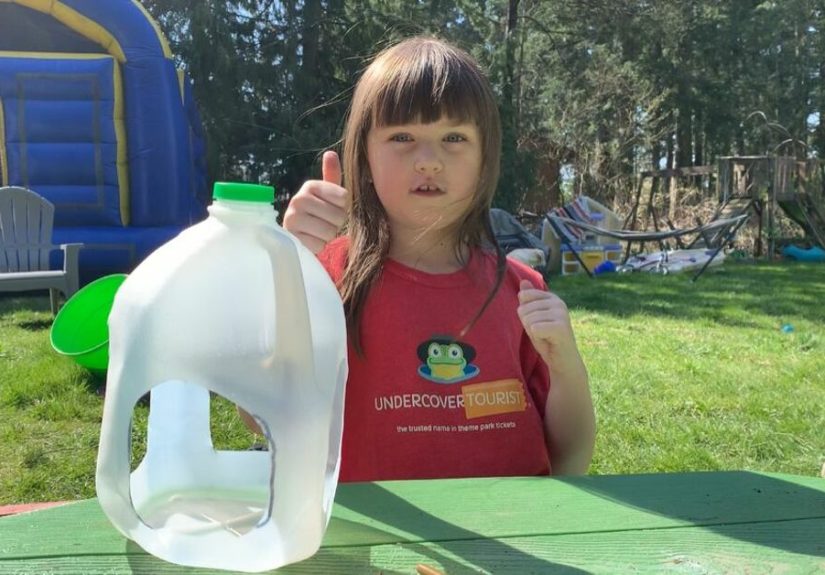
- 1 clean plastic bottle (16–20 oz works great)
- A strip of cotton cloth (old T-shirt) or thick cotton yarn
- Scrap cardboard (cereal box) for a label or “Earth badge”
- Old magazine pages or leftover wrapping paper (optional, for decorating)
What you’ll add
- Potting soil (or seed-starting mix if you’re starting seeds)
- Seeds (basil, mint, or parsley are forgiving) OR a small herb seedling
- Scissors, tape, markers/paint
- Optional: hole punch (or pencil) for the label
Grown-up safety note
If you need a sharp tool to start a cut in the bottle, an adult should do that part. Kids can handle the rest with scissors and supervision.
Also: make sure any recycled container used for crafts is washed and dried first.
Step-by-step instructions
- Clean the bottle. Rinse it well, remove the label, and let it dry. (You’re crafting, not starting a mystery smell collection.)
-
Cut the bottle in half. Aim for the bottom half to be a little taller than the top half. You’ll end up with:
- Bottom piece = the water reservoir
- Top piece (with the cap area) = the soil holder
-
Make the wick path. Poke a small hole in the bottle cap (or remove the cap and use the neck opening if it’s already wide enough).
Thread your cotton strip or yarn through so it hangs down like a tail.- About 4–6 inches should hang into the water reservoir.
- About 3–4 inches should sit up in the soil area.
-
Assemble the planter. Flip the top half upside down and place it inside the bottom half (like a funnel sitting in a cup).
Make sure the wick tail reaches into the reservoir. - Add water. Pour water into the reservoir (bottom half) until it’s about one-third to halfway full.
-
Add soil. Put soil into the top half. Tuck the wick’s top end into the soil (don’t leave it floating in the air).
The wick should touch soil so it can deliver moisture upward. -
Plant seeds or a seedling.
- For seeds: follow the packet depth (most herbs are shallowoften about 1/4 inch).
- For a seedling: make a small hole, place the plant, and gently press soil around it.
-
Decorate (Earth Day style). Wrap the reservoir with paper from an old magazine or leftover craft paper,
or keep it clear so kids can see the water level (science bonus!). -
Make a recycled “Earth badge” label. Cut a small circle from cereal-box cardboard, write the plant name,
and add a tiny Earth drawing. Tape it on like a medal for your new plant citizen.
How it works (quick kid-science explanation)
The cloth or yarn acts like a tiny water elevator. Water travels through the fibers and into the soil slowly. That’s why the plant stays more
evenly moist than it would with random “oops I forgot” watering.
Make it age-flexible
- Preschool–K: Let them decorate and scoop soil; adults handle cutting and wick setup.
- Grades 1–3: Kids can help thread the wick and assemble the planter with guidance.
- Grades 4–6: Add measurements, record growth, and do a “water level graph” for a week.
Turn the craft into an Earth Day mini-lesson (without sounding like a textbook)
Talk about “where stuff goes”
Earth Day isn’t just about making cute thingsit’s about learning how materials move through our world. Try this simple question:
“If this bottle wasn’t reused, what would happen next?”
Then discuss the possibilities: recycling, trash, or (worst-case) litter. This naturally connects to why reducing and reusing matters so much.
Do a 60-second “sorting challenge”
Grab a few clean items (paper, plastic, metal) and set up a mini sorting station. Kids can label bins and practice matching items to the right place.
It’s fast, hands-on, and feels like a game.
Bonus mini Earth Day crafts using recyclables (pick 1–3)
If your kids finish the planter and still have craft energy (or you promised “one more thing” and now you must honor your oath),
here are extra Earth Day crafts for kids using recycled materials.
1) Egg carton seed starters
Cut an egg carton into sections, add a bit of soil, plant seeds, and keep it near a sunny window. Once seedlings are ready,
you can transplant them outdoors or into a bigger pot. It’s a classic because it worksand it’s basically a cardboard apartment building for plants.
2) Tree bark rubbings with recycled paper
Tape a piece of recycled paper to a tree trunk, then rub the side of a crayon over it to reveal the bark texture.
Compare different trees like a tiny forest detective.
3) Recycled “place portrait” collage
Use clean recyclablespaper scraps, cardboard, old packagingto create a picture of a favorite natural place:
a beach, forest, park, or backyard garden. This is a great way to discuss what makes that place worth protecting.
4) Plastic-bag windsock or kite (reuse-only version)
If you have a large plastic bag that can’t be easily recycled where you live, repurpose it into something that gets kids outside.
Add strips as tails, tape to a handle or string, and test wind direction. Suddenly, you’re doing “weather science” and nobody’s complaining.
5) Upcycled crayon “Earth crayons”
Collect broken crayon bits, sort by color, and melt them in an Earth-shaped mold with adult help. This turns “trash crayons” into
brand-new drawing toolsplus it teaches kids that “worn out” doesn’t always mean “done.”
Earth Day craft setup that won’t destroy your kitchen
- Wash first, craft second: Rinse containers and let them dry fully before decorating.
- Cover the surface: Use old newspaper or a reusable tablecloth.
- Make a “recyclables bin”: One box for clean paper/cardboard scraps, one for clean plastic pieces.
- Choose kid-friendly tools: Blunt-tip scissors, washable markers, tape over hot glue for younger kids.
- End with a reset: Kids return scraps to the bin like they’re closing a mini workshop.
Earth Day “do one more thing” checklist
If you want the craft to connect to real-world habits, pick one small action to pair with it:
- Do a 10-minute neighborhood litter walk (gloves on, grown-up supervision).
- Start a “recycling detective” routine: check one item a dayrecycle, trash, or compost?
- Try a simple nature scavenger hunt (rocks, leaves, texturesno picking protected plants).
- Make a “reduce” pledge: reusable water bottle week, lunchbox reusables, or paper-free notes.
FAQ: The questions kids (and parents) actually ask
Do we have to use a plastic bottle?
Noglass jars can become planters too, but they’re breakable and better for older kids with close supervision. Plastic bottles are lightweight,
easy to cut (with adult help), and make it simple to see the water reservoir.
What plants are easiest for kids?
Herbs like basil, mint, and parsley are great starters. If you want fast “wow,” try radish seeds (quick sprouts) or green onions
(they regrow in water and soil like magic).
How often do we add water?
Check the reservoir every couple of days at first. If it’s empty, refill. If the soil looks soggy all the time, reduce the wick thickness
(or shorten how much fabric sits in the water).
Is it okay to paint the bottle?
Yes, but leave a small clear window so kids can see the water level. Also, paint the outside only and let it dry completely before filling with water.
Conclusion: Earth Day crafts that actually stick
The best Earth Day craft idea for kids is the one that turns into a habit: noticing waste, reusing materials, and caring for something living.
A recycled bottle planter checks all the boxesupcycling, science, responsibility, and a tiny burst of pride when the first green sprout appears.
Plus, it’s a craft you don’t have to store in a closet forever. It lives on your windowsill doing plant business like a miniature eco-hero.
Real-life experiences: what usually happens when kids make recycled Earth Day crafts (and why it’s awesome)
If you’ve never led an Earth Day craft session with kids, here’s the real scoop: it’s equal parts “heartwarming environmental stewardship”
and “how did glitter get on the ceiling?” Even with recycled craftsespecially with recycled craftskids bring a special brand of enthusiasm
that can’t be recycled, but definitely can be celebrated.
One of the most common surprises is how proud kids feel when they realize they made something useful out of “trash.”
Adults often see a plastic bottle as a thing to finish and toss. Kids see potential: a rocket, a robot arm, a tiny aquarium for imaginary fish,
or in this case, a planter that grows actual food. The moment a child says, “Wait… this was going to be thrown away,” you can almost hear
the mental lightbulb flick on. That’s the “reuse” lesson landing in real timeno lecture required.
The second classic experience: kids become excellent inventors the second you give them boundaries.
Tell them the goal is to make a self-watering planter and they’ll start proposing upgrades like a design team:
“What if we add a rain gauge?” “What if we make the label a cape?” “What if the plant needs a tiny chair?”
(Plants do not need chairs. But the confidence to ask questions? Absolutely.)
Lean into this by giving one “inventor minute” after the basic build: let them add one improvement using only scraps.
You’ll see creativity, engineering, and problem-solving show up like it paid rent.
Then there’s the “oops” category, which is secretly the best teacher. A common hiccup is overwateringkids love water
because water does things. They pour like they’re trying to hydrate the entire planet personally. With a reservoir planter, you can redirect that
energy into observation: “Let’s look at the water line,” “Let’s see if the wick is touching the soil,” “Let’s decide if the plant needs a sip or a nap.”
Another frequent mishap: the soil ends up everywhere. This is normal. Soil is basically craft glitter that’s socially acceptable outdoors.
A tray underneath the planter and a tiny “sweep squad” (kids with a brush and dustpan) makes cleanup feel like part of the project.
The funniest experience is the sudden attachment kids form with the plant. They name it. They give it a personality.
They’ll defend it in a debate: “Leafy needs more sun,” “No, Leafy is shy and wants shade,” “Leafy is clearly a morning plant.”
This is where Earth Day gets powerful: caring for a plant turns environmental ideas into something personal.
It’s hard to ignore water waste when you’re the official caretaker of a living thingeven if your caretaker badge is made from a cereal box.
Over time, these crafts can shift habits in small, realistic ways. Kids start noticing packaging. They ask if something is recyclable.
They bring you a bottle and say, “Can we use this for something?” That question alone is a win.
It means they’re practicing the first step of sustainability: pausing before tossing.
And if the planter thrives, they’ll want to try anotheran egg carton seed tray, a recycled-paper collage, a windsock from a plastic bag.
Earth Day becomes less of a one-day event and more of a mindset: the world is made of materials, and materials can have second lives.
So yes, your table might look like a recycling bin exploded. But you’re also watching kids build creativity, responsibility,
and a real connection to the planetone reused bottle at a time. Honestly? That’s a pretty fair trade.