Table of Contents >> Show >> Hide
- What a Sugar Scrub Actually Does (and Why It Works)
- 60-Second Safety Checklist (Read This Before You Mix Anything)
- Build Your Base: The Simple Sugar Scrub Formula
- 11 Easy DIY Sugar Scrub Recipes
- 1) The Classic Brown Sugar + Coconut Oil Scrub
- 2) The “Fine & Friendly” Sensitive Skin Sugar Scrub
- 3) Oatmeal + Brown Sugar “Comfort Scrub”
- 4) Coffee + Sugar “Wake-Up” Body Polish
- 5) Honey + Brown Sugar “Glow Saver”
- 6) Citrus Zest Sugar Scrub (No Essential Oil Needed)
- 7) “Spa-Day” Vanilla Latte Sugar Scrub
- 8) Green Tea + Sugar “Calm & Smooth” Scrub
- 9) Turmeric + Sugar “Golden Glow” Scrub (Stain Alert)
- 10) Shea + Sugar “Ultra-Nourishing” Scrub for Rough Spots
- 11) Post-Shave “Smooth Operator” Sugar Scrub (Use BEFORE shaving)
- How to Use a Sugar Scrub (So You Get Smooth Skin, Not Angry Skin)
- Storage & Hygiene: Keep Your Scrub Fresh
- Troubleshooting (Because DIY Gets Weird Sometimes)
- FAQs
- Conclusion
- Experience Notes: What People Commonly Notice After Using DIY Sugar Scrubs (500+ Words)
If your skin has been feeling a little… “winter reptile,” you’re not alone. Between dry air, hot showers, and that one sweater that feels like it was knitted from sandpaper, body skin can get dull fast. A DIY sugar scrub is one of the quickest, cheapest ways to bring back that smooth, soft, “I definitely drink eight glasses of water” glow (even if you don’t).
Sugar scrubs are simple: sugar + oil + optional fun extras. Done right, they gently buff away flaky buildup, help moisturizer sink in better, and make your shower feel like a mini spa daywithout spa pricing or spa small talk.
Quick note: This article is for general skincare education, not medical advice. If you have a skin condition (eczema, psoriasis, rosacea, active acne on the body, open sores, etc.), check with a clinician first.
What a Sugar Scrub Actually Does (and Why It Works)
A sugar scrub is a physical exfoliant: the granules help lift away dead skin cells sitting on the surface. When you pair sugar with oils or butters, you get slip (less tugging) plus hydration, which is why sugar scrubs often feel less harsh than some other gritty scrubs.
The goal isn’t to “sand a table.” It’s to gently polish. If your skin feels raw afterward, that’s not “extra clean.” That’s “oops.”
60-Second Safety Checklist (Read This Before You Mix Anything)
- Skip scrubs on damaged skin: no sunburn, cuts, fresh shaving nicks, rashes, or active irritation.
- Be gentle: light pressure, small circles, short time. This is skincare, not grout removal.
- Choose the right sugar: finer sugar is kinder; coarse crystals can be too aggressive for sensitive areas.
- Patch test if you add fragrance/essential oils: “natural” can still irritate.
- Keep water out of the jar: water contamination is how DIY products get funky.
Build Your Base: The Simple Sugar Scrub Formula
Most DIY sugar scrubs follow the same idea: 2 parts sugar + 1 part oil. Want a thicker paste? Add more sugar. Want a looser “slush”? Add a little more oil.
Best sugars for body scrubs
- Fine white sugar: gentlest, great for sensitive skin and larger areas.
- Brown sugar: softer feel, often dissolves quickly, nice for elbows/knees and “everyday” scrubs.
- Raw/turbinado sugar: coarser; best for very rough spots (heels), used lightly.
Best oils for body scrubs
- Coconut oil: rich and occlusive; solidifies in cooler temps.
- Olive oil: pantry-friendly, cushiony slip.
- Sweet almond oil: lightweight and popular for soft-feeling finish.
- Jojoba oil: feels “dry” and absorbs nicely.
- Grapeseed oil: light, less greasy.
11 Easy DIY Sugar Scrub Recipes
Each recipe makes about 1 to 1½ cups (roughly one jar). For freshness, smaller batches are your friend.
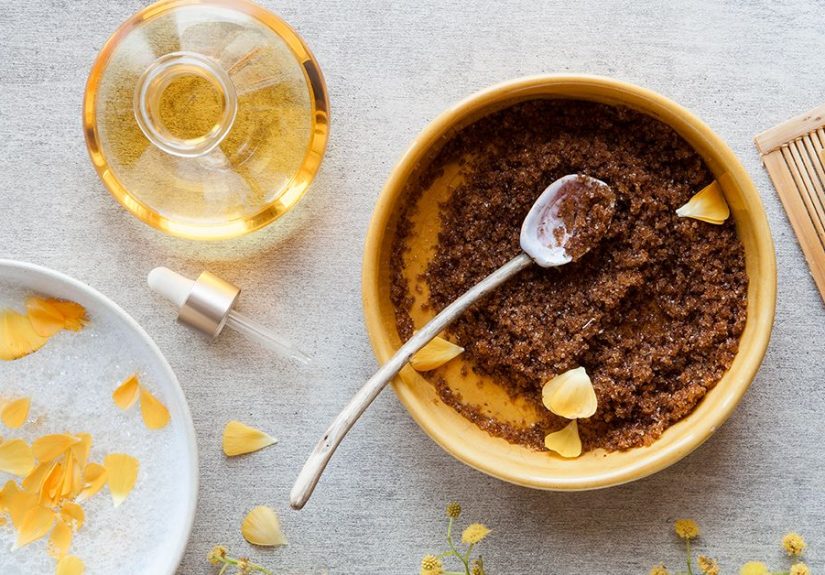
1) The Classic Brown Sugar + Coconut Oil Scrub
Best for: full-body glow, first-timers
- 1 cup brown sugar
- ½ cup coconut oil (melted if solid)
- ½ teaspoon vanilla extract (optional)
- Mix until it looks like damp sand that wants to be a beach vacation.
- Use on damp skin, rinse, then pat dry.
2) The “Fine & Friendly” Sensitive Skin Sugar Scrub
Best for: easily irritated skin (body only), beginners who want gentle exfoliation
- ¾ cup fine white sugar
- ⅓ cup jojoba or grapeseed oil
- 1 tablespoon colloidal oatmeal (optional but soothing)
- Stir well. If it feels too scratchy, add a little more oil or swap to finer sugar.
- Massage lightly for 20–30 seconds per area.
3) Oatmeal + Brown Sugar “Comfort Scrub”
Best for: dry, itchy-feeling skin (not on broken skin)
- ½ cup quick oats (pulse briefly if you want it softer)
- ½ cup fine brown sugar
- ½ cup olive oil
- Mix. Let sit 3–5 minutes so oats soften a bit.
- Use at the end of your shower; rinse with lukewarm water.
4) Coffee + Sugar “Wake-Up” Body Polish
Best for: rough texture, “I need to feel alive” mornings
- ¾ cup brown sugar
- ¼ cup coffee grounds (fine)
- ½ cup coconut or olive oil
- Combine into a thick paste.
- Use from shoulders down (coffee can be a bit much for very sensitive areas).
5) Honey + Brown Sugar “Glow Saver”
Best for: dull skin, post-winter flakes
- 1 cup brown sugar
- ⅓ cup sweet almond oil
- 2 tablespoons honey
- Mix until glossy and scoopable.
- Apply gently; rinse well (honey can cling).
6) Citrus Zest Sugar Scrub (No Essential Oil Needed)
Best for: bright, fresh scent without going heavy on fragrance
- 1 cup white or light brown sugar
- ½ cup olive or grapeseed oil
- Zest of 1 lemon or orange (avoid zesting the bitter white pith)
- Mix and let sit 5 minutes to infuse the oil.
- Use at night if you’re sensitive; follow with moisturizer.
7) “Spa-Day” Vanilla Latte Sugar Scrub
Best for: giftable vibes, cozy shower rituals
- 1 cup brown sugar
- ½ cup coconut oil
- 1 teaspoon vanilla extract
- 1 tablespoon coffee grounds (optional)
- Stir until evenly blended.
- Massage lightly, rinse, and try not to crave dessert immediately.
8) Green Tea + Sugar “Calm & Smooth” Scrub
Best for: body skin that feels stressed (dry air, friction)
- 1 cup fine sugar
- ½ cup sesame or sweet almond oil
- 1 tablespoon matcha or finely ground green tea
- Mix thoroughly (matcha clumpsshow it who’s boss).
- Use lightly; green tea can leave a faint tint that rinses away.
9) Turmeric + Sugar “Golden Glow” Scrub (Stain Alert)
Best for: non-sensitive body areas; people who don’t wear white towels
- 1 cup white sugar
- ¼–⅓ cup coconut oil
- 1–2 tablespoons turmeric powder
- 1 teaspoon vitamin E oil (optional)
- Mix. Wear dark washcloths and rinse your shower floor after.
- Use sparingly and rinse thoroughly.
10) Shea + Sugar “Ultra-Nourishing” Scrub for Rough Spots
Best for: elbows, knees, heels, hands
- 1 cup raw or brown sugar
- ¼ cup melted shea butter
- ¼ cup coconut or olive oil
- Blend into a thick balm-like scrub.
- Focus on rough areas; rinse and moisturize afterward.
11) Post-Shave “Smooth Operator” Sugar Scrub (Use BEFORE shaving)
Best for: legs/underarms/bikini line prep (not right after shaving)
- ¾ cup fine sugar
- ⅓ cup lightweight oil (jojoba or grapeseed)
- 1 tablespoon aloe gel (optional; skip if it makes the mixture watery)
- Gently exfoliate first, rinse, then shave with a fresh razor and a good shave product.
- After shaving, moisturizedon’t re-scrub.
How to Use a Sugar Scrub (So You Get Smooth Skin, Not Angry Skin)
- Start in the shower with warm (not scorching) water.
- Cleanse first so you’re exfoliating clean skin.
- Use a small scoop and massage gently in circles for 20–60 seconds per area.
- Rinse thoroughly with lukewarm water.
- Pat dry (don’t rub like you’re sanding wood).
- Moisturize right awayespecially if you used sugar only (no heavy butters).
How often should you exfoliate?
Most people do well with 1–2 times per week for body exfoliation. If you’re sensitive, start once weekly (or less) and see how your skin behaves. If you’re oily or sweat a lot, you may tolerate a bit morejust avoid turning exfoliation into a daily competitive sport.
Storage & Hygiene: Keep Your Scrub Fresh
- Use a clean spoon or scoop. Fingers + shower water = bacteria party invite.
- Keep water out. Store outside the shower stream if possible.
- Jar choice matters: wide-mouth glass or plastic with a tight lid is easiest.
- Make small batches. DIY scrubs usually don’t contain preservatives like commercial products.
- Smell and texture check: if it smells “off,” looks moldy, or separates oddlytoss it.
Troubleshooting (Because DIY Gets Weird Sometimes)
- Too oily? Add more sugar, 1 tablespoon at a time.
- Too dry or crumbly? Add oil, 1 teaspoon at a time.
- Stings? Stop using it. You may have micro-irritation, fragrance sensitivity, or you scrubbed too hard.
- Clogs your drain? Use less product and rinse longer. Coffee grounds can be especially clingyuse sparingly.
- Skin feels tight after? Reduce frequency and switch to finer sugar + more oil, then moisturize immediately.
FAQs
Can I use a sugar scrub on my face?
Generally, it’s safer to keep classic sugar scrubs on the body. Facial skin is more delicate and can get irritated easily. If you insist, use ultra-fine sugar, feather-light pressure, and avoid any irritated areasbut for many people, a gentler face-specific exfoliant is a better idea.
Should I exfoliate before or after shaving?
Usually before. Exfoliating first helps remove dead skin buildup so the razor glides more smoothly. Exfoliating after shaving can sting and increase irritation.
Do I need essential oils?
Nope. Your scrub will work beautifully without them. If you use them for scent, keep the amount very small, dilute properly in oil, and patch testespecially if you’re sensitive.
Conclusion
A DIY sugar scrub is one of the easiest ways to upgrade your shower from “basic hygiene” to “soft-skin ceremony.” Pick the right sugar, keep the pressure gentle, moisturize afterward, and don’t exfoliate angry skin. With the 11 recipes above, you can tailor your scrub to your moodenergizing coffee, cozy vanilla, soothing oats, or a simple classic that always delivers.
Experience Notes: What People Commonly Notice After Using DIY Sugar Scrubs (500+ Words)
People who start making their own sugar scrubs usually report the same first surprise: the softness hits fast. Like, “Why do my arms feel like I just upgraded my skin subscription?” fast. That’s partly because physical exfoliation removes the flaky layer that can make lotion feel like it’s just sitting on top of the skin. Once that dull layer is smoothed down, moisturizer (or even the oils inside the scrub) tends to feel more effective.
Another common experience: the shower becomes slippery. Not in a fun, whimsical waymore like “please don’t turn me into a cartoon banana peel situation.” Many DIYers end up using scrubs only at the end of the shower so they can rinse the tub right after. A simple habit that helps is to keep the jar away from direct water spray, scoop product with a spoon, apply, rinse yourself, then do a quick final rinse of the floor. Glamorous? No. Practical? Absolutely.
Texture experimentation becomes a hobby, too. A lot of people start with a coarse sugar because it “feels like it’s working,” then realize that finer sugar gives the same smooth finish with less irritation. That shift is especially common for anyone who scrubs too enthusiastically the first time and ends up with skin that feels warm or sensitive afterward. The learning curve is basically: gentle pressure + short scrub time = happy skin; aggressive scrubbing = skin that files a complaint.
Scent is another big part of the experience. Some folks love essential oils, but many discover they prefer food-based scentsvanilla extract, citrus zest, even a little cinnamon (used carefully). It feels cozy, it smells familiar, and it usually avoids the “why is my skin tingling?” mystery that can happen with stronger fragrance ingredients. For sensitive skin types, skipping fragrance entirely often becomes the ultimate power move: the scrub still works, and there’s less risk of irritation.
People also notice that timing matters. Using a scrub right before shaving is a popular routine because it can help the razor glide better and leave skin feeling smoother afterward. On the flip side, using a scrub immediately after shaving commonly leads to stingingso many DIYers learn to separate “exfoliation day” from “shaving day” if they’re prone to irritation. Others keep it simple: exfoliate gently first, shave second, moisturize last, and call it a day.
Then there’s the “rough spot victory lap.” Elbows, knees, heels, and hands tend to show the biggest improvement, so people often end up making thicker, butterier scrubs for those areassomething with shea butter or extra oilwhile keeping the allover scrub lighter. It’s also common to notice that less frequent scrubbing can look better than daily scrubbing. When you back off to one or two times per week, the skin barrier often feels calmer, and the smoothness lasts longer because you’re not constantly irritating your surface layer.
Finally, DIY sugar scrub fans often report a weirdly satisfying side effect: it makes body care feel intentional. Even a five-minute scrub can feel like a reset buttonespecially when the rest of life is loud. So yes, you’ll get smoother skin. But you might also get a small, repeatable ritual that makes your bathroom feel like a place you actually enjoy being. Just… rinse the tub after. Your future self will thank you.