Table of Contents >> Show >> Hide
- The short version (because your moisturizer is calling)
- Why eczema and food keep getting dragged into the same group chat
- So… does dairy help eczema? Let’s break down the evidence
- If dairy doesn’t “treat” eczema, why do some people swear it does (or doesn’t)?
- A smart, safe way to figure out if dairy affects your eczema
- Specific examples (because real life is messier than headlines)
- FAQs about dairy and eczema
- The bottom line
- Real-World Experiences: What People Notice When They Change Dairy (About )
If you’ve ever Googled eczema at 2 a.m. while scratching like a mosquito’s favorite buffet, you’ve probably seen it:
“Cut dairy!” “Add dairy!” “Only drink milk from blissful cows who listen to classical music!”
The internet has a lot of opinions. Your skin just has… feelings.
So, does dairy actually relieve eczema symptoms? Here’s the honest answer: for most people, dairy isn’t a
magic eczema remedy. But for a smaller groupespecially those with a true milk allergy or certain sensitivitiesdairy
can influence flares (usually in the “worse,” not “better,” direction). And then there’s fermented dairy (hello, yogurt
and kefir), which has a more interesting “maybe” storyline thanks to probiotics.
The short version (because your moisturizer is calling)
- Dairy doesn’t reliably “treat” eczema on its own, and most people won’t see dramatic improvement just by adding milk or cheese.
- Milk allergy is real and more common in young kids with moderate-to-severe eczema. In those cases, avoiding milk under medical guidance can help.
- Cutting dairy “just in case” can backfire (nutrient gaps, stress, and the heartbreak of saying goodbye to pizza).
- Fermented dairy (yogurt, kefir) may support the gut-skin connection for some people, but results vary.
Why eczema and food keep getting dragged into the same group chat
Atopic dermatitis (the most common form of eczema) is driven by a mix of skin barrier problems, immune system
overreaction, and genetics. When your barrier is leaky, irritants and allergens can get in more easily, and your immune
system can respond like it’s auditioning for a disaster movie.
Because eczema can flare after you eat something (or after stress, sweat, detergent, winter air, or that one sweater
that looks cute but feels like sandpaper), food becomes an easy suspect. Sometimes it’s the culprit. Often it’s just
standing near the crime scene.
So… does dairy help eczema? Let’s break down the evidence
1) When dairy can make eczema worse: true milk allergy
Dairy is one of the more common food allergens, especially in infants and young children. In kids with eczemaparticularly
moderate-to-severe eczemafood allergies are more likely than in kids without eczema. If a child has a confirmed milk allergy,
consuming dairy can trigger symptoms that may include skin flares.
Here’s the key detail that gets lost online: having eczema doesn’t automatically mean dairy is a trigger. Major dermatology
guidance emphasizes that avoiding a food that causes an allergic reaction rarely makes eczema disappear, and elimination
diets shouldn’t be done casuallyespecially for kidsbecause of nutritional and growth concerns.
In adults, true milk allergy appears to be much less common. In other words: if you’re an adult with eczema and you’re
blaming mozzarella by default, the odds are not in mozzarella’s favor as the villain.
2) When dairy might be neutral: most people with eczema
For many people, dairy is simply… food. Not medicine. Not poison. Just a sandwich ingredient. Broadly, there isn’t a single
“eczema diet” that works for everyone, and reputable clinical guidance tends to focus on identifying individual
triggers rather than banning entire food groups.
That’s also why the phrase “dairy relieves eczema” is hard to defend. If dairy helped eczema in a consistent, repeatable way,
dermatologists would be prescribing yogurt the way they prescribe topical anti-inflammatories. (And honestly, that would be a
delightful era of medicine.)
3) The plot twist: fermented dairy and the gut-skin connection
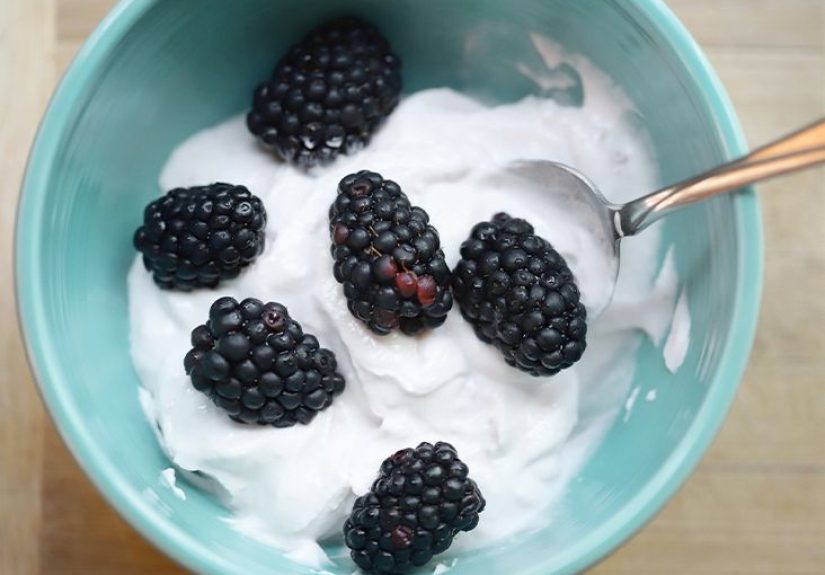
Fermented dairylike yogurt and kefircontains beneficial bacteria (probiotics) and fermentation byproducts that may influence
inflammation and the skin barrier through the gut microbiome. Research on probiotics and eczema is mixed, but some trials and
reviews suggest certain strains can modestly improve symptoms in some people.
Important nuance: this isn’t a blanket “dairy helps eczema.” It’s closer to: some fermented dairy products may support
skin health for some individuals, and the effect (if it happens) is usually mild and gradualnot a dramatic overnight
transformation.
4) What about regular milkany evidence it prevents or reduces eczema?
There is research exploring associations between milk intake patterns and atopic dermatitis, including U.S. population data.
For example, one analysis using NHANES data suggested differences in atopic dermatitis incidence by milk fat intake category.
Interesting? Yes. A reason to start chugging whole milk as an eczema treatment? Not quite.
Observational studies can’t prove cause and effect. People who choose one type of milk may differ in many other lifestyle
factors (diet patterns, socioeconomic factors, overall health behaviors) that also affect inflammation and skin.
If dairy doesn’t “treat” eczema, why do some people swear it does (or doesn’t)?
Because eczema is a master of disguise. Flares come and go. Seasons change. Stress spikes. You try a new detergent. You get
sick. Your skin improves because you finally found the moisturizer your face doesn’t hate. And then dairy gets creditor blame
for something it didn’t fully cause.
That said, individual reactions are real. Some people do notice a consistent pattern: dairy seems to worsen itch,
redness, or oozing patches. Others notice no difference. A smaller group finds fermented dairy feels “calming” to their system
(possibly via digestion, inflammation markers, or just replacing ultra-processed snacks with something simpler).
A smart, safe way to figure out if dairy affects your eczema
Step 1: Start with the boring basics (because they work)
- Moisturize daily (yes, even when your skin behaveseczema loves surprise comebacks).
- Use fragrance-free products and gentle cleansers.
- Manage triggers like sweat, harsh fabrics, and dry indoor air.
- Follow your treatment plan from a clinician (topicals, wet wraps, prescription options if needed).
Diet tweaks should be a supporting actor, not the entire cast.
Step 2: Look for clues that suggest a true allergy
If dairy causes immediate symptoms (hives, swelling, vomiting, wheezing, or rapid flare patterns right after eating), don’t
DIY thistalk to a clinician or allergist. Food allergy testing and supervised oral food challenges are the gold standard for
clarity. This is especially important for children.
Step 3: Try a short, structured “n=1” experiment (if appropriate)
If you’re an adult with stable nutrition and you suspect dairy is a trigger, a short trial can be reasonable. The goal is to
reduce guesswork and avoid turning your life into a forever-elimination diet.
- Pick a tracking window: 2–4 weeks is common.
- Keep everything else steady: same skincare routine, same laundry products, same treatment plan.
- Remove obvious dairy sources: milk, cheese, yogurt, ice cream, butter. (Read labels for sneaky dairy.)
- Track symptoms: itch, sleep disruption, redness, cracking, and where flares occur.
- Reintroduce dairy intentionally: add it back for several days and watch for a repeat pattern.
If symptoms improve off dairy and reliably worsen with reintroduction, you have useful data. If nothing changes, you can stop
blaming dairy and move on to more likely culprits (stress, skin barrier care, environment).
Step 4: If you cut dairy, replace the nutrients on purpose
Dairy can be a major source of protein, calcium, and vitamin D (especially through fortified products). If you remove it,
make sure you replace those nutrients with alternatives (fortified plant milks, leafy greens, canned salmon with bones, tofu
set with calcium, beans, nuts/seeds where appropriate). For kids, this matters even moredo it with professional guidance.
Step 5: If you keep dairy, consider “gentler” formats
If dairy doesn’t clearly worsen your eczema, you don’t have to eliminate it. Some people who feel “off” with milk do better
with fermented options like yogurt or kefir, or with smaller portions. If you’re curious about probiotics for eczema, fermented
dairy can be one way to explore thatjust don’t expect it to replace medical treatment.
Specific examples (because real life is messier than headlines)
Example 1: A toddler with persistent eczema and immediate reactions
A parent notices their toddler’s eczema is moderate-to-severe despite consistent skincare. After dairy, the child develops
hives and worsening itch within a short time. In this case, an allergist evaluation is appropriate. If cow’s milk allergy is
confirmed, eliminating dairy under medical guidance may reduce flares and improve overall comfortwhile ensuring nutrition
stays adequate.
Example 2: An adult whose eczema flares “randomly”
An adult cuts dairy for a month and sees… basically the same eczema pattern. But they also realize their flares spike after
workouts (sweat + friction), in winter (dry air), and when stress is high. They shift focus to shower timing, thick moisturizers,
humidifiers, and targeted prescription topicals. Result: better controlwithout demonizing dairy.
Example 3: Someone adds kefir and notices modest improvement
Another person keeps dairy moderate but adds kefir several times a week. Over a couple months, they report slightly less dryness
and itch. Could it be the probiotics? Maybe. Could it be better overall diet consistency and less ultra-processed snacking?
Also maybe. Either way, the change is modesthelpful, but not miraculous.
FAQs about dairy and eczema
Does milk “hydrate the skin” from the inside?
Drinking milk doesn’t directly hydrate your skin the way a moisturizer does. Hydration and barrier function are influenced by
many factorsfluids, diet quality, essential fats, inflammation, and topical care.
Is lactose intolerance the same as a milk allergy?
No. Lactose intolerance is difficulty digesting lactose and typically causes gastrointestinal symptoms. A milk allergy involves
the immune system and can cause skin, respiratory, or systemic reactions. They’re different problems with different implications.
Should everyone with eczema avoid dairy “just to be safe”?
Generally, no. Broad elimination diets aren’t routinely recommended without a clear reason. Removing dairy without evidence can
increase nutritional risk and make eating stressfultwo things eczema definitely doesn’t need.
What’s the best diet pattern for eczema overall?
There’s no single cure diet, but many clinicians recommend an overall anti-inflammatory eating pattern: plenty of fruits and
vegetables, fiber-rich foods, adequate protein, healthy fats, and fewer ultra-processed foods and added sugars. If dairy doesn’t
trigger you, it can fit into that pattern.
The bottom line
Dairy is not a proven eczema “reliever” for most people. The relationship is individualized:
dairy may worsen symptoms in people with a true milk allergy (more common in young children with moderate-to-severe eczema),
and fermented dairy might offer modest support for some through probiotics. The smartest approach is not a permanent ban or a
“drink milk for clear skin” challengeit’s a structured, safe test guided by symptoms, medical advice when needed, and good
nutrition.
Real-World Experiences: What People Notice When They Change Dairy (About )
People living with eczema often describe dairy as either “my skin’s sworn enemy” or “my skin doesn’t even know dairy exists.”
Both can be truebecause eczema isn’t one single condition with one single trigger. It’s more like a moody group project where
the weather, stress, hormones, soap, sweat, fabric, and your immune system all have editing access.
Experience pattern #1: “Dairy makes my itch louder.”
Some people notice that after pizza nights or a week of extra lattes, their itch ramps up and patches look angrier. When they
run a short elimination trial, they see a small but consistent improvementespecially in itch and sleep. Reintroducing dairy
brings back the same pattern within days. In these stories, the “win” usually isn’t spotless skin; it’s better comfort and
fewer flare spikes. Many also report that the biggest difference comes from cutting the highly processed dairy-heavy foods
(fast-food cheese bombs) rather than all dairy in every form.
Experience pattern #2: “I cut dairy and… nothing happened.”
This is extremely common. People go dairy-free with high hopes and a refrigerator full of almond milkonly to realize their
eczema flares are still showing up on schedule. That can feel discouraging, but it’s valuable information. Many then discover
bigger triggers: winter air, long hot showers, fragrance in laundry detergent, stress, sweating under athletic gear, or not
moisturizing consistently. In these cases, keeping dairy in the diet isn’t “giving up”it’s refusing to play whack-a-mole with
random restrictions that don’t help.
Experience pattern #3: “I do okay with yogurt, but not with milk.”
A frequent anecdote is that fermented dairy feels “easier” than straight milk. People say they tolerate yogurt or kefir better,
sometimes noticing less digestive discomfort, and occasionally reporting slightly calmer skin over time. Even when the skin
benefit is subtle, fermented dairy can replace snack foods that are higher in added sugar and lower in nutrientsanother way it
might indirectly support eczema management. The key theme: improvements are typically gradual and modest, not instant.
Experience pattern #4: “My kid’s eczema and dairy are clearly connected.”
Parents of infants and toddlers sometimes describe a clearer pattern: dairy triggers immediate symptoms (hives, swelling, vomiting,
or rapid flares) in addition to ongoing eczema. When evaluated by an allergist, some children are diagnosed with cow’s milk allergy.
In that scenario, a medically supervised dairy-free plan can reduce flares and improve comfortbut families often mention a second
challenge: keeping nutrition balanced. They learn to swap in fortified alternatives and track calcium/vitamin D and protein so the
child continues to grow well. The “real-world” lesson here is that if dairy is truly a problem, it’s worth getting professional
support so the solution doesn’t create a new problem.
Takeaway from these experiences: the most useful question usually isn’t “Is dairy good or bad for eczema?”
It’s “What happens consistently to my (or my child’s) skin when dairy changeswhile everything else stays steady?”
That kind of structured observation beats internet certainty every time.