Table of Contents >> Show >> Hide
- First: A Quick Reality Check (Because Dreams Love Drama)
- Why Wasps Are Such Powerful Dream Symbols
- Psychological Meaning: What Your Brain Might Be Processing
- Spiritual Meaning: A Symbol of Boundaries, Courage, and Change
- Common Wasp Dream Scenarios (and What They Might Mean)
- What to Do After a Wasp Dream: A Practical Interpretation Method
- When a Wasp Dream Might Be a Sleep/Stress Signal
- A Quick Safety Note (Because Real Wasps Don’t Care About Symbolism)
- Conclusion: Your Dream Isn’t RandomIt’s a Message Wrapped in Wings
- Real-World Experiences People Describe After Wasp Dreams (500+ Words)
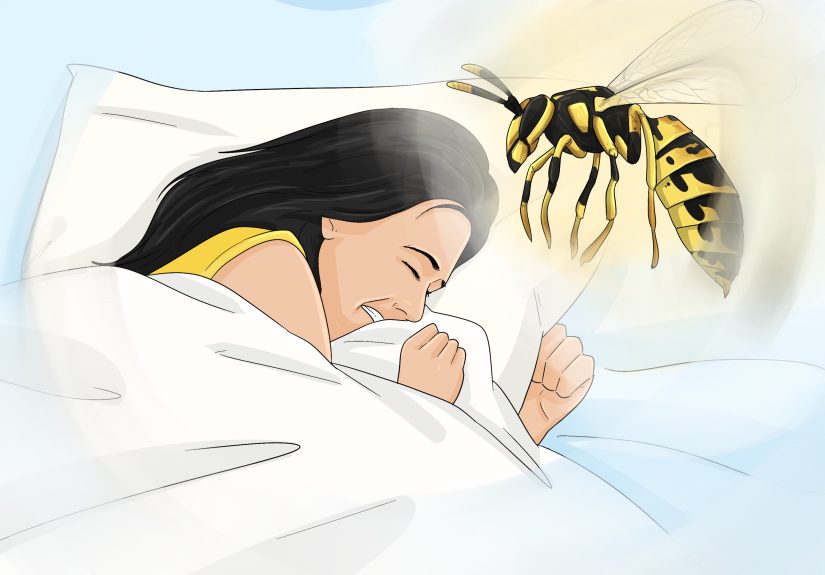
Dreaming about wasps is one of those experiences that can make you wake up like, “Cool, cool… my subconscious has chosen violence.” Whether it’s one angry yellow blur, a whole swarm with a personal vendetta, or a wasp nest that looks suspiciously like it has a mortgage, these dreams tend to feel intense for a reason: wasps press the emotional “react” button.
But here’s the twistwasp dreams aren’t always doom-and-gloom. Yes, they can point to stress, conflict, or feeling “stung” by someone’s words. They can also represent boundaries, assertiveness, productivity, and the part of you that finally says, “Nope. Not today.” This article breaks down the symbolism, possible spiritual meanings, and practical ways to interpret your dream without turning it into a horror franchise.
First: A Quick Reality Check (Because Dreams Love Drama)
Dream interpretation isn’t a perfect science, and your brain is not a fortune cookie. Dreams often remix your memories, emotions, and daily stress into symbolic storiessometimes meaningful, sometimes random, sometimes just your brain doing late-night housekeeping.
The best interpretation is the one that matches your real-life context: what was happening in the dream, how you felt, what the wasps were doing, and what’s currently buzzing around your waking life.
Why Wasps Are Such Powerful Dream Symbols
Wasps are emotionally “loud” symbols because they carry a built-in combo of fear + boundaries + sudden pain. In real life, they can defend their nests aggressively, and (unlike honeybees) many can sting more than once. That alone makes them prime material for a subconscious metaphor.
Core symbolism of wasps in dreams
- Irritation: Something small that keeps bothering you… until it’s suddenly not small anymore.
- Conflict: Tension with a person, group, workplace, or even your own inner critic.
- Boundaries: The instinct to protect what’s yourstime, space, energy, relationships.
- Defensiveness: Feeling attacked, judged, criticized, or cornered.
- Assertiveness: The part of you that’s ready to speak up (even if your voice shakes).
- Productive intensity: Hyper-focus, drive, or pressure to “get it done.”
Psychological Meaning: What Your Brain Might Be Processing
From a psychological angle, dreams can surface emotions you’ve been minimizing during the day. Wasps often show up when you’re dealing with stress, anxiety, anger, resentment, or social tensionespecially emotions that feel risky to express openly.
1) “I’m fine” stress that isn’t actually fine
A wasp dream can reflect the type of stress that doesn’t look dramatic on paper but feels dramatic in your body: deadlines, money pressure, family obligations, or a constant stream of small annoyances. Your mind turns that “background buzz” into… well, a buzzing creature.
2) Feeling attacked or evaluated
Wasps can symbolize criticismreal or perceived. If you’re in a season where you feel judged (at work, online, in a relationship, even by yourself), the dream may mirror that tension. The wasp becomes the embodiment of “I’m being targeted.”
3) Suppressed anger and the fear of your own reaction
Sometimes the wasp isn’t “them.” It’s your own angersharp, protective, and ready to defend your boundaries. If you’re someone who avoids conflict, your subconscious might represent anger as something outside you, chasing you, so you don’t have to admit you’re carrying it.
4) Social dynamics: the swarm effect
Wasps can be solitary or social, and social wasps live in colonies that defend their home as a group. In dreams, a swarm can reflect group pressure: office politics, family drama, gossip, or feeling outnumbered in an argument. If you’ve felt “ganged up on” lately, your brain may translate that into a buzzing crowd with wings.
Spiritual Meaning: A Symbol of Boundaries, Courage, and Change
Spiritually, wasps often symbolize the sacred art of boundariesthe kind that protect your peace without turning you into a human “Do Not Disturb” sign. Many spiritual traditions view stinging insects as messengers that call you to notice what you’ve been tolerating and to respond with clarity.
Common spiritual themes linked to wasps
- Protection: Guarding your energy, home, relationships, or purpose.
- Warrior energy: Not aggression for aggression’s sake, but courage and self-defense.
- Discernment: Spotting what (or who) is not aligned with your values.
- Transformation: A prompt to change behavior patterns, environments, or commitments.
- Truth that stings: Something you know deep down but haven’t wanted to face.
Important note: spiritual meaning is deeply personal. If you’re religious, cultural references may shape your interpretation. If you’re not, “spiritual” can simply mean: what lesson is my inner self trying to teach me?
Common Wasp Dream Scenarios (and What They Might Mean)
Dream about being chased by wasps
This often points to avoidance. Something in waking life feels stressful, confrontational, or emotionally loaded, and you’ve been circling it like it’s a suspicious package. The chase can represent:
- a conflict you haven’t addressed
- a decision you’re postponing
- fear of confrontation or “getting in trouble”
- stress that keeps following you from room to room (and somehow into your dreams)
Ask yourself: What am I running from? Also ask: What would happen if I stopped running? (In dreams, the answer is usually “I might learn something,” not “I will be eaten by airborne needles.”)
Dream about a wasp sting
A sting can symbolize a sharp emotional moment: betrayal, criticism, humiliation, or a “that hit a nerve” conversation. It may also reflect fear of painemotional pain, not just physical.
The location of the sting can add nuance:
- Hand/arm: work, productivity, control, “what I’m doing”
- Face: identity, reputation, embarrassment, visibility
- Leg/foot: direction, progress, feeling blocked
- Back: distrust, “being stabbed in the back” energy
Dream about a wasp nest
This one is a classic. A nest often represents a concentrated source of tensiona situation you know is risky to poke. It might be:
- a toxic workplace dynamic
- a family conflict everyone avoids
- built-up resentment in a relationship
- your own “stacked” stress that’s been accumulating quietly
If you see the nest but don’t disturb it, your subconscious may be saying: “You’re aware of the issue.” If you accidentally disturb it, it can reflect fear of consequenceslike speaking up, setting boundaries, or making a change.
Dream about wasps in your house
The house usually symbolizes your inner worldmind, body, personal space, or family life. Wasps in the house can suggest that stress or conflict is getting too close for comfort. It could also point to overstimulation: too many responsibilities, too many opinions, too many notifications. (Yes, your dream may be subtweeting your group chat.)
Dream about killing a wasp
Killing a wasp can symbolize taking back power, facing a problem, or refusing to be intimidated. It may also reflect angerespecially if the dream feels satisfying rather than scary. If you felt guilty afterward, it could represent fear of being “too harsh” when asserting yourself.
Dream about a swarm of wasps
A swarm often signals overwhelm: many stressors at once, social pressure, or the feeling that problems multiply when you look away for five minutes. If the swarm is organized (moving like a unit), it can reflect group dynamicswork politics, community conflict, or family expectations.
Dream about a calm wasp (or one that doesn’t sting)
This is underrated. A calm wasp may symbolize controlled power: you’re learning to be assertive without exploding. Or it may suggest that the thing you fear isn’t as dangerous as you imagine. Sometimes the dream is basically your brain saying, “You can handle this.”
What to Do After a Wasp Dream: A Practical Interpretation Method
Step 1: Write the “dream headline”
In one sentence, describe the dream like it’s breaking news: “Local dreamer chased by wasps after opening a door they absolutely should not have opened.” The headline reveals the emotional theme fast.
Step 2: Identify the strongest emotion
Fear? Anger? Shame? Panic? Determination? Relief? In dream work, emotion is usually more important than the symbol.
Step 3: Match the symbol to your real life (gently, not dramatically)
- Where do you feel “buzzed” (irritated, overstimulated, on edge)?
- Where do you feel “stung” (hurt, criticized, betrayed)?
- Where do you need better boundaries?
- What are you avoiding because it might “set things off”?
Step 4: Choose one small waking-life action
Not a whole personality makeover. Just one action: a conversation you’ve been delaying, a boundary you need to state, a task you need to finish, or a change in routine to reduce stress.
When a Wasp Dream Might Be a Sleep/Stress Signal
Vivid, upsetting dreams can be linked to stress, irregular sleep, illness, medications, or changes in your routine. If you’re suddenly having intense nightmares or they’re disrupting your life, consider:
- sleep deprivation or inconsistent sleep schedule
- high stress or anxiety
- recent illness/fever
- certain substances (including nicotine) or medication changes
If nightmares are frequent, distressing, or tied to trauma, talking with a healthcare professional or therapist can help. No shameyour brain is powerful, but it’s not always subtle.
A Quick Safety Note (Because Real Wasps Don’t Care About Symbolism)
In real life, most insect stings are mild, but allergic reactions can be serious. If you or someone else has symptoms of a severe allergic reaction (like trouble breathing, swelling of the face/throat, dizziness, or widespread hives), seek emergency care. Dream wasps are metaphors. Real wasps are… very committed to their brand.
Conclusion: Your Dream Isn’t RandomIt’s a Message Wrapped in Wings
Dreaming about wasps often points to one of a few themes: irritation that’s been building, conflict you’re avoiding, boundaries you need to strengthen, or emotions you’ve been downplaying. Spiritually, it can be a nudge toward courage, discernment, and protecting your peace.
The key is context. A wasp dream doesn’t automatically mean something terrible is comingit can mean you’re finally noticing something that needs your attention. And honestly? That’s a pretty heroic use of a nightmare.
Real-World Experiences People Describe After Wasp Dreams (500+ Words)
Below are composite, real-life-style experiences based on common patterns people report when they talk about wasp dreams. Think of them like mini “dream journals” that help you recognize your own situationwithout requiring you to actually be chased through an airport by a flying menace with unresolved feelings.
1) The Deadline Swarm
One person described dreaming they opened their laptop and a swarm of wasps poured out like the world’s worst software update. In waking life, they were juggling multiple deadlines, Slack messages, and a growing sense that they couldn’t do anything “right.” The dream wasn’t predicting disasterit was illustrating overwhelm. Their takeaway was surprisingly practical: they renegotiated one deadline, turned off nonessential notifications, and started time-blocking. The “swarm” didn’t disappear overnight, but it stopped feeling like it owned the room.
2) The Wasp Nest in the Family Kitchen
Another person dreamed there was a wasp nest in the corner of the kitchen ceiling, and everyone in the house acted like it was normal. They were the only one panicking. In real life, they were the “peacekeeper” in a family that avoided conflict. Everyone pretended old hurts didn’t existwhile those hurts quietly dictated every holiday conversation. The dream highlighted a big truth: ignoring the nest doesn’t mean it’s not there. Their next step wasn’t a dramatic confrontation. It was simply naming a boundary: “I’m not discussing that topic at dinner.” Small boundary, big relief.
3) The Sting That Sounded Like a Comment
A common story: someone dreams they get stung and wakes up with a strong emotional “aftertaste,” like embarrassment or anger. In one composite example, the sting happened right after a dream coworker said, “Are you sure you can handle this?” In waking life, the person had recently received feedback that felt harsheven if it was meant to be helpful. The dream wasn’t saying the coworker was evil. It was saying the comment landed on an insecurity. Their biggest insight came from journaling: “I’m not mad about the feedback. I’m mad that I already doubt myself.” That realization shifted the focus from resentment to confidence-building.
4) The Calm Wasp on the Window
Not every wasp dream is a horror movie. Some people dream of a single wasp sitting quietly on a window, and the dreamer simply watches it. In these stories, the dream often happens after someone has made a decision: leaving a job, setting a boundary, ending a draining friendship, or committing to a new goal. The calm wasp can symbolize controlled powerassertiveness without chaos. One person described waking up feeling oddly steady, like they’d received a message: “You don’t have to panic to protect yourself.” That’s a pretty good lesson for waking life, too.
5) The Chase That Ended in Standing Still
Some of the most meaningful “wasp chase” dreams end with a twist: the dreamer stops running. Sometimes the wasp hovers and then flies away. Sometimes it lands. Sometimes it just… isn’t as terrifying when confronted. People often report having this kind of dream during periods when they’re finally ready to address something they’ve avoided: a hard conversation, a health concern, a financial reality, or a relationship truth. The dream becomes a rehearsal for courage. And while waking life is rarely as tidy as dream symbolism, the emotional takeaway is real: avoidance amplifies fear; facing it reduces it.
If your wasp dream stuck with you, treat it like a message worth decodingnot a prophecy. Your mind may simply be asking you to protect your peace, tell the truth, and stop letting tiny irritations become full-blown swarms. (And if nothing else, it’s a reminder to appreciate the fact that your dreams don’t come with sound effects. Usually.)