Table of Contents >> Show >> Hide
- Drew Carey: The Improv Traditionalist with a Modern Sensibility
- Volodymyr Zelensky: From Green Room to War Room
- Why ‘Whose Line Is It Anyway?’ Is the Perfect (and Deeply Weird) Stage
- Comedy, Optics, and War: Is This Idea Brilliant or Bonkers?
- Would Zelensky Ever Actually Do It?
- Improv as Soft Power: Why This Fantasy Resonates
- Experiences, Anecdotes, and What a Night Like This Would Feel Like (≈)
- SEO Summary & Publishing-Ready Metadata
When a veteran American game show host publicly daydreams about inviting a wartime president onto a legendary improv comedy series, it sounds like a setup for a punchline.
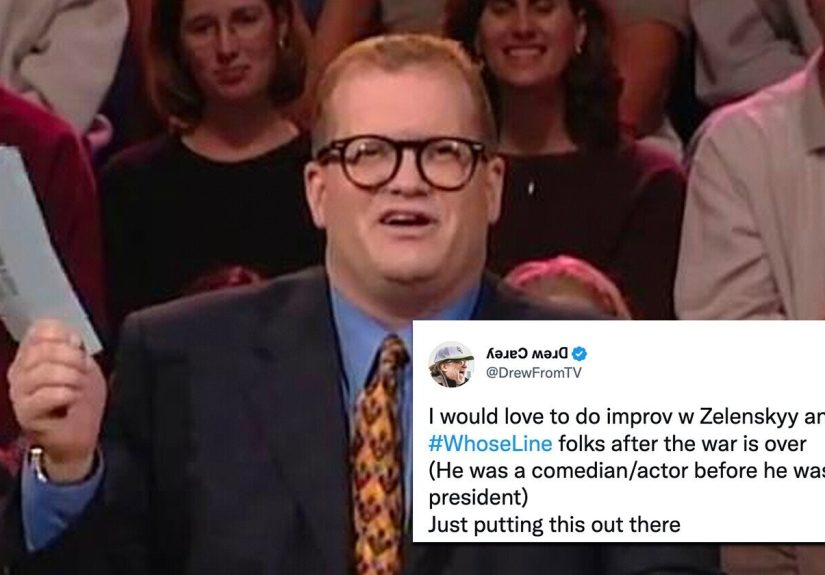
But Drew Carey’s wish to see Ukrainian President Volodymyr Zelensky join a Whose Line Is It Anyway? reunion isn’t just an absurd bit. It’s a sharp, surprisingly hopeful snapshot of how comedy, politics, and global solidarity now collide in real time.
This idea first amplified by coverage on Cracked.com taps into three powerful stories at once: Carey’s improv legacy and public persona, Zelensky’s rare journey from comedian to commander-in-chief, and the enduring cultural weight of Whose Line as the world’s most mainstream crash-course in chaos, wit, and empathy.
Drew Carey: The Improv Traditionalist with a Modern Sensibility
Drew Carey isn’t just “the guy from The Price Is Right.” He’s one of the key figures who helped normalize improv comedy for primetime American audiences.
As host of the U.S. version of Whose Line Is It Anyway? from 1998 to 2007, Carey presided over a mayhem-driven format where the rules were simple: say “yes,” commit to the bit, and keep the laughs rolling.
Offstage, Carey’s reputation has increasingly leaned toward open-hearted, occasionally political decency: support for veterans, vocal backing of democratic values, and public sympathy for Ukraine’s struggle.
So when he imagines a future where he’s back with Ryan Stiles, Colin Mochrie, Wayne Brady and a victorious Zelensky doing scenes instead of briefings it lands less like a stunt pitch and more like a pop-culture prayer for normalcy.
Volodymyr Zelensky: From Green Room to War Room
Long before he was addressing parliaments, Zelensky was doing sketches, voice work, and live comedy.
He rose through Ukraine’s comedy circuit with Kvartal 95, then fronted the political satire series Servant of the People, in which he played an unassuming teacher who accidentally becomes president a role that foreshadowed his real electoral landslide in 2019.
That entertainment DNA matters. It helps explain his instinct for sharp messaging, his direct-to-camera addresses, and his ability to compress complex grief, resistance, and resolve into language that resonates globally.
In another universe, Zelensky and Carey meeting on an improv stage would just be a crossover special.
In this one, the idea only “works” if Ukraine has survived, rebuilt, and earned a night where the biggest risk is a bad punchline.
Why ‘Whose Line Is It Anyway?’ Is the Perfect (and Deeply Weird) Stage
Whose Line Is It Anyway? has always worn its chaos like a badge.
No scripts. No guarantees. No mercy for the unprepared.
Guests are thrown into musical numbers, bad accents, and scenes that hinge on trusting the person next to you not to leave you hanging.
As symbolic theatre, that’s potent.
Improv is built on “yes, and” accepting reality, then building something better with others.
Dropping Zelensky into that space, post-war, would be a live-action metaphor:
a leader who survived one of the century’s ugliest “no, but” invasions stepping into a format that only works if everyone commits to collaboration.
Comedy, Optics, and War: Is This Idea Brilliant or Bonkers?
The Hopeful Reading
In the optimistic cut of this story, Carey’s wish is a soft-focus epilogue:
Ukraine wins, refugees go home, reconstruction is underway, and Zelensky finally has the political space to reclaim a sliver of his performer past.
Sharing an improv stage would underscore that Ukrainians are more than victims and headlines they’re allowed joy, absurdity, and silliness again.
It would also echo how leaders have historically used late-night and comedy appearances to humanize politics.
US presidents have popped up on talk shows and sketch comedy to signal openness and confidence.
A Zelensky Whose Line cameo in a peaceful era would magnify that tradition on a global scale, framing democratic resilience as something unafraid to laugh in the open.
The Awkward Questions
Now the harder angle: comedy about war is a minefield, especially while trauma is still fresh.
Even after a Ukrainian victory, critics would ask whether a sitting or former wartime president should pivot into improv games while soldiers, survivors, and families are still piecing their lives together.
The risk isn’t that Zelensky can’t handle jokes his career proves he can.
It’s whether the world reads the optics as catharsis or carelessness.
Any such appearance would have to center Ukrainian agency:
framed not as “Hollywood healing” imposed from abroad, but as something Ukrainians themselves consider earned, appropriate, and on their terms.
What It Says About American Culture
Carey’s vision also reveals a very American instinct:
if something is scary enough, we eventually try to put it on a stage and improvise our way through the pain.
Comedy clubs hosted Ukraine fundraisers.
Late-night monologues explained missile strikes.
Memes tried to compress geopolitics into something scannable.
The Zelensky-on-Whose Line fantasy is that instinct dialed up.
It imagines a world where the horror is far enough in the rearview mirror that we can finally joke with the people who lived it not at their expense, but at their invitation.
Would Zelensky Ever Actually Do It?
Realistically, Zelensky’s participation would depend on timing, security, and political relevance.
His global image has been built on urgency, moral clarity, and presence in crisis from front-line videos in Kyiv to addresses in Western capitals.
Agreeing to an improv special would only make sense if:
- Ukraine has achieved a durable, broadly recognized peace.
- The appearance directly benefits Ukrainians (relief, reconstruction funds, veterans’ support).
- The framing avoids trivializing the war and instead highlights resilience and cultural revival.
Under those conditions, the move could be brilliant public diplomacy:
a light-hearted global “victory lap” that reminds audiences who Zelensky was before the war and why the country’s survival story deserves more than solemn documentaries.
Improv as Soft Power: Why This Fantasy Resonates
Behind the absurdity is a serious point: comedy is soft power.
When a wartime leader with a comedian’s instincts meets a host who built his brand on ensemble trust, you get a symbolic handshake between cultures.
If a future Whose Line special featured Ukrainian comics alongside Zelensky, Carey, and the classic cast, it could showcase Ukraine’s artistic scene, not just its suffering
echoing how Ukrainian comedians and performers have already used humor to raise funds, keep spirits up, and challenge authoritarian narratives.
And frankly, the idea passes the simplest test of all:
if this show exists one day, it means the worst chapter of the story is over.
That alone is worth rooting for.
Experiences, Anecdotes, and What a Night Like This Would Feel Like (≈)
To understand why Carey’s suggestion hit such a nerve online, it helps to zoom in on the lived texture of improv and of public moments that blur politics and comedy.
Anyone who has sat in a small, overheated improv theater knows the ritual:
the lights drop, the host asks for a suggestion, and a stranger in the crowd yells something unhelpful like “geopolitical tension.”
The cast winces, then turns it into a scene anyway.
That is the muscle memory Carey is playing with: the confidence that even the heaviest prompt can become bearable when processed through shared laughter.
Picture a future Whose Line taping built around Ukraine’s recovery.
The audience is stacked with Ukrainian families, veterans, volunteers, and diaspora communities who spent years refreshing terrifying headlines.
Onstage, the cast explains that every game tonight raises money for rebuilding schools and hospitals.
Every big laugh funds something concrete.
Suddenly the jokes stop being an escape from reality and become a strange, joyful extension of it.
In that room, Zelensky whether as president or former president wouldn’t just be a novelty guest.
He’d be a bridge between identities he’s carried for years: comic, storyteller, national symbol.
Imagine him stepping into a “Helping Hands” sketch or a musical game, the crowd reacting not just because it’s funny, but because it feels like proof that his country survived long enough for him to do something profoundly ordinary: clown around on television.
You can also see Drew Carey leaning into his own history.
A Marine Corps veteran who found his way from discipline to deadpan, Carey understands what it means to hold serious experiences lightly without disrespecting them.
Hosting a reunion with Zelensky and Ukrainian performers wouldn’t just be a casting flex; it would be Carey quietly saying,
“We got you. You’re not just a headline. You’re welcome in the most unserious room in America.”
Behind the cameras, the creative work would be delicate.
Writers and producers (yes, even on an improv-forward show, someone sweats the details) would collaborate with Ukrainian advisors to set boundaries:
jokes aimed upward at aggressors and authoritarians, never at civilians or trauma;
bits that celebrate language, music, and cultural quirks instead of flattening them into stereotypes.
Done right, the episode would feel less like Western media co-opting tragedy and more like friends handing you a microphone after the worst night of your life and saying,
“If you want to tell the story your way, we’re listening.”
That imagined taping is the real heart of Carey’s wish.
It’s not about forcing a president into a sketch.
It’s about believing there will be a night when Ukrainians, and everyone who watched this war from afar, are allowed to exhale so fully that even the most improbable crossover episode suddenly feels perfectly, beautifully normal.
SEO Summary & Publishing-Ready Metadata
sapo:
Drew Carey’s playful wish to bring Ukrainian President Volodymyr Zelensky onto a future Whose Line Is It Anyway? reunion is more than a viral headline.
It’s a symbolic blueprint for what a postwar Ukraine could look like: confident, creative, and free enough to let its leader joke onstage again.
By unpacking Carey’s improv legacy, Zelensky’s comedy roots, and the cultural weight of Whose Line, this feature explores how one hypothetical episode blends soft power, satire, and solidarity into a surprisingly sharp vision of victory and why the world should want this bit to come true.