Table of Contents >> Show >> Hide
- What’s inside
- Why the bathroom counter is a product graveyard
- Experts say to never store these items on your bathroom counter
- 1) Toothbrushes (and anything that goes in your mouth)
- 2) Makeup you use near your eyes (mascara, liner, shadow sticks)
- 3) Skincare backups and “open jar” products
- 4) Medications and supplements
- 5) Contact lenses and contact lens cases
- 6) Jewelry, watches, and small accessories
- 7) Razors (especially loose blades) and shaving tools
- 8) Perfume and fragrance
- 9) Makeup brushes, sponges, and beauty tools
- 10) Cotton balls, cotton swabs, and anything “open in a jar for aesthetics”
- 11) Nail polish, remover, and press-on supplies
- 12) Hair tools and plugged-in appliances (dryers, straighteners, electric trimmers)
- 13) Towels, washcloths, loofahs, and sponges (when they “live” on the counter)
- A smarter “countertop menu” (what can stay)
- Real-life bathroom counter stories (so you don’t have to learn the hard way)
- SEO tags (JSON)
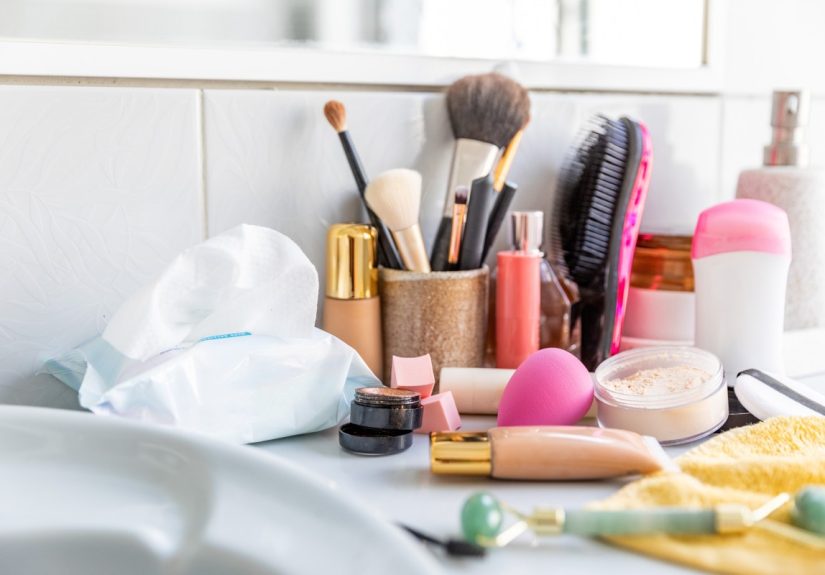
Your bathroom counter wants to be helpful. It’s right thereat arm’s reachlike a loyal sidekick holding your toothbrush, skincare, and that one hair tie you’ve been “saving” since 2019. The problem? Your bathroom counter is also the most chaotic microclimate in your house: steamy, splashy, and occasionally subject to airborne surprises every time someone flushes. In other words: it’s not a shelf. It’s a splash zone.
Below is what dentists, dermatologists, cleaning pros, and public health guidance collectively agree on: the bathroom counter is a terrible long-term home for anything that needs to stay clean, dry, stable, or sterile. (So… a lot of things.)
Why the bathroom counter is a product graveyard
Bathrooms combine three things that quietly wreck your stuff: humidity, temperature swings, and germs. Hot showers create steam that lingers on surfaces and seeps into packaging. Water splashes from sinks hit whatever’s nearby. And flushing can launch microscopic droplets into the air, which then settle onyepcounters and the items on them.
Even if your bathroom looks spotless, the environment itself is rough on anything meant to stay dry, clean, or chemically stable. The counter may look like a harmless slab of quartz, but functionally it behaves like a “community table” for moisture and microbes.
Experts say to never store these items on your bathroom counter
1) Toothbrushes (and anything that goes in your mouth)
Toothbrushes on the counter are convenientuntil you remember they’re basically tiny bristle brooms that scrub your gums. Bathrooms are humid, and moisture helps microbes hang around. Plus, aerosolized particles from flushing and general bathroom use can land on nearby surfaces. If your brush lives out in the open, it’s exposed to all of it.
Better move: Store toothbrushes upright where they can dry fully, away from the toilet if possible. If you share a sink area, keep brushes separated so they don’t “kiss” each other. Counter storage is the least-protective option; a drawer with airflow or a covered setup that still lets it dry is usually safer than leaving it in the splash zone.
2) Makeup you use near your eyes (mascara, liner, shadow sticks)
Eye makeup is the diva of the bathroom: it hates humidity, and it really hates bacteria. Steam and warm air can encourage product breakdown, and bathroom storage increases the odds of contamination over time. Once a product is “off,” your eyes are not the place to test your luck.
Better move: Keep everyday makeup in a cool, dry spot (bedroom vanity, drawer organizer). If you must keep a small kit in the bathroom, choose tightly sealed items, wipe packaging regularly, and be ruthless about replacing anything that changes in smell, texture, or performance.
3) Skincare backups and “open jar” products
That cute open jar of moisturizer looks spa-chicuntil you realize every steamy shower is essentially a humidifier aimed at it. Warm, damp air can shorten shelf life and make products more likely to separate, thin, or feel “weird.” And repeatedly dipping fingers into jars in a bathroom setting adds another layer of contamination risk.
Better move: Store backups outside the bathroom (linen closet, bedroom drawer). For daily use, prefer pumps or squeeze tubes. If you love jars, use a clean spatula and keep the jar in a drawer, not on the counter.
4) Medications and supplements
The classic “medicine cabinet” is a cultural iconbut heat and moisture can reduce medication potency or cause it to degrade sooner than expected. Bathrooms fluctuate in temperature and humidity, especially around showers and sinks. Vitamins can clump, capsules can soften, and tablets can crumble. Even if they still look okay, storage conditions matter.
Better move: Store medicines in a cool, dry location, in their original containers, and follow label directions. A high shelf in a bedroom closet can work well for many households (especially if you need child-safe storage). When in doubt, ask your pharmacist what “room temperature” and “dry place” really mean for your specific meds.
5) Contact lenses and contact lens cases
Contact lens care is all about avoiding contaminationyet bathrooms are full of water droplets, airborne particles, and wet surfaces. Cases that sit on the counter can stay damp longer, which is not what you want for something that touches your eyes. Water exposure is also a known no-go for contact lens hygiene.
Better move: Clean and dry the case properly (following guidance for rubbing/rinsing with solution, emptying, and drying with clean tissue). Store it somewhere dry rather than letting it live permanently next to the sink.
6) Jewelry, watches, and small accessories
Moisture is not jewelry’s love language. Humidity can speed tarnishing, dull finishes, and irritate delicate materials. On top of that, bathroom counters are where small items go to disappeareither down the drain or into the mysterious dimension behind the toilet.
Better move: Keep a small dish in your bedroom or closet. If you remove jewelry in the bathroom, make it a “pit stop,” not a parking spot: take it off, then move it immediately to a dry storage box.
7) Razors (especially loose blades) and shaving tools
A wet razor on a counter is basically an RSVP for rust, dulling, and bacterial growth. Add the possibility of someone knocking it into a sink full of water, and you’ve got the world’s least fun surprise.
Better move: Store razors in a holder that lets them dry fully (not a puddle-prone ledge). Keep spare blades in a dry drawer. If you shave in the shower, use a shower-safe caddy, then dry the razor afterward.
8) Perfume and fragrance
Fragrance is chemistry in a bottle. Heat, light, and humidity can shift scent over timeturning “soft vanilla” into “why does this smell like regret?” Bathrooms can get warm, and counters often sit under bright lights. Not ideal.
Better move: Store fragrance in a cool, dark place (dresser drawer, closet shelf). Keep only what you use daily outand even then, away from steam.
9) Makeup brushes, sponges, and beauty tools
Brushes and sponges love to hold onto moistureand moisture plus warmth is how you get that “this sponge feels… questionable” moment. Tools left on the counter also collect dust and whatever settles out of the bathroom air.
Better move: Let tools dry completely after washing, then store them in a closed or semi-closed organizer in a dry room. If you keep brushes in the bathroom, at least keep them in a drawer and wash them on a schedule that doesn’t rely on wishful thinking.
10) Cotton balls, cotton swabs, and anything “open in a jar for aesthetics”
Pinterest loves the clear apothecary jar. Germs also love itbecause open containers invite dust, splashes, and bathroom air to mingle with items you’ll use on your face, ears, or nails. If the jar has no lid, it’s basically a welcome mat.
Better move: If you want the pretty jar look, choose containers with lids. Or keep these supplies in a drawer organizer and let your bathroom counter be a calm, boring surface (which is the highest compliment a bathroom counter can receive).
11) Nail polish, remover, and press-on supplies
Nail polish doesn’t love heat swings; it can thicken, separate, or get gloopy faster in warm environments. Remover and other solvents are also better stored safely away from heat sources and out of reach of kids or pets.
Better move: Store nail items in a cool drawer or a small case you can pull out when needed. Bonus: you’ll stop “accidentally” buying the same shade of mauve because you forgot you already own five.
12) Hair tools and plugged-in appliances (dryers, straighteners, electric trimmers)
Bathrooms and electricity require respect. Tools left on counters can fall into sinks or get splashed. Cords can snag. And a hot tool set down on a cluttered counter can scorch surfacesor worse, make contact with water.
Better move: Unplug after use, let tools cool, then store them in a heat-safe pouch or drawer. If you use hair tools in the bathroom, make sure outlets are protected appropriately (like GFCI-protected outlets) and keep appliances far from water.
13) Towels, washcloths, loofahs, and sponges (when they “live” on the counter)
Anything that stays damp on a bathroom counter becomes a moisture buffet. Washcloths left in little piles can develop odors quickly. Loofahs and sponges can harbor bacteria if they don’t dry fully between usesespecially in humid bathrooms.
Better move: Hang towels and cloths so air can circulate. Store extras in a linen closet. For loofahs, choose storage that allows full drying (and replace them regularlyyour nose will confirm when it’s time).
A smarter “countertop menu” (what can stay)
If your goal is a cleaner bathroom and longer-lasting products, treat your counter like a restaurant menu with a strict chef: limited options, only the daily essentials, and nothing that spoils in humidity.
- Okay to keep out: hand soap (pump), a small hand lotion (pump), and a tissue boxitems in closed packaging that you wipe down.
- Better in a drawer: toothbrushes, makeup, skincare jars, razors, contact lens gear, jewelry, and backups of anything.
- Counter rule of thumb: if it touches your eyes, mouth, skin, or bloodstream, it deserves better than a humid counter next to a sink.
Small upgrades help: a lidded container for daily items, a drawer organizer for categories, and a “reset routine” (30 seconds each night to clear the counter). Your morning self will feel personally supported.
Real-life bathroom counter stories (so you don’t have to learn the hard way)
People don’t usually change bathroom habits because of an article. They change because something gross, expensive, or mildly humiliating happensand the bathroom counter is often the leading actor in that origin story.
One common tale: the “mystery mascara” incident. Someone keeps mascara and eyeliner on the counter because it’s convenient. The bathroom gets steamy daily. The products start performing poorlyclumping, flaking, smelling a little offso they “fix” it by pumping the wand more. A week later, their eye is irritated, then red, and suddenly they’re googling “is it normal for mascara to betray you?” Dermatologists’ advice about replacing eye makeup starts sounding less like nagging and more like a life philosophy.
Another classic is the “vitamin confetti” situation. A bottle of supplements sits on the counter, right where it’s easy to remember. Over time, the capsules get tacky, the tablets chalk up, and the contents clump from humidity. The label still says the product is fine until its expiration date, but it looks and feels wrong. People end up tossing the bottle, buying a replacement, and learning that “cool, dry place” was not poetic language. It was literal instruction.
Then there’s jewelry: rings set near the sink “just for a second.” A phone buzzes. Someone washes their hands. The ring slides, clinks, and performs a flawless swan dive toward the drain like it’s auditioning for a plumbing commercial. Even when the ring is recovered, water exposure and bathroom humidity can dull finishes and speed tarnish. The lesson tends to stick: a bedroom dish saves money, time, and your blood pressure.
Contact lens cases have their own horror genre. People rinse the case quickly, leave it on the counter, and screw the caps on while it’s still dampbecause it feels “clean enough.” The case never fully dries, and the bathroom environment keeps it moist. Eventually, the case starts to look cloudy or feel slick. Even if nothing dramatic happens, the “I’m not risking my eyesight” realization arrives, and a new habit forms: dry it properly and store it somewhere drier than the splash zone.
Razors, too, quietly punish neglect. Left on the counter, they rust faster and feel dull sooner. People press harder to compensate, then wonder why shaving suddenly feels like they’re exfoliating with a rake. Moving the razor to a holder that dries properly sounds boringuntil you’re buying replacement cartridges early and nursing surprise razor burn.
And finally: the hair-tool near-miss. Plenty of people have a moment where a dryer cord snags, a straightener slides, or an appliance gets splashed near the sink. Nothing bad happens, but the “that could’ve been awful” adrenaline spike is unforgettable. That’s usually the day the counter gets cleared, cords get managed, and appliances get unplugged like they should have been all along.
The thread connecting all these stories isn’t perfectionismit’s realizing the bathroom counter is a high-risk environment for anything you want to keep clean, stable, or safe. Once you treat the counter like a temporary staging area instead of long-term storage, your products last longer, your space looks calmer, and you stop losing tiny valuables to the sink. It’s a win that doesn’t require a full remodeljust a new “home base” for the items that deserve better.