Table of Contents >> Show >> Hide
- What “SaaStr Plus” Really Means Here (And What It Doesn’t)
- Why Flipboard Is Weirdly Perfect for SaaS People
- What You Get When You Follow SaaStr-on-Flipboard
- How to Follow SaaStr-on-Flipboard (Without Overthinking It)
- The “Plus” Part: Turn Reading Into a Team Advantage
- Examples: How Different SaaS Roles Use the Feed
- How to Avoid Information Overload (While Still Staying Sharp)
- FAQ
- Conclusion: The Simplest Way to Upgrade Your SaaS Learning Habit
- Experiences Related to “Follow SaaStr-on-Flipboard for ‘SaaStr Plus’” (Extra Depth)
If you’ve ever told yourself, “Tonight I’ll finally catch up on SaaS reading,” and then woke up three days later buried under 47 open tabs, a podcast queue longer than a runway, and a Slack thread titled “Must-Read GTM Stuff!!!”… congrats. You are a normal person in B2B software.
The good news: you don’t need more content. You need better sorting. That’s the whole idea behind
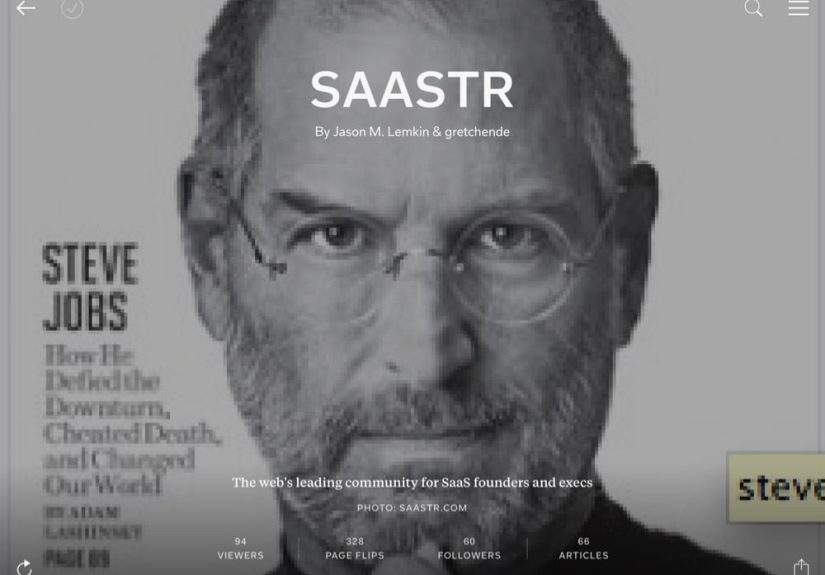
SaaStr-on-Flipboarda simple, scroll-friendly way to follow the best SaaS founder and operator content in one place, and to get a little “Plus” layer of discovery without turning your brain into a notification center.
What “SaaStr Plus” Really Means Here (And What It Doesn’t)
Let’s clear up the naming before the internet gets creative: “SaaStr Plus” in this context is best understood as
an extra stream of curated SaaS contenta way to add more of the good stuff (founder lessons, GTM breakdowns,
hiring war stories, metrics deep dives) into your regular SaaStr reading habit.
In fact, the original idea was described as an experiment: use Flipboard to integrate more high-quality SaaS founder content into the main SaaStr stream, including content from SaaStr’s Quora universe. Think of it as SaaStr, with an extra scoop of “things you actually want to read.” Not “more noise,” but “more signal.” (A rare and precious thing.)
Also: this is different from paid training-style offerings (like structured lessons for teams). Those are a separate lane. “SaaStr Plus” via Flipboard is about curation, discovery, and habit.
Why Flipboard Is Weirdly Perfect for SaaS People
Flipboard has always leaned into the “magazine” metaphor: stories grouped by interest, designed for reading, not doomscrolling.
Instead of one mega-feed that mashes together everything from pricing strategy to someone’s lunch, Flipboard organizes content into
Magazinesand even “Smart Magazines” that tailor what you see around a specific passion (like SaaS growth, cloud, AI, or startups).
That structure matters for SaaS operators because SaaS learning is rarely one-and-done. You’re constantly revisiting the same big buckets:
acquisition, activation, retention, expansion, pricing,
sales execution, customer success, hiring, and fundraising.
Flipboard makes it easier to keep those buckets separatelike having labeled drawers instead of one terrifying junk drawer of “reads.”
It’s also built for “reading in the cracks”
Most SaaS learning doesn’t happen in a silent library while you sip artisanal productivity. It happens between meetings, on a commute,
after you finally get your kid to sleep, or during that five-minute window where your calendar says “free” and your Slack says “LOL.”
Flipboard is designed for those moments: quick scanning, clean formatting, and easy saving. If your current system is “email myself links and never open them,”
you are about to feel personally attackedin a helpful way.
What You Get When You Follow SaaStr-on-Flipboard
Following SaaStr on Flipboard is basically subscribing to a curated “operator’s shelf” of SaaS content. The goal isn’t to replicate SaaStr’s website.
The goal is to make it easier to absorb the broader SaaS conversation: founders sharing real lessons, investors explaining patterns, operators dissecting what worked,
and product/GTM teams comparing notes on what’s changing this year.
Expect a mix like this
- Founder playbooks (0→1, 1→10, 10→50… and the “we accidentally grew too fast” chapters)
- GTM tactics (ICP, positioning, outbound/inbound, sales hiring, enablement, pipeline math)
- Pricing & packaging (why your “simple pricing” becomes three tiers and a spreadsheet anyway)
- Retention & expansion (NRR, churn prevention, onboarding fixes that actually move the needle)
- Hiring & leadership (managers, exec teams, culture, comp, when to upgrade roles)
- Metrics sanity checks (what to track, what to ignore, what investors care about vs. what customers feel)
- AI + B2B (what’s real, what’s hype, and what your buyers will pay for)
The sneaky benefit: when your feed is curated around SaaS outcomes, you’re less likely to spend 18 minutes reading something that’s emotionally spicy but operationally useless.
(Yes, I’m looking at you, “hot takes” that don’t include a single example, framework, or number.)
How to Follow SaaStr-on-Flipboard (Without Overthinking It)
The simplest move is just to follow the SaaStr magazine/profile on Flipboard so new stories show up naturally in your reading flow.
If you want the direct path, use the SaaStr Flipboard magazine link:
https://flipboard.com/@esignature/saastr-s159bteny
A “no-regrets” setup in 3 minutes
- Follow SaaStr on Flipboard so it becomes a default feed.
- Follow 3–5 adjacent topics (e.g., B2B SaaS, startups, product-led growth, sales, AI, venture capital).
- Create one personal Magazine called something like “SaaS Plays I’ll Actually Use” and save the best pieces there.
That last step is important. A personal Magazine turns “interesting” into “actionable,” because you can come back later and say,
“Okay, we’re revisiting pricingwhat did I save that’s relevant?” Instead of searching your browser history like an archaeologist.
The “Plus” Part: Turn Reading Into a Team Advantage
Lots of teams consume content. Fewer teams convert it into decisions. The difference is a light process that doesn’t feel like homework.
Here’s a simple workflow that works especially well with a curated stream like SaaStr-on-Flipboard:
1) The weekly 20-minute “signal sweep”
Pick one time each weekFriday afternoon or Monday morningwhen one person scans the best items and saves:
one for growth, one for product, one for GTM, one for hiring/leadership.
Four stories. That’s it. You’re building a steady drip of learning, not writing a dissertation.
2) The “two-sentence takeaway” rule
If a story is worth sharing internally, it’s worth summarizing in two sentences:
(1) what it says, (2) what we’ll do (or test) because of it. This forces relevance. It also prevents the classic problem where someone shares
a link, everyone reacts with a fire emoji, and nothing changes.
3) The “pilot, don’t debate” default
SaaS teams can debate frameworks forever. A better move: run a small pilot. Try the onboarding tweak for one segment. Test the pricing page change for one plan.
Adjust outbound messaging for one ICP. Curated content becomes powerful when it triggers experiments, not arguments.
Examples: How Different SaaS Roles Use the Feed
Example 1: The early founder (0 to $1M ARR) avoiding random-walk growth
Early-stage founders often bounce between tactics like a pinball: today it’s outbound, tomorrow it’s partnerships, next week it’s SEO, then it’s “maybe we need ABM.”
A curated SaaS feed helps you notice patterns: what successful founders did first, what they ignored, and what they only tackled after traction.
A good “Plus” habit here is to save stories into three mini-buckets: ICP, pricing, and sales motion.
If you can stabilize those, the rest gets dramatically easier.
Example 2: The GTM leader (around $3M–$20M ARR) trying to create repeatability
This is where content is either rocket fuel or pure distraction. You don’t need inspiration; you need repeatability:
consistent pipeline creation, predictable conversion rates, and a clear segmentation strategy.
The best use of a curated feed is to build a “GTM operating system” magazine: hiring plans, quota and comp philosophies, enablement routines,
and real examples of how teams move from founder-led hustle to a real machine.
Example 3: The product leader building for retention and expansion
Product leaders often get flooded with feature ideas and not enough clarity on what drives retention.
A strong SaaS content stream helps you spot recurring themes: onboarding that shortens time-to-value, in-product nudges that drive habit,
and expansion paths that feel natural (not like a surprise fee).
Save stories that contain specific mechanismsnot just “retention matters.” Look for “we changed X, measured Y, and it moved Z.”
Those are the pieces that translate into product decisions.
How to Avoid Information Overload (While Still Staying Sharp)
Here’s the paradox: staying current helps you move faster, but too much input makes you move slower.
The solution isn’t quitting contentit’s creating guardrails.
Try these guardrails
- Time-box reading: 10–15 minutes at a time beats a two-hour binge you’ll regret.
- Read with a question: “How do we improve activation?” beats “Let’s see what’s new.”
- Save only what you’ll use: If you can’t name where it applies, don’t hoard it.
- Rotate themes weekly: Week 1 = pipeline, Week 2 = retention, Week 3 = hiring, Week 4 = pricing.
Think of it like training: consistency wins. Random intensity just makes you sore.
FAQ
Is Flipboard free?
Flipboard has a free app and a web experience. You can follow Magazines and topics, and you can curate your own Magazines.
(Some publishers may have paywalls on their own sites, but that’s separate from Flipboard itself.)
Do I need to be on an iPad?
No. Flipboard works across devices, and many Magazines can be read on the web as well.
The “magazine” feel shines on tablets, but the valuecuration and organizationworks anywhere.
Is this replacing SaaStr’s site, newsletter, or podcast?
Not really. It’s more like adding a layer: a curated stream that can pull in adjacent SaaS content and reduce the friction of discovery.
If you already read SaaStr, this makes it easier to keep the broader ecosystem in view.
Conclusion: The Simplest Way to Upgrade Your SaaS Learning Habit
Following SaaStr-on-Flipboard for “SaaStr Plus” is a small change with a surprisingly large payoff:
you get a cleaner reading experience, better discovery, and a path to turn “I should read more” into “we shipped something better this month.”
If you’re serious about building, scaling, or operating a B2B software company, your learning system matters.
Follow the feed, save the best pieces, andmost importantlyconvert what you learn into tiny experiments. That’s where the compounding happens.
Experiences Related to “Follow SaaStr-on-Flipboard for ‘SaaStr Plus’” (Extra Depth)
Founders and operators often describe the same moment of realization: they weren’t short on advicethey were short on a workflow.
The internet is generous with opinions, but it rarely hands you a labeled box that says, “Here’s what matters for your stage, your motion, and your market.”
A curated stream like SaaStr-on-Flipboard becomes valuable when it changes what your day feels like: less frantic searching, more intentional learning.
One common experience is the “meeting-to-meeting squeeze.” You’ve got 12 minutes before a pipeline review, you want one sharp idea to bring to the table,
and you don’t want to gamble on random search results. A Flipboard-based feed is perfect for that. You skim headlines that are already SaaS-shaped,
pick one item that matches your current problem (say, improving outbound reply rates or tightening your ICP), and you walk into the meeting with a concrete angle:
“Let’s test a narrower segment” or “Let’s update the first-touch message to match the buyer’s actual job-to-be-done.”
It’s not magicalit’s just organized enough to be useful in real life.
Another recurring experience shows up inside teams: the difference between “content as entertainment” and “content as leverage.”
Many leaders have a channel where people drop links. It starts with good intentions and ends with a graveyard of unread wisdom.
Teams that get more value tend to adopt a lightweight ritual: a rotating owner, a tiny weekly share-out, and one decision or experiment that comes from it.
When the input stream is already curated (like “SaaStr Plus”), the ritual becomes easier because you’re starting with higher-quality raw material.
People are more willing to summarize something that feels relevant. And relevance is the only currency that spends in a busy org.
There’s also the “operator confidence” effect. When you’re scaling, you constantly wonder:
“Are we behind? Are we doing this wrong? Is everyone else secretly better at sales hiring than we are?”
A steady diet of credible operator stories and frameworks helps normalize the messy parts of growth.
You see that churn spikes happen. You see that pricing changes are uncomfortable. You see that hiring the first VP is rarely perfect on the first try.
The result isn’t blind reassuranceit’s grounded confidence: you’re not alone, and there are patterns you can follow without copying someone else’s company.
Finally, a very practical experience: curated reading helps people stop confusing “busy” with “informed.”
When your feed is scattered, you can consume a lot and retain almost nothing. When your feed is structured, you start building a mental library:
Oh, this is that segmentation framework again. This is another example of time-to-value being the real onboarding metric.
This is why mid-market sales needs a different motion than SMB. Those repeats aren’t boringthey’re how you learn.
Over time, “SaaStr Plus” isn’t just content you read. It becomes a set of references you can pull from when you’re making decisions under pressure.
That’s the best kind of experience: not more reading, but better thinking.