Table of Contents >> Show >> Hide
- What Makes a Storage Label Actually Work (Not Just Look Cute)
- Choose Your Label Style: Printable, Tape, Tags, or “Whatever Works”
- How to Print and Apply Labels So They Don’t Peel Off in a Week
- Room-by-Room: Label Sets That Make Daily Life Easier
- Where to Find Free Downloadable Label Templates (Without Falling Into a DIY Rabbit Hole)
- The “Don’t Over-Label Your Life” Rule (Yes, That’s a Thing)
- Copy-and-Paste Label Pack: A Ready List You Can Turn Into a Download in Minutes
- Conclusion
If your home had a “settings” menu, labels would be the toggle called Reduce Chaos.
They don’t magically make clutter disappear (sorry), but they do something surprisingly powerful:
they remove the tiny daily decisions that turn “put it away” into “I’ll do it later.”
When every bin, basket, and shelf has a clear job title, you stop playing hide-and-seek with your stuff
and start living like a person who totally has it together (even if your sock drawer says otherwise).
The best part? You don’t need a custom Cricut empire or a label-maker that looks like it belongs in NASA.
Between free printable templates, editable online designs, and a few smart rules, you can create
free downloadable storage labels that work in every roomkitchen, bathroom, closets, laundry,
office, garage, and beyond.
What Makes a Storage Label Actually Work (Not Just Look Cute)
Labels aren’t décor. They’re instructions for future-you and everyone else who shares your space.
A label system lasts when it’s easy to read, easy to maintain, and
flexible enough to survive real life (kids, roommates, late-night snack raids, and the
mysterious migration of scissors).
1) Clarity beats creativity
“Misc.” is a trap. “Stuff” is worse. Use labels that answer: What goes here? and Where does it go back?
Think broad-but-specific categories like Snacks, Baking, First Aid,
Pet Supplies, or Winter Accessories.
2) Consistency is your secret weapon
Pick a naming style and stick with it. If you label one bin “Backstock,” don’t label another “Extras,”
another “Overflow,” and a fourth “Secret Stash.” Your brain will treat that like four different tasks.
Choose one wordlike Overstockand use it everywhere.
3) Durability matters (because water, heat, and toddlers exist)
Kitchen labels face steam, oil mist, and sticky hands. Laundry labels face humidity. Garage labels face dust.
Choose materials accordingly: laminated paper, waterproof label tape, or removable vinyl depending on the zone.
Choose Your Label Style: Printable, Tape, Tags, or “Whatever Works”
“Free downloadable labels” can mean different formats. The best choice depends on the container
and how often the contents change.
Printable labels (paper or sticker sheets)
- Best for: pantry canisters, drawer organizers, bathroom bins, office files.
- Why: fast, cheap, easy to replace, easy to match your home style.
- Pro tip: print on full-sheet sticker paper for a clean look, or cardstock + tape for budget-friendly durability.
Label-maker tape (like classic laminated tape)
- Best for: long-term labelsgarage totes, tool bins, cables, file boxes, seasonal storage.
- Why: crisp, consistent, often water-resistant, and very readable from a distance.
- Pro tip: use larger tape widths for big bins so you’re not squinting like you lost your glasses again.
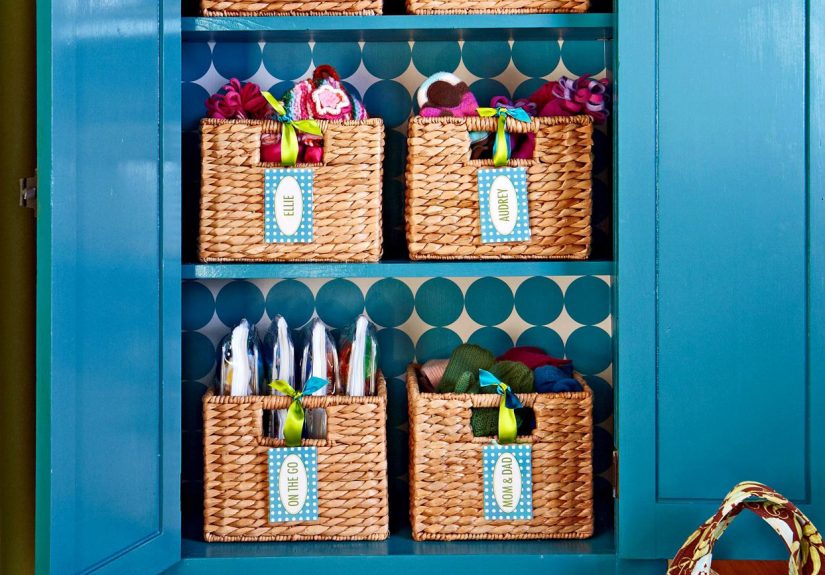
Hang tags and bin clips
- Best for: wire baskets, fabric bins, toy cubbies, open shelving.
- Why: removable and flexibleswap the tag when the bin’s purpose changes.
- Pro tip: use a tag + a quick “inside inventory” note if the bin is deep (e.g., “Craft Paper: 12×12 + rolls”).
Chalkboard or dry-erase labels
- Best for: rotating pantry items, meal prep, leftovers, freezer containers, back-of-jar notes.
- Why: rewrite without reprinting. Perfect for dates, “use-first” reminders, and cooking notes.
How to Print and Apply Labels So They Don’t Peel Off in a Week
Step 1: Pick the right material
- Low-humidity zones: cardstock + clear tape or label pockets are usually enough.
- Kitchen + bathroom: waterproof sticker paper, laminated sheets, or wipeable vinyl.
- Garage + attic: label-maker tape or laminated tags (heat + dust are not paper’s best friends).
Step 2: Clean the surface first
Labels stick to clean, dry surfacesnot to mystery film, lotion residue, or that invisible kitchen grime
that appears the moment you open a cabinet. A quick wipe with soap and water (fully dry) or rubbing alcohol
(test first on delicate finishes) helps labels last.
Step 3: Place labels where you’ll actually see them
Front-facing labels win. Side labels vanish the moment you stack bins or slide baskets into a shelf.
If something sits above eye level, angle the label slightly downward or place it lower on the bin’s face.
Step 4: Make it readable from the “normal human distance”
If you have to pick up the bin to read the label, the label is auditioning to be ignored.
Big bins get big text. Small jars get smaller labels. Keep fonts simple and high-contrast.
Room-by-Room: Label Sets That Make Daily Life Easier
Below are practical, real-home label ideasdesigned for the way people actually live.
Use them as-is, or customize categories to match your household (because “Protein Bars” might be a lifestyle
in one house and a myth in another).
Kitchen & Pantry Labels
Pantry organization works best when categories match how you cook and snack. Start with broad zones,
then add a “backstock” or “overstock” bin if you buy in bulk.
- Snacks
- Breakfast
- Baking
- Pasta & Grains
- Canned Goods
- Spices
- Oils & Vinegars
- School Lunch
- Gluten-Free (or other dietary category)
- Overstock
- Use First
Fridge & Freezer Labels
Labels in cold storage are less about aesthetics and more about reducing food waste and “What is this container?”
moments. Use wipeable labels for dates and rotating leftovers.
- Leftovers (Date)
- Meal Prep
- Kids’ Snacks
- Grab & Go
- Sauces
- Cheese & Deli
- Freeze First
- Broth / Stock
- Breakfast Sandwiches
- Smoothie Packs
Bathroom Labels
Bathrooms become chaos when “a little bit of everything” lives in every drawer. Labels help divide by function,
not by brand (brands change; functions don’t).
- First Aid
- Everyday Meds
- Hair Care
- Skin Care
- Dental Care
- Feminine Care
- Travel Toiletries
- Refills
- Guest Supplies
- Cleaning
Laundry Room Labels
Laundry goes smoother when supplies are grouped by job: wash, treat, fold, and finish.
Bonus points for a clearly labeled “lost socks” bin (because it’s basically a wildlife sanctuary).
- Detergent
- Stain Removers
- Dryer Sheets
- Delicates
- Lint Roller
- Sewing / Mending
- Cleaning Cloths
- Ironing
- Lost Socks
- Donate
Bedroom & Closet Labels
Closets stay organized when labels support your habits: daily items at eye level, occasional items higher up,
and seasonal items in clearly labeled bins. This is where labels earn their keep.
- Work Outfits
- Casual
- Dressy
- Accessories
- Belts
- Hats
- Winter (Gloves / Scarves)
- Summer (Swim / Beach)
- Handbags
- Shoe Care
Kids’ Room & Toy Labels
The best toy labels are visual and simple. If kids can’t read yet, add icons or pictures alongside the words.
Keep categories broad enough for quick cleanups.
- Blocks
- Cars
- Dolls
- Stuffies
- Art Supplies
- Books
- Puzzles
- Games
- Dress-Up
- Outdoor Toys
Home Office Labels
Office labels reduce paper piles and make supplies findable when you’re mid-task.
Keep it functional: “Taxes” beats “Important Adulting.”
- Bills
- Taxes
- Receipts
- Warranties
- Medical
- School
- Projects
- Mail (To Sort)
- Office Supplies
- Cables / Chargers
Entryway / Mudroom Labels
This space is where clutter sprints into your home at full speed. Labels slow it down.
Give every “drop zone” a name.
- Keys
- Wallets
- Sunglasses
- Dog Walking
- Umbrellas
- Hats & Gloves
- School Backpacks
- Return to Store
- Donate
- Out the Door
Garage / Basement / Attic Labels
These areas need labels most because they’re often out of sight and packed with opaque bins.
Use big, bold text and add a quick “top items” note if the bin contains many small things.
- Holiday Decor (Winter)
- Holiday Decor (Fall)
- Camping
- Tools
- Paint Supplies
- Auto
- Sports
- Garden
- Memories
- Donate / Sell
Craft / Hobby Labels
Craft storage is happiest when it’s labeled by activity: “Watercolors” and “Scrapbooking” beat “Random Art Stuff.”
- Paper
- Vinyl
- Paint
- Brushes
- Glue / Tape
- Scissors
- Markers
- Sewing
- Beads
- Works in Progress
Where to Find Free Downloadable Label Templates (Without Falling Into a DIY Rabbit Hole)
You have three realistic options for getting free downloadable storage labels that look polished:
(1) editorial-style printables from home-and-garden publications, (2) brand template libraries designed for home printers,
and (3) drag-and-drop design platforms where you can customize and export in minutes.
-
Home & décor publishers often offer printable label packs you can customize for common household zones
(think pantry, toys, seasonal storage, and family gear). -
Template libraries from label brands let you match designs to standard label sizes, which is great
if you want the “print, peel, stick” life. - Online design tools make it easy to edit fonts, colors, and sizes, then download as PDF for printing.
Whichever route you choose, the winning formula is the same:
pick a consistent style, customize the wording to match your home, and print in a durable format for the room.
The “Don’t Over-Label Your Life” Rule (Yes, That’s a Thing)
Labels are supposed to make life easiernot turn your pantry into a museum exhibit where guests whisper,
“Do we… touch… the quinoa?” A few smart guardrails keep your system helpful, not fussy:
- Declutter first. Labels don’t fix overflow; they just name it.
- Label categories, not every single item. You don’t need a label for “Single Rubber Band.”
- Stay flexible. If a bin’s purpose changes often, use tags or wipeable labels.
- Measure before you print. A label that doesn’t fit is just expensive confetti.
- Revisit seasonally. A five-minute review every few months prevents “label drift.”
Copy-and-Paste Label Pack: A Ready List You Can Turn Into a Download in Minutes
Want the fastest path to a “downloadable” label set? Copy the labels below into your preferred template tool,
drop them into a pre-sized layout (round, rectangle, tag), and export as a PDF.
This gives you a customized label pack without starting from scratch.
| Room | Label Text | Best Label Type | Suggested Size |
|---|---|---|---|
| Pantry | Snacks / Baking / Pasta & Grains / Canned Goods / Overstock / Use First | Printable sticker or laminated tags | 2"x3" or 2.5"x4" |
| Bathroom | First Aid / Hair Care / Skin Care / Dental Care / Refills | Water-resistant printable | 2"x2" or 2"x3" |
| Laundry | Detergent / Stain Removers / Delicates / Lost Socks / Donate | Printable + laminate or label tape | 2.5"x4" |
| Kids | Blocks / Art Supplies / Books / Puzzles / Games / Dress-Up | Tags or bin clips | 3"x4" tags |
| Garage | Tools / Auto / Garden / Camping / Holiday Decor / Paint | Label-maker tape | 1" tape width |
| Office | Taxes / Bills / Receipts / Warranties / Projects / Cables | Printable or label tape | 1"x3" or 2"x3" |
Conclusion
A labeled home isn’t about perfectionit’s about making your space easier to use on your busiest day.
Start small (one drawer, one shelf, one bin), pick a simple style, and label categories that match how you live.
Use printable labels where things change often, label-maker tape where you need durability, and tags when you want flexibility.
Most importantly: let labels serve your life, not the other way around.
of Real-Life Labeling Experience (What Actually Happens After You Label Everything)
The first time you label a room, it feels like you just unlocked a new adult skill. You stand back, admire your work,
and briefly consider starting an inspirational Instagram account called “BinsWithBenefits.” Then real life shows up
with muddy shoes, a missing charger, and a kid yelling, “WHERE’S MY THING?!” That’s when you learn the difference
between labels that look good and labels that actually work.
My biggest “aha” moment came after labeling a pantry. I made beautiful categoriesSnacks, Baking, Pasta, Canned Goods
and felt unstoppable. Two weeks later, I discovered the secret second pantry located behind the first pantry. You know it:
the back row where duplicates go to retire. The fix wasn’t more containers. It was one humble label: Overstock.
That single word saved me from buying a third jar of paprika I apparently collect like rare coins.
Then there was the bathroom. I labeled a bin “Skin Care” and expected calm, spa-like energy. Instead, I learned that
“Skin Care” is a broad term that can include everything from sunscreen to an unopened face mask from 2021.
I split it into Daily and Extras, and suddenly the morning routine stopped feeling
like a scavenger hunt. The lesson: if a category becomes a junk drawer with a fancy name, it needs a second label.
The laundry room taught me the most about label placement. I put labels on the side of bins because it looked sleek.
Unfortunately, “sleek” is also code for “invisible once the bins are stacked.” After one week of asking,
“Which one is stain remover again?” I moved labels to the front. Now the system is so obvious that even someone who
claims they “don’t see mess” can put things back correctly. (Yes, that person lives in many households.)
Kids’ toys? Labels workif they’re simple. I once labeled a bin “Magnetic Building Tiles (Assorted).” That label lasted
exactly as long as it took a child to dump the bin on the floor. When I switched to “Tiles” (plus a little picture icon),
cleanup became faster because it matched how kids think. The label wasn’t for me; it was for the tiny tornado who needed
a quick win.
Finally, the garage: I learned to go bigger than I thought. Small labels on giant bins are basically whispering into a storm.
Big, bold labels“CAMPING,” “TOOLS,” “HOLIDAY”saved time and saved my back because I stopped opening every lid like I was
auditioning for a game show called “What’s In This Tote?” If I had to sum it up: label for the moment you’re tired,
in a hurry, and mildly annoyed. That’s the real test. If the label helps then, it’s a keeper.