Table of Contents >> Show >> Hide
- What Is Robin Roberts’ New TV Project?
- Why This Project Hits Differently
- Why 'GMA' Fans Are Saying They’re Thankful
- The Katrina Context Matters
- How the Special Fits into Robin Roberts’ Expanding TV Career
- What Viewers Can Expect from the Special
- Why This Moment Matters for TV Audiences
- Related Experiences: Why This Project Lands So Deeply With Viewers
- Conclusion
- SEO Tags
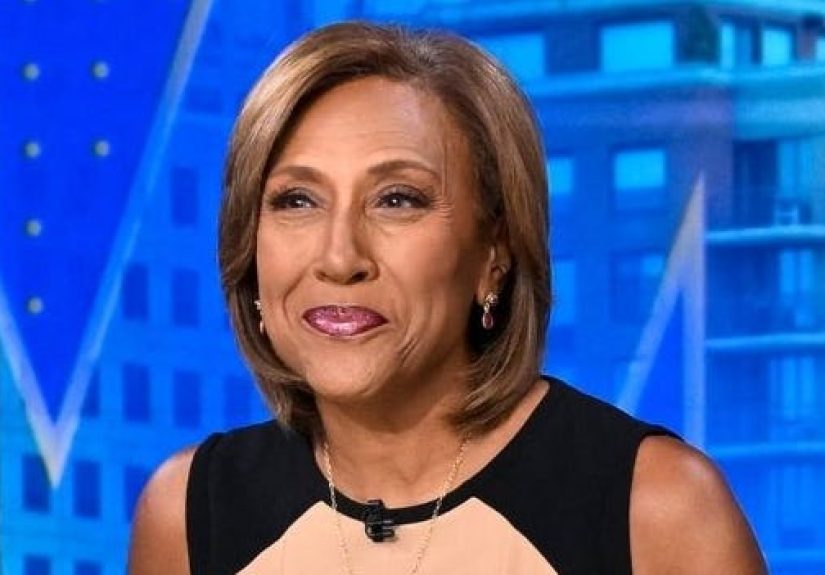
Robin Roberts has spent decades doing something television rarely pulls off gracefully: being polished without feeling plastic. She can deliver hard news, share a laugh before your coffee kicks in, and pivot into a deeply personal story without making it seem like emotional theater. So when Good Morning America fans started buzzing about her latest TV project, the reaction was not just excitement. It was gratitude.
That response makes sense once you look at the project itself. Roberts’ recent special, Hurricane Katrina: 20 Years After the Storm, is not a random celebrity side quest with a fancy promo package. It is a deeply personal return to the Gulf Coast, where Roberts revisits the storm that changed the region and marked one of the most emotional chapters of her career. For longtime viewers, the special feels less like a programming update and more like a full-circle moment.
And that is exactly why so many fans said they were thankful. They were not just cheering a TV personality with a new credit. They were responding to a project with heart, history, and real human stakes.
What Is Robin Roberts’ New TV Project?
The project that sparked the reaction is Hurricane Katrina: 20 Years After the Storm, an ABC News special produced with ABC News Studios and Roberts’ own Rock’n Robin Productions. In it, Roberts returns to New Orleans and her hometown of Pass Christian, Mississippi, to examine how the Gulf Coast has rebuilt since Hurricane Katrina devastated the region in 2005.
That setup alone is powerful. Roberts is not parachuting into an unfamiliar story because it happens to be timely. She is going back to a place that shaped her, a place where the damage was personal, visible, and unforgettable. Twenty years after Katrina, she revisits the same landscape with the perspective of both a journalist and a daughter of the Gulf Coast.
The special also widens its lens beyond destruction. Yes, the storm’s devastation is part of the story, and it should be. But the program also focuses on resilience, culture, rebuilding, and memory. That means viewers get something richer than a disaster recap. They get a story about what remains, what returns, and what never quite leaves.
Why This Project Hits Differently
Robin Roberts has covered major stories for years, but Hurricane Katrina has always occupied a different emotional category in her public life. Back in 2005, viewers watched her report from the Gulf Coast while trying to confirm that her own loved ones were safe. That raw moment became one of the defining memories of her career because it showed the human being behind the anchor desk.
This new special revisits that emotional history without turning it into spectacle. Instead, Roberts uses the anniversary to ask bigger questions: What does recovery really look like after two decades? Which communities were rebuilt, and which ones are still waiting? How do people hold onto culture when so much has been physically erased?
That is part of what makes the project feel meaningful rather than merely marketable. It is rooted in lived experience. Roberts is not performing empathy for the camera. She already has the scars, the memories, and the connection.
Why ‘GMA’ Fans Are Saying They’re Thankful
The word “thankful” may sound small, but in this context it carries a lot of weight. Fans were not just applauding Roberts for staying busy. They were grateful that she used her platform to spotlight a part of the Katrina story that can sometimes be overshadowed, especially along the Mississippi Gulf Coast.
For many viewers, the gratitude seems to come from three places. First, Roberts brings trust. Morning-show audiences feel like they know her, and they believe she will handle serious material with care. That matters when the subject is a disaster that still hurts. Second, she brings personal credibility. Her connection to Pass Christian gives the story emotional grounding. Third, she brings persistence. Roberts has long shown that she does not treat major events as one-day headlines.
In other words, fans are thankful because the project feels earned. It is not opportunistic anniversary television. It is a journalist going home and asking the audience to remember that recovery is not tidy, quick, or evenly distributed.
A Story Bigger Than Nostalgia
There is also something refreshing about a special that does not rely on cheap nostalgia. The anniversary angle could have been handled like a scrapbook: here is old footage, here is sad music, here is a reminder that time flies. Roberts appears to be aiming higher than that. The special connects the past to present-day conversations about disaster response, displacement, inequality, and the cultural endurance of communities that refuse to disappear.
That gives the project relevance beyond fans of GMA. People who lived through Katrina, people who study disaster recovery, and people watching newer tragedies unfold can all see something in it.
The Katrina Context Matters
It is impossible to understand the emotional charge around this special without understanding the scale of Hurricane Katrina itself. The storm became one of the deadliest and costliest hurricanes in U.S. history. It caused immense loss of life, devastating storm surge, catastrophic flooding, and a level of displacement that still echoes through the region.
Mississippi communities such as Pass Christian and Bay St. Louis were hit especially hard by extreme storm surge. New Orleans, meanwhile, became a symbol of national shock, systemic failure, and long-term rebuilding. Two decades later, Katrina is still not just a weather event in the American imagination. It is a story about place, race, class, memory, and who gets to recover fully.
That larger backdrop gives Roberts’ special real substance. Viewers are not only watching an anchor revisit old footage. They are watching a familiar public figure revisit a national wound that remains unfinished.
How the Special Fits into Robin Roberts’ Expanding TV Career
Another reason fans are paying attention is that Roberts’ TV work has grown well beyond the morning desk. In recent years, she has expanded her presence as a producer and host on specials and nonfiction projects. Her deal with ABC News Studios helped formalize that evolution, giving her room to develop documentaries, series, and event programming with more range.
That bigger creative footprint matters because it shows Roberts is not simply maintaining a legacy role at Good Morning America. She is actively shaping what kinds of stories get told under her banner. Her 2025 Hulu docuseries Murder Has Two Faces, for example, examined lesser-known cases that were overshadowed by more famous crimes. That project suggested a clear editorial interest: stories people think they know, stories they do not know enough about, and stories that deserve a second look.
Hurricane Katrina: 20 Years After the Storm fits neatly into that pattern. It revisits a well-known event but pushes viewers to look beyond the headline version. That approach is very Robin Roberts: accessible, compassionate, and sturdier than it first appears.
What Viewers Can Expect from the Special
From what has been publicly shared, the program blends reporting, reflection, and cultural storytelling. Roberts returns to Pass Christian, revisits her high school and meaningful local spots, and speaks with people connected to the region’s long recovery. The special also includes conversations tied to New Orleans’ musical identity, including figures such as Harry Connick Jr., Trombone Shorty, and Branford Marsalis.
That is smart storytelling. Katrina was not only about what was destroyed; it was also about what communities fought to preserve. Food, music, neighborhoods, rituals, and local pride all became part of survival. A project about the Gulf Coast that ignores culture would be like making gumbo without seasoning. Technically possible, maybe. Spiritually wrong, absolutely.
By emphasizing both hardship and resilience, the special seems designed to avoid two common traps. It does not reduce the region to tragedy, and it does not flatten recovery into a feel-good ending. That balance is hard to achieve, which is another reason the audience response has been so warm.
Why This Moment Matters for TV Audiences
Television can still do something powerful when it slows down enough to let a story breathe. In a media culture obsessed with speed, Roberts’ project stands out because it insists that the aftermath matters as much as the event. The floodwaters may have receded long ago, but the emotional and structural consequences did not magically pack up and leave.
That message resonates far beyond Katrina. Viewers today have seen communities across the United States face wildfires, floods, tornadoes, and other disasters. Roberts has spoken about the importance of not just “flying in and flying out” of those stories. This special appears to put that philosophy into practice.
For fans, that is one more reason to be thankful. Roberts is using her visibility not to chase noise, but to create a bridge between public memory and present-day understanding.
Related Experiences: Why This Project Lands So Deeply With Viewers
One reason this special feels bigger than a standard TV announcement is that it taps into experiences many viewers already carry, even if they were never in Mississippi or Louisiana. People know what it feels like to watch a familiar face become the guide through something painful. They know what it means when a broadcaster stops sounding like a broadcaster and starts sounding like a person. Robin Roberts has always been skilled at that balance, but a story like Katrina brings it into especially sharp focus.
For longtime GMA viewers, watching Roberts return to this subject can feel a little like opening a time capsule and a wound at the same time. Some remember seeing her emotional reporting in 2005 and realizing, maybe for the first time, that news anchors are not built out of stainless steel. They are people carrying their own fear, grief, and history while trying to help the rest of us understand what is happening. That memory lingers. So when Roberts revisits Katrina now, viewers are not only responding to a new special. They are responding to the way it reconnects them to a moment when television felt unusually honest.
For Gulf Coast viewers, the experience can be even more layered. There is recognition in seeing places that are often reduced to disaster footage treated as living communities with texture, pride, music, and memory. There is validation in knowing someone with a national platform understands that recovery is not one straight line and definitely not one neat ending. Some people rebuild homes. Some rebuild routines. Some rebuild trust. Some are still rebuilding all three.
Then there is the broader experience of anyone who has lived through a crisis that the rest of the country eventually moved on from. That is where this project likely hits a nerve. Roberts is not just saying, “Remember Katrina.” She is also asking viewers to remember what happens after the cameras leave, after the hashtags fade, and after outside sympathy starts to expire. That is a deeply relatable feeling in modern America, where communities are often expected to recover on a timeline that looks great in a headline and terrible in real life.
There is also something comforting about Roberts herself as the person telling this story. She has a style that can hold sorrow and hope in the same sentence without sounding fake. That is rarer than television executives would probably like to admit. Viewers tend to know when they are being pushed toward inspiration like a shopping cart with one broken wheel. Roberts, by contrast, tends to arrive at hope honestly. She does not skip the hard part.
So the experience of watching this project is likely to be emotional, but not merely sad. It is the kind of emotional that comes from being seen, from having history handled carefully, and from hearing someone say, in effect, this mattered, this still matters, and the people living it were never just background scenery for a national news cycle.
That is why the fan response feels so sincere. Gratitude, in this case, is not about celebrity devotion. It is about trust. It is about relief that the story is in hands people believe will treat it with dignity. And in television, where sincerity can sometimes be rarer than a spoiler-free internet, that kind of response says a lot.
Conclusion
‘GMA’ fans are “thankful” for Robin Roberts’ new TV project because it offers more than a career update. It delivers perspective, memory, and meaning. Hurricane Katrina: 20 Years After the Storm works as television news, but it also works as a deeply personal act of return. Roberts is revisiting one of the most painful stories of her public life and using that experience to illuminate what endurance really looks like.
That combination of credibility and compassion is what has always made Roberts stand out. She is not just on television; she knows how to make television feel human. And in a project centered on Katrina’s long aftermath, that humanity is exactly what viewers seem most grateful for.