Table of Contents >> Show >> Hide
- Why Goat Cheese + Sweet Potatoes Works So Well
- Ingredients
- Goat Cheese Mashed Sweet Potatoes (Stovetop Recipe)
- Alternate Methods (Pick the One That Fits Your Life)
- Flavor Variations (Same Recipe, New Personality)
- Serving Ideas: What to Eat With Goat Cheese Mashed Sweet Potatoes
- Make-Ahead, Storage, and Reheating
- Troubleshooting: Fixes for Common Mash Mishaps
- Nutrition Notes (The “It’s Not Just Comfort Food” Part)
- Experiences From Real Kitchens (500+ Words of What You’ll Notice After Making This)
- Conclusion
Sweet potatoes already know they’re delicious. Goat cheese shows up anywaylike a friend who brings wine to a party you were already excited about. Together, they make a mash that’s creamy, tangy, cozy, and just fancy enough to feel “holiday” without requiring a culinary degree (or a monocle).
In this guide, you’ll get a foolproof goat cheese mashed sweet potatoes recipe, plus smart technique options (stovetop, roasted, and Instant Pot), flavor variations, make-ahead tips, and troubleshooting so you never end up with “sweet potato soup masquerading as mash.”
Why Goat Cheese + Sweet Potatoes Works So Well
Sweet potatoes bring natural sweetness and a velvety texture. Goat cheese (often called chèvre) adds a gentle tang and creamy richness that balances that sweetnesskind of like how a squeeze of lemon makes berries taste more “berry.”
- Flavor balance: Sweet + tangy + salty = your taste buds doing a standing ovation.
- Texture boost: Goat cheese melts into the mash, making it feel plush without needing a gallon of cream.
- Versatile vibe: You can go savory (garlic + herbs) or sweet-savory (maple + sage) and it still tastes like a win.
Ingredients
This recipe makes about 8–10 servings (or 6 servings if your household believes “serving sizes” are a suggestion).
Main Ingredients
- 3 pounds sweet potatoes, peeled and cut into 1-inch chunks (orange-fleshed varieties are classic for mash)
- 3–4 ounces fresh goat cheese (chèvre), softened (more for extra tang)
- 4 tablespoons unsalted butter
- 1/2 cup half-and-half or whole milk, warmed (add more as needed)
- 1 to 1 1/2 teaspoons kosher salt, plus salt for the cooking water
- Black pepper, to taste
Flavor Builders (Pick Your Favorites)
- 1 bay leaf (adds subtle savory depth while boiling)
- 2 cloves garlic, smashed (boil with potatoes) or 4–5 cloves roasted garlic mashed in at the end
- 1–2 tablespoons maple syrup (optional, for sweet-savory style)
- 1/8 to 1/4 teaspoon ground cinnamon (optional, warm and cozynot “dessert,” unless you go wild)
- Fresh herbs like thyme, sage, or rosemary (chopped, or crispy-fried as a topping)
Crunchy Toppings (Optional but Highly Recommended)
- Toasted pistachios, chopped
- Toasted pepitas (pumpkin seeds)
- Chopped pecans or walnuts
Choosing the Goat Cheese
For the smoothest mash, choose fresh chèvre (the soft, creamy log or tub). It blends easily and delivers that signature tang. If you’re goat-cheese-curious (or feeding someone who “doesn’t like goat cheese”), use a milder fresh chèvre and keep the amount closer to 3 ounces. Aged goat cheeses can be firmer and more intensegreat on a cheese board, less ideal for a silky mash unless you grate and melt them carefully.
Goat Cheese Mashed Sweet Potatoes (Stovetop Recipe)
This is the “classic” method: boil until tender, then mash with warm dairy, butter, and chèvre. It’s fast, consistent, and easy to scale up for a crowd.
Step 1: Cook the Sweet Potatoes
- Add the sweet potato chunks to a large pot. Cover with cold water by about 1 inch.
- Salt the water generously (think: “pleasantly seasoned,” not “ocean documentary”). Add the bay leaf if using.
- Bring to a boil, then reduce to a steady simmer. Cook until the sweet potatoes are very tender when pierced with a fork, about 10–15 minutes.
- Drain well. Return the potatoes to the warm pot and set over low heat for 30–60 seconds, stirring gently, to steam off excess moisture. (This step is the difference between “creamy mash” and “sweet potato puddle.”)
Step 2: Warm the Dairy and Butter
Warm dairy blends more smoothly and helps the mash stay creamy. Heat the half-and-half (or milk) with the butter until just warm and meltedmicrowave or stovetop is fine.
Step 3: Mash Like You Mean It (But Not Too Much)
- Mash the sweet potatoes with a potato masher until mostly smooth.
- Pour in the warm butter-dairy mixture gradually and mash until creamy.
- Add the softened goat cheese and fold/mash until fully incorporated.
- Season with salt and black pepper. Taste and adjust.
Step 4: Finish and Serve
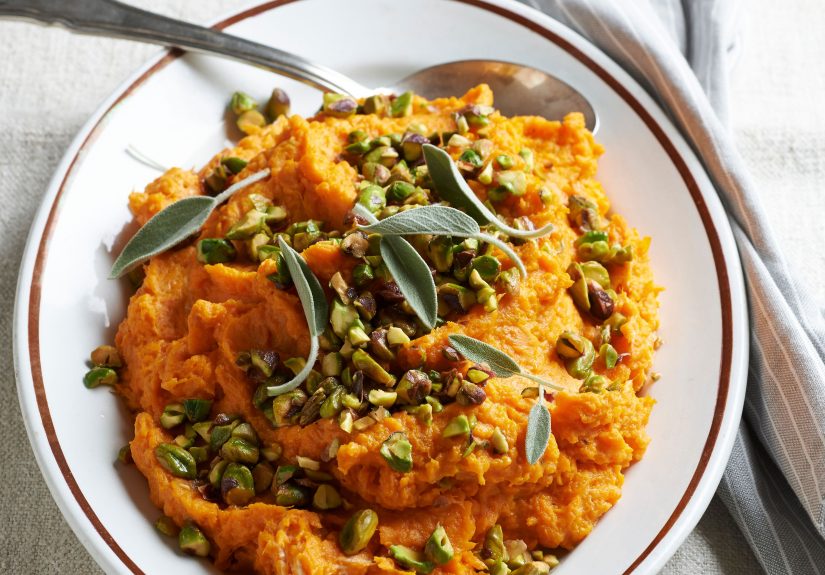
Spoon into a serving bowl. Top with herbs and something crunchy (pistachios, pepitas, or nuts). Serve warm.
Quick “Taste Balancing” Guide
- Too sweet? Add more salt, pepper, and/or a tiny squeeze of lemon.
- Too tangy? Stir in a tablespoon of warm milk and a small pat of butter.
- Too thick? Add warm milk 1 tablespoon at a time.
- Too thin? Simmer on low, stirring often, to evaporate moisture (or add a little more goat cheese for body).
Alternate Methods (Pick the One That Fits Your Life)
Option A: Roasted Sweet Potatoes (Deeper Flavor)
Roasting concentrates sweetness and adds caramelized notes. It’s a little slower, but the flavor payoff is real.
- Heat oven to 400°F.
- Place whole sweet potatoes on a baking sheet and roast until very tender, about 50–70 minutes depending on size.
- Cool slightly, then peel and mash with warm dairy, butter, and goat cheese.
Best for: holidays, dinner parties, and anyone who likes their sweet potatoes with a little “roasted swagger.”
Option B: Instant Pot (Fast + Hands-Off)
Pressure cooking makes sweet potatoes tender quickly with minimal babysitting. Great when your stove is already hosting three other pots.
- Place sweet potatoes (chunks or large pieces) on a steamer basket/trivet with water in the pot.
- Cook on high pressure about 10 minutes (time may vary by size), then quick release carefully.
- Mash with goat cheese, butter, salt, and pepper right in the pot.
Option C: Microwave Shortcut (Small Batch Savior)
If you’re making this on a Tuesday night (respect), you can microwave cubed sweet potatoes with a splash of water, then mash as usual. Texture won’t be quite as plush as roasting, but it’s fast and still tasty.
Flavor Variations (Same Recipe, New Personality)
1) Maple-Sage Goat Cheese Mash (Classic Holiday Energy)
- Add 1–2 tablespoons maple syrup.
- Stir in 1 teaspoon chopped fresh sage (or thyme).
- Top with toasted pistachios or pepitas for crunch.
2) Savory Garlic-Herb (Pairs With Everything)
- Add 2 smashed garlic cloves to the boiling water, or fold in roasted garlic.
- Mix in rosemary + thyme (minced) and finish with cracked black pepper.
- Optional: a drizzle of olive oil for a Mediterranean vibe.
3) Spicy-Sweet (A Little Drama Never Hurt)
- Add a pinch of cayenne or smoked paprika.
- Top with toasted nuts and a tiny drizzle of honey.
4) Citrus Brightener (Less Heavy, More Zing)
- Add 1–2 tablespoons orange juice and a little zest.
- Keep goat cheese at 3 ounces so citrus stays in the spotlight.
Serving Ideas: What to Eat With Goat Cheese Mashed Sweet Potatoes
This dish is basically the side-dish equivalent of a good blazer: it looks great at fancy events, but you can absolutely wear it with jeans.
Holiday Menu Pairings
- Roast turkey or chicken + green beans or Brussels sprouts
- Glazed ham + citrusy salad
- Pork tenderloin + sautéed apples or roasted carrots
Weeknight Pairings
- Sheet-pan chicken thighs + broccoli
- Black bean bowls (use the mash as the “base” instead of rice)
- Seared salmon + lemony greens
Make-Ahead, Storage, and Reheating
Make-Ahead Tips
- Make it 1 day ahead: Prepare the mash, cool, cover, and refrigerate.
- Reheat gently: Warm in a covered baking dish at 350°F or on the stovetop over low heat, stirring often. Add a splash of warm milk if it tightens up.
Storage (Because Leftovers Are a Love Language)
- Refrigerator: Store in an airtight container and aim to eat within 3–4 days.
- Freezer: Freeze for longer storage; thaw overnight in the fridge for best texture.
Food Safety Notes
- Refrigerate leftovers promptly (generally within 2 hours).
- Reheat leftovers until hot throughout165°F is the common safety target.
Troubleshooting: Fixes for Common Mash Mishaps
Problem: My mash is watery
- Drain better next time and let the potatoes steam-dry in the pot.
- For now: simmer on low, stirring frequently, to evaporate excess moisture.
Problem: My mash is gluey or heavy
- Overmixing can make mashed potatoes (including sweet potatoes) dense. Use a masher and stop when smooth enough.
- If it’s already heavy, lean into it: spread in a baking dish, top with a little butter and herbs, and bake until hotlike a cozy mash casserole.
Problem: The goat cheese flavor is too strong
- Add warm milk and butter, then season with salt and pepper.
- Stir in roasted garlic or herbs to soften the tang.
Problem: It tastes flat
- Salt is usually the fix. Add a pinch, stir, taste, repeat.
- A small acid pop helps too: a squeeze of lemon or a tiny splash of orange juice.
Nutrition Notes (The “It’s Not Just Comfort Food” Part)
Sweet potatoes are known for their vibrant orange color, which comes from beta-carotene, a compound the body can convert into vitamin A. They also provide fiber and other nutrients that support overall health.
Cooking method can change how sweet potatoes behave in your body. For example, boiling can yield a lower glycemic response than roasting for some people, while roasting often delivers deeper caramelized flavor. If you’re balancing blood sugar, pairing sweet potatoes with protein and fat (hello, goat cheese) may help create a steadier meal experience.
Translation: you can enjoy your mash, feel happy, and still call it a “balanced plate” with a straight face.
Experiences From Real Kitchens (500+ Words of What You’ll Notice After Making This)
The first time most people make mashed sweet potatoes with goat cheese, the “aha” moment is usually the same: goat cheese doesn’t just make it creamyit makes it interesting. Regular mashed sweet potatoes can lean one-note (sweet, sweet, sweet… and then sweet again). Goat cheese adds that tangy little plot twist that keeps each bite from blending into the next. It’s like switching from a solo performance to a full band.
Another common experience: the topping debate. If you serve this at a gathering, someone will inevitably ask, “What’s on top?” and you’ll proudly say, “Toasted pistachios,” like you planned that sentence your whole life. Crunch matters here. Creamy mash plus a crunchy finish turns a side dish into something people talk aboutespecially when the topping is salty and nutty, because it makes the sweet potato flavor pop. Pepitas do the same job with a slightly earthier bite, and chopped pecans bring that classic holiday vibe. (Your dish, your crunch destiny.)
Then there’s the texture learning curve. Many cooks discoversometimes the hard waythat sweet potatoes can hold onto water. Boil them too long or skip the steam-dry step, and the mash can slide toward “soupy.” The fix is simple and surprisingly satisfying: after draining, return the potatoes to the warm pot and let the steam escape for a minute while you gently stir. It feels almost too easy to matter, but it absolutely does. People who start doing this once rarely stop, because it’s the difference between “pretty good” and “why is this so luxurious?”
The seasoning moment is another classic: you taste, you think it’s fine, and then you add one more pinch of salt and suddenly it tastes like a restaurant side. Sweet potatoes love salt because it sharpens their natural sweetnesskind of like how a tiny bit of salt makes chocolate taste more chocolatey. Black pepper helps too, especially if you’re leaning savory with garlic and herbs.
If you make this for a holiday, you’ll probably notice something else: it reheats better than you expect. The goat cheese and butter help it stay creamy, and a splash of warm milk during reheating brings it right back to life. Some people even prefer it the next day because the flavors have had time to settle inlike a cozy stew, but in mash form. The one “pro move” people learn after a few rounds is reheating only what they plan to serve, keeping the rest chilled so the mash doesn’t go through repeated heat cycles and lose its fluff.
Finally, there’s the guest reaction: goat cheese sounds fancy, but the taste reads as comfort. Even goat-cheese skeptics often come around because the sweetness of the potatoes softens the tang. If you’re serving a mixed crowd, start with 3 ounces of chèvre, taste, and then decide if you want more. That little moment of controlwhere you adjust the tang level like a DJ adjusting the bassfeels oddly powerful. And when people ask for the recipe, you get to say, “It’s easy,” which is the most satisfying sentence in cooking.
Conclusion
Goat cheese mashed sweet potatoes are the kind of side dish that can quietly steal the show: creamy, balanced, and flexible enough to match almost any main course. Whether you boil, roast, or pressure-cook your sweet potatoes, the key is simpledrain well, warm your dairy, and fold in goat cheese gently. Add herbs and crunch on top, and you’ve got a dish that feels both comforting and special.
If you try it once, don’t be surprised if it becomes “your” sweet potato recipethe one friends request and family expects. No pressure. (Okay, a little pressure.)