Table of Contents >> Show >> Hide
- What Are “Goofy God Comics,” Exactly?
- Why Greek Mythology Works So Well as Comedy
- A Quick, No-Stress Refresher on the Olympians
- How the Humor Usually Works: 6 Classic Goofy-God Comedy Engines
- The Characters That Shine in Goofy God Comics
- Zeus: Thunder Dad With Zero Chill
- Hera: Patron of Marriage… and Consequences
- Hades: The Reluctant Manager of Eternity
- Persephone & Demeter: Seasonal Drama, Eternal Feelings
- Athena: Brainy Icon, Tactical Roast Queen
- Aphrodite: Romance, Chaos, and Unreasonable Beauty Standards
- Hermes: Delivery God of Fast Takes
- “30 New Pics” Energy: 10 Themes You’ll Probably Spot in a 30-Comic Batch
- 1) The Underworld’s Customer Reviews
- 2) Mythical Dating App Profiles
- 3) Olympus as a Workplace
- 4) Sibling Rivalry With Divine Consequences
- 5) Monsters as Emotional Support Animals
- 6) Prophecies That Sound Like Bad Push Notifications
- 7) Ancient Art Meets Modern Commentary
- 8) Parenting, But Mythic
- 9) The “Who’s in Charge?” Debate
- 10) The Mythology Educational Sneak-Attack
- What These Comics Get Right (Even While Being Silly)
- Greek Mythology in Art: Why the “Majestic Look” Makes the Jokes Funnier
- FAQ: Because Mortals Love Asking Questions
- Conclusion: Olympus, but Make It Laugh-Out-Loud
- Experiences Around Goofy God Comics: What It Feels Like to Watch Olympus Turn into a Sitcom
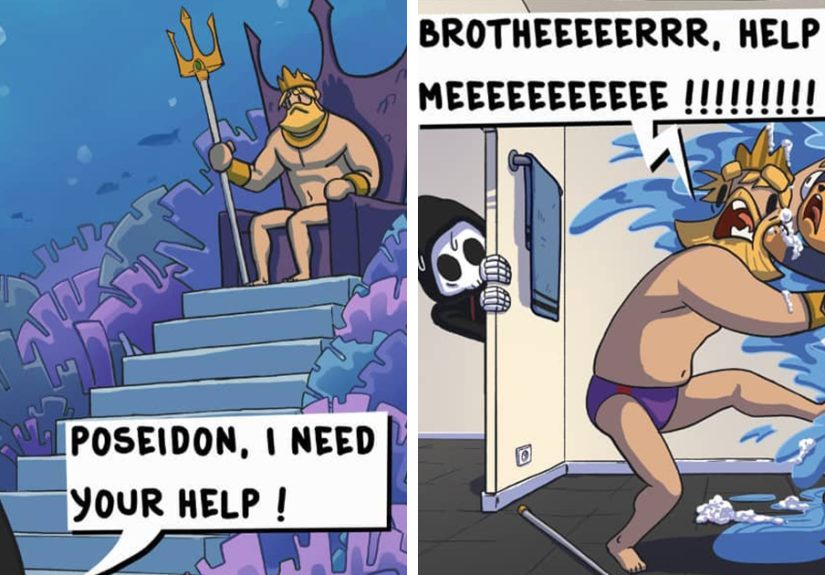
Greek mythology is basically a family group chat that escaped containment and became Western literature. You’ve got immortal power, very mortal feelings, and decisions that would absolutely get you banned from a modern HOA. So it’s no surprise that the internet keeps rebooting Olympusthis time as punchy, snackable Greek mythology comics where gods stress about the kinds of problems you can’t fix with a lightning bolt (like awkward small talk, messy relationships, and “who ate my ambrosia?”).
Enter the vibe of “Goofy God Comics”: a playful, modern spin that drops legendary figures into everyday situations, then lets their divine egos do the rest. The result is the best kind of mythology lessonone where you laugh first, then suddenly realize you remember who Hera is and why Zeus should not be allowed near a HR department.
What Are “Goofy God Comics,” Exactly?
Think of these comics as “Mount Olympus, but make it relatable.” The gods are still godsbig personalities, bigger powersbut they also act like people who absolutely would leave you on read and then blame Fate. The humor usually lands in the gap between:
- Ancient stakes (war, prophecies, curses, underworld bureaucracy)
- Modern inconvenience (dating apps, customer service, sibling drama, deadlines)
That contrast is the secret sauce: mythic grandeur colliding with the daily grind. And because you already “know” these characters (even if only through pop culture), the jokes hit fastlike Hermes on espresso.
Why Greek Mythology Works So Well as Comedy
Greek myths aren’t polite bedtime stories. They’re messy, human, and often darkyet oddly perfect for humor because the gods behave like an immortal mirror of us. Ancient storytellers gave deities passions, jealousy, vanity, and pettiness. Modern comics simply translate those traits into a contemporary setting where everyone recognizes the energy.
Also, Greek mythology is basically built for punchlines because it’s full of:
- Overreaction (“You looked at me wrong. Enjoy being a spider.”)
- Drama (weddings, feuds, transformationsso many transformations)
- Cosmic loopholes (prophecies that read like bad terms-and-conditions)
- Iconic props (tridents, thunderbolts, winged sandals, cursed boxes)
A Quick, No-Stress Refresher on the Olympians
Most “goofy gods” humor starts with the main lineup: the Olympian gods. You’ll see them constantly because they’re instantly recognizable archetypes, each with a built-in comedic angle.
The “Office Leadership” Types
- Zeus: CEO energy with storm powers, and the confidence of someone who has never been told “no.”
- Hera: queen, strategist, keeper of standards, and the person who absolutely remembers what you did in 2016.
- Poseidon: emotional tides, dramatic entrances, and a “you can’t tell me what to do” ocean vibe.
- Hades: introvert king of the underworld, running a realm that’s basically eternal customer support.
The “Skills Department” Types
- Athena: wisdom, tactics, and the calm superiority of someone who brought a spreadsheet to a sword fight.
- Apollo: arts, prophecy, spotlight addiction, and the vibe of a golden-hour Instagram filter.
- Artemis: independence, boundaries, and “don’t talk to me unless it’s about wilderness survival.”
- Hermes: messenger, speed demon, and the god most likely to “circle back” and never do.
- Hephaestus: maker, inventor, and the patron saint of “I can fix it, but I’m going to sigh first.”
The “Weekend Chaos” Types
- Dionysus: wine, parties, and a spiritual commitment to turning a Tuesday into a festival.
- Ares: conflict, impulse, and “what if we solved this by yelling?”
- Aphrodite: love, desire, beautyand the power to turn any situation into a romantic subplot.
How the Humor Usually Works: 6 Classic Goofy-God Comedy Engines
1) Divine Powers, Petty Problems
Zeus can throw lightning, but can he handle a slow Wi-Fi connection? Poseidon controls the sea, but can he stop spilling his drink when he’s emotional? The joke is that power doesn’t equal maturity. It just makes your bad habits louder.
2) Olympus as a Dysfunctional Family Sitcom
Greek gods are related in ways that would make a modern genealogist retire on the spot. Comics lean into this by framing Olympus like a family dinner: awkward, loud, and one comment away from a centuries-long feud.
3) The Underworld as Bureaucracy
The underworld is a goldmine for comedy because it’s already “rules and consequences.” Add paperwork, customer reviews, and a ferry schedule, and you’ve basically got a mythic DMV with ghosts.
4) Modern Dating, Ancient Red Flags
Mythology romance is full of kidnappings, curses, and misunderstandings that could’ve been solved with one honest conversation. Put that energy on a dating app, and suddenly even Medusa is saying, “Respectfully, no.”
5) Monsters as Pets (or Coworkers)
Hydras, pegasi, and three-headed dogs become less terrifying when they’re treated like needy animals. Comedy loves demystifying the monsterturning “legendary threat” into “please stop chewing the furniture.”
6) Mythology as “Explaining Yourself to Mortals”
Gods in ancient stories often meddle with humans. Comics flip the perspective: what if the gods had to justify their decisions in plain English? That’s when things get awkward fast.
The Characters That Shine in Goofy God Comics
Even when the comics rotate through dozens of mythic figures, a few personalities tend to dominate because their myth “brand” is already strong. Here’s how humor often reframes themwithout stripping away what makes them iconic.
Zeus: Thunder Dad With Zero Chill
In myth, Zeus is the sky god and ruler of the pantheonso comedy turns him into the ultimate overconfident boss. He’s decisive, dramatic, and extremely allergic to accountability. A classic gag is Zeus treating every minor inconvenience like it deserves a thunderbolt… and then wondering why everyone avoids his meetings.
Hera: Patron of Marriage… and Consequences
Hera’s humor often comes from contrast: she represents commitment and order, but she’s stuck managing chaos. Comics usually portray her as sharp, tired, and one eyebrow raise away from turning Olympus into a policy-driven operation. If Zeus is the storm, Hera is the forecast that says: “You’re going to regret that.”
Hades: The Reluctant Manager of Eternity
Hades doesn’t usually need to be “evil” to be funny. The underworld is already heavyso the comedy is in his deadpan reactions. He’s the guy who runs a realm of souls and still has to answer questions like, “Is there a snack bar on the ferry?”
Persephone & Demeter: Seasonal Drama, Eternal Feelings
The Persephone myth ties to seasons, which is inherently meme-able: “Gone for half the year? That’s not a phase, mom. That’s a cosmological arrangement.” Comics can keep the emotional weight while still letting the situation be absurdly relatableespecially when Demeter brings “concerned parent energy” to a divine level.
Athena: Brainy Icon, Tactical Roast Queen
Athena’s comedy is often precision. She doesn’t shoutshe corrects. She’s the type to end an argument by calmly referencing three sources and a diagram. In goofy strips, she becomes the god everyone consults… and the one most likely to mutter, “I can’t believe I have to explain this again.”
Aphrodite: Romance, Chaos, and Unreasonable Beauty Standards
Aphrodite’s domaindesiretranslates perfectly into modern humor: crushes, jealousy, shipping wars, and people making terrible choices because someone smiled at them. In a comic universe, she’s the walking embodiment of “you thought you were rational?”
Hermes: Delivery God of Fast Takes
Hermes is naturally funny because he’s always movingmessaging, traveling, trading. That becomes “group chat moderator” energy: always online, always in motion, occasionally starting drama by accident (or on purpose, because it’s Tuesday).
“30 New Pics” Energy: 10 Themes You’ll Probably Spot in a 30-Comic Batch
If you’re reading a fresh roundup of these goofy god panels, the humor usually clusters into themesbecause mythology has recurring motifs, and modern life has recurring headaches. Here are ten “buckets” that fit a typical set of 30 comics, along with examples of how they play out:
1) The Underworld’s Customer Reviews
Charon gets rated one star because someone forgot the coin policy. Hades reads the review and whispers, “I hate it here,” while standing in an immortal palace.
2) Mythical Dating App Profiles
Medusa’s profile bio: “If you can’t handle me at my serpent hair, you don’t deserve me at my… also serpent hair.” Meanwhile, Zeus’s profile is just a lightning emoji and audacity.
3) Olympus as a Workplace
Zeus calls it a “brainstorm,” but it’s literally thunder. Athena requests an agenda. Dionysus requests snacks. Ares requests a fight.
4) Sibling Rivalry With Divine Consequences
Poseidon splashes. Zeus zaps. Hades sighs and turns off notifications.
5) Monsters as Emotional Support Animals
Cerberus becomes the world’s cutest guard dog who still accidentally terrifies guests. Hydra becomes a “bad hair day” metaphorexcept the hair bites back.
6) Prophecies That Sound Like Bad Push Notifications
Apollo delivers a prophecy like, “Something important will happen today,” and everyone is like, “That’s not helpful.” Apollo is like, “It’s called suspense.”
7) Ancient Art Meets Modern Commentary
Someone poses like a majestic statue… then immediately ruins it with a mundane complaint (like sand in sandals). The comedy lands because Greek art is so grand, and modern life is so petty.
8) Parenting, But Mythic
Gods mentoring heroes (or messing them up) becomes “parenting humor,” except the bedtime story is the Trojan War.
9) The “Who’s in Charge?” Debate
Zeus says he’s the boss. Hera says she’s the plan. Athena says she’s the reason anything works. Hermes says, “Can we vote?” Ares says, “Can we fight?”
10) The Mythology Educational Sneak-Attack
You laugh at a joke about Demeter being protective, and then realize you just retained the seasonal framework of the Persephone story. Learning: achieved. Dignity: optional.
What These Comics Get Right (Even While Being Silly)
Comedy doesn’t have to be “accurate” in a textbook sense to be faithful. In fact, the best funny Greek myth retellings keep the emotional truth of the characters:
- Zeus often represents authority and weatherso he’s naturally portrayed as loud power.
- Hera embodies marriage and sovereigntyso she becomes the sharp-eyed enforcer of standards.
- Hades rules the underworldso he’s framed as the serious, tired administrator of the inevitable.
- Aphrodite triggers desireso she becomes the chaotic catalyst for romance and jealousy.
And there’s a deeper reason this works: Greek myths were always retold. They shifted across regions, poets, and centuries. A modern comic is another retellingjust with better punchlines and fewer sacrificial bulls.
Greek Mythology in Art: Why the “Majestic Look” Makes the Jokes Funnier
Greek gods don’t just live in storiesthey live in images: vase paintings, sculptures, temple reliefs, and later classical revivals. When a comic borrows that grand, museum-energy visual language (posed profiles, flowing drapery, heroic silhouettes), it sets up an expectation of epic seriousness.
Then the strip undercuts it with something small and humanlike a petty argument, a misunderstanding, or a god being emotionally unprepared for a group project. That whiplash is comedy gold: the more majestic the setup, the funnier the mundane twist.
FAQ: Because Mortals Love Asking Questions
Are Goofy God Comics “accurate” Greek mythology?
They’re usually myth-aware rather than myth-complete. You’ll see recognizable roles, symbols, and famous relationshipsthen modern jokes layered on top. If you want deep scholarship, read a reference. If you want to enjoy the gods as characters, comics are a great gateway.
Who are the “main” Greek gods I should know to get the jokes?
Start with Zeus, Hera, Poseidon, Hades, Athena, Aphrodite, Hermes, Apollo, Artemis, Ares, Hephaestus, and either Dionysus or Hestia depending on the list. Once you know their “vibes,” you’re basically fluent in Olympus humor.
Why do monsters show up so often?
Because monsters are iconic, and comedy loves demystifying fear. Also: drawing a three-headed dog as adorable is an internet law.
Conclusion: Olympus, but Make It Laugh-Out-Loud
Greek Mythology Characters Come Alive when creators treat them like personalitiesnot dusty names. “Goofy God Comics” works because it respects the mythic core (power, flaws, drama) while translating it into modern situations we instantly recognize (work, relationships, anxiety, snacks).
So if you’re scrolling through a set of 30 new goofy god pics, enjoy the jokesand notice what else sneaks in: you’ll come away remembering who rules the sky, who runs the underworld, who starts the romance, and who would absolutely win “Most Likely to Say ‘I Told You So’” on Olympus.
Experiences Around Goofy God Comics: What It Feels Like to Watch Olympus Turn into a Sitcom
There’s a very specific experience that happens when you read a batch of goofy Greek mythology comics, and it’s almost always the same rhythm: you laugh, you recognize a name, and then you realize you’re quietly rebuilding a mental map of Greek myth without ever sitting down to “study.” It feels like learning by accidentlike picking up vocabulary from memes, except the vocabulary includes immortals, monsters, and a shocking number of questionable decisions.
At first, the fun is surface-level: Zeus is dramatic, Hades is tired, Hermes is chaos on wings. The jokes don’t require you to know every detail; they’re powered by archetypes. But after a few strips, something clicks. You start noticing patternswhy Demeter is always intense about her daughter, why the underworld has rules, why Hera’s patience is not infinite. Even if you never read Homer cover-to-cover, you begin to feel the “logic” of Olympus, which is basically: emotions are real, consequences are theatrical, and everybody’s related.
Another common experience: you catch yourself narrating the characters like coworkers. Zeus becomes the boss who insists every idea is his idea. Athena becomes the colleague who sends the cleanest email you’ve ever seen and ends it with “Per my last message.” Dionysus becomes the friend who turns a casual hang into a three-day event. This reframing makes the gods feel strangely familiar, and that familiarity makes the myths less intimidating. Instead of “ancient literature,” it’s suddenly “ancient personalities,” which is a much easier door to walk through.
These comics also tend to create tiny “memory anchors.” You might forget the full genealogy, but you’ll remember that Hermes is the messenger because your brain filed him under “delivery guy who never logs off.” You’ll remember Aphrodite’s domain because the joke made desire look like a button she can press at will. You’ll remember that Hades is not the same as “the devil” because he’s portrayed as a ruler with a job, not a cartoon villain. The humor turns facts into mental stickerssmall, bright, hard to lose.
And then there’s the social experience: goofy god strips are extremely shareable. People send them the way they send reaction GIFs“This is so you,” “This is literally our group chat,” “This is me at work.” Mythology becomes a shared language for modern moods. When someone texts you a panel about divine bureaucracy, they’re not only making you laugh; they’re also inviting you into a mini-club where everyone understands that Olympus is basically the original reality TV cast.
Finally, there’s a surprisingly wholesome aftertaste. Greek myths can be heavytragedy, violence, fate. Goofy god comics don’t erase that history, but they soften the entry point. They let you approach the material with joy first, curiosity second. And that’s often how the rabbit hole starts: one funny strip, then you Google a name, then you’re reading about a myth you didn’t realize you cared about. Olympus doesn’t just come alive. It follows youinto your bookmarks, your conversations, and your brain’s growing list of “ancient stories that still feel weirdly modern.”