Table of Contents >> Show >> Hide
- Why Pots Are the Secret Weapon for a Fragrant Garden
- Your 10-Minute Setup for Success
- Pick the Right Pot (Because Size Really Does Matter Here)
- The 13 Best Fragrant Herbs to Grow in Pots
- Easy Herb Combos for One Pot (No Plant Drama Required)
- Keep the Fragrance Going All Season
- Troubleshooting: Quick Fixes That Save Your Sanity
- Experience Section (Extra ): What Growing These Herbs in Pots Feels Like in Real Life
- Conclusion
Want your patio (or windowsill, or fire escape, or that one sunny corner you’re pretty sure is technically “indoors”) to smell like a fancy kitchen and a spa had a baby?
Grow herbs in pots. You don’t need a backyard, a greenhouse, or a mysterious lineage of “people who just know plants.”
You need containers with drainage, decent potting mix, and the courage to water consistently without turning everything into soup.
Container herbs are the ultimate low-commitment, high-reward relationship: they’re close by when you cook, they perfume the air when you brush past,
and if one gets dramatic (looking at you, cilantro), you can swap it out without re-landscaping your life.
Below are 13 aromatic herbs that thrive in pots and make even a tiny space smell like you’ve got your act together.
Why Pots Are the Secret Weapon for a Fragrant Garden
Pots give you controlover soil, moisture, sunlight, and (importantly) the herbs that like to take over the world.
Many fragrant herbs come from regions with sharp drainage and plenty of sun, and containers let you mimic those conditions even if your yard is more “mud season” than “Mediterranean hillside.”
Plus, pots move. Too hot? Too windy? Surprise frost? You can relocate your herbs like the plant-parent superhero you are.
Your 10-Minute Setup for Success
- Use containers with drainage holes. No drainage = sad roots. If your pot is hole-free, drill it or use it as a decorative “cachepot” with a real pot inside.
- Skip garden soil. Use a quality potting mix (light, fluffy, drains well). Heavy soil compacts in pots and roots hate that.
- Give most herbs 5–8 hours of sun. Some tolerate partial sun, but more sun usually means more fragrance and stronger flavor.
- Water with intention. Containers dry faster than beds. Check moisture with your finger: if the top inch is dry, it’s time.
- Feed lightly. A little slow-release fertilizer or occasional diluted liquid feed is plenty. Overfeeding can mean fast growth with weaker aroma.
Pick the Right Pot (Because Size Really Does Matter Here)
For most herbs, a pot that’s 8–12 inches wide is a great start. Bigger herbs (rosemary, lemongrass) appreciate 12–18 inches.
If you want a mixed herb “bouquet pot,” choose something closer to 16–20 inches and pair herbs with similar water needs.
Terracotta breathes (great for herbs that hate wet feet), while plastic holds moisture longer (helpful in hot summers or for thirstier herbs).
The 13 Best Fragrant Herbs to Grow in Pots
1) Basil
Basil is summer in leaf formsweet, peppery, and instantly “I can cook.” It loves warmth and steady moisture.
Pot tip: Choose at least an 8–12 inch pot (larger if you want a big bush), and pinch the top leaves often to keep it branching and fragrant.
Sun: Full sun is ideal. Water: Keep evenly moist, not soggy.
Bonus: Compact varieties are perfect for small containers and windowsill gardens.
2) Mint
Mint smells clean, bright, and slightly smug because it grows like it’s being paid. That enthusiasm is exactly why it belongs in a pot.
Pot tip: A 10-inch container with drainage is a classic choice; keep it contained so it doesn’t spread.
Sun: Sun to partial shade. Water: Likes consistently moist soil.
Harvest move: Cut stems oftenfresh growth is the most aromatic.
3) Rosemary
Rosemary is the woody, resinous “walk past me and inhale” herb. In many climates it’s happiest in a pot because you can bring it to safety in winter.
Pot tip: Go 12–16 inches wide with fast-draining mix; terracotta helps prevent soggy roots.
Sun: Full sun. Water: Let the top couple inches dry between waterings.
Pruning: Snip tips regularly for fragrance and shapeavoid cutting into old bare wood.
4) Thyme
Thyme is small but mightyearthy, herbal, and ridiculously fragrant when brushed. It’s also forgiving, which makes it a top-tier “starter herb.”
Pot tip: An 8–10 inch pot is plenty; give it sharp drainage.
Sun: Full sun. Water: Drought-tolerant once established; don’t keep it constantly wet.
Style idea: Creeping thyme can spill beautifully over the edge of a pot like a scented waterfall.
5) Oregano
Oregano brings that bold, savory aroma that makes tomato sauce smell like it’s been simmering for hours (even if it hasn’t).
Pot tip: 10–12 inches wide; oregano likes room to branch.
Sun: Full sun. Water: Moderatelet the top inch dry between waterings.
Flavor secret: A bit of “benign neglect” often intensifies aroma more than pampering does.
6) Sage
Sage is warm, woodsy, and slightly pepperylike autumn in a sweater. Its fuzzy leaves hold scent beautifully.
Pot tip: 10–12 inches wide with excellent drainage.
Sun: Full sun to light shade. Water: On the dry side; soggy soil is the fast track to sadness.
Keep it lush: Lightly prune to prevent it from getting leggy and to encourage tender new growth.
7) Parsley
Parsley is fresh, green, and underappreciateduntil you grow it and realize how aromatic it actually is.
Pot tip: Use a deeper pot (8–10 inches) because parsley has a substantial root system.
Sun: Sun to partial shade. Water: Likes consistent moisture.
Harvest rule: Cut outer stems first and let the center keep producing.
8) Cilantro
Cilantro is a fast, fragrant sprinterbright, citrusy, and best when young. It can bolt (flower) quickly in heat, but containers let you manage it.
Pot tip: 8–10 inches wide; sow in batches every couple of weeks for continuous harvest.
Sun: Morning sun with afternoon shade in hot weather. Water: Keep evenly moist.
Bonus: If it flowers, you can harvest coriander seed latertwo aromas for the price of one.
9) Chives
Chives smell like gentle onions with a clean, grassy twist. They’re compact, reliable, and basically never ask for much.
Pot tip: 6–8 inches works, but bigger pots make thicker clumps.
Sun: Full sun to partial shade. Water: Moderate; don’t let it bone-dry for too long.
Pretty perk: The purple flowers are gorgeous and can be used as an edible garnish.
10) Dill
Dill is feathery, fresh, and unmistakablelike pickles in the best possible way. It’s also a magnet for beneficial insects when it blooms.
Pot tip: Choose a deeper container (10–12 inches) because dill forms a taproot and likes stability.
Sun: Full sun. Water: Even moisture; avoid extreme swings.
Pro move: Plant a new pot every few weeksdill is often happiest when grown succession-style.
11) Lavender
Lavender turns a balcony into a perfume counterin a good way. It prefers dry air, sharp drainage, and lots of sun.
Pot tip: 12 inches wide minimum, with gritty, fast-draining mix; don’t crowd it.
Sun: Full sun. Water: Deep but infrequent; let the mix dry between waterings.
Keep it thriving: Light pruning after flowering helps maintain shape and encourages future blooms.
12) Lemon Balm
Lemon balm smells like lemon candy and calm intentions. It’s vigorousso, like mint, it’s smartest in a pot.
Pot tip: 10–12 inches wide; give it its own container so it doesn’t outcompete neighbors.
Sun: Sun to partial shade. Water: Moderate; steady moisture keeps leaves tender.
Use it: Tear a leaf, rub it between your fingers, and you’ll understand why people put it in teas.
13) Lemongrass
Lemongrass is bold, citrusy, and dramaticin height, scent, and “wow, my patio smells amazing” energy.
It’s not cold-hardy in many places, which makes containers perfect.
Pot tip: 14–18 inches wide; lemongrass gets big and likes consistent moisture.
Sun: Full sun. Water: Regular watering; don’t let it dry out completely.
Winter plan: Bring it inside before frost or treat it as a warm-season annual.
Easy Herb Combos for One Pot (No Plant Drama Required)
Mixing herbs is fununtil you pair a “dry feet please” herb with a “keep me moist” herb and everyone has a bad time.
Try these friend groups instead:
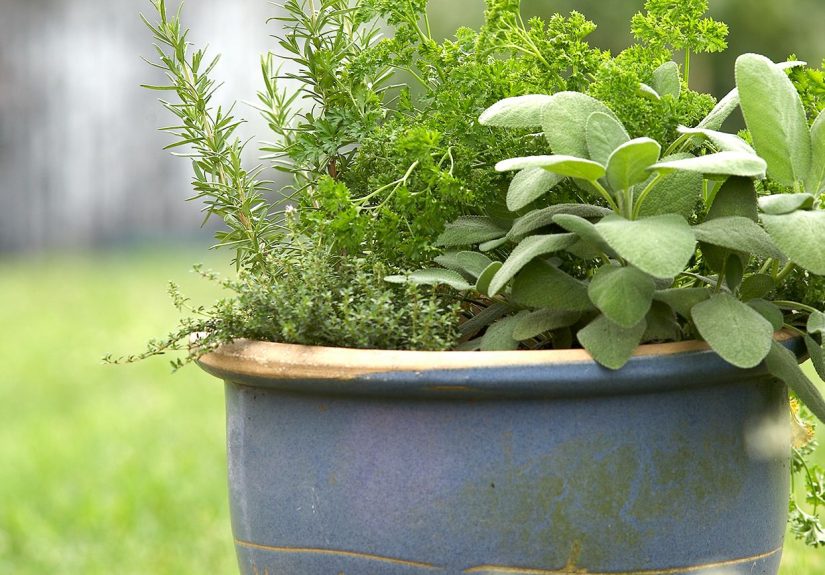
- Mediterranean Pot (drier): Rosemary + thyme + oregano + sage (and lavender nearby in its own pot if you want maximum fragrance).
- Moisture-Loving Pot (even moisture): Basil + parsley + chives.
- Solo Pots for the “Spreaders”: Mint and lemon balm each get their own container.
- Quick-Harvest Pot: Cilantro + dill (grown in succession, replaced as they finish).
Keep the Fragrance Going All Season
- Harvest often. Regular cutting encourages fresh growth, which is typically the most aromatic.
- Pinch leafy herbs. Basil, mint, and lemon balm respond beautifully to frequent pinching.
- Don’t drown them. Most container herb failures are water-related: either too much or too little, with no in-between.
- Rotate pots. If one side grows faster, turn the container weekly for even light and fuller plants.
- Indoor option: A bright south- or west-facing window helps, and supplemental grow lights can keep herbs productive in winter.
Troubleshooting: Quick Fixes That Save Your Sanity
Leggy basil or mint? More sun and more pinching. Cut just above a leaf node to force branching.
Yellowing leaves? Check drainage first, then watering frequency. Constantly wet mix can suffocate roots.
Weak fragrance? Often it’s low light or too much fertilizer. Aim for bright sun and moderate feeding.
Rosemary struggling indoors? It wants bright light and careful watering. Let it dry slightly between drinks and improve airflow.
Experience Section (Extra ): What Growing These Herbs in Pots Feels Like in Real Life
If you’ve never grown herbs in containers, here’s the most honest preview: it starts with optimism, then becomes a tiny daily ritual, and eventually turns into a personality trait.
Gardeners often describe a specific moment when they realize the “fragrant garden” payoff isn’t just aestheticit’s practical. You step outside (or lean toward your windowsill),
brush your hand across thyme, and suddenly your fingers smell like a roast chicken’s best friend. That’s the hook.
One common experience is the balcony microclimate surprise. You think, “My balcony is sunny,” and then July arrives and your pots feel like stovetops.
This is where container growing teaches fast lessons: terracotta dries quickly, smaller pots dry even faster, and herbs that love sharp drainage (rosemary, thyme, oregano) often shrug off heat,
while basil acts like it’s auditioning for a wilted-leaf role. The fix most container gardeners land on is beautifully simplecheck moisture daily, water deeply when needed,
and group pots so taller plants cast a little afternoon shade where it helps.
Another classic: the mint reality check. People plant mint once, feel proud for about two weeks, and then realize mint is not “a plant” so much as “a plan.”
In containers, mint becomes the friend you can enjoy in measured doses: it’s happy, you’re happy, and nobody is digging mint out of the lawn for the next decade.
The same lesson often applies to lemon balmwonderful scent, enthusiastic growth, best appreciated with boundaries.
Then there’s the succession planting glow-up. Cilantro and dill tend to teach patience because they’re not trying to be a year-long evergreen hedge of flavor.
Container gardeners frequently discover that sowing a small pot every couple of weeks feels less like extra work and more like “how am I suddenly organized?”
You stop mourning bolting cilantro and start treating it like a scheduled guest: show up, be delicious, leave politely, repeat.
Finally, many people talk about the kitchen feedback loopthe more your herbs thrive, the more you cook with them, and the more you notice fragrance.
Basil in a pot doesn’t just taste better; it changes how your whole space smells when you pinch a leaf before dinner.
Lavender nearby makes evenings feel calmer. Lemongrass turns a plain patio into something that smells like citrus and warm air.
And the best part? You don’t need “perfect” plants. Even a scrappy little thyme mound can perfume your hand and your dinner.
That’s what makes container herbs so addictive: they deliver fragrance and flavor in small, repeatable momentsalmost anywhere you can fit a pot.
Conclusion
A fragrant herb garden doesn’t require land, luck, or a seven-part composting system. It requires a few pots, sun, drainage, and herbs that match your space and your habits.
Start with two or three (basil, chives, and thyme are a strong trio), then expand as your confidenceand your pastaimproves.
Before long, you’ll have a garden you can carry, rearrange, and harvest with one hand while you’re holding a spatula in the other. That’s the dream.