Table of Contents >> Show >> Hide
- Why Shucking Feels Hard (And Why It Doesn’t Have to)
- What You Need (Tools That Make This 10x Easier)
- Buying, Storing, and Prepping Oysters (So They Taste Like the Ocean, Not Regret)
- Oyster Anatomy in 60 Seconds: The Parts You Actually Need
- The Classic Hinge Method (Best for Beginners)
- The Side-Entry Method (When the Hinge Won’t Cooperate)
- How to Keep the Liquor (and Lose the Grit)
- Common Shucking Problems (And Quick Fixes)
- Serving Oysters at Home (Restaurant Vibes, Without Restaurant Prices)
- Food Safety Reality Check: Raw Oysters Aren’t Risk-Free
- Shortcut Options (When You Want Easier, Not Necessarily Raw)
- FAQ: Quick Answers to the Questions Everyone Googles Mid-Shuck
- Conclusion
- Kitchen Stories & Shucking Experiences: 10 Lessons That Make You Better Fast
Shucking oysters is one of those kitchen skills that looks like a medieval sport: a mysterious knife, a slippery shell,
and a brave friend who says, “It’s easy!” while standing at a safe distance.
The good news: it is easyonce you know what you’re aiming for. Shucking isn’t about brute force. It’s about
leverage, control, and keeping your hand far away from the business end of the blade. This guide breaks it down so you
can open oysters cleanly, keep that delicious “oyster liquor” in the shell, and avoid turning your countertop into a
gritty, briny crime scene.
Why Shucking Feels Hard (And Why It Doesn’t Have to)
An oyster’s job is to stay shut. Your job is to politely convince it otherwise. Most frustration comes from trying to
“stab” the oyster open. That’s the fastest way to (a) break the shell, (b) shred the meat, or (c) invent new words your
family didn’t know you knew.
Instead, think wiggle + twist. You’re looking for a tiny sweet spot where the knife can get purchase,
then you rotate the blade like a key. The shell pops, the muscle releases, and suddenly you feel like you should be
paid by the hour.
What You Need (Tools That Make This 10x Easier)
1) The right oyster knife
Use a real oyster knifenot a chef’s knife, not a paring knife, and definitely not “whatever is sharp.”
Oyster knives are short, stout, and designed to pry without bending.
- Boston-style: a sturdy classic; great all-around for beginners.
- New Haven-style: often has a more pronounced tip angle; helpful for tight hinges.
- Galveston-style: wider blade for some larger oysters; not always beginner-friendly.
2) A thick kitchen towel (or cut-resistant glove)
The towel is your safety shield and your grip enhancer. Fold it thick. If you want extra protection (especially if you’re
shucking a lot), a cut-resistant glove on your non-dominant hand is a smart upgrade.
3) A stable work surface
Use a cutting board or a folded damp towel under your board to prevent sliding. Shucking on a slippery counter is like
doing gymnastics on a banana peel.
4) A stiff brush + a bowl for shells
Brush away mud and grit before you open them. Have a “shell bowl” ready so your workspace stays sane.
5) Ice for serving (and a small fork for eating)
You can serve oysters on crushed ice, rock salt, or even a bed of crumpled foil. The goal is to keep them cold and level.
Buying, Storing, and Prepping Oysters (So They Taste Like the Ocean, Not Regret)
How to choose good oysters
- Closed shells: They should be tightly shut. If one is slightly open, tap itif it closes, it’s likely alive.
- Heavy for their size: That usually means they’re full of liquor (a very good thing).
- Smell test: They should smell like the seaclean and brinynot “fishy” or funky.
How to store oysters at home
Keep oysters cold (refrigerated) and able to “breathe.” Don’t seal them in an airtight container and don’t soak them in fresh water.
Store them cup-side down if possible, covered with a damp towel. If you’re buying them ahead, aim to shuck them as fresh as you can.
Quick cleaning step (reduces grit later)
Rinse the shells under cold running water and scrub with a stiff brush. You’re cleaning the outside so you don’t drag sand and shell dust
into the oyster when you open it.
Oyster Anatomy in 60 Seconds: The Parts You Actually Need
- Hinge: the pointy “back” where the shells connectyour usual entry point.
- Cup shell: the deeper shell that holds the oyster and its liquor (keep this on the bottom).
- Flat shell: the top shell that comes off first.
- Adductor muscle: the muscle that clamps the shell shut; you’ll cut this to release the oyster.
The Classic Hinge Method (Best for Beginners)
This is the go-to technique for most oysters. It’s controlled, repeatable, and keeps the oyster looking pretty in the shell.
Step-by-step
- Set up your station. Put a damp towel under your cutting board so it won’t slide. Keep a bowl nearby for shells and debris.
-
Hold the oyster correctly. Place the oyster cup-side down (curvier side down) to keep the liquor from spilling.
Point the hinge toward you. -
Wrap it like a tiny, salty burrito. Fold a thick towel over the oyster, leaving just the hinge exposed. Your non-dominant hand
holds the oyster firmly through the towelyour fingers should never be in front of the knife tip. -
Insert the knife into the hinge. Put the tip into the hinge and use small, controlled wiggles. Don’t shove. If you’re pushing hard,
you’re using the wrong angle. -
Twist to pop the shell. Once the knife is seated, rotate your wrist like turning a key. You should feel the hinge give and the shell
pop slightly open. -
Slide the knife along the top shell. Keep the blade flat against the inside of the top (flat) shell and sweep to cut the adductor muscle.
This releases the top shell without tearing the oyster. - Lift off the top shell. Remove it carefully and check for loose shell chips. Use the knife tip to pick out any fragments.
-
Free the oyster from the bottom shell. Slide the knife under the oyster to cut the bottom attachment. Keep the oyster level so you
don’t dump the liquor. -
Final check. If there’s visible grit, use the knife tip to nudge it away. Avoid rinsing the meat under running water unless you truly have
no choicefresh water can wash away flavor fast.
The Side-Entry Method (When the Hinge Won’t Cooperate)
Some oystersespecially certain shapes or super-tight hingesfight the classic approach. Side-entry can be easier once you’re comfortable with the knife.
The idea is the same: find a seam, get purchase, then twist.
- Hold the oyster cup-side down in a towel, just like the hinge method.
- Find the seam along one side where the two shells meet.
- Insert the knife tip gently into the seam (not deepjust enough to get leverage).
- Twist to separate the shells slightly, then slide to cut the top muscle and remove the flat shell.
Side-entry is especially useful if you’re dealing with oysters that have brittle hinges or a shape that makes hinge access awkward.
How to Keep the Liquor (and Lose the Grit)
Oyster liquor is not “oyster juice you should dump.” It’s part of the tasting experiencesalty, briny, and basically the oyster’s personality in liquid form.
- Keep the cup shell down while shucking so the liquor stays put.
- Scrub shells before opening to reduce sand falling in.
- Use the knife tip like tweezers to remove tiny shell chips instead of swirling the oyster around.
- Serve immediately on ice to keep flavor crisp and clean.
Common Shucking Problems (And Quick Fixes)
“My knife keeps slipping.”
Your towel fold might be too thin, or your angle is off. Fold thicker, stabilize the oyster, and use small wiggles to “seat” the tip before twisting.
Also: dull or flimsy knives make everything worse.
“The hinge won’t take the knife.”
Try rotating the oyster 180 degrees and approaching againsometimes the hinge has an easier entry point from a slightly different angle.
If it’s still a fortress, switch to the side-entry method.
“I’m crushing the shell.”
That’s usually too much force, too fast. Slow down. Seat the knife, then twist. If you’re prying wildly, you’re fighting the oyster instead of unlocking it.
“I tore the oyster.”
It happens. The fix is simple: keep going, then flip the oyster in the shell so the prettier side faces up. Nobody needs to know.
“There’s grit inside.”
Prevent it by scrubbing before shucking. If you already have grit, pick it out with the knife tip and blot with a clean paper towel corner.
Rinsing should be the last resort if you care about flavor.
Serving Oysters at Home (Restaurant Vibes, Without Restaurant Prices)
Build a stable “ice bed”
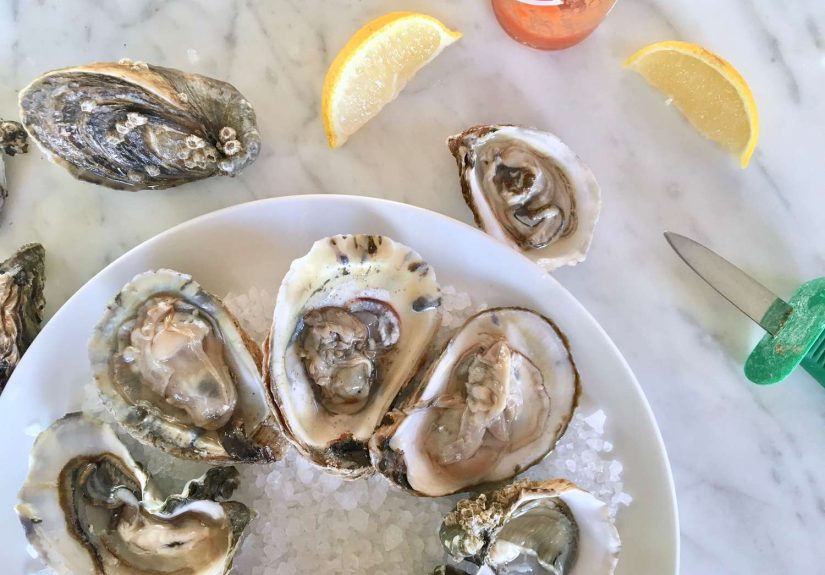
Crushed ice is ideal because it cradles the shells and keeps them level. No crushed ice? Use ice cubes plus crumpled foil or rock salt to keep oysters steady.
Classic condiments (and a few fun ones)
- Lemon wedges: simple, bright, and hard to mess up.
- Mignonette: vinegar + shallot + pepper (the “fancy but easy” option).
- Cocktail sauce: for the horseradish lovers.
- Hot sauce: great flavor, but rememberit doesn’t “sanitize” a raw oyster.
- Cucumber granita or yuzu kosho: if you want to impress people who own linen napkins.
Pairings that play nicely
Crisp, acidic drinks love oysters: sparkling wine, Muscadet, Chablis-style whites, dry rosé, or a clean lager. If you’re doing stout with oysters,
you’re also doing a vibeand it’s a valid one.
Food Safety Reality Check: Raw Oysters Aren’t Risk-Free
Raw oysters can carry harmful germs, including Vibrio. Many healthy people who get sick recover, but serious infections can happenespecially in
people with certain medical conditions or weakened immune systems. If you’re in a higher-risk group (or serving someone who is), the safest option is to
enjoy oysters fully cooked.
- Keep oysters cold from purchase to plate.
- Avoid cross-contamination: wash hands, tools, and surfaces after handling raw shellfish.
- Protect cuts: if you have a wound on your hand, wear gloves and keep it covered while handling raw seafood.
If you ever hear about a recall or outbreak linked to oysters, take it seriously. “But I already bought lemons” is not a medical exemption.
Shortcut Options (When You Want Easier, Not Necessarily Raw)
If your goal is “open the oyster” more than “serve it raw,” you have options:
-
Freezer nudge (10–15 minutes): a brief chill can relax the muscle and make shucking easier. Don’t forget them in there; you’re not making
oyster popsicles. -
Quick broil to pop: a short blast of high heat can cause shells to open. This is great for cooked preparations, and it’s also a lifesaver if
you’re making oysters Rockefeller or grilled oysters. It will change the oyster, thoughso don’t call it “raw.”
FAQ: Quick Answers to the Questions Everyone Googles Mid-Shuck
Can I shuck oysters ahead of time?
You can, but best quality is same-day. If you must, store shucked oysters cold in a non-reactive container with their liquor, tightly covered, and serve as soon as possible.
Do I need to rinse oysters after opening?
Ideally, no. Scrub shells before shucking to prevent grit. If you see shell fragments inside, remove them with the knife tip. Rinsing the meat can dilute flavor quickly.
What’s the “months with an R” rule?
It’s a traditional guideline tied to warm-weather spoilage and spawning seasons. Modern refrigeration and aquaculture make oysters more available year-round,
but warm months can still increase bacterial riskso proper handling and reputable sourcing matter.
How many oysters per person?
For a starter, 3–6 per person is common. For a full “oyster night,” 8–12 per person isn’t unusualespecially if your group treats oysters like potato chips with better PR.
Conclusion
Shucking oysters with ease comes down to three things: the right tools, the right grip, and the right mindset.
Don’t force itseat the knife, twist with control, and keep the cup shell down so you save the liquor.
Start with a small batch, go slow, and you’ll build confidence fast. Before long, you’ll be the person at the party everyone watches like it’s a live cooking show
and you’ll get first dibs on the prettiest oysters, which is the only reasonable payment.
Kitchen Stories & Shucking Experiences: 10 Lessons That Make You Better Fast
Most people’s first oyster-shucking session is a mix of confidence, curiosity, and at least one moment of,
“Why is this shell stronger than my willpower?” The funny thing is how quickly your hands learn once you stop trying to out-muscle the oyster.
Here are the real-world experiences that tend to show up in home kitchensand how to use them to level up.
Lesson 1: Your setup matters more than your bravery. When the cutting board slides even a little, your brain goes into “danger mode,”
and your technique gets shaky. The moment you tuck a damp towel under the board and keep your tools within reach, you suddenly feel in control.
Shucking is a small-motion skill, and small motions need a stable stage.
Lesson 2: The towel fold is basically your training wheels. Beginners often grab a thin dish towel and wonder why it feels risky.
A thick, folded towel gives you friction and protection. It also helps you hold the oyster firmly without squeezing it like you’re trying to extract a confession.
Once you experience how much safer it feels, you’ll never go back to the flimsy fold.
Lesson 3: “Wiggle until it seats” is the breakthrough moment. The hinge can feel impossible until you realize the knife tip isn’t supposed
to spear its way in. The magic is finding that tiny notch where the tip catches. When it happens, you’ll feel a subtle “click” of stabilitythen twisting works.
That one sensation teaches your hands what to look for the next time.
Lesson 4: Every oyster has a personality. Some pop open like they’ve been waiting for you. Others are stubborn little vaults.
This is where you learn flexibility: if the hinge is a nightmare, switching to side-entry feels like discovering a secret door.
Home shuckers get better quickly because they’re forced to adapt instead of repeating one move forever.
Lesson 5: Shell chips happendon’t panic. The first time a bit of shell flakes into the meat, it’s easy to think you ruined everything.
In reality, you just learned why scrubbing the shell matters and why you keep the knife tip handy for cleanup. With practice, you’ll make cleaner openings,
but even pros occasionally get a chip. The difference is they calmly remove it and keep going.
Lesson 6: Keeping the liquor feels like winning. When you finally open an oyster and the shell is still full of briny liquor, it’s deeply satisfying
like you solved a puzzle and got delicious points for it. That’s why the “cup-side down” habit sticks. It’s not just tradition; it’s a practical trick that preserves flavor.
Lesson 7: Your pace should be slow… until it isn’t. At first, one oyster can take a full minute (or two). Then you hit a rhythm:
scrub, wrap, seat, twist, sweep, lift, release. The repetition builds muscle memory, and suddenly you’re shucking in a calm flow.
The speed comes naturally when the movements are confident, not rushed.
Lesson 8: Serving is part of the experience. People remember the oyster platterice, lemon, sauces, maybe a little mignonettealmost as much as the oysters themselves.
Once you’ve shucked successfully, you’ll start having fun with presentation. Even a simple tray of ice and a few lemon wedges can feel special.
Lesson 9: You become “the oyster person” faster than you expect. After one or two successful runs, friends start volunteering, “Bring oysters!”
You’ll get questions about knives, storage, and how to do the twist. It’s a surprisingly social skill: a little showmanship, a little technique, a lot of sharing.
Lesson 10: Respect the safety rules, and you’ll actually relax. The irony is that being carefultowel protection, controlled twisting, clean surfaces
makes the whole process feel less stressful. You don’t need to be fearless. You just need to be methodical. That’s how you shuck oysters with ease:
not by fighting the shell, but by working smarter than it does.