Table of Contents >> Show >> Hide
- What Happened: The Bathroom Time Blow-Up
- Why the Internet Sided With the Wife
- But What If He Actually Needs That Long?
- The Not-So-Funny Health Side of ‘Toilet Scrolling’
- Boundary-Setting That Doesn’t Feel Like Bathroom Surveillance
- How to Talk About It Without Starting World War Poop
- Reality Check: What He Actually Needed to Hear
- Extra: Experiences Couples Share About Bathroom-Time Battles (And What Actually Helped)
Every marriage has its “weirdly specific hill to die on.” Some couples fight about laundry. Some battle over thermostat rights like it’s the Supreme Court. And then there are the brave souls waging war over… bathroom time.
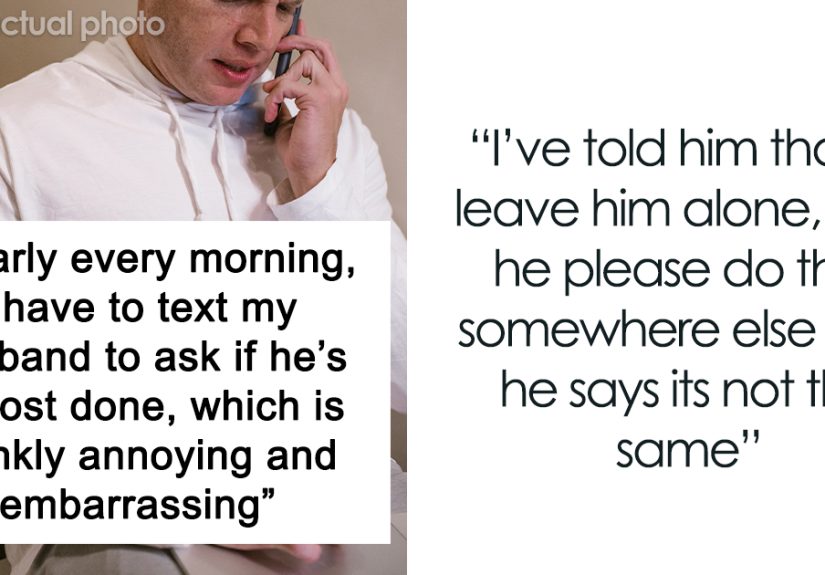
In this particular internet-flavored saga, a husband decided his bathroom breaks were sacred, untouchable, and apparently protected under the Geneva Conventions. His wifeliving in the same home, in the same reality, with the same responsibilitiesasked him to stop vanishing for marathon toilet sessions. He responded by calling her a jerk for “trying to control” him.
The internet did what the internet does: it grabbed popcorn, pulled up a chair, and collectively said, “Sir. It’s you. You are the problem.” And honestly? That reaction didn’t come out of nowhere.
What Happened: The Bathroom Time Blow-Up
The setup: one bathroom, one partner, and a suspiciously long break
The conflict usually starts innocently: one partner steps into the bathroom, closes the door, and the house gets quiet. Too quiet. Ten minutes pass. Then twenty. Sometimes thirty. The spouse on the outside starts doing mental math: “Did you take a book in there? A phone charger? A full camping setup?”
Meanwhile, the partner on the inside is often doing what many modern humans do in private: scrolling, reading, watching videos, “just checking something real quick,” and accidentally traveling through three TikTok timelines and a full Wikipedia spiral about ancient bread.
The insult that lit the fuse
The wife’s complaint wasn’t “You don’t deserve privacy” or “Never poop again.” It was essentially: “Hey, can you stop taking forever in the one room everybody needs, especially when there’s stuff to do and kids to wrangle?” The husband interpreted that as a personal attack and labeled her controllingbecause nothing says “freedom” like a 40-minute sit-down that turns the toilet into a recliner.
Online commenters tend to hear the subtext: this isn’t really about bodily functions. It’s about fairness, partnership, and the way one person’s “me time” can quietly become the other person’s “carry everything alone” time.
Why the Internet Sided With the Wife
Bathroom time vs. disappearing act
Everyone deserves privacy. Everyone deserves a moment to breathe. But there’s a difference between “I need a few minutes” and “I have moved into the bathroom and started a small republic.”
When one partner consistently disappears, the other partner becomes the default manager of life: answering kids, handling pets, dealing with dinner, finding shoes, remembering appointments, resetting the chaos. That’s not “controlling bathroom time.” That’s asking for equal participation in a shared life.
The mental load: the invisible job nobody applied for
A lot of couples don’t fight because one person never lifts a finger. They fight because one person becomes the project manager of the entire householdplanning, tracking, anticipating, reminding, noticing while the other person gets to “help” like a friendly volunteer.
In many families, the imbalance shows up as a time gap: one partner gets uninterrupted breaks, the other gets “breaks” that are basically doing dishes in peace. So when someone claims a regular, uninterrupted bathroom escape hatch, it can feel less like self-care and more like a sneaky redistribution of labor.
When “me time” becomes “you deal with everything time”
Here’s the part people don’t want to say out loud: long bathroom breaks can act like a socially acceptable disappearance. It’s the one place where no one is “allowed” to ask questions. If you’re overwhelmed, anxious, or just tired of being needed, hiding in the bathroom can feel like a relief.
But the relief comes at a costbecause the household doesn’t stop needing things just because someone is behind a locked door. If that locked door becomes a routine escape from parenting or partnership, resentment doesn’t build slowly. It builds like a pressure cooker. (Pun not intended. But also: kind of intended.)
But What If He Actually Needs That Long?
Yes, sometimes it’s medicalnot mythical
To be fair: some people do have legitimate gastrointestinal problems. Constipation, IBS, hemorrhoids, pelvic floor issues, medication side effects these can make bathroom time longer and more uncomfortable than anyone wants to admit at dinner.
If someone is truly struggling physically, the answer isn’t “Hurry up.” It’s “Let’s fix what’s making this so hard.” That could mean changing diet habits, drinking more water, moving more, reviewing medications, or talking to a clinician if symptoms are ongoing.
How you can tell the difference between a health issue and a hideout
A rough, practical litmus test:
- If the bathroom trip is painful, urgent, and unpredictable: that sounds like a medical issue worth addressing.
- If the bathroom trip includes entertainment, snacks, and suspicious calm: that sounds like a break disguised as plumbing.
Either way, the marriage solution is the same: honesty plus a plan. “I’m constipated and embarrassed” is still more workable than “You’re a jerk for noticing I’m gone for an hour.”
The Not-So-Funny Health Side of ‘Toilet Scrolling’
Sitting forever can backfireyes, literally
Health experts have been saying for years that sitting on the toilet too long can contribute to hemorrhoid problems. The toilet seat isn’t a lounge chair. It’s a piece of porcelain with dreams of becoming a chair, and it should not be encouraged.
Add a smartphone, and the problem gets worse. Phones make it easy to lose track of time, and the longer you sit, the more pressure you put on the veins in that area. If you’ve ever wondered why “just a minute” turns into a full episode of a show you don’t even like, your phone is the answer.
The unsexy fix that actually works: fiber, water, movement
Most bathroom drama doesn’t need a dramatic solution. It needs boring consistency. Fiber helps stool hold water and move along. Water helps fiber do its job. Movement helps your gut do what it was designed to do: keep things moving instead of staging a sit-in.
You don’t need to become a kale influencer overnight. Start small: add a fiber-rich breakfast, eat fruit you actually enjoy, swap in whole grains where it’s easy, and drink more fluids through the day. If constipation is frequent, it’s worth treating it like the health issue it isnot like a personal failure that must be hidden behind a locked door.
Hygiene reality check: your phone has been places
Also: bathrooms are germ factories. If you’re scrolling while you’re sitting there, your phone is basically taking the trip with you, collecting microscopic souvenirs. Even excellent handwashing can’t completely erase the gross factor of dragging your phone into splash-zone territory.
If nothing else motivates change, try this mental image: touching your phone, then touching your face, then eating chips. Congratulationsyou’ve invented a new reason for couples to argue.
Boundary-Setting That Doesn’t Feel Like Bathroom Surveillance
Stop timing each other like you’re running a NASCAR pit crew
The worst version of this conflict is “You were in there 27 minutes!” “No I wasn’t!” “Yes you were, I have receipts!” Nobody wins. Everyone feels policed.
Instead of turning the bathroom into a courtroom, turn it into a shared agreement: private time is normal, but private time should be plannedespecially in a house with kids, one bathroom, or a tight schedule.
Build a fair “break system” that doesn’t punish one partner
Here’s the simple rule that saves marriages: all downtime counts. If one partner is getting uninterrupted “bathroom breaks,” the other partner needs uninterrupted breaks tooreal ones, not “I’ll relax after I fold these towels.”
Some couples use:
- Alternating reset breaks: each partner gets 15–30 minutes of uninterrupted decompression.
- Phone-free bathroom rule: no scrolling, no accidental time travel.
- Single-bathroom courtesy: if someone knocks, wrap it up and move on.
Try a “bathroom divorce” (without the actual divorce)
When space and budget allow, separate bathroomsor at least separate routinescan reduce friction. Even without two bathrooms, couples can create “private zones” that aren’t the only toilet in the house: a chair on a porch, a walk around the block, a quick drive, headphones in another room.
The goal is not to ban alone time. The goal is to stop using the bathroom as the only legally protected sanctuary.
How to Talk About It Without Starting World War Poop
Use feelings, not accusations
Try this: “When you come home and disappear into the bathroom for a long time, I feel alone with everything. I’m not mad that you need a minuteI’m mad that I don’t get one.”
Avoid this: “You’re hiding in there because you’re lazy and you hate your family.” (Even if you have evidence. Even if the evidence is… loud.)
Offer two possible explanationsand solve both
You can say: “Either you need longer bathroom time because something’s going on physically, or you’re using it as a break. If it’s physical, let’s fix it. If it’s a break, let’s make breaks fair.”
That’s not controlling. That’s collaboration with a tiny hint of accountability.
Reality Check: What He Actually Needed to Hear
Calling your spouse a jerk for noticing your disappearing act is like calling the smoke alarm “dramatic” while your kitchen is on fire. The conflict isn’t about privacy. It’s about respect.
If you’re a partner and a parent, you don’t get to opt out of the hard parts by relocating to the bathroom. If you need decompression time, ask for it like an adult and help your spouse get the same. If you’re having bathroom issues, treat them like a health concern and get support instead of turning the toilet into your second apartment.
The internet wasn’t saying, “Never take a bathroom break.” It was saying: “Stop pretending your break doesn’t affect anyone elseand stop insulting your partner for asking for fairness.”
Extra: Experiences Couples Share About Bathroom-Time Battles (And What Actually Helped)
Couples talk about bathroom time the way they talk about money: awkwardly, vaguely, and only after someone snaps. But once people start comparing notes, patterns show up fast.
One common experience: the “after-work vanish.” A partner walks in the door, says hello, and immediately heads to the bathroom like it’s a charging dock. The other partneroften already running on fumesfeels dismissed. Not because the bathroom exists, but because the timing feels strategic: it happens right when kids need dinner, homework needs help, or the day’s chaos finally needs two adults. Couples who fixed this didn’t ban bathroom breaks. They created a ritual first: five minutes of reconnecting, a quick check-in, then the break. That small sequence made the disappearance feel less like abandonment and more like a normal human need.
Another experience: the “phone trap.” People swear they’re only going in for a minute, then emerge 30 minutes later with numb legs and a suspiciously detailed knowledge of celebrity breakups. Couples who solved this often made it playful instead of punitive: a “no phone on the throne” basket by the door, a joke timer, or a pact that bathroom time is for bathroom things only. Removing the phone didn’t just shorten the visitit reduced the secrecy. The bathroom stopped being a portal and became a bathroom again.
Then there’s the practical crowd, especially in one-bathroom homes. Their experience is less emotional and more logistical: someone else needs that room. The fix here was simple courtesy rules: if you’re in there and someone knocks, you wrap up. If you need extended time, you communicate it in advancelike you would for any other interruption. Couples reported that just naming the need (“I’m not feeling great, I might be a while”) prevented half the resentment.
A surprising number of couples also discovered the real issue wasn’t the bathroomit was the lack of guaranteed personal time. When both partners were exhausted, the bathroom became the only place where nobody asked them to do something. The couples who felt better long-term started scheduling breaks like they scheduled everything else: intentionally and evenly. One partner took a walk while the other handled bedtime, then they swapped the next night. Some protected weekend “off-duty” windows. The point wasn’t perfection. It was proof: “Your rest matters as much as mine.”
Finally, there’s the hard but honest experience: sometimes bathroom hiding is conflict avoidance. People retreat because they’re overwhelmed, don’t know how to ask for space, or don’t want to engage. Couples who worked through this often used a simple reframe: taking space is healthy when it’s communicated and temporary; disappearing is harmful when it’s silent and habitual. When partners learned to say, “I’m flooded; I need ten minutes and then I’ll come back,” the bathroom stopped being a bunker. It became what it should have been all along: a quick stop, not a lifestyle.