Table of Contents >> Show >> Hide
- What the Philips Evnia 49-Inch OLED Curved Gaming Monitor Actually Is
- Design: Beautiful, Premium, and Slightly Ridiculous
- Display Quality: This Is Why People Keep Buying OLED
- Gaming Performance: Fast, Smooth, and Seriously Addictive
- Audio, Connectivity, and Features That Actually Matter
- The Less Glamorous Stuff: The Quirks Are Real
- Who Should Buy the Philips Evnia 49-Inch OLED Curved Gaming Monitor?
- Final Verdict
- Extended Hands-On Experience: Living With the Philips Evnia 49-Inch OLED Curved Gaming Monitor
- SEO Tags
If your idea of a sensible monitor is “something modest that fits neatly on a normal desk,” the Philips Evnia 49-inch OLED curved gaming monitor would like a word. More specifically, it would like most of your desk, a healthy chunk of your field of view, and probably your afternoon while you keep saying, “Okay, wow, this is a lot of screen.”
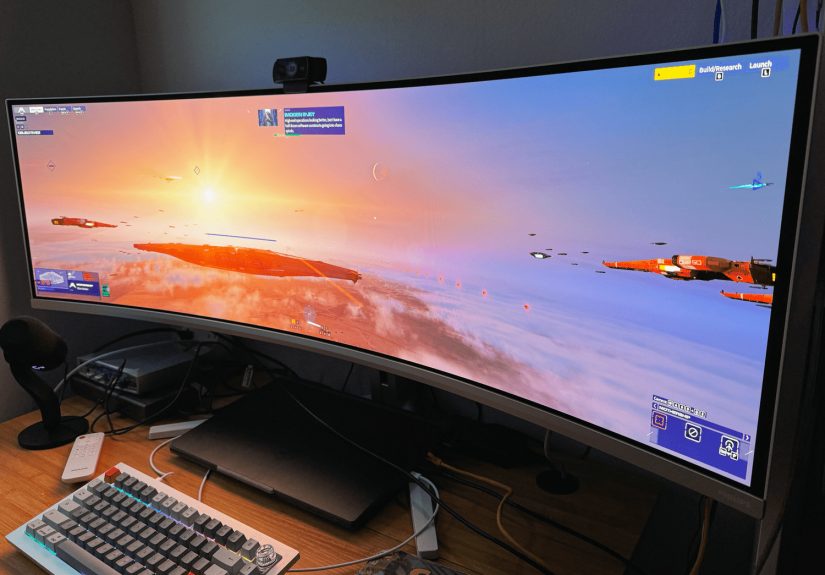
The Philips Evnia 49M2C8900 is one of those displays that makes a strong first impression before you even power it on. It is enormous, curved, glossy, and unapologetically premium-looking. On paper, it sounds like a fantasy draft pick for gamers: 49 inches, QD-OLED panel tech, 5120 x 1440 resolution, 240Hz refresh rate, a 0.03ms response time, DisplayHDR True Black 400, Ambiglow lighting, USB-C connectivity, and built-in speakers that are not an afterthought for once. In practice, it delivers plenty of what makes OLED gaming monitors feel special, but it also brings the usual OLED caveats and a few super-ultrawide-specific quirks along for the ride.
So, is this giant curved OLED gaming monitor a glorious endgame display, or just an expensive way to discover that your desk is smaller than you thought? The short answer: it is incredibly impressive, occasionally annoying, and absolutely not for everyone.
What the Philips Evnia 49-Inch OLED Curved Gaming Monitor Actually Is
The Philips Evnia 49-inch OLED curved gaming monitor is effectively the equivalent of putting two 27-inch 1440p monitors side by side and removing the seam in the middle. You get a 32:9 aspect ratio, a 1800R curve, and a Dual QHD resolution of 5120 x 1440. That makes it a super-ultrawide display built for immersion, multitasking, and the kind of gaming setup that quietly screams, “I absolutely spent too much money on my PC, and I regret nothing.”
Under the hood, the star of the show is the QD-OLED panel. That matters because QD-OLED combines OLED’s signature perfect blacks and near-instant pixel response with rich, saturated color. The result is a screen that looks punchy, cinematic, and fast in ways traditional LCD gaming monitors still struggle to match. Blacks look black instead of “dark gray pretending to be black,” contrast is excellent, and motion clarity is one of the monitor’s biggest selling points.
Design: Beautiful, Premium, and Slightly Ridiculous
One of the most surprising things about the Evnia is that it does not look like a typical angry gamer spaceship. Philips gave it a cleaner white-and-silver design that feels more upscale than aggressive. It has a premium vibe that works in a gaming room, but it also does not look out of place in a home office. That is a small win for anyone who wants a monster gaming display without the usual “transformer with RGB issues” aesthetic.
That said, this monitor is still huge. Not “kind of large” huge. Not “might need to shuffle a few things around” huge. More like “this monitor has now become the furniture” huge. The stand is sturdy and adjustable, but it takes up real estate, and the screen itself is so wide that you need a genuinely deep desk to make the setup comfortable. If your desk is shallow, the Evnia can feel like it is leaning into your personal space like an overly friendly golden retriever.
The glossy screen coating also deserves a mention. It helps the picture look vibrant and luxurious, but it also means reflections can become part of the viewing experience if you have bright windows, overhead lights, or a tendency to game in a room lit like a department store.
Display Quality: This Is Why People Keep Buying OLED
The main reason to buy the Philips Evnia 49-inch OLED curved gaming monitor is simple: the image looks fantastic. In SDR, the picture is rich, colorful, and deeply immersive. QD-OLED gives the screen strong color volume and vivid saturation, while OLED contrast makes games, movies, and darker scenes feel more dimensional than they do on most IPS or VA alternatives.
This is the kind of screen that makes neon-heavy games look absurdly good. Space games, racing sims, story-driven action titles, and atmospheric horror games all benefit from the Evnia’s combination of deep blacks, excellent contrast, and fast response. Shadow-heavy scenes look moody and dramatic rather than washed out, and bright colors have a pop that feels expensive in the best way.
There is, however, a catch. Actually, a few catches. First, out-of-the-box picture modes can be inconsistent. Some modes look excellent, while others drift enough in color accuracy or gamma that you may find yourself tweaking settings sooner than expected. This is not a disaster, but it does mean the Evnia is not quite a “plug it in and forget it” masterpiece.
Second, HDR is good, but it is not the clean knockout punch the spec sheet might suggest. The monitor handles dark HDR scenes beautifully because OLED contrast is doing heavy lifting there. Bright highlights can look sharp and dramatic in smaller areas of the screen. But when big portions of the image need to get bright at once, the monitor feels less punchy than some buyers may hope for. If you are expecting a retina-scorching HDR experience, this is more “cinematic and contrasty” than “flashbang with certification.”
Text Clarity and Daily Desktop Use
For work, browsing, and productivity, the Evnia is both awesome and a little weird. The extra width is wonderful for spreadsheets, timelines, side-by-side windows, chat apps, and browser tabs. You can spread your work out in a way that feels liberating. It is the digital equivalent of upgrading from a studio apartment to an open loft.
But like many QD-OLED monitors, text clarity is not absolutely perfect. Small fonts and high-contrast edges can show a bit of fringing because of the panel’s subpixel structure. Some people barely notice it. Others spot it immediately and never stop seeing it. If your life revolves around writing, coding, spreadsheets, or long hours of reading tiny text, this is worth knowing before you buy.
Gaming Performance: Fast, Smooth, and Seriously Addictive
Now for the fun part. The Philips Evnia 49-inch OLED curved gaming monitor is excellent for gaming. The 240Hz refresh rate gives motion a fluid, responsive feel, and OLED’s near-instant pixel response keeps moving objects sharp with very little blur. This is exactly where the monitor earns its “hands-on” reputation, because the combination of speed and size is not subtle. It feels dramatic.
In games that support 32:9 properly, the immersion is outstanding. Racing games feel wider and more natural. Flight sims and space games become gloriously panoramic. First-person games can feel more expansive and immediate. Even some third-person titles benefit from the extra visual width, assuming the field of view scaling plays nicely.
Support for AMD FreeSync Premium Pro and NVIDIA G-SYNC compatibility also helps keep gameplay smooth, which matters on a display this fast and this wide. If you have a high-end gaming PC, the Evnia gives it room to flex.
But this is also where reality taps you on the shoulder. Not every game supports 32:9 well. Some titles handle the aspect ratio beautifully, while others slap black bars on the sides, crop awkwardly, or make menus behave like they were designed during a very confusing lunch break. Super-ultrawide gaming is amazing when it works and mildly irritating when it does not.
There is also the raw performance demand. Pushing 5120 x 1440 at high settings and high frame rates is not light work. This monitor is an especially good match for powerful GPUs, not bargain-bin graphics cards that start sweating when you open Chrome and a game launcher at the same time.
Audio, Connectivity, and Features That Actually Matter
One of the Evnia’s sneaky strengths is that it is not just a pretty panel. It is also surprisingly well-equipped. You get USB-C with power delivery, a USB hub, HDMI 2.1, DisplayPort, KVM support, and a remote for easier menu navigation. That makes the monitor more practical than some premium gaming displays that behave as if features beyond “screen turns on” are somehow beneath them.
The built-in speakers are especially worth calling out. Usually, “monitor speakers” is a phrase that means “sound will come out, technically.” Here, the built-in 30W DTS speaker system is actually usable and, by monitor standards, downright impressive. No, it will not replace a dedicated speaker setup if you care deeply about audio, but it is far better than the thin, sad little chirping you get from most monitors in this category.
Ambiglow is another headline feature. Done well, it adds a nice sense of atmosphere by extending on-screen colors around the monitor. It can make games and movies feel more immersive, especially in a dim room. Still, it is more of a fun extra than a reason to buy the display on its own. Think of it as seasoning, not the meal.
The Less Glamorous Stuff: The Quirks Are Real
The Philips Evnia 49-inch OLED curved gaming monitor is great, but it is not a flawless giant. OLED care features are part of the package, and that means living with reminders and refresh cycles designed to protect the panel over time. Pixel Refresh is useful, sensible, and slightly annoying in the way healthy habits often are. You know it is good for you, but you may still roll your eyes when it interrupts your flow.
Brightness management can also be noticeable, especially if you are sensitive to Auto Brightness Limiter behavior. On a screen this large, shifts in brightness are harder to ignore than they are on smaller OLED displays. Add in the glossy coating, the occasional picture mode frustration, and the text-rendering caveat, and it becomes clear that this is a premium monitor with premium compromises.
Who Should Buy the Philips Evnia 49-Inch OLED Curved Gaming Monitor?
You should seriously consider this monitor if you want a 49-inch OLED gaming monitor that feels immersive, fast, and luxurious; if you play a lot of racing games, sims, cinematic action games, or open-world titles; if you want one display that can handle gaming and productivity; and if you have the desk space and GPU horsepower to support it.
You should probably pass if you are extra sensitive to text fringing, want blistering full-screen HDR brightness, mainly play games with poor ultrawide support, or need something more practical than spectacular. A smaller OLED or a strong Mini-LED alternative may fit your life better.
Final Verdict
The Philips Evnia 49-inch OLED curved gaming monitor is a seriously impressive piece of hardware. It combines a huge super-ultrawide canvas, OLED contrast, great motion clarity, useful connectivity, and surprisingly good audio into a package that feels special when it is doing what it does best. It turns the right games into events. It makes multitasking feel easy. And it looks far more elegant than many gaming monitors with similar ambitions.
At the same time, it is not a magic trick that erases the usual OLED concerns or the practical tradeoffs of a 49-inch 32:9 panel. There are brightness limitations, panel-care interruptions, occasional setup fiddling, and the ever-present question of whether your favorite game actually supports this gloriously absurd aspect ratio.
Still, if you want a premium curved gaming monitor that leans hard into immersion and visual quality, the Philips Evnia 49M2C8900 makes a strong case for itself. It is big, fast, beautiful, and a little needy. Much like a high-performance sports car, really. Gorgeous when dialed in, slightly dramatic when it is not, and hard to forget once you have spent time with it.
Extended Hands-On Experience: Living With the Philips Evnia 49-Inch OLED Curved Gaming Monitor
After the initial “wow, this thing is gigantic” moment wears off, the Philips Evnia 49-inch OLED curved gaming monitor starts revealing what daily life with a super-ultrawide OLED actually feels like. And that experience is not just about raw specs. It is about rhythm. You sit down, wake the monitor, and the first thing you notice is how much visual territory you have. A game on one side, Discord and performance monitoring on the other, or a video timeline stretched luxuriously across the screen with room for tools and preview windows. The Evnia changes how you arrange your digital life, and once you get used to that space, smaller monitors can feel oddly cramped.
For gaming, the most memorable moments usually come from titles that understand what a 32:9 display is supposed to do. Racing games are the obvious stars here. The extra width creates a better sense of speed and peripheral awareness, so corners feel more natural and trackside scenery sweeps by with a satisfying, cinematic flow. Flight sims and cockpit-based games also feel almost tailor-made for the format. When the curve wraps the image around your line of sight, the experience becomes less “looking at a monitor” and more “sitting inside a very expensive digital window.” It is not VR, of course, but it scratches some of the same itch.
Then there are the games that do not cooperate. Some launch perfectly and make you grin. Others behave like they have never heard of 32:9 in their lives. Menus can stretch, HUD elements can wander too far to the edges, and a few titles greet you with black bars like they are doing you a favor. That inconsistency is part of super-ultrawide ownership, and the Evnia does not magically solve it. What it does do is make the successful experiences so good that you are more willing to forgive the failures.
For work, the story is a little more practical and a lot more mixed. The width is fantastic for multitasking. It is easy to keep multiple full-size windows open without the mental clutter that sometimes comes with stacking apps on smaller screens. But over long office-style sessions, the realities of OLED monitor ownership creep in. Static elements, taskbars, logos, and recurring app layouts make you more aware of panel-care features than you would be on a standard LCD. The built-in protections are smart and necessary, but they are still reminders that this is a premium display that wants a little maintenance in exchange for its gorgeous image.
The Evnia also has personality. The Ambiglow lighting can be fun in a dark room, and the speakers make casual use more convenient than expected. You can absolutely sit down for a quick session without turning on external speakers or fussing with extra peripherals. That may sound minor, but it makes the monitor feel more complete. It is not just a panel with ports attached; it feels like a full setup centerpiece.
In the end, living with the Philips Evnia 49-inch OLED curved gaming monitor feels a lot like owning a luxury item that also happens to be a performance machine. On the right day, with the right game, the right room lighting, and the right settings, it feels spectacular. On the wrong day, when glare sneaks in, a game refuses to behave at 32:9, or the panel-care system pops up at an inconvenient time, it reminds you that premium gear still comes with tradeoffs. But even then, it rarely stops being interesting. And that may be the best compliment you can give a display like this: it does not just show your content. It changes the way the whole setup feels.