Table of Contents >> Show >> Hide
- A Quick Refresher on Hannibal
- Main Hannibal Cast List (2001 Film)
- The TV Series Hannibal: A New Ensemble for the Same Legend
- How the Hannibal Cast Shaped Modern Horror
- Fun Trivia and Cast Connections
- Watching Hannibal Through the Cast’s Eyes: A Fan Experience
- Final Thoughts: Why the Hannibal Cast Still Matters
If you’ve ever watched Hannibal and thought, “Wow, these people look
way too comfortable around cannibals,” you’re not alone. One of the biggest
reasons the 2001 film Hannibal (and later the TV series) stuck in
pop culture is its unforgettable cast. From Anthony Hopkins’ chilling charm
to Julianne Moore’s steel-nerved Clarice, the actors are the secret ingredient
that makes this grisly story go down surprisingly smoothly.
In this guide, we’ll walk through the key Hannibal cast list:
the main actors and actresses from Ridley Scott’s 2001 film, how their
performances shaped the movie, and how the later TV series reimagined those
roles with a new ensemble. Think of it as a character-focused menu just
without any questionable entrées.
A Quick Refresher on Hannibal
The film Hannibal (2001) is the follow-up to the Oscar-winning
The Silence of the Lambs. Set ten years later, it finds Dr. Hannibal
Lecter living under an assumed identity in Florence, Italy, while FBI agent
Clarice Starling tries to track him down before one of his surviving victims,
the disfigured billionaire Mason Verger, exacts his revenge.
The movie leans heavily on its ensemble. It doesn’t just rely on shock value;
it depends on actors who can sell a twisted mix of horror, dark humor, and
psychological chess. That’s exactly what this cast does.
Main Hannibal Cast List (2001 Film)
Anthony Hopkins as Dr. Hannibal Lecter
Let’s start with the obvious: Anthony Hopkins as Dr. Hannibal Lecter. By the
time Hannibal hit theaters, Hopkins had already turned the cannibal
psychiatrist into one of cinema’s most iconic villains. Here, he leans even
more into the character’s theatrical side delivering silky, polite dialogue
while casually planning terrible things over a gourmet meal.
Hopkins’ performance in this film is less confined than in
The Silence of the Lambs. Instead of talking through glass in a
basement cell, this Lecter walks freely through art museums, crowded streets,
and fancy dinners in Florence. That freedom lets Hopkins showcase Hannibal’s
charisma: he’s not just terrifying, he’s disturbingly charming, which makes
the horror land even harder.
Julianne Moore as Clarice Starling
Taking over from Jodie Foster, Julianne Moore steps into the role of FBI
agent Clarice Starling. It’s a tough assignment: she has to honor a character
audiences already love while bringing something new to the table.
Moore’s Clarice is older, wearier, and very much done with politics. In
Hannibal, she’s not a trainee anymore she’s a seasoned agent who
’s had to fight her way through a male-dominated bureaucracy. Moore plays her
with a firm, almost icy resolve. Even when her bosses undermine her and
Lecter toys with her, she doesn’t crumble. The dynamic between Hopkins and
Moore feels different from the first film: less mentor–student, more two
professionals who know exactly how dangerous the other is.
Gary Oldman as Mason Verger
Gary Oldman plays Mason Verger, Hannibal’s only surviving victim if you
can call him “surviving.” Horribly disfigured and confined to a bed, Verger
is a wealthy predator plotting brutal revenge. Oldman is almost unrecognizable
under layers of prosthetics, and he leans into the character’s mix of
religious hypocrisy, sadism, and obscene wealth.
Oldman’s Verger gives the story a second villain. Hannibal might be a
cannibal, but Verger reminds you that evil also comes in the form of power
and entitlement. The scenes between Verger and his staff show just how far
he’s willing to go to see Lecter suffer even if it means feeding someone
to pigs.
Ray Liotta as Paul Krendler
Ray Liotta plays Paul Krendler, the smarmy Justice Department official who
undermines Clarice at every turn. If Verger represents money and vengeance,
Krendler represents political sleaze. He’s the kind of guy who will throw an
agent under the bus to protect his own career, then complain about the wine
selection.
Liotta adds a streak of pitch-black comedy to the film. Krendler is arrogant,
petty, and deeply corrupt which makes what eventually happens to him at
Hannibal’s dinner table both horrifying and, in a very dark way, inevitable.
Frankie Faison as Barney Matthews
Frankie Faison returns as Barney, the calm, professional orderly who once
watched over Lecter in the asylum. In Hannibal, he’s no longer
guarding a cell. Instead, he quietly sells off artifacts from Lecter’s past
and tries not to get dragged into the chaos.
Barney is one of the film’s few grounded presences. Faison gives the
character an understated dignity he’s seen enough horror to know not to
worship Lecter, even if others are still obsessed with him.
Giancarlo Giannini as Inspector Rinaldo Pazzi
Italian actor Giancarlo Giannini plays Inspector Rinaldo Pazzi, a Florence
policeman who realizes the refined academic in town is actually Hannibal
Lecter. Rather than quietly bringing in the FBI, Pazzi decides to cash in on
a private bounty, and that choice seals his fate.
Giannini plays Pazzi as a man torn between professional duty, family
pressures, and financial temptation. His storyline gives the film a noir-like
thread a detective who gambles with a monster and loses.
Francesca Neri as Allegra Pazzi
Francesca Neri plays Allegra, Pazzi’s wife. While her screen time is smaller,
she anchors Pazzi’s personal life, reminding us that the choices he’s making
don’t just affect him. She’s a glimpse of normalcy in a movie full of people
who have stepped way over the line.
Other Notable Supporting Performances
Beyond the leads, the Hannibal cast list includes a deep
bench of character actors who make the world feel lived-in and dangerous:
-
Željko Ivanek as Dr. Cordell Doemling, Verger’s doctor,
whose bedside manner is as unsettling as his boss. -
Hazelle Goodman as Evelda Drumgo, whose confrontation with
Clarice sets off the film’s opening disaster. -
David Andrews as FBI Agent Pearsall and
Francis Guinan as FBI Director Noonan, representing the
political pressure cooker Clarice operates in. -
Mark Margolis, Enrico Lo Verso, Ajay Naidu, Boyd Kestner, Ric
Young, Bruce MacVittie, Ivano Marescotti, Judie Aronson, and others
who fill out the criminal underworld, law enforcement circles, and the
international settings that give the movie scope.
Together, these actors create a world where everyone has an angle, and almost
no one is truly innocent. It’s the perfect ecosystem for a predator like
Lecter.
The TV Series Hannibal: A New Ensemble for the Same Legend
While this article focuses on the 2001 film, it’s impossible to talk about
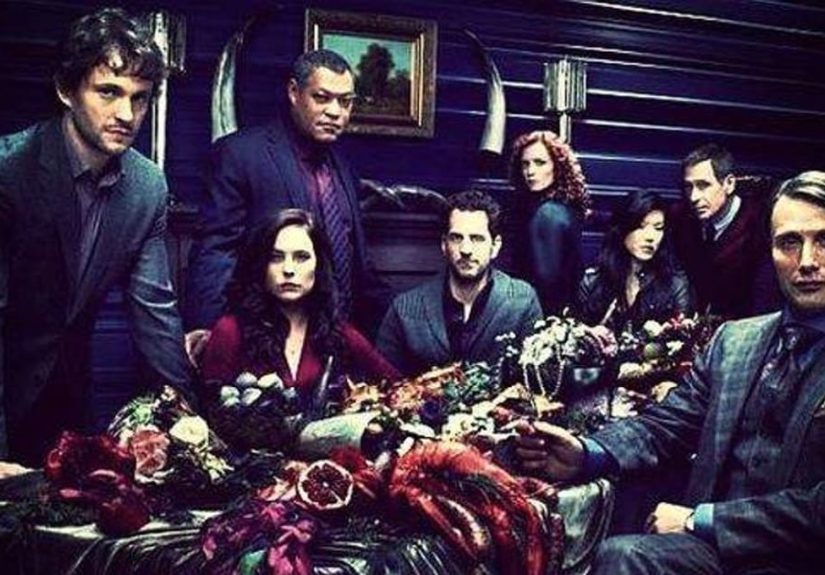
the Hannibal cast without mentioning the NBC TV series
(2013–2015). The show reimagined the Lecter mythos with a fresh set of
actors and a strikingly different tone more surreal, more stylized, and
deeply character-driven.
-
Mads Mikkelsen takes on Hannibal Lecter, playing him as a
sleek, enigmatic European psychiatrist whose elegance makes his crimes even
more disturbing. -
Hugh Dancy plays Will Graham, the gifted but fragile FBI
profiler whose empathy makes him both brilliant and vulnerable. -
Caroline Dhavernas appears as Dr. Alana Bloom,
Laurence Fishburne as Jack Crawford, and
Gillian Anderson as Dr. Bedelia Du Maurier, Hannibal’s
own therapist.
The TV cast built a loyal fanbase and proved that there’s room for multiple
interpretations of these characters. Where the movie leans into operatic
horror, the show leans into psychological slow burn. For fans, comparing
Hopkins vs. Mikkelsen or Moore vs. the series’ different Clarice-adjacent
roles is half the fun.
How the Hannibal Cast Shaped Modern Horror
One of the reasons people still talk about Hannibal is that its cast
pushed horror closer to prestige drama. Instead of treating the material as
disposable, actors like Hopkins, Moore, Oldman, and Liotta approached it with
the same seriousness they’d bring to an awards-season drama.
Hopkins plays Lecter with the confidence of someone who understands he’s
playing an icon. Moore refuses to let Clarice be minimized, even when the
script throws obstacles in her way. Oldman disappears inside prosthetics,
yet still makes Verger feel like a fully realized, if monstrously broken,
human being. Giannini and Faison add texture and perspective, reminding us
that the story reaches beyond the main cat-and-mouse game.
As a result, Hannibal became a reference point for later horror and
thriller projects that aimed higher than simple jump scares. It showed that
a gruesome story could still be carefully acted, elegantly staged, and
strangely beautiful if you’re willing to cast the right people.
Fun Trivia and Cast Connections
-
Several cast members have deep roots in the thriller and crime genres.
Anthony Hopkins, Gary Oldman, and Ray Liotta all came into
Hannibal with strong reputations for playing intense or morally
complex characters. -
Julianne Moore’s casting as Clarice Starling linked the film to her broader
body of work playing intelligent, complicated women under pressure. -
Many supporting actors, such as Mark Margolis and Giancarlo Giannini, had
already built careers in European or independent cinema before appearing in
Hannibal, adding an international feel to the cast. -
The TV series later kept that tradition alive by choosing actors like Mads
Mikkelsen and Gillian Anderson, who brought arthouse and prestige TV
credentials to a network horror show.
Watching Hannibal Through the Cast’s Eyes: A Fan Experience
If you revisit Hannibal today, one of the most rewarding ways to
watch it is to focus less on the shocks and more on the performances. The
story is violent and operatic, but the cast grounds it in recognizable human
behavior ambition, fear, pride, obsession, and the occasional terrible
life choice.
Start with Hopkins. Try watching his scenes as if Hannibal were the world’s
most dangerous host at a dinner party. Notice how he rarely raises his voice.
He gives people just enough attention and flattery to make them drop their
guard. When he does something horrific, it feels like a betrayal of that
“charm,” even though we know who he is. That tension is what makes the
character linger in your memory.
Then shift your attention to Julianne Moore. She spends a lot of the film
dealing with bureaucratic nonsense, public scrutiny, and professional
sabotage. Watching her performance, you can almost feel the weight of every
meeting, memo, and accusation. When she goes after Hannibal, it isn’t just a
noble hero vs. villain moment it’s a woman trying to do her job while the
system quietly hopes she fails. That perspective makes her scenes with Lecter
even sharper. She’s not mesmerized by him; she’s irritated that everyone else
is.
Gary Oldman’s Mason Verger offers a different kind of experience. His scenes
are grotesque, but if you focus on the acting beneath the makeup, you’ll see
a man who never actually stopped being a predator. His body is ruined, but
his sense of entitlement is perfectly intact. Watching him interact with his
staff and his animals, you get the sense that he has learned absolutely
nothing from what happened to him. That stubborn refusal to change is far
scarier than any scar on his face.
The supporting cast rewards close viewing too. Giancarlo Giannini’s Pazzi
feels like he wandered in from a classic Italian crime film, bringing with
him all the moral compromises of a cop who has been doing this for too long.
Frankie Faison’s Barney, by contrast, feels like someone who’s already seen
how badly things can go and is now quietly trying to survive the story
instead of drive it.
If you’re a fan of the TV series, rewatching the film with the show in mind
can be a fun game of comparison. Mads Mikkelsen’s smooth, mysterious Hannibal
is very different from Hopkins’ more theatrical monster, but both versions
share a crucial trait: they’re fascinating enough that people keep talking to
them long after they should have run away. The same goes for the various
Clarice/Will-type characters intelligent, empathetic people whose greatest
strength also makes them vulnerable.
Finally, pay attention to how the cast uses silence. Some of the most
unsettling moments in Hannibal are not the gory ones, but the quiet
pauses a slight head tilt from Lecter, a stare from Clarice, a nervous
glance from someone who realizes they’ve made a deal with the wrong devil.
Those small choices are where experienced actors really earn their keep, and
they’re a big reason the film continues to attract new viewers, even decades
later.
Final Thoughts: Why the Hannibal Cast Still Matters
Whether you come for the horror, the psychological drama, or just to see one
of cinema’s most infamous villains in action, the cast of
Hannibal is what makes the story memorable. Anthony Hopkins delivers
a performance that is equal parts charming and chilling. Julianne Moore keeps
Clarice grounded and human in the middle of chaos. Gary Oldman, Ray Liotta,
and the rest of the ensemble fill in a world where power, corruption, and
violence all sit at the same table.
For fans of dark thrillers, digging into the Hannibal cast list
isn’t just trivia it’s a roadmap to some of the most interesting careers
in modern film and television. And if you ever find yourself judging a movie
by its cast, remember: when a story is this unsettling, you really do want
the best people in the room.