Table of Contents >> Show >> Hide
- Why This Challenge Works Better Than It Should
- What Research Says About Drawing, Stress, Memory, and Motor Learning
- How to Run the 20-Minute Non-Dominant Dog Challenge
- Prompt Ideas to Keep the Series Going
- How Teachers, Parents, and Teams Can Use This Challenge
- Common Mistakes and Smart Fixes
- Mini FAQ for Search and Readers
- 500-Word Experience Add-On: What This Challenge Feels Like in Real Life
- Conclusion
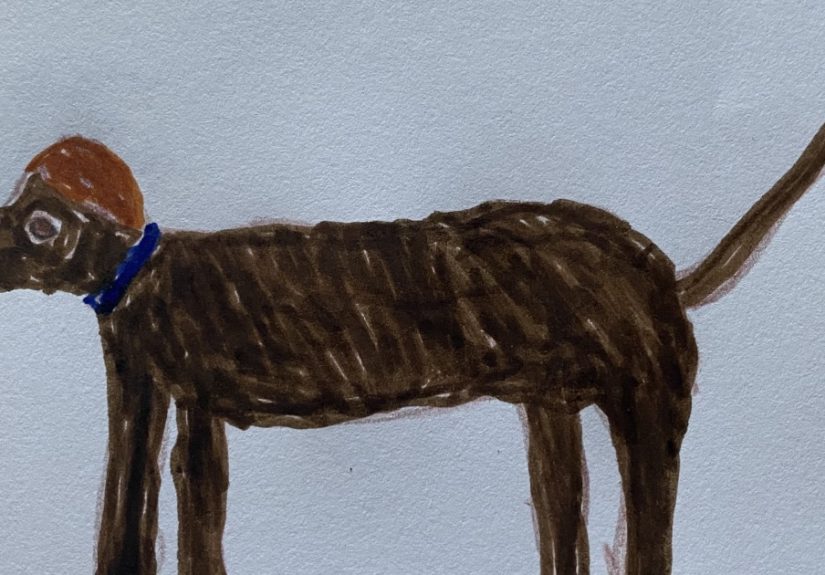
Let’s begin with a truth every perfectionist needs to hear: your first non-dominant-hand dog drawing will probably look like a potato with trust issues. That is exactly the point.
The “draw a dog with your non-dominant hand” challenge is funny, low-pressure, and weirdly powerful. It blends creativity, motor control, emotional reset, and social connection into one
gloriously wobbly activity. You don’t need talent, expensive supplies, or a beret. You need a pen, paper, and the courage to let your lines look like noodles.
This article takes the playful “Hey Pandas” style challenge and turns it into a genuinely useful practice you can use at home, in class, with your team, or on a stressful Tuesday afternoon.
We’ll cover what makes this challenge so addictive, what research says about drawing and the brain, how to run a 20-minute version, how to make it social, and how to avoid turning your
doodle session into a frustration session. At the end, you’ll also get an extended 500-word experience section so you can feel what this challenge is like in real lifenot just in theory.
If you’re here for a polished art tutorial, this is not that. If you’re here for a creativity workout disguised as chaos, welcome home.
Why This Challenge Works Better Than It Should
1) It forces your brain to slow down (in a good way)
Your dominant hand runs on autopilot for many daily tasks. Switching hands interrupts that autopilot and makes you pay attention to movement, pressure, and shape.
That awkwardness is not failureit’s focus. You become more intentional with every line because your “easy mode” is gone.
2) It lowers the stakes and raises the fun
The non-dominant hand gives everyone the same superpower: imperfection. In a normal drawing session, people compare skill levels. In this challenge, everyone looks mildly confused and hilariously sincere.
That levels the playing field and invites experimentation. You stop aiming for “gallery-worthy” and start aiming for “this dog has personality.”
3) It trains resilience in miniature
You’ll make an ugly line. Then another. Then somehow, against all odds, a dog appears. That process mirrors real life: messy attempts, small adjustments, surprising progress.
It’s a safe place to practice frustration tolerance and flexibility, two skills useful far beyond paper.
4) It’s social by design
Challenges are sticky because they are shareable. A non-dominant-hand dog drawing has built-in story value: “Look what my left hand did.” People laugh, post, vote, remix prompts,
and come back for another round. That makes this challenge ideal for online communities, classrooms, friend groups, and remote teams.
What Research Says About Drawing, Stress, Memory, and Motor Learning
Let’s keep this evidence-based but human-readable. Here are the key takeaways that matter for this challenge:
Drawing can support memory better than writing alone
Multiple experiments have shown a “drawing effect”: when participants draw information, recall is often better than when they only write it. The mechanism appears to involve a richer blend of
semantic processing, visual encoding, and motor action. In plain English: drawing gives your brain more hooks to hang memory on.
Important nuance: not all doodling equals better recall. Task-relevant drawing tends to outperform random free-form doodling in memory tasks. So if your goal is learning, draw what matters.
If your goal is stress relief and play, random doodling is still perfectly finejust don’t expect it to behave like a memory hack every time.
Even short art-making sessions can reduce stress markers
In a widely cited art-making study, many participants showed reduced cortisol after a single creative session. Translation: you don’t need to paint a ceiling fresco for three months to get a benefit.
Short, regular creative breaks can be useful reset tools, especially when attention is scattered and stress is rising.
Non-dominant-hand training improves specific motor skill
Research on non-dominant hand precision drawing suggests adults can improve speed, smoothness, and accuracy with surprisingly modest practice. That is encouraging for challenge formats:
you can begin clumsy, train briefly, and still see measurable change.
But here is the myth-busting part: using your non-dominant hand does not automatically make you “smarter” in a magical, general way. Gains are usually specific to what you practice.
Practice non-dominant drawing and you’ll likely get better at non-dominant drawingplus related confidence, patience, and creative comfort.
Creative activity supports emotional well-being
U.S. public-health and mental-health guidance consistently highlights healthy coping routines, including creative activities and self-care habits. Arts and health initiatives also report associations
between arts engagement and positive well-being outcomes across age groups. This doesn’t mean one dog doodle “cures stress,” but it does support the idea of small creative routines as a healthy habit.
How to Run the 20-Minute Non-Dominant Dog Challenge
Supplies (minimalist edition)
- 1 sheet of paper (or a notes app + stylus)
- 1 pen or pencil
- Timer set to 20 minutes
- Optional: colored markers for dramatic ears
Minute-by-minute format
- Minute 0–2: Warm-up scribbles. Draw circles, zigzags, and tiny paw prints with your non-dominant hand.
- Minute 3–6: Dog silhouette. Big shapes only: head, body, legs, tail. No detail panic.
- Minute 7–10: Face and expression. Eyes, nose, mouth, ears. Give your dog a mood: heroic, sleepy, suspicious, overcaffeinated.
- Minute 11–14: Personality props. Add one prop: tennis ball, bow tie, space helmet, detective hat.
- Minute 15–17: Line pass. Thicken key outlines, erase noise if needed.
- Minute 18–20: Caption + title. Name your masterpiece: “Sir Wiggleton III,” “CEO of Barking,” or “Definitely Not a Cat.”
Challenge rules that keep it fun
- Only non-dominant hand for drawing.
- No tracing.
- No deleting the whole drawing in frustration. Fix forward.
- Post or share within 10 minutes of finishing.
- Celebrate effort, not polish.
Prompt Ideas to Keep the Series Going
One challenge is fun. Ten challenges build a habit. Rotate these prompts to keep your audience engaged:
- Dog Jobs: firefighter dog, chef dog, astronaut dog, librarian dog.
- Dog Emotions: proud dog, jealous dog, dramatic dog, confused dog at math class.
- Dog Eras: medieval knight dog, 80s rockstar dog, futuristic cyber-dog.
- Dog Mashups: sushi dog, cactus dog, cloud dog, detective dog.
- Dog + Story: draw a dog that just found a secret map.
Scoring ideas (if your group loves competition)
- Most Expressive Face
- Best Use of Chaos
- Funniest Caption
- Most Unexpected Prop
- People’s Choice
Pro tip: keep the tone warm and funny. The fastest way to kill a creative challenge is to turn it into an exam.
How Teachers, Parents, and Teams Can Use This Challenge
In classrooms
Use it as a 10-minute transition before writing or discussion. It helps students shift attention, reduces performance anxiety, and gives quieter students a low-stakes way to participate.
You can tie it to language arts (“write a one-paragraph backstory for your dog”) or science (“draw a dog adapted to desert life”).
At home
Try “Family Sketch Night.” Everyone draws the same prompt with their non-dominant hand, then tells a 30-second story about their dog. This is a simple, screen-light activity that invites laughter
without requiring expensive materials or long setup.
For remote or office teams
Run it as a 15-minute morale break. People post drawings in a shared channel, then vote with emojis. You get a quick reset, a conversation starter, and a reminder that creativity belongs at work too.
Common Mistakes and Smart Fixes
Mistake: “I’m terrible at this, so I quit.”
Fix: Replace quality goals with process goals: finish in time, add one funny detail, write a caption. Completion builds momentum.
Mistake: Too much detail too soon
Fix: Start with big shapes first. Details only after the silhouette reads clearly as “dog,” not “mystery cloud.”
Mistake: Comparing your sketch to skilled artists
Fix: Compare your drawing to your last non-dominant drawing, not someone else’s dominant-hand masterpiece.
Mistake: Confusing doodling with targeted learning
Fix: If the goal is memory support, draw the exact concept you want to remember. If the goal is emotional reset, free-form is fine.
Mini FAQ for Search and Readers
Is drawing with your non-dominant hand good for your brain?
It can be a useful challenge for attention, motor control, and creative flexibility. It’s best understood as skill-specific practice, not a magic intelligence upgrade.
Can beginners do the non-dominant hand dog challenge?
Absolutely. Beginners often enjoy it most because there’s no expectation of perfection.
How often should I do this challenge?
Two or three short sessions per week is plenty to build confidence and visible improvement.
Does this help with stress?
Many people experience it as a calming, playful break. It works best as one part of a broader healthy routine (sleep, movement, social support, and creative downtime).
What if I’m left-handed?
Easy: use your right hand for the challenge. The rule is simpleuse the hand you use less.
500-Word Experience Add-On: What This Challenge Feels Like in Real Life
Experience 1: “The Tail That Became a Tornado”
I sat down after a long day with a cup of tea, a black pen, and exactly zero faith in my non-dominant hand. My first line looked like it had tripped over itself.
I drew the dog’s body as an oval, then added four legs that were definitely from different species. The tail started as a gentle curve and somehow became a weather event.
I laughed out loud, which I had not done all day. Halfway through, I noticed I was breathing slower. I stopped judging every line and started asking, “What’s next?”
The dog got a superhero cape because why not. The final drawing was objectively ridiculous, but my mood was completely different: lighter, warmer, less tense.
The best part wasn’t the resultit was the shift from “I need to perform” to “I get to play.”
Experience 2: “Family Night, Accidental Comedy Hour”
We tried this with three generations at one table: teenager, parents, and grandparent. Everyone used their non-dominant hand, and everyone complained during minute two.
Then the jokes started. One dog had six eyebrows. One looked like a loaf of bread with ears. My grandmother drew a tiny crown and announced, “This is Queen Barkalot.”
We ended up talking more in those twenty minutes than we had in three evenings of scrolling in silence. After each person shared their drawing, we gave awards: Best Tail Drama,
Most Suspicious Face, and Lifetime Achievement in Accidental Abstract Art. No one “won,” but everyone wanted round two.
Experience 3: “Classroom Reset That Actually Worked”
A teacher used this challenge right after a difficult test. Students were restless, and focus was low. She set a 12-minute timer, gave one rule (“wrong hand only”),
and one prompt (“draw a dog who just discovered a secret”). At first there were eye-rolls. By minute five, the room was buzzing. Students who rarely volunteered started
showing their drawings and explaining their dog stories. One student said, “I’m bad at drawing, but this was fun because everyone was bad today.” That line says everything.
Equal awkwardness can create equal courage. The class transitioned into writing with better energy and fewer shutdowns.
Experience 4: “Team Break, Better Meeting”
In a remote team check-in, energy was flat and people looked fried. We used a shared board and ran a 10-minute non-dominant dog round before discussing project blockers.
People posted names like “Bark Zuckerberg” and “Sir Sniffs-a-Lot.” Laughter happened fast, but so did something else: people became more open.
When the meeting shifted to real issues, the tone stayed human and collaborative. The challenge didn’t solve deadlines or budgets, but it improved the way we talked through them.
Sometimes the value of a creative break is not in the drawing itself; it’s in the social glue it creates.
Across all these experiences, one pattern keeps showing up: the challenge works because it is imperfect on purpose. It creates permission to experiment, permission to laugh,
and permission to be a beginner again. That combination is rareand useful.
Conclusion
“Hey Pandas, Draw A Dog With Your Non-Dominant Hand” is more than a quirky internet prompt. It’s a compact creativity ritual that can support focus, emotional reset, and social connection,
while nudging your motor skills outside autopilot. You don’t need to be artistic. You just need to show up, draw badly, and keep going anyway.
If you run this challenge online, keep the tone playful and inclusive. If you run it offline, keep it short and repeatable. And if your first dog looks like a confused croissant, congratulations:
you’re doing it exactly right.