Table of Contents >> Show >> Hide
- Quick Jump
- What the prompt is really asking
- What “cool” actually means (and why it varies)
- The patterns: what people tend to share (and why it works)
- How to pick your coolest thing without overthinking
- How to photograph it and tell the story
- If it’s valuable, protect it like a pro
- Why prompts like this keep working (even after they’re “closed”)
- Experiences: the coolest-thing moments people remember
- Conclusion
There are two kinds of people on the internet: the ones who post vacation photos, and the ones who post a single image of a mysterious object and instantly become the most interesting person you know. That’s the energy behind Bored Panda’s community prompt, “Hey Pandas! Show Me The Coolest Thing You Own (Closed).”
The premise is delightfully simple: pick the one possession that makes people lean in and say, “Waitwhat is that?” Take a photo. Add a little context. Then watch strangers bond with you over a chest older than most countries, a shiny mineral that looks like it fell out of a fantasy novel, or a tiny gadget that does one weird thing extremely well.
Even though the prompt is labeled “Closed,” the idea is evergreen. You can still play along at home (or in your group chat) because the real fun isn’t “winning.” It’s discovering how objects become storieshow a thing can be useful, beautiful, odd, sentimental, or all four at once.
What the prompt is really asking
Bored Panda’s “Hey Pandas!” posts are essentially digital campfires: one question, a bunch of photos, and a comment section that turns into a friendly show-and-tell. This particular prompt asked readers to share the coolest thing they ownthen people responded with items that weren’t just “nice,” but conversation-starting.
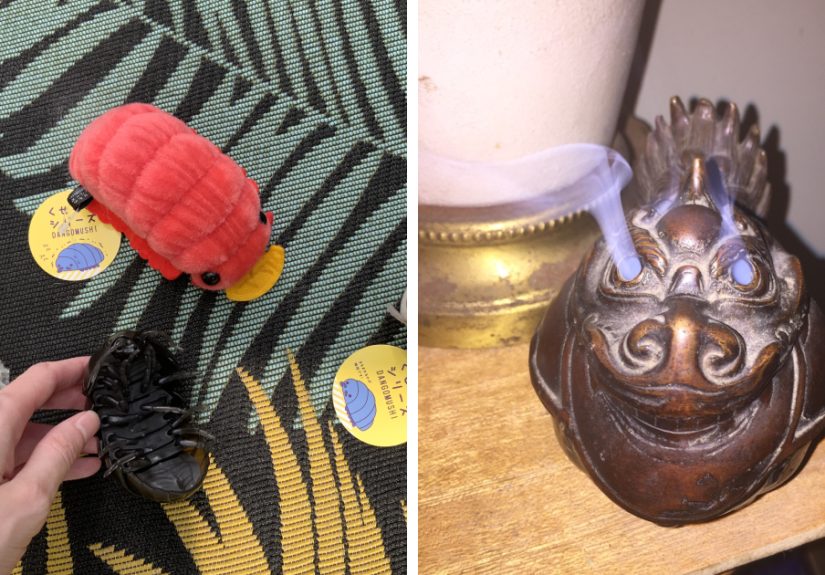
The sample submissions on the page make the point quickly. One person posted an antique chest dated to the late 1600s (yes, the 1600s). Another shared an incense burner shaped like a smoking dragon. Someone else showed off a set of rolling woodlice models from Japantiny creatures that curl into a ball, because apparently whimsy is a feature, not a bug. And the list keeps the variety going: a cultural headpiece, a real amethyst, and other objects that blur the line between collectible and character in your life.
Notice what’s missing: nobody needs a perfect backdrop, a fancy camera, or a museum label. The “cool factor” lives in what the object representshistory, craft, engineering, humor, or a memory that’s impossible to Photoshop.
What “cool” actually means (and why it varies)
“Coolest thing you own” sounds like a single category, but it’s really a choose-your-own-adventure. One person’s coolest thing is a rare collectible. Another person’s coolest thing is a battered notebook filled with sketches.
Cool doesn’t have one definitionso let’s break it into a few types that show up again and again.
1) Time-travel cool
These are objects with a sense of age and continuity: heirlooms, antiques, or anything that makes you feel like you’re holding a piece of a longer story. An old chest, a vintage tool, a family-made quilttime-travel cool is less about perfection and more about proof. Proof that this thing existed before you did and will probably outlast you (politely).
2) Engineering cool
Some objects are cool because they’re clever. A pocket tool that solves three problems. A mechanical toy with surprising motion. A device that does one specific job so well it feels like magic. Engineering cool is the satisfaction of “Who thought of that?”the kind of item you hand to someone just to watch their eyebrows lift.
3) Handmade cool
Handmade doesn’t have to mean “artisan marketplace.” It can mean “my friend built this,” “I learned how to make this,” or “my family passed this down.” Handmade cool has fingerprints on itsometimes literallyand that’s the point. The imperfections are part of the signature.
4) Weird-but-wonderful cool
The internet loves a lovable oddity: a dragon incense burner, a quirky figurine, an unusual mineral, a strange art piece that makes your guests ask questions. Weird cool works because it sparks curiosity without needing a long explanation. It’s the object equivalent of an excellent one-liner.
5) Heartbeat cool
This is the category that hits people unexpectedly: the object you can’t replace. It might be “worth” very little in dollars but a lot in meaning. And psychology research backs up why these things stick with usobjects can become symbols of identity, relationships, and memory, which changes how we value them compared with people who don’t share that history.
The patterns: what people tend to share (and why it works)
When you look at prompts like this, a few patterns pop out. They’re useful if you’re trying to figure out what you’d shareor if you’re writing about internet culture, collecting, or the psychology of possessions.
Heirlooms and antiques: “This survived. So will I.”
Antique objects get attention because they compress time into something you can hold. A centuries-old chest isn’t just a chestit’s a witness. People love that. It’s also why even non-collectors can’t resist asking: “How did you get that?” and “What’s the story?”
Statement pieces: objects with instant personality
A dragon-shaped incense burner is a perfect example of “instant personality.” It doesn’t need a résumé. It announces itself. These items do well online because they communicate in a split second, even on a fast scroll.
Curiosities and mini-collections: the joy of specificity
The Japanese rolling woodlice models are a master class in specificity. They’re not just “toys.” They’re a tiny world you didn’t know existed until the photo showed up. The more specific the object, the more it feels like a portaland portals perform well on the internet.
Natural wonders: rocks that look like they have lore
Minerals and stoneslike an amethystsit at a fun intersection: they’re natural, beautiful, and oddly dramatic under light. They photograph well, they’re easy to appreciate, and they come with built-in “what is it?” energy. That makes them perfect for a “coolest thing” prompt.
Cultural objects: cool comes with responsibility
Cultural artifacts can be fascinating, but they also require extra care and ethical attention. If something is tied to a specific community or cultural tradition, it’s worth learning what it is, where it came from, and whether it was sourced responsibly. “Cool” gets even cooler when it’s respectful and informed.
How to pick your coolest thing without overthinking
If you try to choose the “coolest thing you own” by ranking everything you’ve ever touched, you’ll end up staring at your closet like it owes you money. Instead, use a few fast filters.
The “two-sentence test”
Pick an object and try to describe why it’s cool in two sentences. If you can do it, it’s a strong candidate. If you need a ten-minute TED Talk, it might still be coolbut it’s not as instantly shareable.
The “most-asked-about” test
Think about what guests comment on. What do people pick up? What do they ask you about? The coolest thing you own is often the thing you’ve already explained five times… and secretly enjoyed explaining every time.
The “I would miss this” test
If an object disappeared tomorrow, would you genuinely feel a loss? Not just “ugh, that was expensive,” but “that was part of my story.” This helps you find heartbeat coolthe kind that matters even when nobody is watching.
The “joy + usefulness” combo
Some of the best answers are items that are both practical and delightful: a tool you actually use, a kitchen gadget that saves time, a piece of furniture that’s functional but also has history. The sweet spot is “I use it, and it makes me happy.”
How to photograph it and tell the story
You don’t need professional lighting, but you do need clarity. Think of your post like a mini museum label, except with more personality and fewer velvet ropes.
Photo basics that make any object look better
- Use natural light near a window (avoid harsh direct sun that blows out details).
- Pick a calm background so the object is the star, not your laundry pile.
- Add a “scale clue” (a hand, a coin, a book) so viewers understand size.
- Shoot details: maker marks, textures, hinges, stitching, interesting wearthese are the “plot.”
The perfect caption formula (without sounding like a robot)
Captions work best when they answer three questions:
- What is it? Name it plainly first (“Antique cedar chest,” “Dragon incense burner,” “Rolling woodlice models”).
- Why is it cool? One specific reason (“dated to the 1600s,” “the smoke looks like the dragon is exhaling,” “they roll into a ball”).
- What’s the story? Where it came from, who gave it to you, what it reminds you of, or how you found it.
Bonus: turn it into a “micro-exhibit”
If you want your post to feel extra satisfying, add a tiny “label” section in your caption:
Year/era, material, origin (if known), and one fun fact.
It’s a small touch that makes people lingerand lingering is basically the highest compliment on the internet.
If it’s valuable, protect it like a pro
The internet loves cool stuff. Unfortunately, so do burglars, floods, and the laws of physics. If your coolest possession has significant monetary value or deep personal meaning, a little protection goes a long way.
Start with documentation (your future self will thank you)
Museum pros treat documentation as part of “care,” not paperwork. A strong record includes good photos, basic details (maker, dimensions, materials), purchase info (if you have it), and notes about condition. If the object is ever damaged, lost, or stolen, documentation can make recovery, repair, and insurance claims much easier.
Create a home inventory (yes, even if you rent)
Insurance and consumer-protection organizations consistently recommend keeping a home inventory: photos or videos of belongings, plus notes like serial numbers, receipts, and descriptions. It’s not glamorous, but it’s the difference between “I had a laptop” and “I had this exact laptop, model X, bought on this date.”
Practical approach: take a quick video walk-through of each room, then do close-ups of higher-value items. Update once a year or after big purchases. Some consumer resources suggest keeping your inventory somewhere secure outside the home (or in a protected digital backup) so it’s still available if the worst happens.
Use an app if it makes you more likely to actually do it
If spreadsheets make you want to nap, use a tool built for the job. The NAIC home inventory resources highlight scanning barcodes, uploading photos, grouping items by room/category, and exporting your inventory when neededfeatures that reduce friction, which is the real enemy here.
Know when you need an appraisal
If an item is genuinely valuablefine art, antiques, certain collectiblesconsider a professional appraisal. An appraisal isn’t just a price tag. It’s documentation: what the object is, its condition, and a justified valuation based on purpose (like insurance replacement value vs. fair market value). Guidance from collectors’ insurance resources also emphasizes using qualified appraisers and recognized professional standards for appraisal reports.
Protect the story, not just the object
The most irreplaceable part of many possessions is the story: who owned it, where it came from, what it meant. Here’s a surprisingly powerful move:
write a short “object story” paragraph and store it with your photos.
For digital photos and documents, Library of Congress resources recommend practical habits like descriptive file names, tagging, organizing into folders, and keeping multiple copies stored in different places. The goal is simple: if one device fails, your memories don’t go with it.
A quick safety note for posting online
Share proudly, but share smart. Avoid showing mail, keys, addresses, or clearly readable serial numbers in public posts. If you’re sharing something truly valuable, consider keeping certain identifying details private. “Cool” is better when it doesn’t come with a side of “oops.”
Why prompts like this keep working (even after they’re “closed”)
A prompt like “Show me the coolest thing you own” isn’t just about objectsit’s about identity and connection. People don’t merely post items; they post proof of their taste, their history, their hobbies, and their sense of humor.
Psychology research often discusses how ownership changes perceived value (the “endowment effect”), and how mementos and meaning can shape the way we attach to things. Translation for real life: the object matters, but the story matters moreand that’s why comment sections fill up with questions, compliments, and “I had one of those!” moments.
In a world where so much online content is polished, filtered, and optimized, a single photo of a beloved object feels oddly refreshing. It’s authentic without oversharing. It invites conversation without demanding attention. It’s a tiny, friendly reminder that humans are still humans, and we still like weird little treasures.
Experiences: the coolest-thing moments people remember
To make this topic feel real, here are several “you could totally picture this happening” experiences that show why the coolest thing you own becomes more than a thing. These are common, relatable scenariosmini-stories that capture how objects create connection.
1) The unexpected icebreaker at a new place
Imagine you’ve just moved into a new apartment or started at a new school. You don’t know anyone well yet, and small talk feels like chewing cardboard. Then someone notices the odd object on your shelfmaybe a dragon incense burner that makes smoke pour from its mouth like a movie effect. Suddenly the conversation has direction: “Where’d you get that?” “Does it really work?” “Okay, show me.” In ten minutes, you’ve gone from polite nodding to laughing over how ridiculous (and awesome) it is. The object didn’t replace your personality; it gave your personality a door to walk through.
2) The family story that finally gets told
At a family gathering, someone brings out an old chest or a handmade item that’s been in the family forever. Most of the younger relatives have seen it, but nobody ever asked about it. This time, someone does. The answer isn’t just “It’s old.” It turns into a story about who owned it, how it traveled, and what it meant during a tough time. People who usually scroll on their phones start listening because the object is now a character in the family narrative. You’re not just looking at wood and metal; you’re looking at the reason the family stayed connected across years.
3) The “I didn’t know you were into that!” moment
Sometimes the coolest possession reveals a hobby you’ve never talked about: mineral collecting, tiny models, vintage finds, DIY craft, or art. A friend comes over, sees your amethyst (or a small collection of unusual objects), and suddenly they’re asking questions that actually matter: “How do you find these?” “How do you know what’s real?” “What’s your favorite piece?” It’s one of the simplest ways to deepen friendshipsbecause it’s easier to talk about a shared interest than to force deep conversation out of nowhere.
4) The online post that finds your people
You post a photo of your coolest itemnothing dramatic, just honest enthusiasm and a short caption. Then the comments come in: someone recognizes it, someone shares a similar item, someone asks for advice, someone tells you a fun fact. You realize the internet can still be a place where strangers are kind about small joys. Better yet, your object becomes a magnet for the exact kind of people you’d probably get along with in real life: curious, enthusiastic, and just a little nerdy in the best way.
5) The day you decide to protect what matters
There’s also a quieter experience: the moment you realize your coolest thing deserves better than a random shelf in direct sunlight or a “somewhere safe” hiding spot you won’t remember later. You take proper photos, write down what you know, maybe store it more thoughtfully, and back up the story digitally. It feels oddly grown-up, but also satisfyinglike you’re honoring the object, not just owning it. And if the item is sentimental, writing down the story can be as meaningful as the preservation itself. You’re not just protecting a possession; you’re protecting a piece of your life.
That’s the secret of this prompt: the coolest thing you own isn’t only impressive. It’s a relationshipbetween you and the object, and between you and the people who learn its story.