Table of Contents >> Show >> Hide
- What Is HIIT, Exactly?
- Why HIIT Works (Without the “Miracle” Hype)
- “Good for Everyone” Means “Adaptable for Almost Everyone”
- How Hard Should HIIT Feel?
- HIIT Safety 101: Warm-Up, Progression, Recovery
- HIIT Workouts You Can Actually Do
- How to Progress Without Overdoing It
- HIIT Mistakes That Make People Quit
- How HIIT Fits Into a Weekly Plan
- HIIT for Different Bodies and Different Seasons of Life
- Conclusion: HIIT Is a FormatMake It Yours
- Real-World Experiences With HIIT (The “Yep, That’s Me” Section) 500+ Words
If you’ve ever Googled “quick workout” and then immediately felt attacked by the phrase “just do 45 minutes,”
welcome. High-Intensity Interval Training (HIIT) is the workout style that respects your schedule, your attention span,
and your desire to feel like a superhero in under half an hour.
HIIT workouts are short bursts of higher-effort movement mixed with lower-effort recovery. That’s it. No secret handshake.
No fancy gym membership required. And the best part? HIIT is adaptablemeaning it can work for beginners,
experienced athletes, older adults, people with busy jobs, and anyone who’s ever said, “I want results, but I also want dinner.”
This guide breaks down what HIIT is, why it works, how to do it safely, and how to make it fit your lifewhether you’re
sprinting, cycling, marching in place, or doing “enthusiastic chair cardio” because your knees have opinions.
What Is HIIT, Exactly?
HIIT (high-intensity interval training) alternates between:
- Work intervals: short periods of higher intensity effort
- Recovery intervals: lower intensity movement (or rest) to catch your breath
“High-intensity” doesn’t mean you must collapse dramatically onto the floor (though some people enjoy the drama).
It means you’re working harder than your “comfortable pace”often around vigorous effort for you.
Your high-intensity level depends on your fitness, age, health, and the movement you choose.
Common HIIT styles you’ve probably heard of
- Classic intervals: 30 seconds hard / 60 seconds easy
- Tabata: 20 seconds hard / 10 seconds easy (repeated 8 times)
- HIIT circuits: rotating through exercises (squats, push-ups, rowing, biking) in timed intervals
- Low-impact HIIT: faster pace without jumping (great for joints and beginners)
Why HIIT Works (Without the “Miracle” Hype)
HIIT is popular because it can build fitness efficiently. When you push effort up, then recover, your body learns to
handle changing demandslike walking up stairs, carrying groceries, chasing a toddler, or making it through the airport
when your gate is “only” 0.8 miles away.
1) It can improve cardio fitness (yes, even if you’re not “a cardio person”)
One major benefit linked to HIIT is improved aerobic capacity (often discussed as VO2 max). In plain English:
your body becomes better at using oxygen during effort, which can translate to better stamina in daily life and workouts.
2) It fits real schedules
HIIT sessions are often 10–30 minutes, including warm-up and cool-down. That matters because the best program is the
one you’ll actually doconsistently, imperfectly, and without needing a motivational speech from a mountain-top guru.
3) It’s flexible: you choose the intensity and the impact level
HIIT isn’t one workoutit’s a format. You can apply it to walking, cycling, swimming, rowing, strength moves, or
low-impact cardio. That’s why HIIT can be “for everyone” in the practical sense: most people can do
some version of interval training that matches their body and goals.
4) It can support metabolic health and body composition goals
Many people use HIIT for fat loss, weight management, or improving markers like blood pressure and blood sugar.
It’s not magic, and it doesn’t override nutrition or sleepbut it can be a powerful tool alongside a balanced routine.
If your goal is changing body composition, consistency plus strength training plus reasonable calories beats any single “fat-burning” trick.
“Good for Everyone” Means “Adaptable for Almost Everyone”
Let’s be responsible and real: not everyone should jump into all-out, breathless intervals on day oneespecially if you’ve been inactive,
have certain medical conditions, or are returning from injury. But most people can benefit from an interval-based approach
when it’s scaled appropriately.
Who HIIT tends to work well for
- Beginners: intervals help you train without holding a steady hard pace the whole time
- Busy adults: short sessions make consistency realistic
- Older adults: appropriately scaled HIIT can support fitness and function
- People who get bored easily: you’re never stuck doing the same effort for long
- Anyone building endurance: intervals teach pacing and recovery
When to slow down and get medical guidance
If you’ve been inactive or you have a chronic condition (like heart disease, diabetes, arthritis), it’s smart to talk with a clinician
about what intensity is appropriate. That’s not meant to scare youit’s meant to help you train safely and confidently.
How Hard Should HIIT Feel?
You don’t need a heart rate monitor to do HIIT well (though wearables can be useful). The simplest tool is the
talk test:
- Moderate effort: you can talk, but not sing
- Vigorous effort: you can only say a few words before you need a breath
For many HIIT sessions, your work intervals sit in the “vigorous” zone, while recoveries bring you down to moderate or light effort.
Beginners often do “moderate-hard” intervals first (because going from 0 to 100 is a cartoon plotline, not a training plan).
HIIT Safety 101: Warm-Up, Progression, Recovery
The fastest way to make HIIT miserable is to skip the basics. The best way to make HIIT sustainable is to respect them.
1) Always warm up (yes, always)
A warm-up helps your heart, muscles, and joints transition into harder effort. Keep it simple:
5 minutes of easy movement (walking, cycling, marching) plus a few gentle mobility moves.
2) Start with fewer intervals than you think you need
Beginners often do well with 4–6 work intervals at first. You’re building the habit and the skill of pacing,
not auditioning for an action movie.
3) Use recovery like it’s part of the workout (because it is)
Recovery is where your body regroups so you can hit the next work interval with good form.
If your form falls apart, your intensity is too high or your recovery is too short.
4) Schedule HIIT like a grown-up
- 2–3 HIIT sessions per week is a common sweet spot for many people.
- Alternate hard days with easier movement (walking, mobility, light strength, yoga).
- If you’re sore, exhausted, or sleeping poorly, reduce intensity or volume.
HIIT Workouts You Can Actually Do
Below are sample HIIT workouts with different impact levels. Choose one and keep it for 2–3 weeks before swapping.
Progress comes from repeating a plan long enough to adaptnot from collecting workouts like trading cards.
Workout A: The True Beginner HIIT (No Jumping, No Drama) 15 minutes
- Warm-up: 5 minutes brisk walk or march in place
- Intervals: 6 rounds of 20 seconds “work” / 70 seconds easy
- Work moves (pick one): fast walking, step-ups, incline treadmill, cycling, marching with arm swings
- Cool-down: 2–3 minutes easy pace + gentle stretching
Goal: finish feeling challenged but not wrecked. You should feel like you could do “one more round” if you had to.
That’s a good sign you chose the right intensity.
Workout B: Classic Cardio HIIT 20 minutes
- Warm-up: 5 minutes easy pace
- Intervals: 8 rounds of 30 seconds hard / 60 seconds easy
- Options: bike, rower, running, incline walk, swimming
- Cool-down: 3–5 minutes easy pace
“Hard” should feel like you’re working, but you’re not sprinting like your phone is at 1% and you’re searching for a charger.
Keep form smooth and controlled.
Workout C: Strength-Style HIIT (Joint-Friendly and Effective) 18 minutes
This one boosts your heart rate while building strength endurance. Use moderate weights or bodyweight.
- Warm-up: 4 minutes (squats to a chair, hip hinges, arm circles, light marching)
- Circuit: 3 rounds, 40 seconds work / 20 seconds rest
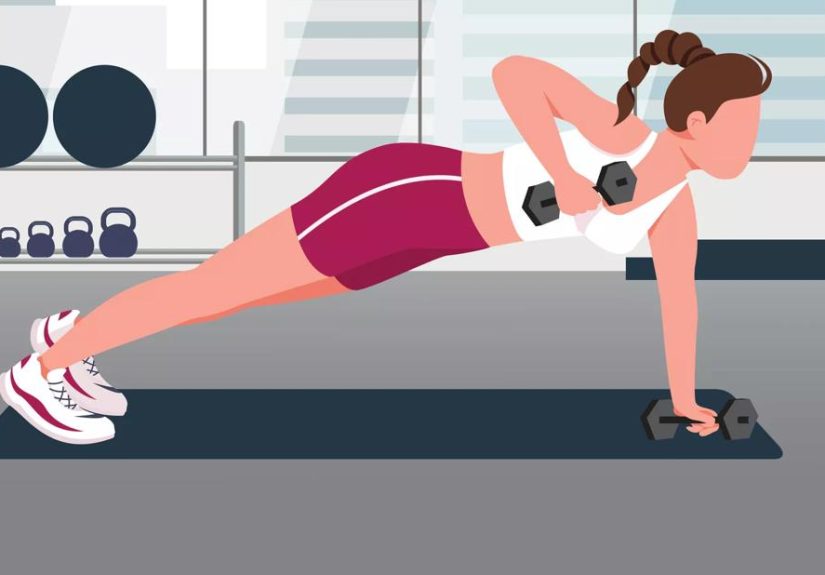
- Exercises: squat to chair, incline push-ups, dumbbell row (or band row), glute bridge, farmer carry (or march holding weights)
- Cool-down: 3 minutes easy movement + breathing
Workout D: Low-Impact “Apartment Friendly” HIIT 12 minutes
- Warm-up: 3 minutes
- Intervals: 8 rounds of 20 seconds work / 40 seconds easy
- Work moves: fast step-touch, speed skater steps (no jump), shadow boxing, high-knee marches, slow mountain climbers
- Cool-down: 2 minutes
How to Progress Without Overdoing It
HIIT is like hot sauce: a little can be amazing; too much can ruin your day.
Try one progression at a time:
- Add one interval (e.g., go from 6 rounds to 7)
- Increase work time slightly (20 seconds to 25 seconds)
- Reduce recovery a little (70 seconds to 60 seconds)
- Upgrade the movement (march → brisk walk → incline walk → jog)
If you change everything at once, your body doesn’t adapt fasteryou just get tired faster.
HIIT Mistakes That Make People Quit
1) Going too hard, too soon
The “all-out” approach is great for a movie montage. In real life, it usually causes burnout, sore joints,
or the kind of fatigue that makes you consider becoming a houseplant.
2) Choosing complicated moves at high speed
HIIT is not the time to learn an advanced choreography routine. Pick movements you can perform safely while breathing hard.
Simple is effective.
3) Treating recovery days like a myth
Recovery is where adaptation happens. If your HIIT frequency is high and your sleep is low, your progress may stall.
Rotate HIIT with easier cardio, mobility work, and strength training.
How HIIT Fits Into a Weekly Plan
Here’s a practical, balanced week for many adults:
- Mon: HIIT (cardio intervals)
- Tue: Strength training + easy walk
- Wed: Easy cardio (Zone 2-ish) or mobility
- Thu: HIIT (strength-style HIIT or low-impact intervals)
- Fri: Strength training
- Sat: Fun movement (hike, sport, dance, long walk)
- Sun: Rest or gentle recovery
The goal is not “maximum intensity every day.” The goal is repeatable training that keeps you healthy,
strong, and energetic.
HIIT for Different Bodies and Different Seasons of Life
The most underrated HIIT skill is being willing to modify. That doesn’t mean you’re “not doing it right.”
It means you’re training intelligently.
For joint sensitivity
- Use cycling, rowing, swimming, incline walking, or strength-style HIIT
- Choose step-based moves over jumps
- Keep intervals shorter at first (10–20 seconds)
For older adults
- Prioritize longer warm-ups
- Use low-impact intervals and stable movements
- Focus on consistency and form, not “all-out” intensity
For people returning after time off
- Start with “interval walking” (1 minute brisk / 2 minutes easy)
- Build volume first, then intensity
- Track recovery: sleep quality, soreness, energy
Conclusion: HIIT Is a FormatMake It Yours
HIIT workouts can be good for everyone because they’re adjustable. You can make intervals harder or easier, higher impact
or low impact, cardio-based or strength-based. You can do them in a gym, at home, outside, or in a hotel room with a suspiciously decorative chair.
If you want the simplest place to start: choose one movement you can do safely (walking, cycling, step-ups, marching),
do 5 minutes of warm-up, then 6 short intervals, and cool down. Repeat twice a week for three weeks. You’ll learn pacing,
build confidence, and probably surprise yourself with how much better you feel.
Real-World Experiences With HIIT (The “Yep, That’s Me” Section) 500+ Words
HIIT looks great on paperclean intervals, perfect timing, motivational music that makes you feel like you’re starring in a sports commercial.
Real life, however, has a way of adding plot twists. The good news? Most people’s experiences with HIIT follow a very normal pattern:
awkward beginnings, a few “what was I thinking?” moments, and thenif they stick with a reasonable plannoticeable wins.
Experience #1: The beginner who thinks HIIT means “punishment.”
A lot of people start HIIT by going too hard on day one, because that’s what the internet screams. They pick high-impact moves,
do intervals that are too long, and end the workout seeing their life choices in flashback. Then they decide HIIT “isn’t for them.”
When that same person switches to low-impact interval walking (or cycling) with short work boutslike 20 seconds brisk, 70 seconds easyeverything changes.
The workout becomes challenging but doable. They finish feeling proud instead of broken. Within a few weeks, they notice everyday stamina improve:
stairs don’t feel like betrayal, and carrying groceries doesn’t require a dramatic pause halfway to the kitchen.
Experience #2: The busy adult who finally finds a routine that fits.
Many people don’t quit workouts because they’re lazythey quit because the plan doesn’t match their life. HIIT often clicks for busy schedules because
it’s efficient. A parent might squeeze in a 15-minute session while dinner bakes. A remote worker might do a quick interval circuit between meetings.
The common “aha” moment is realizing consistency matters more than workout length. They stop waiting for the mythical hour-long window of free time
and start stacking short sessions across the week. The result isn’t just fitness; it’s momentum. They feel like someone who works out, because they do.
Experience #3: The person who hates running but loves feeling strong.
Not everyone enjoys traditional cardio. Some people thrive with strength-style HIIT: squats to a chair, rows with bands, farmer carries, incline push-ups.
Their experience often includes a shift in mindset: “This is hard, but it’s my kind of hard.” They notice posture improving,
legs feeling steadier, and shoulders feeling more capable. The scale might not move fast, but clothes fit differently.
Their confidence grows because the workouts feel practicallike training for life, not just for a treadmill number.
Experience #4: The older adult who learns HIIT doesn’t have to mean jumping.
A lot of older adults assume HIIT is only for younger people doing burpees. Once they try safe, scaled intervalslike brisk walking, light cycling,
or low-impact step patternsthey often feel empowered. They may start cautiously, with longer recoveries and fewer rounds.
Over time, they become more comfortable with the sensation of “working hard” in a controlled way, and they learn to trust recovery.
Many describe better daily energy and improved confidence in movement. The biggest win isn’t becoming the fastest person in the gym;
it’s feeling more independent, stable, and capable in everyday tasks.
Experience #5: The person who discovers the secret ingredient is recovery.
One of the most common experiencesespecially for people who love intensityis realizing that more HIIT isn’t always better.
When people do HIIT too often, sleep can get worse, soreness lingers, and motivation dips. The “breakthrough” usually happens when they add easier days:
walking, mobility, light strength, or simply resting. Suddenly, their HIIT sessions feel sharper and more enjoyable.
They stop dreading workouts and start looking forward to them. That’s the version of HIIT that laststhe one that supports your life instead of stealing from it.
If any of these sound familiar, that’s a good sign. HIIT isn’t about perfection; it’s about a smart structure you can return to,
week after week, in whatever form your body needs right now.