Table of Contents >> Show >> Hide
- The Medieval Artist’s Biggest Problem: Zero Google Images
- The Greatest Hits: Unseen Animals, Seen Through Pure Imagination
- 1) The Elephant: A Castle With Legs (Plus a Bonus Trunk)
- 2) Sirens: When “Half-Bird” Becomes “Leggy Chicken Mermaid”
- 3) Crocodiles, Hydrus, and Other “Reptiles” That Look Like Dragons on a Diet
- 4) Hyenas, Onocentaurs, and the “We’re Not Even Trying To Be Real” Category
- 5) Sea Monsters on Maps: Fish + Land Animal = Accurate Enough
- 6) Rhinoceroses: The Original “I Heard It Has Armor” Problem
- Why These Animals Look So Weird (And Why That’s the Point)
- What Medieval Animal Fails Teach Us Today
- Conclusion: Long Live the Medieval Animal Imagination
- Field Notes: My Very Modern Experience Falling Into the Bestiary Rabbit Hole (Extra )
Imagine being a medieval artist whose job is to paint the wonders of creation… while having personally witnessed roughly
three of them: a chicken, a dog, and that one suspiciously judgmental goat behind the monastery.
No zoo livestreams. No nature documentaries. No “close-up rhinoceros 4K” search results. Just vibes, secondhand stories,
and a manuscript deadline that does not care about your “reference shortage.”
That’s how we ended up with some of the funniest medieval animal illustrations ever madeespecially in
illuminated manuscripts and medieval bestiary illustrations, where artists tried to depict
exotic beasts they’d never seen, using descriptions that were… let’s call them “creative.”
The results range from charmingly incorrect to “sir, that is a horse wearing a snorkel.”
The Medieval Artist’s Biggest Problem: Zero Google Images
Medieval Europe produced extraordinary art, but it wasn’t exactly a time of casual weekend safaris.
For many artists, “exotic animals” were things you heard about from travelers, pilgrims, crusaders, merchants,
or that guy at the market who swears his cousin’s friend met a camel once.
Sometimes rulers kept menageries, and sometimes unusual animals arrived as diplomatic gifts.
But most painters still worked from a distancedrawing animals through a chain of descriptions, copied images,
and symbolic traditions.
Bestiaries: Medieval “Nature Books” (With a Side of Moral Lessons)
A bestiary wasn’t simply a cute animal catalog. It was a mash-up of natural history, legend, and Christian symbolism.
Real animals and imaginary creatures shared the page like it was totally normal to put “lion” next to “basilisk” and
“sure, both of these exist, spiritually.”
In other words: the goal was often meaning, not zoological accuracy.
So if an elephant looks like a sturdy pony with a hose attachedwell, the important thing is that it teaches you a lesson,
like humility or strength or “please stop asking me why the elephant has human knees.”
Copying Was a Feature, Not a Bug
Many medieval painters learned by copying earlier manuscripts. If an old manuscript showed a crocodile that looked like a
grumpy dragon with fins, the next artist might copy it faithfullyeven if it was based on a traveler describing a crocodile
from 300 miles away while being chased by it.
This is how the “telephone game” of art works: each retelling preserves confidence and loses detail.
Symbol Beats Biology
Medieval viewers often read animals as moral metaphors. A unicorn might represent purity and the Incarnation story,
a siren might represent temptation and vanity, and a hyena might represent… complicated medieval ideas that are best left
in their century.
When symbolism is the point, “accuracy” becomes optional, like garnish.
The Greatest Hits: Unseen Animals, Seen Through Pure Imagination
Let’s tour the highlightsthose moments when medieval painters bravely said, “I have never seen this creature,
but I have heard of it, and that’s basically the same thing.”
1) The Elephant: A Castle With Legs (Plus a Bonus Trunk)
Elephants show up in medieval art in ways that are oddly relatable: large, important, and drawn with the nervous energy
of someone sketching from a description that begins, “It’s like a cow, but also like a mountain, and it might carry a tower.”
In some manuscript traditions, elephants are paired with architectureliterally the “elephant and castle” motif.
The animal becomes a moving platform: thick legs, a bulky body, and a structure perched on top like a traveling apartment.
And because the artist may not know what an elephant’s feet look like, the legs can end up looking like columns.
The trunk becomes an accessorysometimes accurate-ish, sometimes more like a flexible trumpet.
What makes these images funny isn’t that the artists were “bad.” Many were highly skilled.
The comedy comes from the constraints: the elephant is being translated through stories, symbolism, and an existing visual style,
then squeezed into a page layout meant for devotion, not wildlife realism.
2) Sirens: When “Half-Bird” Becomes “Leggy Chicken Mermaid”
Sirens in medieval manuscripts are a masterclass in “sources disagree.”
Classical descriptions often present sirens as part woman, part bird. Later traditions drift toward part woman, part fish
(the mermaid look). Medieval artists inherited the confusion and ran with itsometimes with two tails, sometimes with feathers,
sometimes with the overall vibe of a glamorous poultry situation.
And yes: there are depictions where the lower half resembles a long-legged chicken.
Add a mirror (a common symbol of vanity) and you get a creature that looks less like “dangerous sea enchantress”
and more like “influencer bird, getting ready for her close-up.”
3) Crocodiles, Hydrus, and Other “Reptiles” That Look Like Dragons on a Diet
Crocodiles were known in Europe largely through texts and travelers’ reports. In bestiaries, they sometimes come bundled with
legendary opponents like the hydrusdescribed as an enemy of the crocodile.
Artists might never have seen either creature, so they build a visual language from familiar pieces:
lizard body, dragon head, fishy tail, and an expression that says “I bite, therefore I am.”
This is medieval logic at its finest: if you’ve never seen a crocodile, you draw something that looks convincingly bitey.
Accuracy is negotiable; menace is mandatory.
4) Hyenas, Onocentaurs, and the “We’re Not Even Trying To Be Real” Category
Bestiaries often mix real animals with creatures that are symbolic, legendary, or straight-up hybrid inventions.
You’ll find half-man/half-donkey beings, moralized beasts, and strange “science” claims that function more like sermons than zoology.
The images reflect this. Some creatures look like an animal costume party where nobody read the invitation.
The humor here is different: it’s less “they tried and failed” and more “they tried and succeeded at illustrating a worldview
where nature is a moral storybook.”
5) Sea Monsters on Maps: Fish + Land Animal = Accurate Enough
Medieval and early modern mapmakers filled oceans with monsters that were meant to educate and entertain,
often based on what they considered authoritative sources. A popular idea was that the sea contained versions of land animals:
sea lions, sea dogs, sea pigs. So artists produced literal hybridsfish bodies with familiar animal headslike a
“create-your-own-cryptid” kit.
Some of these monsters look whimsical, but they were often attempts at being accurate within the knowledge system of the time.
Reports from sailors, recycled in texts, then reused by artists, create images that feel like someone describing an octopus
as “a giant lobster, but wetter.”
6) Rhinoceroses: The Original “I Heard It Has Armor” Problem
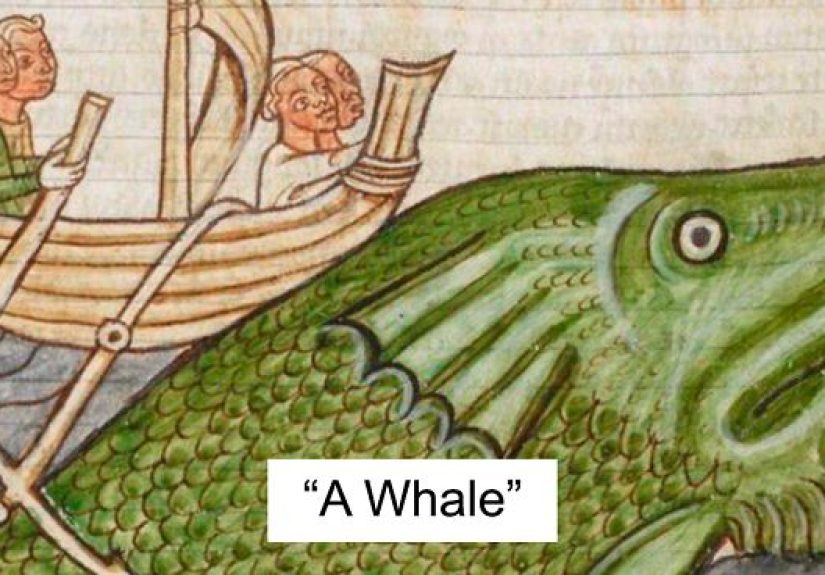
Rhinoceroses were famously difficult for Europeans to describe accurately without firsthand viewing.
Late medieval and early Renaissance sources sometimes portray them as bulky beasts with plated armor,
folds exaggerated into hard segments, and a general “living tank” aesthetic.
When you’ve never seen a rhino, you lean into the story: thick skin becomes literal armor.
The result can look like a fantasy creature designed by committee: “Make it horse-shaped, add a horn,
and give it a suit of medieval plate because that feels right.”
Why These Animals Look So Weird (And Why That’s the Point)
The funniest medieval depictions aren’t just random mistakes. They’re predictable outcomes of how information traveled.
If you want to decode medieval art humor, look for these forces at work:
The “Telephone Game” Effect
- Step 1: A traveler sees an animal and describes it dramatically (because travel stories are content).
- Step 2: A writer compresses it into a moralized text (because sermons need material).
- Step 3: An artist copies the textor copies another artist’s copyinto a new manuscript.
- Step 4: The animal becomes a recognizable icon, not a biological specimen.
Style Constraints: Medieval Art Isn’t Trying to Be a Nature Documentary
Medieval painters worked within stylistic conventions: flattened space, patterned backgrounds, clear outlines,
and symbolic emphasis. Many manuscript images were small and had to be legible.
So artists simplified forms into bold shapes that “read” quicklyespecially in the margins or small panels.
That’s why you might see a lion that looks like a big dog with excellent hair, or a camel that resembles a horse
that lost a bet and grew a hump overnight.
Realism Was Sometimes Less Important Than Recognition
Here’s the twist: many of these images did their job. Viewers could still say, “Ah yes, exotic beast,”
and then absorb the story, symbolism, or moral lesson attached to it.
Medieval visual culture prized clarity of meaning. And if the meaning is “distant wonders exist,” the image succeeds,
even if the elephant has the legs of a sofa.
What Medieval Animal Fails Teach Us Today
Laughing at medieval animals is fun, but it’s also oddly modern. We still do this.
We draw things we’ve never seen based on descriptions, memes, and half-remembered images.
The difference is that we now have camerasyet we still manage to invent new inaccuracies at internet speed.
Medieval artists remind us that images aren’t just about seeing. They’re about knowing
or, at least, about what a culture thinks it knows. Their “wrong” animals are windows into medieval information networks:
travel, trade, religion, education, and storytelling all condensed into paint and gold leaf.
And honestly? If someone asked you to paint a rhinoceros using only a 14-word text message from a friend who is actively panicking,
you’d produce something equally iconic.
Conclusion: Long Live the Medieval Animal Imagination
The next time you see a medieval elephant carrying a castle, a siren with suspiciously poultry-like legs,
or a sea monster that looks like a fish wearing a dog’s head, remember: you’re looking at an artist solving a real problem.
They built a visual world from stories, symbols, and inherited imagesoften with humor, confidence, and zero field research.
These hilarious “attempts” aren’t failures so much as snapshots of how knowledge moved in the Middle Ages.
They’re reminders that art can be faithful to a culture’s ideas even when it’s wildly unfaithful to anatomy.
And that, in its own way, is kind of beautifulespecially when the camel looks like it’s trying to explain itself.
Field Notes: My Very Modern Experience Falling Into the Bestiary Rabbit Hole (Extra )
The first time I went looking for medieval animal paintings, I expected a quick laugh and maybe a shareable image or two.
Ten minutes, tops. That was adorable of me.
What actually happened was a full-blown bestiary spiral: one manuscript page turned into another, then another,
and suddenly it was hours later and I was emotionally invested in a completely unrealistic elephant.
It starts innocently. You see a tiny creature in the marginsome kind of “lion” that looks like a fluffy dog
with the confidence of a king. You chuckle. Then you notice the gold leaf. Then you notice the delicacy of the linework.
Then you realize the artist was not doodling; they were executing a highly trained, expensive craft.
Your laughter turns into respect… and then back into laughter when you meet the siren.
The siren is the moment you understand medieval visual storytelling is basically a group project across centuries.
You can almost feel the layers: an ancient author describing “half-woman, half-bird,” a medieval compiler adding symbolism,
a painter trying to reconcile it with a style that favors clear silhouettes, and thenbecause the margin has limited space
the whole creature becoming a glamorous chicken-person holding a mirror like she’s about to drop the hottest album of 1270.
After that, everything reads differently. You stop asking “Why is it wrong?” and start asking
“What did this need to communicate?” An elephant with a castle doesn’t just say “elephant.”
It says “distant power,” “royal spectacle,” “the world is bigger than your village,” and also
“please do not inquire about the feet; this is a holy book.”
My favorite part, surprisingly, is how the weirdness becomes consistent. Once you’ve seen enough pages,
you can predict the design choices. Unknown animal? Give it the body of something familiar.
Dangerous animal? Add teeth you can see from across the room.
Aquatic mystery? Glue a fish tail onto whatever you already know.
It’s not laziness; it’s an early system of visual communication. Medieval artists are building iconslogos for ideas.
By the end of the rabbit hole, you realize the joke is partly on us.
We assume images should be photographic, even when the culture making them had different priorities.
Medieval painters weren’t failing to be modern illustrators; they were succeeding at being medieval ones.
And honestly, if my only reference for a rhinoceros was a dramatic travel story and a moral lesson about sin,
I’d probably give it armor too. I might even add a castle, just to be safe.
So yes, I still laugh at the animals. But now it’s the kind of laugh you give when you’re impressed:
a laugh that says, “You did the best you could with what you had,” followed immediately by,
“And what you had was apparently one rumor, two metaphors, and a lot of gold.”