Table of Contents >> Show >> Hide
- What Makes Homemade Eggnog Taste “Legit”?
- Cooked vs. Uncooked Eggnog
- Classic Homemade Eggnog Recipe (Cooked Custard-Style)
- Flavor Variations That Still Taste Like Real Eggnog
- Make-Ahead, Storage, and Food Safety
- Troubleshooting (Because Eggnog Can Be Dramatic)
- Eggnog “Upgrades” for People Who Take Holidays Seriously
- FAQ: Homemade Eggnog Recipe Questions
- Kitchen Experiences & Real-Life Eggnog Moments (Extra Notes People Wish They Knew)
- Conclusion
Eggnog is basically the holiday season in a glass: creamy, cozy, lightly spiced, and somehow both nostalgic and
“why don’t we drink this year-round?” The best part? A truly great homemade eggnog recipe doesn’t require a culinary
degreejust a whisk, a thermometer (highly recommended), and the willingness to grate nutmeg like you mean it.
This guide walks you through a classic cooked custard-style eggnog (safer than raw-egg versions),
plus easy variationsnonalcoholic, adult-only boozy, dairy-free options, and the
little tricks that make it taste like it came from a fancy restaurant instead of your fridge door.
What Makes Homemade Eggnog Taste “Legit”?
Great eggnog isn’t just milk with vibes. It’s a balance of:
- Richness from a mix of milk + cream (or a smart alternative).
- Body from gently cooked egg yolks (think: silky custard, not scrambled breakfast).
- Warm spicenutmeg is the headliner, cinnamon and clove are the backup singers.
- Time (even a few hours) so flavors meld and the texture thickens slightly.
Cooked vs. Uncooked Eggnog
Cooked eggnog (custard-style)
This is the method in the recipe below. You heat the egg mixture gently until it reaches a safe temperature.
The result is smooth, thick, and classic, with a bonus: it’s a much safer option for families,
guests, and anyone who’d rather not gamble with raw eggs during party season.
Uncooked eggnog (quick method)
This can be delicious, but it should be made with pasteurized eggs (or pasteurized liquid egg
products) if it won’t be cooked. If you’re serving kids, pregnant guests, older adults, or anyone with a weakened
immune system, cooked eggnog is the safer lane.
Classic Homemade Eggnog Recipe (Cooked Custard-Style)
Yield: About 6–8 servings
Prep time: 10 minutes
Cook time: 10–15 minutes
Chill time: At least 2 hours (overnight is even better)
Ingredients
- 6 large egg yolks
- 2/3 cup granulated sugar (adjust to taste)
- 2 cups whole milk
- 1 cup heavy cream (plus extra for topping if you’re feeling fancy)
- 1/4 teaspoon fine salt (yes, it matters)
- 1 teaspoon vanilla extract
- 1/2 to 1 teaspoon freshly grated nutmeg, plus more for serving
- Optional: 1 small cinnamon stick or a pinch of ground cinnamon
- Optional (adults only): 1/2 to 1 cup bourbon, rum, brandy, or a blend
- Optional “extra frothy”: 2–3 egg whites, whipped to soft peaks (use pasteurized whites if you prefer)
Equipment (Highly Recommended)
- Medium saucepan
- Whisk
- Fine-mesh strainer (for ultra-smooth texture)
- Instant-read thermometer (the MVP of not-scrambling-your-eggs)
Step-by-Step Instructions
-
Whisk yolks + sugar until pale and fluffy.
In a large bowl, whisk the egg yolks and sugar for about 1–2 minutes. You’re looking for a lighter color and
a slightly thicker texture. This helps create that classic custard body. -
Warm the milk, cream, salt, and spices.
In a saucepan over medium heat, combine the milk, cream, salt, and (if using) cinnamon stick. Heat until the
mixture is steaming and hotbut not boiling. If it bubbles aggressively, turn the heat down. Eggnog wants
“spa day,” not “volcano.” -
Temper the eggs (so they don’t turn into tiny omelets).
Slowly pour about 1 cup of the hot dairy into the yolk mixture while whisking constantly. Go graduallythink
“gentle waterfall,” not “fire hose.” This raises the egg temperature safely without curdling. -
Cook the custard gently to thicken.
Pour the tempered egg mixture back into the saucepan. Cook over medium-low heat, stirring constantly with a
whisk or wooden spoon, until it reaches 160°F and lightly coats the back of a spoon.
Don’t let it boil. -
Strain for a silky finish.
Remove from heat and pour through a fine-mesh strainer into a clean bowl or pitcher. This catches any tiny bits
and keeps the texture smooth. -
Flavor + chill.
Stir in vanilla and 1/2 to 1 teaspoon nutmeg. Cool at room temperature for about 15 minutes, then cover and
refrigerate for at least 2 hours (overnight is best). -
Add alcohol (optional, adults only).
Once chilled, stir in your chosen spirit(s). Start with 1/2 cup, taste, then add more if you want a bolder kick.
(If you’re serving mixed ages, keep it nonalcoholic and let adults “customize” their own cups.) -
Make it extra frothy (optional).
If you like a lighter, airier eggnog, whip 2–3 egg whites to soft peaks and gently fold into the chilled eggnog.
This makes it feel like holiday mousse in drink form.
How to Serve
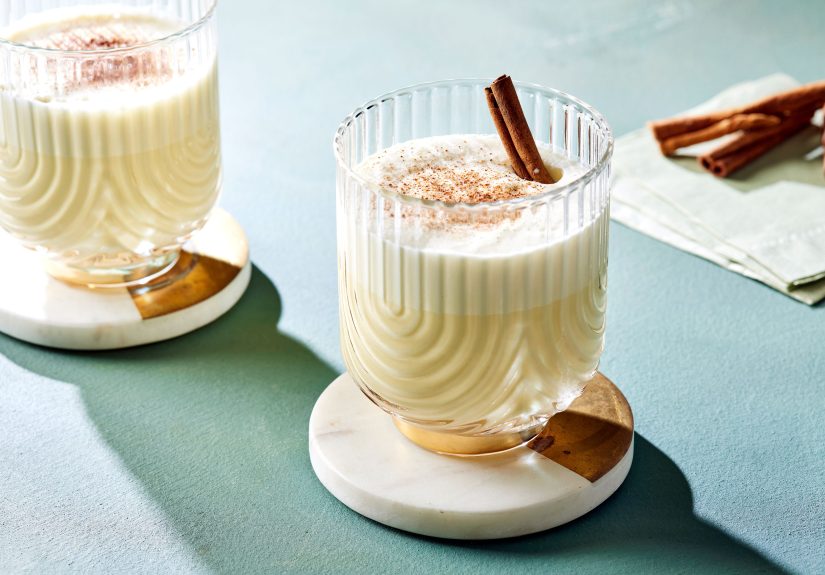
- Pour cold into small glasses (eggnog is richthink “sip,” not “sports drink”).
- Top with a dusting of fresh nutmeg. This is non-negotiable if you want that classic aroma.
- Optional upgrades: whipped cream, cinnamon stick, or a tiny sprinkle of cinnamon sugar.
Flavor Variations That Still Taste Like Real Eggnog
1) Nonalcoholic eggnog (family-friendly)
Just skip the spirits. To keep the flavor complex, add:
- 1/8 teaspoon ground cinnamon
- A tiny pinch of ground clove (seriously tinyclove is loud)
- Extra vanilla (another 1/2 teaspoon)
2) “Adult-only” classic blend
For a traditional bar-style profile (for legal-age adults only), try a blend of bourbon + rum or brandy + rum.
Add gradually after chilling so you can control the strength and keep the texture smooth.
3) Lighter eggnog (less heavy, still cozy)
Use 2 cups whole milk + 1 cup half-and-half instead of heavy cream. You’ll get a thinner body but still plenty of
holiday flavor. Chill time helps it feel richer.
4) Dairy-free eggnog that doesn’t taste sad
For a dairy-free version with real “eggnog energy,” use:
- 2 cups unsweetened oat milk
- 1 cup canned coconut milk (full-fat) for richness
- Keep the yolks + sugar the same, and cook gently as written
Coconut milk adds body; oat milk keeps it creamy without turning the whole thing into a tropical vacation.
Make-Ahead, Storage, and Food Safety
How far ahead can you make homemade eggnog?
Custard-style eggnog is best after it chills and the flavors settle. Make it:
- At least 2 hours ahead for decent flavor and texture.
- Overnight for peak eggnog greatness.
How long does it last?
In a clean, covered container in the refrigerator, plan on 2–3 days for best quality. If it smells
“off,” looks unusual, or tastes funky, toss it. Holiday cheer is optional; foodborne regret is not.
Why the thermometer matters
Cooking the custard gently to a safe temperature thickens the mixture and helps reduce food safety risks.
It also prevents the most common eggnog tragedy: curdling. “160°F” is the sweet spothot enough to set the custard,
not so hot that it turns grainy.
Troubleshooting (Because Eggnog Can Be Dramatic)
My eggnog curdled. Now what?
First: breathe. Second: strain it. If it’s still a little lumpy, blend it briefly with an immersion blender.
Next time, lower the heat and stir constantly. Eggnog likes attention.
It’s too thick.
Whisk in a splash of cold milk until it reaches your favorite pour. Chill again for 30 minutes.
It’s too thin.
It will thicken slightly as it chills. If it’s still too thin after chilling, your custard may not have reached
temperature long enough. You can gently rewarm and thicken (slow heat, constant whisking), then chill again.
It tastes too sweet.
Add a pinch more salt and a little more nutmeg. You can also whisk in a splash of milk or cream to balance it.
If you added alcohol, a slightly stronger spirit flavor can also reduce the perception of sweetness.
Eggnog “Upgrades” for People Who Take Holidays Seriously
Fresh nutmeg is the cheat code
Pre-ground nutmeg works, but freshly grated nutmeg brings that unmistakable eggnog aroma that makes people say,
“Wait… you made this?”
Add a whisper of citrus
A small strip of orange peel warmed in the milk (remove before tempering) can add subtle brightness. Don’t overdo
itthis is eggnog, not a candle store.
Serve in small glasses
Eggnog is rich. Smaller servings keep it special and prevent the “I love eggnog… why do I feel like a snowman?”
moment.
FAQ: Homemade Eggnog Recipe Questions
Can I make eggnog without alcohol?
Absolutely. Traditional eggnog can be served nonalcoholic, and many people prefer it that way. You can also offer
alcohol on the side for adults to add individually.
Is homemade eggnog safe?
Custard-style eggnog (cooked gently to a safe temperature) is generally considered the safer homemade option than
raw-egg versions. If you want a no-cook eggnog, use pasteurized eggs or pasteurized egg products.
Can I “age” eggnog?
Some boozy eggnog traditions involve aging it in the fridge for weeks. If you go that route, it should be for
legal-age adults only and handled carefully. The cooked custard method in this recipe is designed
for fresh enjoyment, with best flavor in the first few days.
Kitchen Experiences & Real-Life Eggnog Moments (Extra Notes People Wish They Knew)
If you’ve never made eggnog before, here’s the funny thing: the recipe is simple, but the experience is
where you become an eggnog person. The first time you whisk yolks and sugar into that pale, fluffy ribbon, you’ll
think, “This is either going to be amazing… or I’m about to invent sweet scrambled eggs.” That’s normal. Eggnog
has a way of making even confident cooks hover over the stove like it’s defusing a tiny dairy bomb.
The most common first-timer moment is realizing how much heat matters. On the stove, there’s a narrow zone between
“silky custard” and “grainy regret.” The good news is that eggnog is forgiving if you treat it gently. When people
say “stir constantly,” they mean itthis isn’t the time to check your phone, scroll for holiday playlists, and
come back to find your custard doing its best impression of cottage cheese. If you do get a few tiny bits, though,
it’s rarely a total loss: straining saves the day more often than you’d expect. This is why so many experienced
home cooks keep a fine-mesh strainer within arm’s reach like it’s a kitchen lucky charm.
Another real-life observation: eggnog tastes better after a nap. Not yoursthe eggnog’s. Fresh off the stove, it
can taste a little “separate,” like the flavors haven’t met each other yet. After a few hours in the fridge,
everything smooths out: the nutmeg settles in, the vanilla rounds out the edges, and the texture thickens into
that classic creamy pour. This is why people who swear they “don’t like eggnog” sometimes change their minds after
tasting homemade the next day. It’s not magic; it’s chemistry and patience wearing a holiday sweater.
Serving eggnog also comes with its own set of mini-lessons. First: smaller glasses win. Eggnog is rich, and the
joy is in the cozy sip, not the giant mug you’d use for iced coffee. Second: fresh nutmeg is the fastest way to
make it feel special. The smell hits before the first taste, and suddenly it’s not just “a creamy drink”it’s a
moment. Third: people love options. If you’re hosting, keep the base nonalcoholic and let adults add spirits to
their own cups. It avoids confusion, keeps things family-friendly, and makes you look like the thoughtful genius
of the party (even if you’re secretly just avoiding a labeling disaster).
Then there’s the customization phaseaka the part where every household becomes convinced they’re the official
eggnog authority. Someone wants it spicier. Someone wants it less sweet. Someone wants it “more like the carton”
(and you’ll try not to take that personally). The trick is to make small adjustments: a pinch more salt for
balance, extra nutmeg for warmth, a tiny dash of cinnamon for a bakery vibe. If it’s too thick after chilling,
whisk in a splash of milk and call it a “chef’s texture adjustment.” If it’s too thin, chill longer and pretend
you planned the lighter style all along.
Finally, the most charming eggnog experience is what happens when leftovers appear. Eggnog has a talent for
sneaking into breakfast: stirred into coffee, blended into a smoothie, or used as a base for French toast batter.
Even if you only make it once a year, it tends to create a little traditionone that smells like nutmeg, sounds
like a whisk tapping a saucepan, and tastes like the holiday season decided to show up on time for once.
Conclusion
A great homemade eggnog recipe is equal parts technique and holiday attitude: gentle heat, steady whisking,
fresh nutmeg, and enough chill time for everything to come together. Once you’ve made custard-style eggnog at home,
the store-bought stuff starts to feel like a distant cousin who only texts when they need something.
Make it nonalcoholic for everyone to enjoy, offer spirits on the side for adults, and don’t skip the nutmeg finale.
Your future self (and your guests) will thank youprobably with a second glass.