Table of Contents >> Show >> Hide
- Why Teen Well-Being Online Is Such a Big Deal
- Discord’s Big Idea: Safer by Default, Not Safer by Accident
- Privacy Without Total Parental Surveillance
- Discord Wants Teen Voices in the Room, Not Just on the Menu
- Less “Perform for the Algorithm,” More “Hang Out With Your People”
- Discord’s Approach Is Promising, But It Is Not Magic
- What Discord Seems to Understand About Teen Self-Esteem
- What Teens and Parents Can Actually Take From This
- Everyday Experiences Related to This Topic
- Conclusion
Note: This article is based on real, publicly available information and official guidance current as of April 2026. It is written as an original editorial-style synthesis for web publication.
Teen life online can feel a little like walking through a carnival funhouse with Wi-Fi. One minute you are laughing in a group chat about a terrible game strategy. The next, you are staring at a highlight reel of other people’s lives and wondering why everyone else seems cooler, prettier, funnier, or somehow more “together” than you. That emotional whiplash is part of why teen mental health and social media have become such a big conversation in the United States.
Discord, a platform best known for gaming communities, group chats, servers, voice hangouts, and fandom chaos, seems to understand that this issue is not just about blocking the worst content. It is also about helping teens feel safer, less pressured, and more in control. In other words, it is not only trying to stop bad experiences. It is trying to build better ones.
That matters because teens are still extremely online. U.S. data continues to show that most teens use social platforms, and many say they are online almost constantly. At the same time, health experts keep warning that social media can affect sleep, body image, anxiety, depression, bullying, and self-esteem. So when Discord says it wants to create age-appropriate experiences that support teen well-being, that is not just a PR sparkle bomb. It is a response to a very real problem.
Why Teen Well-Being Online Is Such a Big Deal
Before looking at Discord’s approach, it helps to understand the backdrop. U.S. health authorities have made it clear that teen mental health is under strain. Social media is not the sole villain in the story, but it is part of the plot. Public health experts have pointed to patterns involving persistent sadness, hopelessness, cyberbullying, unhealthy comparison, and exposure to content that can make teens feel worse about themselves.
There is also a frustrating truth here: social media is not good or bad in one neat little package. It can help teens find friendship, identity, support, and belonging, especially when they feel isolated offline. It can also amplify insecurity like a megaphone at a middle school talent show. Much depends on what teens see, who they interact with, how long they stay online, and whether the platform design makes them feel empowered or trapped.
This is where Discord tries to set itself apart. The company’s pitch is not that teens should disappear from the internet and go live in a cabin with no notifications. Its pitch is that teens deserve digital spaces designed with their age, privacy, autonomy, and emotional reality in mind.
Discord’s Big Idea: Safer by Default, Not Safer by Accident
The most important thing Discord is doing is shifting toward a “teen-by-default” model. That phrase may sound like it was invented in a meeting with too many sticky notes, but the idea is actually simple. Instead of making teens hunt through settings to protect themselves, Discord is turning on stronger protections automatically and keeping them in place unless a user is verified as an adult.
That design choice matters for self-esteem more than it first appears. Teens do not always need more options. Sometimes they need fewer opportunities to walk directly into a digital dumpster fire. By defaulting to stricter safety settings, Discord is trying to reduce unwanted exposure to sensitive content, creepy messages, and age-inappropriate spaces before those experiences ever happen.
Its newer global safety plan includes filtered access to sensitive visual media, age-gated spaces, and a separate message request inbox for direct messages from people a user may not know. It also includes friend request alerts and limits on certain features for users who are not confirmed adults. That setup is meant to cut down on surprise interactions and potentially disturbing content, both of which can shake a teen’s sense of comfort and control.
Why This Can Help Teens Feel Better
Feeling better about yourself is not always about motivational quotes or pastel graphics that say “you are enough.” Sometimes it is about not getting ambushed by a stranger in your inbox. Sometimes it is about not being pushed into adult content or uncomfortable situations before you are ready. Sometimes it is simply about having a little breathing room.
Discord’s content filters, especially for potentially graphic or sexually explicit image-based media, can help reduce the shock factor that often makes online spaces feel chaotic. Its message request system can reduce unwanted contact. Its age-restricted spaces can create a clearer line between teen environments and adult ones. Together, those features may not magically produce self-love, but they do reduce the background stress that chips away at it.
Privacy Without Total Parental Surveillance
Here is where Discord is trying to walk a very tricky tightrope: helping families support teens without turning every online interaction into a household intelligence operation. Its Family Center is designed to give parents or guardians visibility into parts of a teen’s activity while still maintaining privacy and autonomy.
That balance is surprisingly important. Teens are more likely to feel respected when safety tools do not treat them like suspects in a tiny hoodie. Discord’s Family Center does not hand over private messages like a reality show confessional. Instead, it is built around the idea that families can talk about online life without teens feeling monitored every second.
That approach lines up with what many mental health experts recommend: open communication, realistic boundaries, and active guidance rather than spying. Teens generally do better when trusted adults are involved in their digital lives in a supportive way, not in a “let me read every message you have ever sent since seventh grade” way.
Discord Wants Teen Voices in the Room, Not Just on the Menu
One of the more interesting things Discord has done is admit that adults are not always the best people to guess what teens actually need. Revolutionary, I know.
Its Teen Charter and newer Teen Council efforts show that the company is trying to bring teen perspectives directly into platform design. The Teen Charter emphasizes ideas like authenticity, privacy, inclusivity, and transparency. Put more plainly, Discord is signaling that teens should be able to show up as themselves, have boundaries, feel included, and know what is going on.
That may sound abstract, but it connects directly to self-image. Teens tend to feel worse about themselves in digital spaces that reward performance over personhood. A platform culture that encourages “come as you are” sends a very different message than one built entirely on polished popularity, follower counts, or appearance-based comparison.
Discord’s Teen Council also suggests the company understands something many platforms learn too late: teens can usually spot fake concern from a mile away. If a company wants to support their well-being, it has to listen to how teens actually build friendships, where they feel pressure, and what makes them feel safe online. Discord has publicly said it wants teen input to shape future product features, policies, and educational resources. That is not a cure-all, but it is smarter than assuming adults have the perfect blueprint.
Less “Perform for the Algorithm,” More “Hang Out With Your People”
Another reason Discord may help some teens feel better about themselves is structural. Unlike platforms centered on public feeds, constant posting, influencer culture, or endless metrics, Discord is still heavily built around smaller communities, private servers, shared interests, and real-time conversation.
That matters because self-esteem often gets bruised in environments where everything feels like a popularity contest. Teens can get pulled into comparison spirals when likes, views, aesthetics, and polished images become the main currency. Discord is not completely immune to that sort of pressure, but it is generally more focused on communities than on public self-branding.
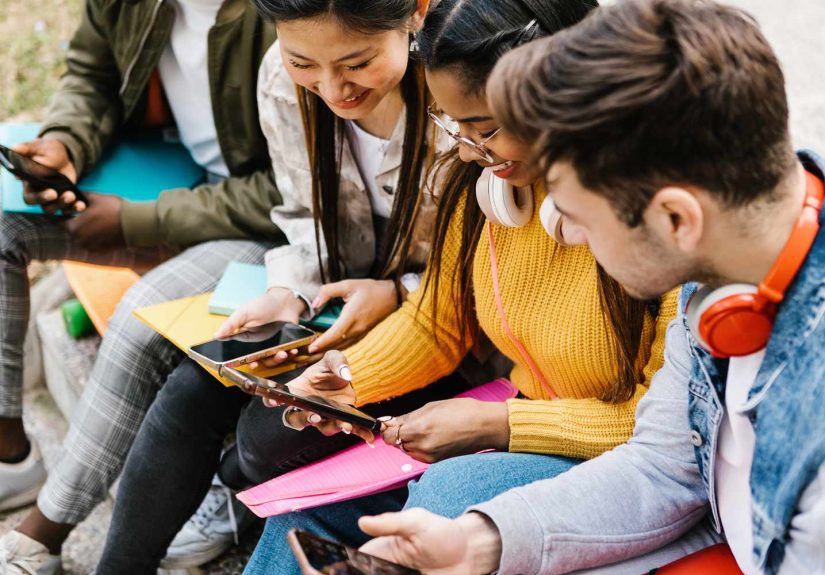
In many cases, a teen joins Discord to talk about a game, a class, a band, a hobby, a fan universe, or a friend group. That can create a healthier kind of online identity. Instead of asking, “How impressive do I look?” the platform can sometimes invite a better question: “Where do I belong?” And belonging is a much sturdier foundation for self-worth than chasing approval from strangers.
Belonging Is a Mental Health Word, Too
Public health and pediatric experts often emphasize connection as a protective factor for young people. Feeling seen, valued, and part of a group can buffer stress. Discord seems to understand that meaningful connection is not just a nice extra feature. It is one of the core reasons teens come online in the first place.
That is also why Discord’s own teen well-being materials have leaned into conversations with teens and families about digital life, privacy, limits, and support. The company has said teens asked for better time-management tools, more education for parents and teens, and age-adaptive features. That feedback suggests teens do not just want freedom online. They want help navigating it without feeling judged for needing that help.
Discord’s Approach Is Promising, But It Is Not Magic
To be fair, Discord is not sprinkling confidence dust over the internet. A safer platform is still a platform. Teen anxiety, loneliness, bullying, and comparison are much bigger than one app’s settings menu. And even Discord’s improved safeguards have limits.
For one thing, the company itself has acknowledged that age assurance is complicated. In fact, after announcing a broader global rollout, Discord later said it would delay parts of that rollout in order to expand verification options, improve vendor transparency, and publish more technical documentation. That was probably the right move. When a platform is dealing with teens, privacy, and age checks, “trust us” is not enough.
Second, even the best settings cannot erase every social problem. Teens can still run into exclusion, rude behavior, pressure, or unhealthy community norms. Servers can still become cliquey. Friends can still be messy. And yes, there will always be at least one person online acting like they were raised by unmoderated comment sections.
So the real question is not whether Discord can make every teen feel amazing all the time. It cannot. The better question is whether its design choices lower the odds of harm and increase the odds of healthy connection. Right now, the answer appears to be yes, at least in the direction the company is moving.
What Discord Seems to Understand About Teen Self-Esteem
Underneath all the safety settings and policy language, Discord’s strategy reveals something important: teens feel better about themselves when they have agency, privacy, boundaries, and community.
They feel better when platforms do not flood them with unwanted content. They feel better when adults guide them without humiliating them. They feel better when they can connect around interests instead of constantly marketing themselves. They feel better when a platform asks what they need instead of deciding for them from a distant corporate tower.
That does not mean Discord has solved online well-being. But it does mean the company is moving beyond the old “just report it if something goes wrong” model. It is trying to design an environment where fewer things go wrong in the first place and where teens can feel supported, not just managed.
What Teens and Parents Can Actually Take From This
If you are a teen, the lesson is not that a platform will rescue your self-esteem for you. The lesson is that healthier online spaces usually share a few traits: clear boundaries, tools that reduce stress, communities built around shared interests, and enough privacy to let you be yourself.
If you are a parent, Discord’s example is a reminder that the best safety conversations are usually collaborative. Ask who your teen talks to online. Ask what communities they enjoy. Ask what makes them feel comfortable or uncomfortable. Try curiosity before panic. The internet has enough panic already.
And if you are just watching the broader tech world, Discord is worth paying attention to because it reflects a larger shift. More platforms are being pushed to think not only about removing dangerous content, but also about designing for confidence, belonging, and emotional well-being. That is a much harder job. It is also the right one.
Everyday Experiences Related to This Topic
The following examples are illustrative composite experiences based on common teen online patterns, not profiles of specific individuals.
Imagine a 15-year-old who joins Discord because all her friends use it after school to talk while gaming, swap homework complaints, and send memes that make absolutely no sense to anyone over 30. She does not join because she wants to become internet-famous. She joins because she wants to belong somewhere. That difference matters. On a platform built around performance, she might start measuring herself against prettier photos, bigger followings, or carefully edited lives. On Discord, she is more likely to be known for being funny, helpful, or weird in the best possible way.
Now imagine a 14-year-old boy who is shy in person but much more comfortable typing than talking in class. In the right server, Discord can help him find people who love the same game lore, coding project, or niche hobby he does. Instead of feeling like the odd kid out, he feels useful. He can answer questions, share ideas, and become part of a group identity. That kind of acceptance can boost confidence in a way that no generic “be yourself” poster ever could.
There is also the teen who has had a rough experience online before. Maybe they received weird messages, got pulled into a group that made them uncomfortable, or saw content they really did not want to see. After that, even opening an app can feel stressful. Features like filtered sensitive media, message request separation, and clearer age boundaries may sound technical, but emotionally they can mean one simple thing: less dread. And when teens feel less dread, they usually have more room for confidence, humor, and normal human chaos.
Another common experience is the family conversation problem. A teen does not want parents reading every private message, and parents do not want to feel completely shut out. That is where a tool like Family Center can change the tone. Instead of an argument built on suspicion, it can create a discussion built on awareness. The teen feels respected. The parent feels informed. Nobody has to pretend the internet is harmless, but nobody has to act like trust is impossible either.
Then there is the pressure of comparison. Even on community-based platforms, teens can still feel insecure. Maybe they worry they are not funny enough in voice chat, not skilled enough in a game, or not included enough in a friend group. No platform can erase that entirely. But a space that values shared interests over public image can soften the blow. It gives teens more ways to contribute than just looking impressive. Sometimes feeling better about yourself starts with realizing people like having you around, not because you are perfect, but because you are you.
Conclusion
Discord is not trying to make teens feel better about themselves with a single grand gesture. It is doing it in smaller, more practical ways: stronger safety defaults, privacy-respecting family tools, sensitive-content filters, age-appropriate boundaries, and more teen input in product design. That approach will not eliminate every online problem, but it does move the platform closer to something many teens actually need: a digital space where they can connect, relax, and be themselves without constant pressure or unnecessary harm.
In a culture where social media often turns identity into a performance, that is a meaningful shift. And honestly, the bar should never have been “less terrible.” It should always have been “more human.” Discord appears to be aiming for that second goal. For teens, that could make all the difference.