Table of Contents >> Show >> Hide
- Step 1: Measure Your Space
- Step 2: Choose the Right Soil Depth
- Step 3: Use the Simple Volume Formula
- Step 4: Translate Volume into Bags or Bulk
- Common Projects & Quick Soil Estimates
- Pick the Right Type of Soil
- Pro Tips So You Don’t Run Out (or Overspend)
- Real-World Experiences: Lessons Learned About Soil Estimation
- Bottom Line: A Little Math, A Lot Less Guesswork
You’ve picked out your plants, built a beautiful raised bed or found the perfect giant planter on sale.
Then reality hits: “Uh… how much soil do I actually need to fill this thing?” Buying dirt sounds simple
until you’re standing in the garden center trying to mentally convert feet, inches, cubic yards, and bags
while a forklift whizzes by.
The good news: estimating soil volume is way easier than it looks. With a tape measure, a couple of quick
calculations, and a basic understanding of how soil is sold, you can skip the guesswork (and avoid
discovering you’re three bags short halfway through filling your raised bed).
Think of this guide as your practical, slightly nerdy garden companion. We’ll walk through a simple formula
for soil volume, how deep to make that new bed, how many bags or cubic yards to order, plus real-world tips
that experienced DIYers and gardeners have learned the hard way.
Step 1: Measure Your Space
Every soil calculation starts with three numbers: length, width, and depth. Once you know those, you’re
already 80% of the way there.
For simple rectangles and squares
Most garden projects can be measured as a rectangle:
- Length (L): Long side of the bed or area, in feet.
- Width (W): Short side of the bed or area, in feet.
- Depth (H): How deep you want the soil, usually in inches.
Example: A raised bed that’s 4 feet wide and 8 feet long with 10-inch-tall sides.
- Length = 8 ft
- Width = 4 ft
- Depth = 10 in (we’ll convert this in the next step)
For awkward, not-so-square spaces
Lawns, curved beds, and weird corners rarely cooperate and form perfect rectangles. No problem. Break the
space into smaller shapes:
- Rectangles: Area = length × width
- Triangles: Area = ½ × base × height
- Circles: Area = π × radius²
Calculate the area for each shape, add them together to get the total square footage, then apply your desired
depth. It’s the same logic, just in pieces. A little extra time measuring now saves a lot of money and
back-and-forth later.
Step 2: Choose the Right Soil Depth
Before you unleash your inner mathlete, decide how deep the soil actually needs to be. Too shallow and roots
struggle. Too deep and you’re paying for extra soil your plants don’t really use.
Typical depth guidelines
- Topdressing a lawn: 1–2 inches of soil or compost.
- New flower or landscape beds: 6–8 inches of improved soil on top of existing ground.
- Vegetable raised beds: 6–12 inches of soil is good for most crops when the bed is open to the native soil below.
- Deep-rooted veggies (tomatoes, peppers, squash): Aim for 12–24 inches of total root zone (some can extend into the native soil).
- Containers and planters: Fill to near the top, leaving about an inch for watering space.
University extension services commonly recommend at least 6 to 12 inches of quality soil in raised beds to
give roots room to spread and to improve drainage. If your bed sits on concrete or another hard surface,
lean toward the deeper side of that range because roots can’t grow down into the ground.
Once you decide on your depth, convert it to feet if you’re working in feet for length and width:
Depth in feet = depth in inches ÷ 12
So a 10-inch-deep bed becomes:
10 ÷ 12 = 0.83 feet (you can use 0.8 or 0.83 in your calculator).
Step 3: Use the Simple Volume Formula
Here’s the core formula used by soil calculators, landscapers, and DIYers everywhere:
Volume = Length × Width × Depth
If all three numbers are in feet, the volume you get will be in cubic feet.
Example: 4×8 raised bed, 10 inches deep
- L = 8 ft
- W = 4 ft
- Depth = 10 in = 0.83 ft
Volume = 8 × 4 × 0.83 ≈ 26.6 cubic feet of soil.
If you prefer to keep everything in inches, you can do this instead:
- Convert length and width to inches (1 ft = 12 in).
- Multiply length × width × depth (all in inches).
- Divide by 1,728 to convert cubic inches to cubic feet (because 12³ = 1,728).
Either way, you’ll land on the same result. Use whichever method makes your brain hurt less.
From cubic feet to cubic yards
Soil bought in bulk (delivered by truck or loaded into your trailer) is usually sold by the
cubic yard.
1 cubic yard = 27 cubic feet
To convert:
Cubic yards = total cubic feet ÷ 27
Using our 4×8 bed example with 26.6 cubic feet:
26.6 ÷ 27 ≈ 0.98 cubic yards.
That’s basically one full cubic yard. Most home gardeners round up a little to account for settling and minor
measurement errors, so you’d likely order 1 cubic yard for that bed.
Step 4: Translate Volume into Bags or Bulk
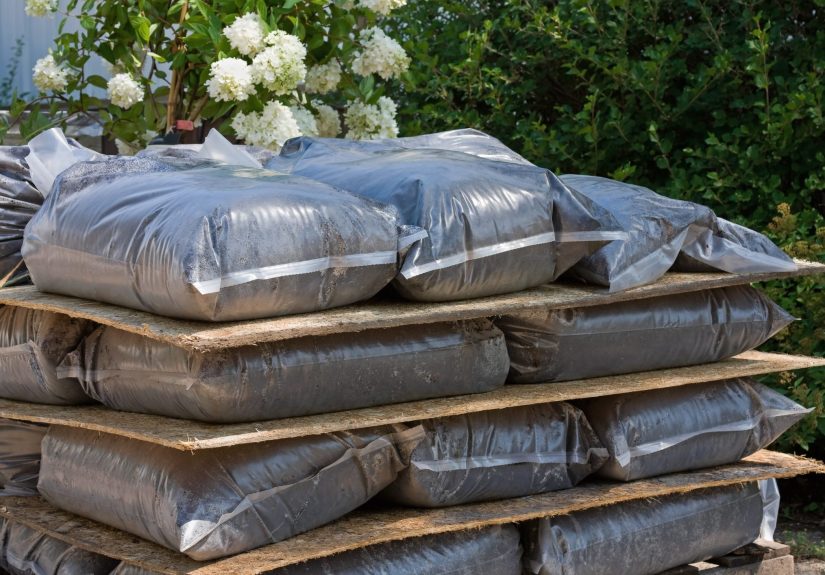
Garden soil is usually sold two ways:
- In bags (with volume listed in cubic feet)
- In bulk (by the cubic yard)
Common bag sizes
While brands vary, you’ll typically see:
- 0.5 cubic foot bags
- 0.75 cubic foot bags
- 1 cubic foot bags
- 1.5 or 2 cubic foot bags (more common for potting mix and mulch)
Always double-check the bag label; grabbing all 0.5 cu. ft. bags when you thought they were 1 cu. ft. is a
very classic “back to the store again” move.
To figure out how many bags you need:
Number of bags = total cubic feet ÷ bag size (in cubic feet)
Example: Using 0.75 cu. ft. bags
Back to our 4×8 bed (26.6 cubic feet):
Number of bags = 26.6 ÷ 0.75 ≈ 35.5 bags
Round up to 36 bags. If that number makes your wallet cry, compare the price against having one cubic yard
delivered. For bigger projects, bulk soil is usually the better deal.
Example: Topdressing a lawn
Say you want to add 1 inch of compost to a 20×20-foot lawn area.
- Area = 20 × 20 = 400 sq. ft.
- Depth = 1 in = 1 ÷ 12 = 0.083 ft
- Volume = 400 × 0.083 ≈ 33.2 cubic feet
In cubic yards:
33.2 ÷ 27 ≈ 1.23 cubic yards.
If you buy in 1 cu. ft. bags, you’ll need about 34 bags. If you buy in bulk, order 1.25–1.5 cubic yards
to be safe.
Common Projects & Quick Soil Estimates
Raised garden bed (3×6 feet, 10 inches deep)
This is a popular beginner bed size.
- L = 6 ft
- W = 3 ft
- Depth = 10 in = 0.83 ft
Volume = 6 × 3 × 0.83 ≈ 15 cubic feet.
With 0.75 cu. ft. bags:
15 ÷ 0.75 = 20 bags.
Many raised bed recipes use a mix like 60–70% topsoil and 30–40% compost or other organic matter. You can buy
those separately and blend them in the bed, or purchase a pre-mixed “raised bed soil” if you prefer convenience
over playing garden chemist.
Large round planter
Imagine a round planter with a diameter of 24 inches (2 feet) and a height of 18 inches (1.5 feet), but you
decide to fill it only 16 inches deep (1.33 feet) to leave room for mulch.
- Radius = 1 ft
- Area of base = π × radius² ≈ 3.14 sq. ft.
- Depth = 1.33 ft
Volume ≈ 3.14 × 1.33 ≈ 4.2 cubic feet.
If you’re using 1.5 cu. ft. bags of potting mix:
4.2 ÷ 1.5 ≈ 2.8 bags → buy 3 bags.
New landscape bed along a fence
Let’s say you’re creating a 3-foot-wide, 25-foot-long bed along the back fence, and you want 8 inches of fresh
amended soil on top.
- L = 25 ft
- W = 3 ft
- Depth = 8 in = 0.67 ft
Volume = 25 × 3 × 0.67 ≈ 50.25 cubic feet.
In cubic yards:
50.25 ÷ 27 ≈ 1.86 cubic yards.
This is a classic bulk-delivery project. Order about 2 cubic yards and you’ll have enough for the bed plus a
little extra to feather into surrounding soil or top off containers.
Pick the Right Type of Soil
Knowing the volume is only half the battle. You also want the right kind of soil:
-
Topsoil: Basically the upper layer of native soil. Good for building up low spots, starting
lawns, and as a base in deeper beds. Quality can vary a lot. -
Garden soil / raised bed mix: Topsoil blended with compost and other organic materials.
Designed for in-ground or raised beds where drainage and nutrients matter. -
Potting mix: Lightweight, soilless mixes (peat, coir, perlite, etc.) meant for containers.
Great drainage and root aeration, but not ideal for big in-ground areas due to cost.
For raised beds, many extension services suggest mixing high-quality topsoil with compost or soilless mix
instead of using straight topsoil. A 50/50 blend of compost and soilless mix or compost and topsoil is a
popular, productive combo that gives roots structure, nutrients, and drainage.
Pro Tips So You Don’t Run Out (or Overspend)
Add a little extra for settling
Freshly placed soil settles over time, especially in raised beds and containers. Ordering 5–10% more
than the exact calculated volume helps you avoid thin spots later and gives you a stash for touch-ups.
Dry vs. wet soil volume
Bulk soil that’s been sitting through a rainstorm is heavier and can appear “denser” than bagged soil, but the
volume is the same. What does change is how easily you can shovel and spread it. If you know a storm is coming,
try to schedule your delivery for a dry stretch so the job is easier on your back.
Compare bag price vs. bulk delivery
For small projects (a few planters, a single small raised bed), bags are convenient and easy to stash. Once
your project crosses into the “dozens of bags” territory, bulk is usually cheaper and fasterespecially if
your store charges a delivery fee for pallets of bags anyway.
Measure twice, buy once
It’s tempting to eyeball dimensions, but an extra couple of minutes with a tape measure can save you a lot of
money. Being off by just one inch in depth across a large area can change your soil needs by many cubic feet.
Real-World Experiences: Lessons Learned About Soil Estimation
Numbers and formulas are great, but most gardeners learn about “how much soil do I need?” the same way they
learn about sunburn: the hard way. Here are some lived-in, Family Handyman–style lessons from people who have
moved more dirt than they care to admit.
The raised bed surprise
A common story goes like this: someone builds two gorgeous 4×8-foot beds, proudly screws in the last board,
then heads to the store and loads up “a few bags” of soil. After dumping eight bags into the first bed, they
realize the soil barely covers the bottom. Cue the second trip. And the third.
When you actually calculate the volume, those two beds at 10 inches deep need over 50 cubic feet of soil.
That’s a lot of bags. Many gardeners eventually switch to bulk delivery for larger projects simply
because they’d rather move soil with a wheelbarrow than with twenty separate receipt lines.
Using filler materials wisely
Another real-world trick: if you’re building tall raised beds20 inches or moreyou don’t necessarily need
20 inches of premium soil mix all the way down. Some gardeners layer in chunky materials like coarse
wood chips, half-rotted logs, or old branches in the bottom third (a practice similar to hugelkultur),
then add a mid-layer of garden soil and compost, and finish with 8–12 inches of high-quality planting mix on top.
This approach:
- Reduces the volume of expensive soil you need to buy.
- Improves drainage.
- Helps organic matter slowly break down over time, feeding the bed.
The key is still to calculate the total volume of the bedthen decide how much of that volume will be premium
soil versus filler. You might, for example, fill the bottom 8 inches with coarse material and only calculate
purchased soil for the top 12 inches.
Container gardening and the “just one more pot” problem
Container gardeners know the “just one more” curse: you buy enough potting mix for the planters you planned,
then you find a cute new container… and another. Suddenly your carefully calculated soil volume is out the
window.
One practical habit is to estimate how many gallons or cubic feet each pot uses and keep a simple note on your
phone. Over time you’ll learn, for example, that:
- A typical 12-inch round pot takes about 0.75–1 cubic foot of mix.
- A 16–18-inch container takes 1.5–2 cubic feet.
- Whiskey barrel–style planters can easily use 3–4 cubic feet each.
Having those mental benchmarks makes it much easier to grab the right number of bags when you inevitably add
“just one more” pot to the porch.
Pickup trucks, trailers, and the one-yard myth
Many bulk soil suppliers mention that a typical full-size pickup bed can hold about one cubic yard of soil.
That’s a good rule of thumbbut it doesn’t always account for weight, wheel wells, or shorter beds.
Two important real-world tips:
- Always check your vehicle’s payload rating before asking for a yard (or more).
- If in doubt, ask for a slightly smaller load and make two trips rather than stressing the suspension.
Also, bring a tarp to line the bed and another to cover the soil on the way home. There’s nothing quite like
vacuuming potting mix out of a truck bed for weeks because you skipped the second tarp.
Accounting for slopes and uneven ground
Yard projects rarely involve perfectly level surfaces. If you’re filling in a low area or leveling a slope, the
“average depth” method works best:
- Measure depth at the shallowest spot and the deepest spot.
- Add them together and divide by two to get an average depth.
- Use that number in your volume formula.
For example, if a low area ranges from 1 inch deep at one edge to 5 inches deep at the worst spot:
(1 + 5) ÷ 2 = 3 inches average depth.
Use 3 inches in your calculations, then round up a bit to give yourself a buffer. It won’t be perfect to the
last shovel-full, but it will be close enough that you’re not wildly over- or under-buying.
The “buy once, cry once” philosophy
Finally, experienced gardeners will tell you: soil quality is not the place to cheap out.
You don’t have to buy the fanciest brand on the shelf, but avoid mystery “fill dirt” for vegetable beds and
long-term plantings. Good soil lasts for years, and you only have to buy it once for a given container or bed.
Better drainage, fewer issues with compaction, and healthier roots mean less frustration later. Doing the math
up front helps you spend your budget where it matters: healthy soil that actually makes your plants happy.
Bottom Line: A Little Math, A Lot Less Guesswork
Figuring out how much soil you need boils down to three steps: measure your space, pick a sensible depth, and
run the simple volume formula. From there, you convert cubic feet into bags or cubic yards, choose the right
type of soil for your project, and add a little extra to account for settling and “project creep.”
Once you’ve done it a couple of times, you’ll be able to size up a bed or planter and estimate the soil
required with surprising confidence. Your plants will thank you, your wallet will be happier, and your future
self will be thrilled not to make three emergency soil runs in one weekend.