Table of Contents >> Show >> Hide
- Why the North Sea Still Has So Many Unexploded Munitions
- The Real Challenge: Uncertainty, Corrosion, and “Surprise Factor”
- Step One: Find the Needle in the Underwater Haystack
- Step Two: Decide Whether to Avoid, Remove, or Neutralize
- Step Three: Neutralize the MunitionWith the Least Damage Possible
- Protecting Marine Life: Noise, Shock Waves, and Smarter Mitigation
- The Chemical Side of the Problem: It’s Not Just “Will It Explode?”
- Offshore Wind Is Accelerating the “Find and Fix” Era
- What’s Next: Better Maps, Better Robots, and Fewer Underwater “Surprises”
- Extra: Real-World Experiences From North Sea UXO Work (About )
- Conclusion
- SEO Tags
If the North Sea had a “lost and found,” it would be the size of a small countryand the tags would read things
like parachute mine, depth charge, and WWII bomb (do not shake). Decades after World War I and World War II,
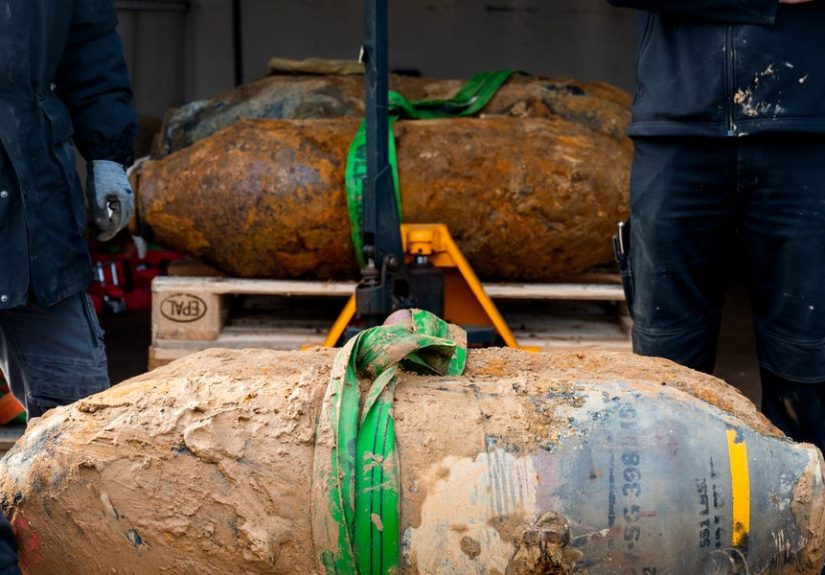
huge quantities of unexploded ordnance (UXO) still sit on or under the seabed. They’re a safety hazard for fishing,
shipping, and coastal communities, and they’re a growing headache for offshore wind farms, cables, and pipelines
trying to build the clean-energy future on top of yesterday’s battlefield.
Here’s the twist: “Defusing” in the North Sea rarely looks like a movie scene with wire cutters and dramatic sweat.
It’s more like a carefully choreographed science-and-engineering operation: mapping the seafloor with sonar and
magnetometers, confirming suspicious targets with robots, choosing the least harmful disposal option, and protecting
marine life from underwater shock waves and noise. In other words, it’s patient, data-driven, and very allergic to
improvisation.
Why the North Sea Still Has So Many Unexploded Munitions
The North Sea’s UXO problem is partly geography and partly history. It was a major corridor for naval operations,
mining, aerial bombing, and anti-submarine warfare. After the wars, additional munitions were dumped at sea during
disposal efforts, often with incomplete records. That legacy is now colliding with modern offshore activityespecially
wind farms that need seabed surveys, cable trenches, and foundation installation.
Some areas are notorious: fishermen have historically reported the highest risk of accidental encounters in parts of the
southern North Sea, where trawling and seabed work overlap with legacy munitions fields. Meanwhile, offshore construction
zones can contain a messy mixbombs, mines, projectiles, and anti-submarine deviceseach with different risks and handling needs. [8]
The Real Challenge: Uncertainty, Corrosion, and “Surprise Factor”
The most frustrating thing about old munitions is that time doesn’t politely deactivate them. Casings corrode and can become
harder to detect or safely move. Fuzes and detonators may become more sensitive. And the seafloor itself is dynamicstorms,
currents, and sediment movement can bury items, uncover them again, or shift them into new places.
Scientists and engineers also have to work with uncertainty. Records of dumping and wartime activity can be incomplete or inaccurate.
That’s why modern UXO work leans heavily on evidencemeasured geophysical signals, repeatable survey methods, and
conservative risk management. [8]
Step One: Find the Needle in the Underwater Haystack
Before anyone talks about disposal, teams have to answer a deceptively simple question: What’s actually down there?
The North Sea isn’t a clear aquarium; it’s an energetic, sediment-rich environment. So scientists use layered sensingmultiple tools
that each reveal a different clue.
Geophysical surveys: seeing with sound and magnetism
UXO search commonly starts with systematic seabed surveys using instruments such as multibeam echosounders and side-scan sonar
(to map shapes on the seafloor) plus magnetometers or gradiometers (to detect ferrous metal anomalies). Survey vessels run planned
linesthink “mowing the lawn,” but with a very expensive boatso data coverage is consistent and auditable. [16]
When targets may be buried, sub-bottom profilers can help identify objects beneath the surface. Combining these datasets lets analysts
tag “contacts” (interesting shapes) and “anomalies” (interesting magnetic signatures), then prioritize what needs a closer look.
Robots do the risky close-up work
Once a target is flagged, remotely operated vehicles (ROVs) frequently move in for visual confirmation. ROVs can carry cameras and
sensors to inspect an object without sending a diver into harm’s way. Many projects use an ROV-based investigation step before deciding
whether to avoid, relocate, or dispose of an item. [1][16]
Data science is quietly doing a lot of heavy lifting
Modern UXO workflows also include advanced data processing and quality controlbecause the sea is full of “false friends.”
A rock can look like a bomb on sonar. A piece of scrap metal can trigger a magnetometer. Analysts cross-check datasets, apply
classification rules, and increasingly use automated support tools to reduce false positives while staying conservative about safety.
The goal isn’t to be “clever.” The goal is to be right.
Step Two: Decide Whether to Avoid, Remove, or Neutralize
“Defusing” doesn’t automatically mean “touch it.” In many offshore projects, the preferred outcome is to avoid the UXO
entirelyadjusting turbine positions, rerouting cables, or establishing exclusion zones. Avoidance reduces the chance of triggering an
explosive event and often reduces environmental impacts as well. NOAA’s offshore-wind reviews, for example, explicitly describe avoidance
as the preferred approach for UXO risk mitigation where feasible. [5]
But sometimes avoidance isn’t possible because of layout constraints, seabed conditions, cable routing, or other restrictions. In those
cases, teams may consider physical relocation, removal, or in situ disposal. Decisions are typically framed around a “reasonably practicable”
risk approachreducing risk as far as feasible without pretending the ocean can be made perfectly predictable. [5]
Step Three: Neutralize the MunitionWith the Least Damage Possible
When disposal is required, the central challenge is balancing three goals that don’t always get along:
(1) protect human safety, (2) protect marine ecosystems, and (3) keep offshore construction
moving without turning the seabed into a demolition range.
Low-order deflagration: “burning out” instead of blasting
One of the most important shifts in recent years is the growing use of low-order deflagration.
In plain English: instead of setting off a full high-order detonation that creates a major shock wave, specialists can
use techniques designed to ignite and consume the explosive fill in a controlled wayaiming to avoid a violent detonation
and reduce underwater noise and seabed damage. [1][2]
A real-world example: the Inch Cape offshore wind project reported investigating hundreds of potential UXO targets with ROV support,
confirming dozens of UXOs, and disposing of a subset using a low-order deflagration method described as igniting and burning out the
explosive content without detonation, followed by debris removal. [1]
Another example comes from offshore wind operations in Scotland’s Moray Firth, where clearance teams have reported using low-order
deflagration for large batches of munitions to avoid the dramatic shock waves associated with traditional methods. [2]
Research literature supports the acoustic benefit: sea-trials comparing high-order detonations to deflagration have reported substantial
reductions in peak sound pressure and overall sound exposure (often described on the order of ~20 dB lower for deflagration in those trials),
along with reduced seabed damagethough researchers also note that chemical residues can remain and require monitoring. [4]
High-order detonation: sometimes still used, but heavily managed
Traditional “blast-in-place” methods can involve initiating a high-order detonation to neutralize a munition. This approach is effective but
loudunderwater explosions are among the most intense human-made point sources of ocean noise. Because of the known risks to marine mammals and
fish, regulators and project planners increasingly treat high-order detonation as a last resort, applying strict mitigation and monitoring when it’s used.
Technical reports describe how a typical blast-in-place approach can involve co-locating a modern donor charge to trigger the UXO; the key point for
a general audience is that the method can generate strong pressure waves and high noise levels, which is why alternatives and mitigation measures have
become so important. [3]
Physical relocation and recovery: when moving it is safer than lighting it
Another option is physical relocation or recovery, which may be preferred in some situations. In the U.S. offshore wind context, NOAA summaries note
that confirmed UXO may be removed through physical relocation or in situ disposal, and that relocation is often preferred but not always possible,
depending on the item’s condition, location, and other constraints. [5]
For some munitions fields, especially where environmental contamination is a major concern, retrieval is becoming more visible in public policy.
Germany’s environment ministry has described large quantities of munitions on the seabed and the growing problem of corroding shells that are harder
to locate and dispose of. [7] Reporting on cleanup efforts describes teams using specialized platforms and careful handling to recover old ammunition,
with a long-term push toward automation and safer offshore processing methods. [12]
“Cutting” or component removal: a specialized niche
In certain scenarios, specialized cutting or extraction approaches may be used to remove explosive components.
Regulatory discussions in the U.S. acknowledge “cutting of the UXO” as one possible method for extracting explosive components,
but emphasize that method selection depends on location, size, condition, and specialist consultation. [5]
The practical message: these are not DIY tasks, and they are not “standard procedures” you can summarize in a few bullet points. They’re
specialist operations chosen under strict safety frameworks.
Protecting Marine Life: Noise, Shock Waves, and Smarter Mitigation
The North Sea isn’t just infrastructure spaceit’s habitat. One reason scientists and regulators have pushed so hard for quieter disposal methods is the
vulnerability of marine mammals like harbor porpoises, which are sensitive to sound and rely on acoustic cues to navigate and find food.
Multiple assessments in Northwest Europe focus on disturbance and potential hearing impacts from impulsive noise sources, including UXO clearance. [6][10]
What mitigation can look like in practice
Mitigation strategies vary by country and project, but common themes include:
planning disposal windows, using observation and acoustic monitoring for marine mammals, applying deterrence measures to encourage animals to leave the
area before impulsive noise events, and verifying sound fields when required by regulators.
Noise abatement methods also matter. “Bubble curtains” (systems that create a barrier of bubbles to reduce sound propagation) are better known in pile-driving
mitigation, but evidence reviews discuss their broader role and note that results can vary with currents and site conditions. Some trials have reported measurable
reductions in peak sound pressure and sound exposure level when bubble-based mitigation is applied. [9]
The point isn’t that one gadget magically solves everything. It’s that modern UXO work is increasingly designed like an environmental engineering project:
quantify the risk, choose the least harmful method, and verify the results.
The Chemical Side of the Problem: It’s Not Just “Will It Explode?”
Even when munitions don’t detonate, they can still pollute. Corroding shells can leak explosive compounds and breakdown products into sediments and water,
and researchers are investigating how these substances accumulate in marine organisms. Germany’s environment ministry, for instance, has warned that explosive-derived
substancessome described as carcinogenic or mutagenichave been found accumulating in mussels and fish, raising concerns about long-term ecosystem impacts and possible
pathways into the food chain. [7]
Universities and research groups are also studying how explosive compounds transform over time and how toxic the breakdown products may be. These questions matter because
they influence policy: when is a munition best left alone, when should it be removed, and how should post-clearance monitoring be designed? [15]
In short, North Sea UXO is an environmental science problem and a safety problem. You can’t solve it with just a boomor just a lab test.
Offshore Wind Is Accelerating the “Find and Fix” Era
Offshore wind development has effectively become a giant, well-funded seafloor inspection program. Before turbines go in, developers commission detailed geoscience and UXO
surveys. If targets are found, projects may confirm them with ROVs and then either avoid them or neutralize those that threaten safe construction.
In 2025, for example, offshore wind reporting described clearance of WWII sea mines at a North Sea site connected to the Nordlicht project in Germany, following site surveys and identification work.
The story illustrates a broader trend: building renewables offshore often means confronting wartime leftovers with modern robotics and monitoring. [14]
Meanwhile, project updates from the North Sea show the scale can be enormoushundreds of potential targets investigated, dozens confirmed, and a smaller subset disposed of to enable construction,
with deflagration increasingly featured as a lower-impact option. [1]
What’s Next: Better Maps, Better Robots, and Fewer Underwater “Surprises”
The future of North Sea UXO work looks like a blend of robotics, environmental monitoring, and policy coordination:
- Smarter detection: Better sensor fusion and improved interpretation workflows reduce false positives and help prioritize real hazards.
- More remote operations: ROVs and autonomous systems reduce diver exposure and can work longer hours in harsh conditions.
- Quieter disposal: Deflagration and other low-order approaches keep gaining traction where they can meet safety requirements with lower acoustic impact. [4]
- Long-term remediation planning: Some governments are moving beyond one-off clearance toward systematic cleanup programs, motivated by environmental leakage concerns. [7][12]
Progress is realbut the ocean is big, history is messy, and the seafloor is not a filing cabinet. The realistic goal isn’t “zero UXO tomorrow.”
It’s reducing risk steadily, using the best science available, and leaving the North Sea safer and quieter than we found it.
Extra: Real-World Experiences From North Sea UXO Work (About )
Ask people who work around North Sea UXO what it feels like, and you’ll rarely hear bravado. You’ll hear routines. Checklists. Screens. Coffee. A lot of waiting.
The “experience” is less like a spy movie and more like an ultra-cautious blend of oceanography lab, construction site, and air-traffic control tower.
On a typical survey day, geophysicists watch a live stream of seabed data rolling insonar imagery that looks like a grayscale moonscape and magnetometer traces that spike
when the seafloor hides something metallic. The mood changes when a “contact” looks too symmetrical or the magnetic signature is too clean. A boulder is lumpy. Scrap metal is messy.
Old munitions can be weirdly “organized” in a way nature rarely is. That’s when the team starts speaking in calm, clipped sentencesbecause excitement is for roller coasters, not UXO.
Then the ROV goes down. ROV pilots and engineers describe this as a mix of video game and surgical procedureexcept the controller is guiding a multi-ton robot in currents,
sometimes in low visibility, while everyone tries to avoid stirring up sediment. When the camera finally frames the object, the silence on deck can be dramatic.
Not because people are scared in a cinematic way, but because everyone knows the next decisions must be conservative and defensible. If it’s a confirmed munition, it gets logged,
photographed, and assessed. If it’s not, everyone exhales and files it under “false alarm, still glad we checked.”
Environmental specialists have their own tense moments. Marine mammal observers and acoustic monitoring teams track activity before and during operations, because impulsive noise can disturb
species like harbor porpoises. Their experience is part science, part patience: long hours scanning waves, listening to data streams, and coordinating with the offshore team so mitigation steps
happen at the right time. The payoff isn’t applauseit’s the quiet confidence that risk was reduced and procedures were followed.
In labs onshore, chemists and marine biologists live in a different world: sample jars, chromatography runs, and the slow, careful work of detecting explosive-related compounds in sediments or
organisms. They talk about munitions as “sources” and “pathways,” and their questions sound almost philosophical: How fast do these chemicals leak? Where do they go? What do they become?
Their experience is less about dramatic events and more about building the evidence that guides national cleanup priorities and safer disposal choices.
And finally there’s the project management side, which might be the most underappreciated experience of all: lining up permits, coordinating specialist vessels, keeping construction schedules realistic,
and making sure safety and environmental requirements are met without cutting corners. UXO work teaches a simple lesson that crews repeat like a mantra:
slow is smooth, and smooth is fast. When the seabed might contain 80-year-old surprises, the best “speed” is doing it right the first time.
Conclusion
Defusing unexploded munitions in the North Sea is a modern collision between history and infrastructure. Scientists and specialist teams start by mapping the seabed with
geophysical surveys, confirm targets using robotics, and then choose risk-reducing strategiesoften prioritizing avoidance, and increasingly using lower-impact methods like
deflagration when disposal is unavoidable. Alongside safety, environmental science now plays a central role: underwater noise must be managed to reduce disturbance to marine life,
and chemical leakage from corroding munitions is pushing governments toward longer-term remediation plans.
The North Sea may never be completely free of wartime leftoversbut the combination of better sensing, smarter robotics, and more environmentally responsible disposal is turning a dangerous
legacy into a solvable engineering and conservation challenge.