Table of Contents >> Show >> Hide
- Why multiple recipients can get tricky
- The 15-step method
- Step 1: Decide if this is one letter or multiple letters
- Step 2: Identify the “primary” recipient
- Step 3: Confirm names, spelling, and preferred titles
- Step 4: Choose the right level of formality
- Step 5: Pick a strategy for the inside address block
- Step 6: Use an attention line when one person should receive it first
- Step 7: If listing multiple people at the same company, stack names neatly
- Step 8: For couples, choose a respectful, modern name format
- Step 9: For families or households, be explicit about who is included
- Step 10: For larger groups, address the groupthen clarify the audience
- Step 11: Write the salutation based on how many people you’re directly greeting
- Step 12: In the first sentence, “name the room”
- Step 13: Use a “cc:” line for transparency (and to avoid awkward forwarding)
- Step 14: Address the envelope for delivery first, etiquette second
- Step 15: Do a final “respect + readability” check
- Examples you can copy (and tweak)
- Mistakes to avoid (so your letter doesn’t become “Reply All: The Musical”)
- Real-life experiences that make you weirdly good at this (about )
- Conclusion
Addressing a letter to more than one person sounds simpleuntil you’re staring at an envelope wondering whether “and” needs a comma, whether “Ms.”
is safer than “Mrs.”, and whether listing seven names will make your letter look like the end credits of a Marvel movie.
The good news: there are reliable rules (and a few “don’t make it weird” best practices) that work for business letters, formal mail, and social
correspondence. Below are 15 clear steps with specific examples so your letter lands in the right handsand reads like you know what you’re doing.
Why multiple recipients can get tricky
You’re not just choosing wordsyou’re managing hierarchy (who’s primary), clarity (who the letter is for),
courtesy (titles and names), and deliverability (the address needs to actually work in the real world).
Done well, your letter feels polished. Done poorly, it feels like you accidentally invited someone’s ex to Thanksgiving.
The 15-step method
Step 1: Decide if this is one letter or multiple letters
If recipients are at different addresses, sending individual copies is usually the cleanest and most professional move. If they’re
at the same address (same household or same company), one letter can workif the content truly applies to everyone.
Step 2: Identify the “primary” recipient
Even when multiple people will read it, most letters have a main decision-maker: a hiring manager, department head, chairperson, or account owner.
Choose the primary recipient based on responsibility, rank, or who you want to take action.
Step 3: Confirm names, spelling, and preferred titles
This is the easiest place to lose credibility. Confirm correct spelling, professional titles (Dr., Judge, Professor), and preferred honorifics when
possible. If you’re unsure how someone prefers to be addressed, a quick check of their email signature, company bio, or public profile helps.
Step 4: Choose the right level of formality
Your format depends on the context:
- Business/professional: formal structure, titles + last names, clean inside address.
- Legal/complaint/request: very formal, clear subject line or “Re:”, precise recipient roles.
- Social (thank-you, invitation): etiquette-forward, household naming matters more.
Step 5: Pick a strategy for the inside address block
For multiple recipients, you generally have three workable layouts:
- Option A (same organization): list each person on separate lines, then company + address.
- Option B (couple/household): list both names on one or two lines, then address.
- Option C (group/committee): address the group name (and optionally note key individuals).
Step 6: Use an attention line when one person should receive it first
If you’re writing to a company but need it routed to a specific person (or two), use an Attention line above the company name.
This is especially helpful when the company address is correct but the internal destination is not obvious.
Example:
Step 7: If listing multiple people at the same company, stack names neatly
When two or three individuals share a workplace, stacking names is cleaner than cramming everyone onto one line. Keep titles consistent.
Example:
Step 8: For couples, choose a respectful, modern name format
If both recipients share the same last name, you can list them together. If they have different last names, list both full names. If you’re unsure
whether someone uses Ms. or Mrs., Ms. is often the safest professional default.
Examples:
Step 9: For families or households, be explicit about who is included
If the letter is intended for everyone in the household (holiday card, general notice), you can use “The [Last Name] Family.” If the letter is
only for named adults, list only those adultsdon’t assume “and family” unless you truly mean it.
Step 10: For larger groups, address the groupthen clarify the audience
If you’re writing to a board, committee, or department, a group salutation is usually more readable than listing 12 names. You can still identify
the primary contact in the address block or via an attention line.
Example:
Step 11: Write the salutation based on how many people you’re directly greeting
A practical rule: if you’re greeting one to three people, name them. If it’s more than that, use a collective greeting.
Choose punctuation based on formalitycommas feel friendly; colons feel more formal.
- Two people (formal): Dear Ms. Perez and Mr. Chen:
- Three people (semi-formal): Dear Jordan, Maya, and Sam,
- Group (formal): Dear Board Members:
- Unknown specific person (better than “To Whom It May Concern”): Dear Hiring Team:
Step 12: In the first sentence, “name the room”
When multiple people are addressed, your opening line should make it obvious who you’re speaking to and why.
Examples:
- “I’m writing to both of you regarding the updated lease renewal timeline.”
- “I’m writing to the Facilities Team to request approval for the attached safety plan.”
- “I’m writing to the Committee to formally submit my application materials.”
Step 13: Use a “cc:” line for transparency (and to avoid awkward forwarding)
If one person is the main addressee but others should receive a copy, add a cc: line at the bottom. This keeps the letter readable
while still documenting who received it.
Example:
Step 14: Address the envelope for delivery first, etiquette second
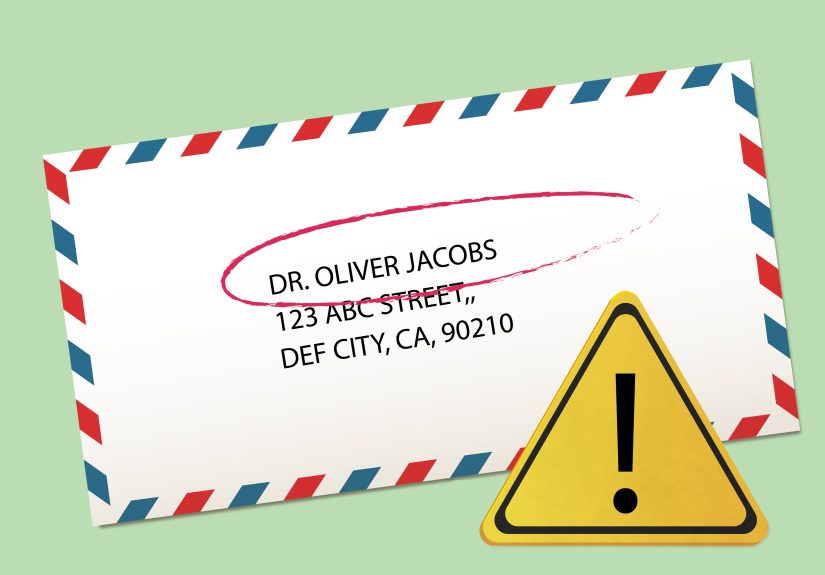
A beautiful salutation won’t help if the mail can’t be delivered. Use the correct delivery address, include apartment/suite numbers, and avoid
“creative” formatting that confuses postal processing.
- Include unit designators (APT, STE) when applicable.
- If you must use two address types (like PO Box and street), make sure the intended delivery line is clear.
- Keep it legible and consistentespecially for formal mail.
Step 15: Do a final “respect + readability” check
Before you send, quickly scan for:
- Misspelled names (the #1 avoidable offense).
- Incorrect or outdated titles.
- Overloaded address block (too many names, not enough clarity).
- Mismatch between salutation and address block (if you used “Dear Dr. Patel,” did you also label them as Dr. above?).
- Whether separate letters would be clearer (especially for multiple locations).
Examples you can copy (and tweak)
Example 1: Two recipients at the same company
Example 2: One primary recipient, others copied
Example 3: Married couple (modern, clear, and polite)
Example 4: Larger group (committee/board)
Mistakes to avoid (so your letter doesn’t become “Reply All: The Musical”)
- Listing everyone everywhere: ten names in the address block AND ten in the salutation is visually exhausting.
- Using outdated generic greetings by default: if you can find a name or role, use it.
- Guessing titles: “Dr.” and “Judge” are not vibes; they’re facts.
- Forgetting inclusivity: when you don’t know a person’s preference, neutral and professional options reduce risk.
- Addressing for etiquette but ignoring delivery rules: mail has to get there before it can impress anyone.
Real-life experiences that make you weirdly good at this (about )
Most people don’t learn how to address letters to multiple recipients from a calm, scholarly place. They learn it in the wildusually while trying
not to look unprofessional, ungracious, or accidentally passive-aggressive.
One common “level-up” moment happens during a job search. You find a posting, you polish your cover letter, and then you realize the company didn’t
list a single human namejust a job title and a portal that feels like it was designed in 2009 and never emotionally recovered. That’s when you
discover the difference between a vague greeting (which can feel lazy) and a targeted one like “Dear Hiring Team,” which is specific enough to feel
intentional without pretending you know things you don’t. The first time you do this, you feel like a professional adult. The second time, you feel
like a wizard.
Another experience: writing to a property manager, a landlord, or an HOA board. You’re not just sending a noteyou’re documenting a timeline, and you
want the right people to see it. Addressing the letter to the chair (or the named manager) and using a cc line for the rest of the stakeholders is
a quiet power move: it keeps the letter readable, but it also makes it very clear this isn’t a secret complaint whispered into the wind. Bonus:
it reduces the odds of “Oh, I never saw that.”
Social correspondence teaches you a different skill: how to be correct without being awkward. People’s names and titles can be personal. Some couples
share a last name; others don’t. Some people love honorifics; others would rather eat a stapler than be called “Mrs. Husband’s-First-Name.” When you
address envelopes with both people’s names clearly and respectfully, you send a subtle message: “I see you as individuals, not as an accessory pack.”
It sounds small, but it lands bigespecially for formal events like weddings, graduations, and milestone celebrations.
Then there’s the workplace “multi-recipient” scenario: you’re writing to two departments who both own a piece of the problem, and you want alignment,
not finger-pointing. Addressing both recipients directly in the salutation (“Dear Ms. Perez and Mr. Chen:”) can set a collaborative tone before the
body even begins. It’s the written equivalent of bringing everyone into the same roomwith a little less risk of someone stealing your conference-room
donut.
The best part is that once you’ve done this a few times, it becomes automatic. You start thinking in systems: primary recipient, group visibility,
delivery clarity, and respectful naming. And suddenly you’re the person friends text when they’re like, “Help, do I write ‘and family’ or is that too
much?” Congratulations. You have become The Letter Person.
Conclusion
Addressing a letter to multiple recipients is really three skills in one: (1) choosing the right structure (one letter vs. multiple copies), (2)
showing respect with names and titles, and (3) keeping delivery details clean so the letter reaches the right people. Use the 15 steps above as a
checklist, lean on attention lines and cc lines when clarity matters, and don’t be afraid to simplify by addressing a group when the list gets too
long. Your future self (and your recipients) will thank you.