Table of Contents >> Show >> Hide
- Why Cleaning a Trombone Matters (Besides Basic Dignity)
- What You’ll Need (Trombone Spa Shopping List)
- The 2-Minute Daily Routine That Prevents 80% of Problems
- Clean the Mouthpiece Weekly (Because That’s Where Your Face Lives)
- Deep Clean: The Trombone Bath (Step-by-Step)
- Re-Lubricate the Right Way (Smooth Slide, Happy Life)
- Exterior Cleaning and Finish Care (Shine Without the Sadness)
- How Often Should You Clean a Trombone?
- Troubleshooting: When Cleaning Isn’t Enough
- Small Habits That Keep Your Trombone Cleaner Longer
- Real-World Experiences and Lessons (About of “Yep, Been There”)
- Wrap-Up
A trombone is basically a shiny brass straw… that you pay money for… and then immediately fill with warm breath,
condensation, and whatever microscopic souvenirs your last snack left behind. The good news: cleaning a trombone
isn’t mysterious. The better news: a clean horn plays easier, sounds better, and is far less likely to develop the
kind of “eau de locker room” that makes bandmates take one step back when you unpack your case.
This guide walks you through quick daily habits, an easy deep-clean “bath,” slide care that actually works, and
what to do when something is stuck (hint: not brute force). It’s written for students, parents, adult beginners,
and anyone who’s ever thought, “Surely the trombone cleans itself?” (It does not.)
Why Cleaning a Trombone Matters (Besides Basic Dignity)
Your trombone’s inside surfaces collect condensation every time you play. That moisture mixes with tiny particles
and residue that naturally build up over time. When gunk accumulates, the bore effectively narrows in spots, which
can mess with response, tone, and tuning. Slides can also start to feel gritty or sluggish because dirt and old
lubricant turn into a sticky paste. And yes, a neglected mouthpiece can become less hygienic and less pleasant
to use.
Cleaning isn’t about making your horn look pretty (though that’s a nice bonus). It’s about keeping the air pathway
open, the slide smooth, and the instrument reliableso you can focus on playing, not wrestling your main slide like
it owes you money.
What You’ll Need (Trombone Spa Shopping List)
Must-haves
- Mild dish soap (no bleach; skip anything harsh or abrasive)
- Lukewarm water (warm is fine; hot is not your friend)
- Mouthpiece brush
- Flexible cleaning snake (a bore brush long enough for trombone tubing)
- Two towels (one for the tub bottom, one for drying)
- Soft lint-free cloth (microfiber or cotton)
Nice-to-haves
- Slide lubricant: either slide oil or slide cream (choose one system)
- Small water spray bottle (especially if you use slide cream)
- Tuning slide grease (for tuning slides only)
- Pipe cleaner or small brush for water key areas
- Cleaning rod + gauze/cloth (for gentle interior wiping where appropriate)
Things to avoid
- Hot water (it can damage finishes and isn’t worth the risk)
- Bleach, strong detergents, harsh solvents (these can damage lacquer/finish)
- Over-soaking (long baths can be rough on finishes)
- Metal tools, pliers, “just one good yank” (especially on stuck mouthpieces/slides)
The 2-Minute Daily Routine That Prevents 80% of Problems
If you do nothing else, do this after you play. Think of it as brushing your teeth, but for your horn.
-
Empty the water key(s). Moisture in the instrument is mostly condensation, not “spit,” and it
builds up fast. Open the water key and gently blow air through to clear lingering droplets. -
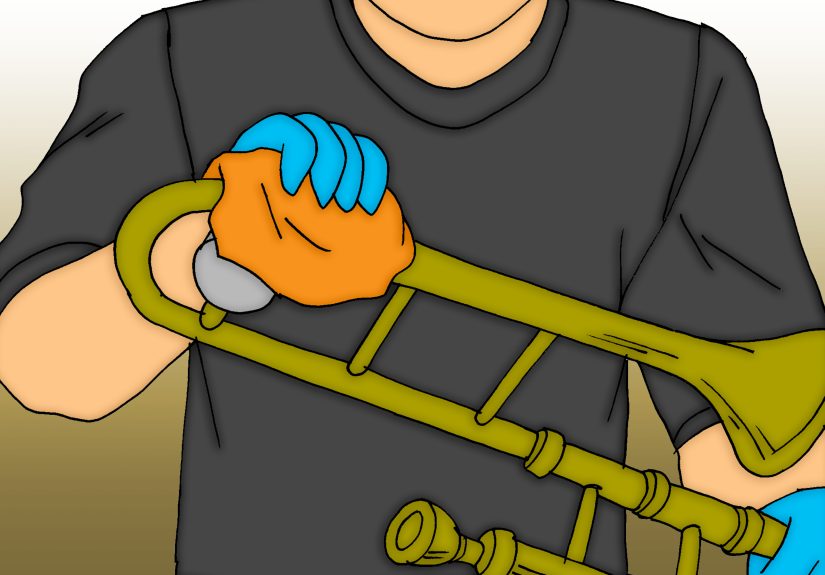
Wipe the outside. Use a soft cloth to remove fingerprints and sweatespecially where your hands
grip the instrument. This helps keep the finish happier over time. -
Lock the slide before you set it down. A moment of slide-locking can save you from a dented outer
slide, a repair bill, and a dramatic retelling that starts with “So I set it down for literally two seconds…” - Put it away properly. Case closed, latches secured, no heavy books pressing on the slide inside.
Clean the Mouthpiece Weekly (Because That’s Where Your Face Lives)
Mouthpieces collect residue quickly and can affect feel and airflow if the bore gets funky. A weekly wash is a solid
baseline; heavy players may prefer more often.
- Run warm (not hot) water through the mouthpiece.
- Add a small drop of mild dish soap to the mouthpiece brush.
- Brush through the shank and cup, then rinse thoroughly until no soap remains.
- Dry with a clean cloth and set it aside.
Deep Clean: The Trombone Bath (Step-by-Step)
How often should you do a full bath? Some players deep-clean weekly, others monthly, others every couple of months.
A practical rule: if your slide feels gritty, your horn smells weird, or your tone feels “clogged,” it’s bath time.
For many people, once a month is a comfortable rhythm.
Step 1: Set up your “Trombone Spa”
- Line the tub (or a large plastic bin) with a towel to protect the instrument.
- Fill with lukewarm water and a small amount of mild dish soap.
- Keep a second towel nearby for drying and a clear workspace for parts.
Step 2: Disassemble carefully
Take the instrument apart into its major sections:
- Mouthpiece
- Main hand slide (separate inner and outer slide sections if you’re comfortable)
- Tuning slide(s)
- Bell section
If something is stuck (tuning slide won’t move, mouthpiece won’t come out), don’t force it.
A repair shop has the right tools to remove stuck parts without bending tubing or damaging the receiver.
Step 3: Rinse and soak (briefly)
Run lukewarm water through each section to loosen obvious debris. Then let parts soak for about 10 to 20 minutes.
You’re aiming to soften buildup, not marinate your trombone like it’s dinner.
Avoid extended soakingespecially on lacquered instruments. If you’re unsure about your finish or you’re working with
a rental, keep the soak short and gentle.
Step 4: Snake the tubing (the satisfying part)
Use a flexible cleaning snake to scrub the inside of each tube while it’s still wet. Work slowly and gently:
the goal is to remove residue, not to speedrun a plumbing job.
- Bell section / leadpipe area: Run the snake through the mouthpiece receiver path and bell tubing as far as it safely goes.
- Tuning slide: Clean both legs with the snake, then rinse.
- Outer slide: Carefully run the snake through each outer slide tube. Go slowouter slides are sensitive.
Pro tip: if your snake has brush heads on both ends, you can dip one end into the soapy water and work it through,
then rinse thoroughly with clean lukewarm water afterward.
Step 5: Rinse like you mean it
Soap left inside tubing can attract new grime and mess with lubrication. Rinse each piece with clean lukewarm water
until everything feels squeaky-clean (but not literally squeakythat’s a later problem).
Step 6: Dry completely
Drying is not the glamorous part, but it matters. Water left inside can contribute to corrosion and makes lubricants
less effective.
- Stand slides upright to drain.
- Wipe exteriors with a soft cloth.
- Let parts air-dry before re-lubricating and reassembling.
Re-Lubricate the Right Way (Smooth Slide, Happy Life)
Cleaning removes old lubricant. That’s gooduntil you put the horn together dry and discover what “sticky” really means.
Re-lubrication is not optional.
Main slide: choose one system
Option A: Slide oil (simple, fast)
- Wipe inner slide stockings clean and dry.
- Add a couple drops of slide oil to each inner slide tube near the stocking area.
- Reassemble and move the slide back and forth to distribute evenly.
Option B: Slide cream + water spray (popular for a slick feel)
- Apply a small amount of slide cream to the stocking areas on the inner slide.
- Wipe off excessmore is not better; more is just… more.
- Mist lightly with a water spray bottle, then assemble and work the slide to spread the lubricant.
- Keep the spray bottle handy during playing if the slide starts to feel dry.
Don’t mix systems. Slide oil and slide cream are designed to work differently. If you switch from one
to the other, clean off the old product first.
Tuning slide: use tuning slide grease
Tuning slide grease is for tuning slidesnot the main hand slide. Apply a thin, even film, insert the slide, and
move it a few times to distribute. Wipe off the excess so it doesn’t become a lint magnet.
If you have an F-attachment (rotary valve)
Many trombones have a rotary valve. You can gently rinse around it during cleaning, but avoid taking apart valve
mechanisms unless you know exactly what you’re doing. After cleaning, use the correct rotor oils (as recommended
by the instrument maker or your local shop) so the valve stays quick and quiet.
Exterior Cleaning and Finish Care (Shine Without the Sadness)
For day-to-day exterior cleaning, a soft cloth usually does the job. If you want more shine:
- Lacquer finish: Use a polish made for lacquered brass (or just stick to a clean cloth).
- Silver plate: Use a silver cloth designed for instrumentsgently.
Avoid harsh chemicals and abrasive cleaners. If you’re ever tempted to use a strong household solvent, pause and
ask yourself: “Would I put that on a car’s paint job?” If the answer is “absolutely not,” don’t put it on your trombone.
How Often Should You Clean a Trombone?
Frequency depends on how much you play, where you play, and how sensitive your slide is to grime. Here’s a practical
schedule that works for most players:
- Every session: empty water keys, wipe exterior, lock slide, store properly.
- Weekly: wash mouthpiece; wipe and refresh slide lubricant as needed.
- Monthly (or every 1–2 months): full bath cleaning with snake brush.
- Yearly: have a qualified technician check it over and do a professional cleaning/adjustment.
Troubleshooting: When Cleaning Isn’t Enough
The slide is still sticky after cleaning
- Check for dents. The smallest dent in an outer slide can ruin smooth motion.
- Clean off old lubricant completely. Residue + new product can create sludge.
- Use the right product. Tuning slide grease on the hand slide will make everything worse.
- Consider professional slide alignment. Sometimes the issue is mechanical, not dirty.
The mouthpiece is stuck
Don’t twist with superhuman force, don’t tap it with tools, and definitely don’t let a well-meaning friend “help”
by yanking. A shop can remove it safely in minutes with a mouthpiece puller.
The tuning slide won’t move
Same rule: don’t force it. A stuck tuning slide can require repair attention, and forcing it can bend slide legs or
damage the receiver area. Get professional help.
Small Habits That Keep Your Trombone Cleaner Longer
- No food, gum, or candy while playing. Particles in the horn become buildup fast.
- Rinse your mouth with water before you play (especially after eating).
- Keep a water spray bottle in your case if you use slide cream.
- Don’t cram books in the case. Pressure on the slide can slowly bend it.
- Vacuum or shake out the case occasionally. Dust and lint love to travel.
- Use the slide lock. It’s the seatbelt of the trombone world.
Real-World Experiences and Lessons (About of “Yep, Been There”)
The first time most players clean a trombone, they expect a quick rinse and a triumphant sparkle. What they often
get instead is a surprisingly educational moment: the water changes color, the snake brush comes out with mystery
specks, and suddenly “I’m sure it’s fine” becomes “Oh… that’s been in there the whole time?”
One of the most common experiences is discovering how much the main slide depends on cleanliness. A slide that felt
“kind of slow but manageable” before the bath can feel dramatically smoother afterwardalmost like the instrument
got upgraded overnight. That’s because friction doesn’t need a giant dent to become annoying; it can come from a
thin film of old lubricant mixed with dust. Once that film is gone and the correct slide lubricant is applied, the
slide starts moving the way you thought it was supposed to move all along.
Another classic lesson: less lubricant is usually more. Players often apply slide cream like they’re frosting
a cake. The result is a sticky slide that attracts lint, which then attracts more grime, which then convinces you
your trombone is cursed. In reality, a small amount of product plus a light water mist can outperform a heavy layer
every time. If you can see thick streaks of cream, you’ve probably gone past “smooth” and into “swampy.”
People also tend to underestimate how important drying is. A freshly washed trombone reassembled while still
wet often ends up with diluted lubricant that doesn’t last. That can create a frustrating cycle: you clean, you
lube, the slide feels okay for a day, then it gets sluggish again. Letting parts air-dry (or at least draining well)
makes the lubrication step far more effective and keeps the slide consistent from rehearsal to rehearsal.
If you play in a school band setting, you may relate to the “case archaeology” moment. You open the case and find
crumbs, pencil shavings, and a folded worksheet that somehow migrated on top of the slide. Players learn quickly
that a trombone case is not a backpack. Even a little pressure in the wrong spot can cause tiny alignment issues
over time, and those issues show up as a slide that suddenly feels rough in certain positions. Keeping the case
clean and free of extra items is one of those boring habits that saves real money later.
Finally, there’s the confidence boost. A clean instrument just feels better to practice on. Notes speak more easily,
the slide responds more predictably, and you stop wasting brainpower fighting the hardware. It’s a small maintenance
routine that pays off in a very musical way: you get to sound more like yourself and less like someone trying to
play through a clogged straw. The best part? After you’ve done it once, trombone cleaning stops feeling like a big
project and starts feeling like normal ownershiplike tuning a guitar or sharpening a pencil. Just… shinier.
Wrap-Up
Cleaning a trombone isn’t complicated, but it is consistent. Do the quick daily routine, wash the mouthpiece weekly,
bathe the instrument on a reasonable schedule, and re-lubricate with the right products. Treat stuck parts as a
“call a pro” situation, not a personal challenge. Your reward is a smoother slide, clearer tone, and an instrument
that’s ready when you are.