Table of Contents >> Show >> Hide
- Why Vinegar Works for Toilet Bowl Cleaning
- What You Need Before You Start
- How to Clean a Toilet Bowl With Vinegar Step by Step
- How to Remove Hard Water Stains and Toilet Rings
- How to Get Rid of Toilet Bowl Odors With Vinegar
- Common Mistakes to Avoid
- When Vinegar Is Not Enough
- How Often Should You Clean a Toilet Bowl With Vinegar?
- Simple Preventive Tips That Make Future Cleaning Easier
- Real-Life Experiences: What Actually Happens When You Clean a Toilet Bowl With Vinegar
- Final Thoughts
- SEO Tags
Note: The HTML below is based on current U.S. cleaning and safety guidance. Across CDC, EPA, and major U.S. home-care publishers, the consistent advice is that vinegar can help loosen mineral buildup, toilet rings,
Clorox™
+4
CDC
+4
US EPA
+4
can help target the waterline or under-rim stains; vinegar should never be mixed with bleach or other cleaners; and if you need true disinfection, that should be done separately with an EPA-registered disinfectant used exactly as labeled.
Real Simple
+13
CDC
+13
US EPA
+13
le>
Let’s be honest: cleaning a toilet bowl is nobody’s idea of a glamorous afternoon. It is the household chore most people would happily outsource to a team of highly motivated woodland creatures. But when the bowl starts showing a mystery ring, smells a little suspicious, or looks like it has been hosting a hard-water science fair, white vinegar can be a surprisingly effective helper.
If you want a simple, affordable way to tackle toilet bowl stains, loosen mineral buildup, and freshen up odors, vinegar deserves a spot in your cleaning lineup. It is especially handy for everyday maintenance and for bowls dealing with hard water marks, dingy waterlines, and the kind of odor that makes you suspicious even when everything looks clean.
That said, vinegar is not magic in a bottle. It is not the right answer for every stain, and it is not a substitute for a true disinfectant when someone in your household is sick or when you need sanitation beyond routine cleaning. Used the right way, though, it can make your toilet bowl look and smell dramatically better without turning your bathroom into a chemistry experiment.
Why Vinegar Works for Toilet Bowl Cleaning
The reason vinegar works so well on many toilet bowl messes is simple: it is acidic. That mild acidity helps break down mineral deposits, loosen hard water residue, and lift the chalky or rusty-looking buildup that clings to the bowl. It also helps cut through the grime that can trap unpleasant odors.
In real-life bathroom terms, that means vinegar can be especially useful for:
- Hard water rings around the waterline
- Yellow, brown, or orange stains caused by mineral deposits
- Lingering toilet odors caused by buildup in the bowl or under the rim
- Routine refreshes between deeper bathroom cleanings
Think of vinegar as the dependable friend who shows up with practical shoes and gets the job done. It may not have flashy packaging or neon blue foam, but it can be remarkably effective when used with patience, soaking time, and a good toilet brush.
What You Need Before You Start
Before you begin, gather your supplies. The process is simple, but having everything ready makes the job faster and less annoying.
- Distilled white vinegar or cleaning vinegar
- Toilet brush
- Rubber cleaning gloves
- Baking soda for stubborn stains
- Paper towels for targeted stain treatment
- Microfiber cloth for wiping the outer toilet surfaces
Open a window or turn on the exhaust fan if you can. Vinegar is not the harshest cleaner in the world, but a bathroom that smells like salad dressing in a sauna is still not ideal.
How to Clean a Toilet Bowl With Vinegar Step by Step
If your toilet bowl just needs a solid refresh, this basic method usually does the trick.
Step 1: Flush First
Flush the toilet to wet the bowl and remove loose debris. Starting with a freshly flushed bowl gives the vinegar a better shot at the stains instead of wasting energy on whatever chaos happened there earlier.
Step 2: Add the Vinegar
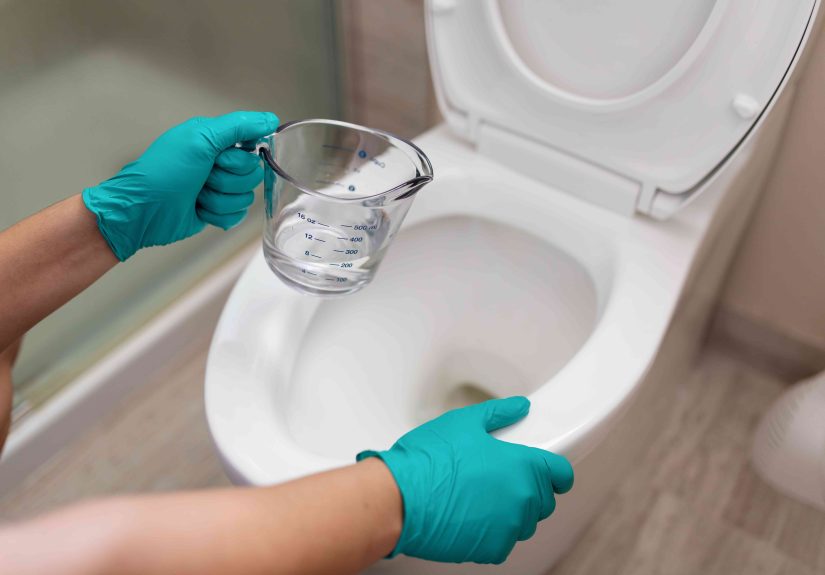
Pour about 1 to 2 cups of vinegar into the toilet bowl, making sure it runs around the sides and reaches the stained areas. Swish it around with the toilet brush so the vinegar coats the bowl more evenly, especially under the rim and along the waterline.
Step 3: Let It Sit
This is the part many people rush, and it is exactly why they end up scrubbing like they are training for a sport. Let the vinegar sit for at least 15 to 30 minutes. If the stains are heavier, leave it for an hour. For really stubborn buildup, an overnight soak can help.
Step 4: Scrub Thoroughly
Use your toilet brush to scrub the entire bowl, paying extra attention to the waterline, under the rim, and any spots with visible staining. The goal is not just to wave the brush around and hope for the best. Get under that rim. Get into the curves. This is where hidden grime likes to live rent-free.
Step 5: Flush Again
Flush to rinse the bowl. In many cases, the toilet will already look brighter and smell fresher. If some stains remain, move on to the deeper methods below.
How to Remove Hard Water Stains and Toilet Rings
If your toilet bowl has a stubborn ring that laughs in the face of ordinary cleaning, you are probably dealing with hard water stains or mineral deposits. Vinegar can still help, but you may need to get more strategic.
Use a Vinegar Soak for the Waterline
When stains sit right at the waterline, the vinegar can become diluted too quickly. One of the easiest fixes is to lower the water level in the bowl as much as possible. You can do that by flushing and briefly stopping the refill, or by pushing some of the water down with a toilet brush.
Then pour vinegar directly onto the stained section. For extra-stubborn rings, soak paper towels in vinegar and press them onto the stained area. Let them sit for 30 minutes to several hours before scrubbing. This keeps the vinegar in direct contact with the deposit instead of letting it drift away in the bowl water like a tiny, defeated boat.
Add Baking Soda for Stubborn Spots
If vinegar alone does not finish the job, sprinkle baking soda into the bowl after the vinegar has had time to work. The baking soda adds gentle abrasion, which can help loosen grime and mineral residue without being overly harsh on porcelain.
Once it fizzes, let it sit for another 10 to 15 minutes, then scrub again. The fizz is satisfying, yes, but the real benefit is the combination of soaking, softening, and extra scrubbing support. It is not a magic volcano. It is teamwork.
Repeat if Necessary
Really heavy mineral buildup may take more than one round. That is normal. A toilet bowl that has been collecting hard water deposits for months is not going to transform in two minutes just because you arrived with good intentions.
How to Get Rid of Toilet Bowl Odors With Vinegar
If the toilet bowl smells less than fresh even after a flush, buildup is often the culprit. A vinegar soak can help dissolve the residue that traps odor molecules, especially under the rim and around the inner bowl.
To target odors:
- Pour vinegar generously around the bowl and under the rim.
- Let it sit for at least 30 minutes.
- Scrub the bowl thoroughly, including under the rim.
- Wipe the seat, lid, hinges, and exterior base with a separate cleaning cloth.
- Flush and reassess.
Here is the key point many people miss: a toilet odor is not always coming from the water you can see. Sometimes the smell is coming from residue tucked under the rim, splashes around the base, or grime on exterior surfaces. In other words, if you only clean the center of the bowl and then act surprised that the bathroom still smells weird, the toilet is not the problem. The cleaning strategy is.
Common Mistakes to Avoid
Do Not Mix Vinegar With Bleach
This is the big one. Never combine vinegar with bleach or use vinegar right after another cleaner without rinsing thoroughly first. Mixing cleaning chemicals can create dangerous fumes, and that is not a shortcut anyone wants to take.
Do Not Expect Vinegar to Disinfect Like a Registered Disinfectant
Vinegar is useful for cleaning and deodorizing, but if you need to disinfect a toilet, especially after illness, use an appropriate disinfectant product separately and follow the label directions exactly. Cleaning and disinfecting are not the same thing.
Do Not Rush the Soak Time
Most vinegar failures are really patience failures. If you pour vinegar in, scrub for 20 seconds, and declare it useless, you did not test vinegar. You tested wishful thinking.
Do Not Ignore the Rim
A lot of hidden buildup collects under the rim, where water enters the bowl. That area can hold odor-causing residue and stain-making gunk. Always scrub it.
Do Not Use Abrasive Tools Carelessly
If you ever move beyond vinegar and baking soda to a pumice stone for severe mineral buildup, keep the stone wet and use a gentle hand. Porcelain is tough, but it is not begging to be sanded like a deck chair.
When Vinegar Is Not Enough
Vinegar is excellent for routine maintenance and many common stains, but there are times when you need backup.
You may need a stronger product or a different method if:
- The bowl has heavy rust staining that keeps returning
- There is thick limescale or hard-water buildup that has been there for a long time
- You need true disinfection because someone has been sick
- The odor remains even after a thorough bowl and exterior cleaning
In those cases, you might need a toilet cleaner designed for mineral deposits, a carefully used pumice stone, or an EPA-registered disinfectant used on a clean surface according to the product label. Vinegar is great, but it is not here to win every single battle on its own.
How Often Should You Clean a Toilet Bowl With Vinegar?
For most households, a weekly clean is a smart routine. Regular cleaning prevents stains from building up, keeps odors under control, and means you will spend less time dealing with a dramatic toilet bowl ring that suddenly looks like ancient archaeology.
If you have hard water, frequent use, or a bathroom that tends to get funky fast, you may want to use vinegar more often for maintenance. A quick weekly vinegar treatment can help stop stains before they become a full-blown project.
Simple Preventive Tips That Make Future Cleaning Easier
- Brush the bowl briefly once or twice between deep cleans
- Use vinegar regularly before stains get established
- Pay attention to the waterline and under-rim area
- Wipe the outer toilet surfaces often so odors do not build up elsewhere
- Avoid relying on drop-in tank tablets as your only cleaning method
Toilet cleaning gets dramatically easier when you stop waiting for visible disaster. The best time to clean a toilet is before it starts looking like it belongs in a gas station thriller.
Real-Life Experiences: What Actually Happens When You Clean a Toilet Bowl With Vinegar
One reason vinegar remains so popular is that people can see the difference without needing a cabinet full of specialty products. In a lightly stained toilet bowl, the results are often immediate. You pour in the vinegar, let it sit, give the bowl a proper scrub, and suddenly the dull film lifts. The toilet looks brighter, the room smells cleaner, and the job feels far less dramatic than expected.
In homes with hard water, the experience is a little different. Vinegar still helps, but the first cleaning session may feel more like negotiation than victory. The ring fades, but maybe it does not fully disappear. You scrub again the next day, and the bowl improves more. By the third round, the mineral band that once looked permanent is suddenly much lighter. That is the real lesson people learn with vinegar: it rewards consistency more than brute force.
Many people also discover that odor problems are not always where they think they are. Someone may swear the bowl itself is the issue, pour in vinegar, flush, and then wonder why the bathroom still smells off. Then they finally scrub under the rim, wipe around the seat hinges, clean the outer base, and realize the toilet has been innocent-ish all along. The smell was coming from buildup in hidden places. Vinegar helps expose that truth in a very humbling way.
Another common experience happens with guest bathrooms. Because they are used less often, people assume they stay clean longer. In reality, a little standing-water mineral buildup can sit quietly until one day the bowl has a faint ring and a stale smell. A vinegar soak is perfect for this situation. It is easy, inexpensive, and ideal for maintenance before the bathroom starts looking neglected.
There is also the surprisingly satisfying experience of using vinegar-soaked paper towels on a stubborn waterline ring. At first, it looks ridiculous, like you are tucking the toilet in for a nap. But after the soak, those towels come off, the deposits have softened, and the brush suddenly has a fighting chance. It is one of those cleaning tricks that seems silly until it works.
People who try baking soda after a vinegar soak often report another little victory: the bowl feels smoother afterward. That is because you are not just masking the stain visually. You are helping remove the residue that makes the surface look dingy in the first place. A smoother bowl tends to stay cleaner longer because there is less rough buildup for new grime to cling to.
Of course, vinegar has limits, and experience teaches that pretty fast too. If the toilet has years of rust staining or thick mineral crust, vinegar may improve the situation without fully solving it. That does not mean the method failed. It means the stain has moved into “call in reinforcements” territory. Still, even in those cases, vinegar often makes the next step easier by loosening what has built up.
Perhaps the biggest real-world takeaway is this: vinegar works best when you use it before the toilet bowl becomes a horror story. People who use it weekly usually spend just a few minutes keeping the bowl fresh. People who wait until the ring is visible from space end up with a bigger project. So yes, vinegar is effective. But more importantly, it is effective enough to turn toilet cleaning from a dreaded event into a manageable habit, which may be the most beautiful sentence ever written about bathroom maintenance.
Final Thoughts
If you want a simple and affordable way to clean your toilet bowl with vinegar, this method is absolutely worth trying. It can help loosen mineral deposits, reduce stains, freshen odors, and make routine toilet care feel much less aggressive. For everyday mess, hard water rings, and mild odor issues, vinegar punches well above its price tag.
The secret is using it correctly: give it time to soak, scrub thoroughly, target the rim and waterline, and repeat when necessary. Add baking soda when stains are stubborn, and switch to a stronger product when true disinfection or heavy buildup calls for it.
In other words, vinegar is not a miracle cleaner. It is better. It is a practical cleaner. And in the world of toilet bowls, practical wins every time.
SEO Tags
“` :