Table of Contents >> Show >> Hide
- What “Construct a Zip Line” Really Means
- Step 1: Decide If Your Site Is Zip-Line-Friendly
- Step 2: Set Your Safety Requirements (Before You Shop)
- Step 3: Hire a Qualified Installer (and Ask the Questions That Matter)
- Step 4: Build Your Operating Rules Like You’re Running a Mini Theme Park
- Step 5: Inspect, Maintain, and Know When to Shut It Down
- Common Mistakes People Make (So You Don’t Have To)
- Safer Alternatives If DIY Is the Goal
- Frequently Asked Questions
- Real-World Experiences: What Zip Line Projects Actually Feel Like (and What People Learn)
Safety note (read this first): I can’t provide DIY, step-by-step construction instructions for building a zip lineespecially for backyard setupsbecause mistakes can lead to serious injuries. What I can do is walk you through a practical, real-world “5-step” process for planning a zip line safely, choosing the right professionals and equipment, and setting clear operating rules so your “wheee!” doesn’t turn into “wee-ooo” (the sound of an ambulance).
If you’re here because you want a zip line in your yard, at camp, or on a property, you’re in good company. Zip lines are basically gravity’s most cheerful delivery service. But they’re also a system under significant load with moving parts, height, speed, and peopleaka the ingredients of a thrilling afternoon and a potential liability salad. The good news: you can still get the fun without turning your backyard into an engineering final exam.
What “Construct a Zip Line” Really Means
When people say “construct a zip line,” they often picture a cable between two trees and a pulley you bought at 1:00 a.m. during a scrolling session that started as “just one more video.” In reality, a safe zip line is a designed system that considers:
- Anchors: what holds the system and what happens under load.
- Ride hardware: trolley/pulley, connectors, harness, lanyard, and backup methods.
- Speed control: braking and landing so riders don’t become a human comet.
- Clearance: avoiding ground strikes, obstacles, and “surprise tree hugs.”
- Inspection and operations: rules, supervision, and maintenance over time.
Because so much depends on site-specific factors (terrain, span length, slope, anchor health, local codes, and user weight range), the “construction” portion should be handled by qualified installers or engineers. Your job is to be the smart project manager who asks the right questions and doesn’t accept sketchy answers.
Step 1: Decide If Your Site Is Zip-Line-Friendly
Before you price anything, you need to answer one question: Is a zip line even appropriate here? A lot of zip line dreams die at this stage, and honestly, that’s a win for ankles everywhere.
Site checks that matter
- Space and direction: You need a clear corridor with no branches, wires, fences, roofs, or “mysterious things future-you forgot were there.”
- Landing area: The end zone needs room to slow down and dismount safely, not a patio set you’re emotionally attached to.
- Slope and speed: More slope generally means more speed. More speed means more braking design and more risk if anything is off.
- Ground clearance: People + sagging line + gravity = you need clearance that remains safe across the entire ride.
- Weather and environment: Wind, rain, seasonal changes, and tree growth all affect performance and safety.
Specific example
Imagine you have two sturdy-looking trees 80 feet apart. Sounds perfectuntil you notice the line would pass near a swing set, and the landing area slopes toward a retaining wall. That’s not “cute backyard adventure.” That’s “physics audition.” A safer alternative might be repositioning the corridor or choosing a different activity (like a slackline at low height) if the property simply doesn’t cooperate.
Pro tip: Take photos and rough measurements of the corridor and landing zone to share with a professional installer. You’re not designing the systemyou’re giving them the info they need to tell you if your plan is sensible.
Step 2: Set Your Safety Requirements (Before You Shop)
This is where many projects go sideways, because people shop first and think later. Instead, define the “non-negotiables” that determine what kind of system is possible.
Key safety decisions
- Who will ride: Kids only? Adults too? Mixed ages? Different weight ranges change the required design and supervision.
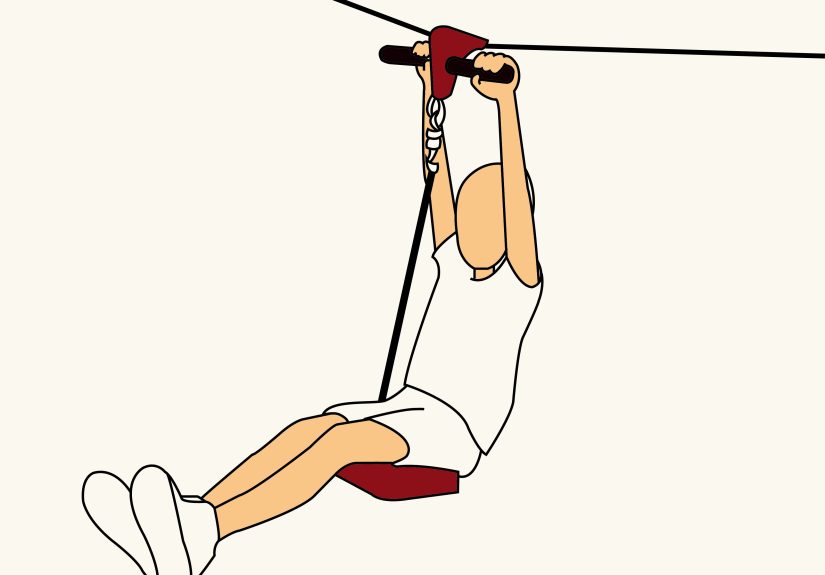
- Riding position: Seated harness? Handlebar? (Seated harness systems with professional components are common for controlled riding.)
- Supervision model: Will an adult operate it every time, or are you imagining “self-serve zip line” (which is a phrase that makes safety professionals blink slowly)?
- Speed control expectations: A safe ride ends gently. If your mental image is “launch like a superhero,” you need to recalibrate toward “arrive like a civilized person.”
- Fall and impact prevention: This includes harness fit, connection methods, and clear rules to prevent risky behaviors.
Rule of thumb: If you can’t confidently explain how riders slow down, dismount, and what happens if someone lets go or shifts unexpectedly, you’re not ready for a DIY buildand you’re probably ready for a professional consultation.
Step 3: Hire a Qualified Installer (and Ask the Questions That Matter)
Yes, “hire a pro” can sound like the least fun sentence in the English language. But when you’re dealing with height, speed, and dynamic load, it’s the sentence that keeps your story from going viral for the wrong reasons.
What to look for
- Experience with zip lines or aerial adventure systems: Not just “general handyman” work.
- Site assessment process: They should evaluate anchors, corridor, clearance, and landing/braking approach.
- Documentation: You should receive guidance on use, inspection, and limitations (including weight range).
- Insurance and professionalism: This is a real installation, not a “cash-only, no paperwork” situation.
- Maintenance plan: They should explain what needs routine inspection and how often.
Questions to ask (your “not my first rodeo” checklist)
- How do you determine safe clearance along the entire ride?
- How is speed controlled and what is the braking method?
- What equipment is used for the trolley, harness, and connectors?
- How do you inspect anchors over time (especially if trees are involved)?
- What are the operating rules and supervision requirements?
- What’s the inspection schedule and what signs mean “stop using immediately”?
Red flag: If someone shrugs at braking or says, “People just drag their feet,” you’ve found the “nope” door. Please walk through it calmly and with dignity.
Step 4: Build Your Operating Rules Like You’re Running a Mini Theme Park
Even a professionally installed backyard zip line can be unsafe if it’s used casually with no rules. Zip line safety is as much about operations as it is about hardware.
Simple rules that prevent most problems
- One rider at a time: No tandem riding unless the system is specifically designed for it.
- No “free-handing”: Riders should stay properly connected and follow the intended riding position.
- Helmet and harness use: Use properly fitted gear every time, not “only when Grandma is watching.”
- Start and stop protocols: A clear “all clear” signal before launching, and a controlled landing routine.
- Weight and height limits: Stick to what the installer specifies.
- Weather rules: No riding during storms, high winds, or when surfaces are slippery.
Make it easy to follow
Post the rules near the start platform. Keep the gear organized. If the system requires supervision, treat that like a hard rulenot a suggestion. The moment you start thinking “It’ll probably be fine,” that’s your cue to pause, inspect, and reset.
Step 5: Inspect, Maintain, and Know When to Shut It Down
A zip line isn’t a “set it and forget it” garden gnome. It’s a mechanical system exposed to weather, movement, and repeated loading. Over time, things wear, loosen, or degrade. A solid maintenance habit is what keeps the fun consistent.
Routine inspection habits
- Pre-use check: Look for obvious damage, unusual wear, and anything that looks “off.”
- Scheduled inspection: Follow the installer’s recommended intervals for deeper inspection of components.
- Anchor monitoring: If trees are involved, understand that living anchors change over time. If posts are involved, understand that soil and weather can shift stability.
- Hardware and connectors: Retire gear that shows wear or damage. Don’t “see if it lasts one more weekend.”
- Braking system check: If stopping becomes harsher or inconsistent, stop using the line until it’s evaluated.
When to stop immediately: Any visible damage to key components, sudden changes in ride behavior (speed, sag, stopping), unusual noises, or anything you can’t confidently explain. The correct response is not “send it.” The correct response is “pause it.”
Common Mistakes People Make (So You Don’t Have To)
- Underestimating speed: Even “short” lines can move fast, especially with a steep slope.
- Skipping braking planning: The ending matters as much as the beginning.
- Assuming any tree is a safe anchor: Trees vary widely in health, species strength, and root stability.
- Using non-rated hardware: “It looks strong” is not a rating system.
- Letting kids self-operate: Lack of supervision creates risky behavioroften unintentionally.
- Ignoring maintenance: Wear is sneaky. Weather is relentless. Gravity is patient.
Safer Alternatives If DIY Is the Goal
If what you really want is a fun backyard project you can build yourself, consider options that keep the thrill but reduce the risk:
- Low-height slackline over grass with spotters and safe boundaries.
- Playground swings or gliders installed to manufacturer guidance.
- Ninja line kits set low with strict rules and supervision.
- Climbing dome or bouldering wall at safe height with fall protection surfaces.
You can still have adventure without building a high-tension, high-speed system that demands professional engineering judgment.
Frequently Asked Questions
Can I build a zip line myself if I buy a kit?
Kits vary widely. Even with a kit, installation is where most safety issues appearbecause the site determines slope, clearance, and braking needs. For a backyard zip line, it’s safest to have a qualified installer assess your site and install or at least inspect the final setup.
What’s the most important safety feature?
Braking and controlled landing are big ones, along with reliable anchors and properly fitted harness systems. But the “best” feature is consistent supervision and rules that match how the system was designed to be used.
How do I keep kids safe on a zip line?
Use a system designed for their size and weight range, require proper gear every time, supervise every ride, and keep the environment distraction-free. Make rules simple and repeatable.
Real-World Experiences: What Zip Line Projects Actually Feel Like (and What People Learn)
People who add a zip line to a property often describe a predictable emotional arc. It starts with “This will be amazing,” quickly turns into “Wow, there are a lot of details,” and ends (if done responsibly) with “I’m glad we didn’t wing it.” That middle stage is the most important, because it’s where good decisions are madeor skipped.
One common experience is discovering that the landing is the real star of the show. The first time someone rides a properly designed zip line, the launch feels exciting, the glide feels smooth, and then the brain quietly asks, “So… how do we stop?” People who planned well love the ending because it’s boringin the best possible way. A controlled stop doesn’t get applause, but it gets repeat rides, which is kind of the whole point.
Another frequent lesson is that “strong enough” is not a vibeit’s a calculation. Homeowners often begin by focusing on the cable or trolley because those parts are visible and fun to shop for. Then they learn that anchors (and how the whole system behaves under load) are the real safety foundation. That’s the moment many people realize this isn’t a standard weekend DIY like building a planter box. It’s more like a small amusement ride that happens to live in your yard.
Families also report that the rules matter more than expected. Even with excellent equipment, unsafe behavior shows up fast: kids racing to go next, someone trying to “jump off,” or the classic “I’m going to do it backwards” surprise. When the rules are posted, repeated, and enforced consistently, the zip line becomes a predictable activity instead of a chaotic experiment. People who take the time to build a simple operating routinegear check, clear signal, one rider, safe dismountsay the experience feels calmer and more fun because everyone knows what to do.
And then there’s the maintenance reality. Many owners mention that weather is like an unpaid intern who shows up daily and “rearranges” your plan. Sun, moisture, and temperature changes can alter how equipment looks and behaves over time. The best experiences come from people who treat inspections as part of the fun: a quick pre-ride check becomes a habit, like checking a bike tire before a long ride. That mindset turns safety from a one-time checklist into a normal part of ownership.
Finally, lots of people share the same favorite moment: watching someone who’s nervous take their first ride, glide across, and land safely with a grin that says, “I can’t believe I did that.” The most satisfying zip line stories aren’t about maximum speed or extreme height. They’re about a well-planned experience where the thrills are intentional, the risks are managed, and the memories are the kind you actually want to keep.