Table of Contents >> Show >> Hide
- Artichoke 101: What You’re Actually Eating
- How to Pick and Store Artichokes So They Taste Their Best
- Tools You’ll Want (Nothing Fancy)
- How to Prep Artichokes Without Feeling Like You’re Defusing a Bomb
- The Best “Starter Method”: Steamed Whole Artichokes
- Other Great Ways to Cook Artichokes (Pick Your Mood)
- How to Prep Baby Artichokes for Roasting or Sautéing
- Three Sauces That Make Artichokes Feel Like a Special Occasion
- How to Eat an Artichoke (Without Looking Like It’s Your First Day on Earth)
- Troubleshooting: Why Your Artichokes Aren’t Tender (Yet)
- Make-Ahead Tips and Leftovers
- Nutrition Snapshot (A Nice Bonus)
- Kitchen Experiences: Real-Life Lessons from Cooking Artichokes (Extra )
- SEO Tags
Artichokes are one of the few vegetables that come with built-in dinner theater. You pull a leaf, dip it, scrape it,
repeatlike a delicious, low-stakes mystery novel where the plot twist is butter. And when you finally reach
the prize (the tender heart), you’ll understand why people talk about artichokes the way others talk about their
favorite band: a little obsessed, slightly smug, and absolutely correct.
This guide shows you how to cook artichokes so they turn out tender, flavorful, and worthy of the
“who made these?” reaction. We’ll cover choosing and storing, foolproof prep, the best cooking methods
(steaming, boiling, roasting, grilling, and pressure cooking), plus sauces and serving ideas that make the whole
thing feel like a restaurant side dishwithout the restaurant price tag.
Artichoke 101: What You’re Actually Eating
A globe artichoke is an unopened flower bud. Most of it is leaves, but the real stars are:
- The leaf “meat”: the tender part at the base of each leaf.
- The heart: the best bitesweet, nutty, and buttery all on its own.
- The choke: the fuzzy, inedible center (on mature globe artichokes) that needs removing.
Baby artichokes are a different vibe: smaller, more tender, and with a much less bothersome choke (often edible).
They’re ideal for roasting, sautéing, and tossing into salads or pasta.
How to Pick and Store Artichokes So They Taste Their Best
What to look for at the store
- Heavy for their size (more moisture = more tenderness).
- Tight, compact leaves (wide-open leaves can mean older, drier artichokes).
- Fresh color: green or purple-tinged is fine; avoid shriveled or brittle leaves.
- The “squeak” test: a gentle squeeze can make fresh leaves squeak a little.
How to store them
Keep artichokes cold and slightly humid. Store them unwashed in the fridge in a loosely closed bag, or stand them
stem-side down in a jar with a bit of water (like flowers) and refrigerate. Use within about a week for best quality.
Tools You’ll Want (Nothing Fancy)
- Chef’s knife + kitchen shears (for trimming spiky tips)
- Cutting board
- Lemon (your anti-browning sidekick)
- Large pot + steamer basket (or a rack/colander that fits)
- Tongs
- Spoon (for scooping out the choke)
How to Prep Artichokes Without Feeling Like You’re Defusing a Bomb
Prep is where most people get intimidated. The truth: you’re basically giving the artichoke a haircut and a
manicurethen a quick lemon “facial” to keep it from browning.
Step-by-step trimming (whole globe artichokes)
- Rinse under cold water, pulling leaves open a bit so you can wash out any grit.
- Trim the stem to about 1/2–1 inch (or longer if you like; it’s edible when cooked).
- Cut off the top (about the top 1/4 to 1/3) to remove the sharpest leaf tips.
- Snip the remaining spikes on outer leaves with kitchen shears (purely for comfort).
-
Prevent browning: rub cut surfaces with lemon, or park the artichoke in a bowl of water with lemon
juice while you prep the rest.
Do you remove the choke before cooking?
For whole artichokes, it’s easiest to cook first, then remove the choke when the leaves are tender and the center is
easier to access. For halved artichokes (roasting/grilling style), remove the choke before cooking for best texture.
The Best “Starter Method”: Steamed Whole Artichokes
If you want a reliable, classic result, steam artichokes. Steaming keeps flavor concentrated,
prevents waterlogging, and gives you that perfectly tender leaf base and silky heart.
Basic steamed artichokes (restaurant-style)
For 2–4 large artichokes
-
Add 1–2 inches of water to a pot. Toss in half a lemon (squeezed), a few garlic cloves, and a handful of herbs like
parsley (optional but lovely). - Set in a steamer basket/rack. Place artichokes stem-side up (or on their sides if needed).
- Cover and simmer-steam until tender.
How long to steam artichokes
- Medium: about 25–35 minutes
- Large: about 35–45+ minutes
- Extra-large: 45–60 minutes (some are built like tiny armored tanks)
How to know they’re done
- A leaf near the center pulls out with a gentle tug.
- A knife slides easily into the base (near where leaves meet the stem).
- The stem end (if left on) feels fork-tender.
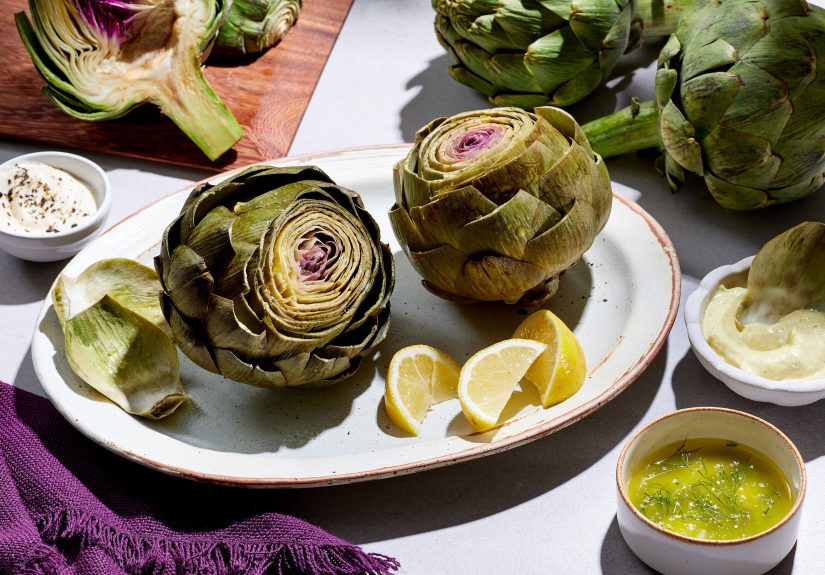
How to serve steamed artichokes so they steal the show
Let them drain upside down for a minute, then plate with a bold dipping sauce (ideas below). Add flaky salt, lemon
wedges, and a drizzle of good olive oil. Suddenly you’re hosting.
Other Great Ways to Cook Artichokes (Pick Your Mood)
1) Boiled (or simmered) artichokes
Boiling is simple and fast to set up, and the seasoned cooking water can add flavor. The tradeoff: a slightly more
“water-forward” taste than steaming. If you’re serving with a punchy sauce, it’s a great option.
- Fill a pot with enough salted water to cover artichokes (add lemon, garlic, bay leaf if you want).
- Simmer until tender, generally 25–40 minutes depending on size.
- Drain upside down to prevent watery bites.
2) Instant Pot / pressure cooker (fast and surprisingly tender)
Pressure cooking is the weeknight cheat code. It’s especially helpful if you love artichokes but don’t want to wait
an hour while they take their sweet time becoming tender.
- Add about 1–2 cups of water to the pot (follow your appliance minimum).
- Set a trivet/steamer insert and place artichokes on top.
- Cook on High Pressure: 8–12 minutes for small/medium, 12–20 minutes for large.
- Quick release carefully, then test tenderness. Add a few minutes if needed.
3) Roasted artichokes (for caramelized edges and big flavor)
Roasting works best for halved artichokes or baby artichokes. Many cooks par-steam
first so the inside gets tender before the outside over-browns.
- Steam whole artichokes for 15–20 minutes (or simmer briefly), just until slightly tender.
- Halve lengthwise and scoop out the choke with a spoon.
- Rub with olive oil, lemon, garlic, salt, pepper. Add herbs or Parmesan if you want extra drama.
-
Roast at 450°F until browned and tender, about 15–25 minutes depending on size
and how much you par-cooked.
4) Grilled artichokes (smoky, charred, party energy)
Grill artichokes after par-cooking so the interior is tender. Then the grill adds that smoky char that makes people
hover around the platter like it’s the main course.
- Steam or simmer whole artichokes until mostly tender (often 20–30 minutes).
- Halve and remove choke. Brush with olive oil and season well.
-
Grill cut-side down over direct heat for 3–5 minutes to char, then flip and grill a few minutes
more until golden and heated through.
5) Microwave steaming (yes, it works)
For one or two artichokes, microwave steaming can be efficient. You’re basically creating a little steam chamber.
Wrap or cover with a splash of water and cook in bursts until tender. Timing varies widely by size and microwave
power, so think of this as an “eyes-on” method.
How to Prep Baby Artichokes for Roasting or Sautéing
Baby artichokes are the low-maintenance friend who still looks amazing in photos. Here’s the key: remove tough
outer leaves and trim the top, then cook quickly.
- Snap off the darkest outer leaves until you see pale, tender leaves.
- Trim the top 1/3 and peel the stem if it looks fibrous.
- Halve or quarter; drop into lemon water to prevent browning.
-
Roast at 425–450°F with olive oil, salt, pepper, garlic for about 25–35 minutes,
or sauté/braise until tender.
Three Sauces That Make Artichokes Feel Like a Special Occasion
1) Lemon-garlic butter (classic, unstoppable)
Melt butter with grated garlic, lemon zest, a squeeze of lemon, and a pinch of salt. Add parsley if you’re feeling fancy.
2) Quick aioli (big flavor, zero stress)
Stir mayo with minced garlic, lemon juice, Dijon, and black pepper. Optional: smoked paprika or hot sauce.
3) Bright vinaigrette (for lighter, zingier vibes)
Whisk olive oil + vinegar (or lemon) + mustard + salt + pepper. Add chopped shallot and herbs. Great with steamed or grilled artichokes.
How to Eat an Artichoke (Without Looking Like It’s Your First Day on Earth)
- Pull off a leaf.
- Dip the base in sauce.
- Scrape the tender part with your teeth (don’t eat the whole leafmost of it is fibrous).
- Repeat until you reach the pale inner leaves.
- Remove the fuzzy choke with a spoon (if present), then eat the heart like the champion you are.
Troubleshooting: Why Your Artichokes Aren’t Tender (Yet)
They’re still tough after the full cook time
Artichokes vary a lot by size and age. Keep cooking and test again every 5–10 minutes. If steaming, make sure there’s
enough water to keep producing steam.
They taste bitter
Some bitterness is natural. Balance it with lemon, salt, and a rich sauce. Also, older artichokes can taste stronger
and feel more fibrous.
The cut parts turned brown
That’s oxidation (like apples). Use lemon water or rub with lemon right after trimming. The browning is mostly
cosmetic, but lemon helps keep things pretty.
Make-Ahead Tips and Leftovers
- Make ahead: Steam or boil earlier in the day; serve at room temp with sauce, or rewarm gently.
-
Leftovers: Pull off remaining leaves and chop the heart for salads, pasta, grain bowls, omelets,
or pizza. -
Freezing: For best quality, freeze cooked artichoke hearts (not raw), following safe home
preservation guidance.
Nutrition Snapshot (A Nice Bonus)
Artichokes are known for being fiber-rich and providing a range of vitamins and minerals. Translation: they can be
indulgent and virtuousespecially when you don’t use dipping sauce as a personal swimming pool. (No judgment
either way.)
Kitchen Experiences: Real-Life Lessons from Cooking Artichokes (Extra )
If you ask a group of home cooks about their first artichoke attempt, you’ll often hear the same three emotions in
order: curiosity, confusion, and then sudden devotion. Artichokes have a learning curve, but it’s the kind that
rewards you quicklylike figuring out how to fold a fitted sheet, except tastier and with butter.
One common experience is underestimating how long artichokes take. People plan “a quick side,” set the artichokes on
the stove, and then realize the vegetable has the patience of a monk. The fix is simple: treat cook times as a range,
not a promise. Size matters, freshness matters, and even the season matters. Once you accept that the artichoke is
done when it’s done (not when the clock says so), you stop stressing and start winning.
Another familiar moment: the first time someone discovers the choke. They finally reach the center, feeling like
they’ve completed a delicious quest, and thensurprisethere’s a fuzzy patch that is absolutely not meant for
chewing. This is where artichokes teach a quiet kitchen skill: slow down and look. A spoon and 10 seconds of
attention turns “uh-oh” into “oh wow.”
Many cooks also learn that artichokes are a social food. Put a platter of steamed artichokes on the table with two
sauces and people naturally start talking, comparing dipping strategies, and debating which sauce is superior
(answer: the one with lemon). It becomes interactive without trying. For hosts, this is gold: you’ve served a side
dish that doubles as an icebreaker and keeps guests happily occupied while the main dish finishes.
Then there’s the “I didn’t know I liked artichokes” conversion story. It usually happens when someone tries a
roasted or grilled artichoke for the first timethose caramelized edges and smoky notes push the flavor from mild
and vegetal into deeply savory. Suddenly, artichokes aren’t just a novelty. They’re a craveable side dish that can
stand next to steak, roasted chicken, salmon, or a big pasta dinner and still get compliments.
Finally, experienced artichoke cooks tend to develop a personal signature. Some people always add garlic and bay leaf
to the steaming water. Others insist on a Dijon vinaigrette. Some swear that serving artichokes at room temperature
makes them taste sweeter and more “springy.” These little rituals are part of the fun: once you master the basics,
the artichoke becomes a canvas. And that’s the real experiencemoving from “how do I cook this thing?” to “how do I
make it my thing?” The moment that happens, your side dish doesn’t just show up. It shows off.