Table of Contents >> Show >> Hide
- Sweet Potato Basics (Before We Hit the Heat)
- Method 1: Oven-Baked Whole Sweet Potatoes (Classic & Creamy)
- Method 2: Microwave Sweet Potato (Fastest “Real Food” Option)
- Method 3: Boiled Sweet Potatoes (Smooth, Mashable, Great for Mixing)
- Method 4: Steamed Sweet Potatoes (Tender, Moist, “Clean” Flavor)
- Method 5: Roasted Sweet Potato Cubes or Wedges (Caramelized & Crispy-Edged)
- Method 6: Air Fryer Sweet Potatoes (Crispy Outside, Fast Inside)
- Quick Cheat Sheet: Which Method Should You Use?
- Food Safety & Leftovers (Because Future You Deserves Nice Things)
- Conclusion
- of Real-Life Sweet Potato Experiences (The Good, the Great, and the “Oops”)
Sweet potatoes are the kitchen’s overachievers: they can be dinner, dessert, a side dish, a snack, andif you’re really living rightbreakfast with a runny egg on top.
They’re naturally sweet, loaded with color, and ridiculously flexible. The only real problem? Deciding how to cook them so they turn out fluffy, tender, crisp-edged, or mashable on purposenot by accident.
This guide covers six reliable methods (oven-baked, microwave, boiled, steamed, roasted pieces, and air-fried), plus the little “why it works” details that help you nail the texture you want every time.
Along the way, we’ll also handle the questions everyone asks: Do you peel them? How do you know they’re done? And what’s the fastest path to “I need food now”?
Sweet Potato Basics (Before We Hit the Heat)
Pick the right sweet potato for the job
- Orange-fleshed sweet potatoes (often labeled “yams” in U.S. grocery stores) get creamy and very sweet when cooked.
- Purple sweet potatoes tend to be drier and denserawesome for slicing, steaming, and snacking.
- Uniform size matters when cooking whole: similar potatoes finish at the same time, so dinner isn’t a relay race.
Nutrition note: orange sweet potatoes are especially rich in beta-carotene, which your body converts into vitamin A.[1][2]
Storage tip that saves heartbreak
Don’t refrigerate raw sweet potatoes. Cold temps can cause chilling injury (weird texture, hard centers, off flavors). Store them in a cool, dry place instead.[3][4]
To peel or not to peel?
If you’re baking or air-frying whole, keep the skin on. It helps the potato hold its shape and gives you that lightly crisp exterior.
If you’re boiling/steaming for mash or pie filling, peeling is optionaljust know the skin can add a slightly earthy flavor and a little extra texture.
How to know when sweet potatoes are done
The simplest test: a paring knife or skewer should slide in with almost no resistance.
For ultra-fluffy baked sweet potatoes, many cooks aim for a higher internal temp (think “steaming hot and collapsing-soft”), not just “technically tender.”[5]
Method 1: Oven-Baked Whole Sweet Potatoes (Classic & Creamy)
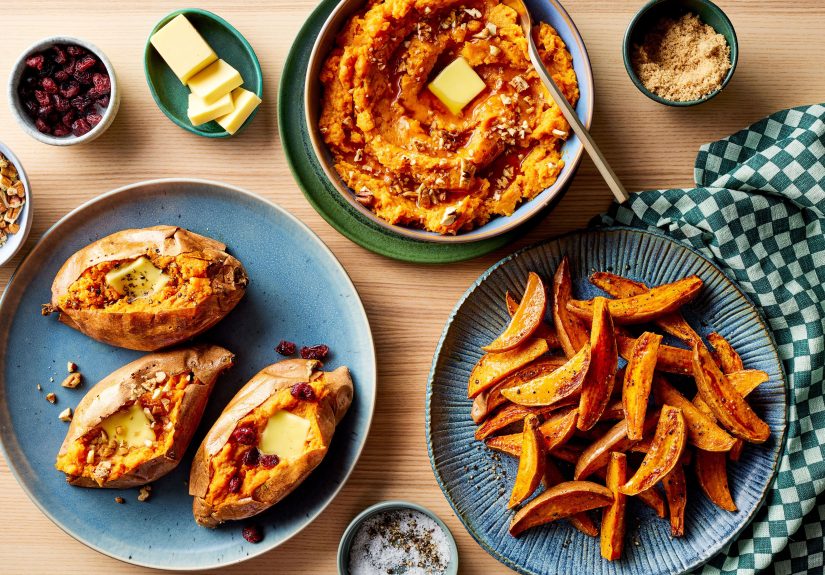
If you want that steakhouse-style sweet potatopillowy inside, slightly crisp skinthis is the move.
Bonus: baking gives the potato time to taste like itself, but louder.
Best for
- Fluffy interiors
- Stuffed sweet potatoes (savory or sweet)
- Meal prep you can reheat all week
How to do it
- Heat oven to 400–425°F.
- Scrub potatoes, pat dry, and poke holes all over with a fork (steam needs an exit).
- Optional: rub with a little oil and salt for a tastier skin.
- Bake directly on the rack or on a sheet pan until very tender, typically about 45–60 minutes depending on size.[6]
- Rest 5 minutes, slice, fluff, and season.
Make them taste even sweeter (the nerdy-but-useful trick)
Sweet potatoes get sweeter when enzymes have time to convert starch into sugar. That conversion happens in a lower internal temperature range,
so slower cooking can boost sweetness before the potato races past the “sweet spot.”[7]
Topping ideas (fast, not fussy)
- Savory: butter + flaky salt + black pepper + chives
- Smoky: Greek yogurt + chipotle powder + lime
- Sweet: peanut butter + cinnamon + a drizzle of honey
Method 2: Microwave Sweet Potato (Fastest “Real Food” Option)
Microwaving is the weeknight hero. You won’t get crisp skin, but you will get soft, hot sweet potato in the time it takes to scroll your group chat.
Best for
- Single servings
- Lunches
- Quick mash (add butter and smash it right in the bowl)
How to do it
- Scrub the potato and pierce it several times.
- Place on a microwave-safe plate.
- Microwave until fork-tender, usually 6–10 minutes for one medium potato, turning halfway.[8]
- If it’s still firm, keep going in 1-minute bursts.
Upgrade: “Microwave + oven” hybrid
Want speed and a better skin? Microwave to get the inside mostly done, then finish in a hot oven for texture.
Some test-kitchen approaches use this combo specifically to hit a very soft interior efficiently.[5]
Microwave safety PSA: Don’t skip the fork holes unless you enjoy cleaning sweet potato confetti off your microwave ceiling.
Method 3: Boiled Sweet Potatoes (Smooth, Mashable, Great for Mixing)
Boiling is perfect when you need sweet potatoes to become an ingredient: mashed, whipped, blended into soup, or baked into something that convinces people you “love hosting.”
Best for
- Mashed sweet potatoes
- Casseroles, pies, and baking
- Baby food and super-smooth purees
How to do it
- Peel (optional) and cut into even chunks for faster cooking.
- Cover with cold water, salt the water, and bring to a boil.
- Simmer until tender, often about 20–25 minutes for chunks (time varies by size).[9]
- Drain well. Let steam off for a minute so your mash isn’t watery.
Texture tips
- Cut evenly so pieces finish together.
- Drain thoroughlyexcess water dulls flavor and makes mash sad.
- For extra flavor, mash with browned butter, cinnamon, and a pinch of salt (salt makes sweet taste sweeterscience is nice).
Health note (why some people prefer boiled)
Some nutrition experts point out boiling can lower the glycemic impact compared to roasting for certain meals, and it doesn’t require added fat.[10]
Method 4: Steamed Sweet Potatoes (Tender, Moist, “Clean” Flavor)
Steaming is like boiling’s more refined cousin. You get tender sweet potatoes without waterlogging them, which is great for clean flavor and a slightly firmer bite.
Best for
- Meal prep slices or chunks
- Salads, bowls, and quick sides
- Keeping texture intact
How to do it (stovetop)
- Add water to a pot so it sits below your steamer basket.
- Bring water to a boil, add whole sweet potatoes (or big chunks) to the basket.
- Cover, reduce to medium, and steam until a knife slides in easilyoften around 30 minutes for medium whole potatoes.[11]
- Rest 5 minutes, then slice or mash.
Flavor idea
Steamed sweet potatoes are a perfect blank canvas. Try sesame oil + soy sauce + scallions for a savory twist, or butter + maple + cinnamon for classic comfort.
Method 5: Roasted Sweet Potato Cubes or Wedges (Caramelized & Crispy-Edged)
Roasting pieces is where sweet potatoes become irresistible. More surface area means more browning, more caramel notes, and more “I’ll just eat these off the pan” behavior.
Best for
- Sheet-pan dinners
- Tacos, salads, grain bowls
- Crispy edges + tender centers
How to do it
- Heat oven to 400–425°F.
- Cut into even cubes (about 3/4–1 inch) or wedges.
- Toss with oil, salt, and seasonings.
- Spread in a single layer (crowding = steaming).
- Roast until browned and tender, flipping once. Many recipes land in the 30–50 minute range depending on size and oven temp.[12][13]
Pro move: crispier roasted sweet potatoes with one pantry ingredient
A light dusting of cornstarch can help roasted sweet potatoes crisp up by absorbing surface moisture and encouraging browning.[14]
Use a littlethink “snowfall,” not “breaded cutlet.”
Seasoning combos that actually taste different
- Smoky-salty: paprika + garlic powder + cumin + salt
- Warm-spiced: cinnamon + chili powder + salt (yes, salt)
- Herby: rosemary + black pepper + olive oil
Method 6: Air Fryer Sweet Potatoes (Crispy Outside, Fast Inside)
The air fryer is basically a tiny convection oven with ambition. It’s great when you want roasted vibes without waiting a full oven cycle.
Best for
- Whole sweet potatoes with lightly crisp skin
- Sweet potato fries
- Small-batch cooking
Air fryer whole sweet potatoes
- Preheat to 400°F.
- Scrub, dry, poke holes, and lightly oil + salt.
- Air fry until tender, flipping halfway, usually about 35–40 minutes depending on size.[15]
Air fryer sweet potato fries (crisp strategy)
Fries are pickier than cubes. For extra crisp, some methods use a starch slurry and staged temps to build a better crust.[16]
If you want simpler, just cut evenly, don’t crowd the basket, and cook in batches.
Quick Cheat Sheet: Which Method Should You Use?
| Goal | Best Method | Why |
|---|---|---|
| Fluffiest whole sweet potato | Oven-baked | Long heat = creamy interior, deeper sweetness |
| Fastest edible sweet potato | Microwave | 6–10 minutes and you’re eating |
| Silky mash / pie filling | Boiled | Easy to blend and portion |
| Tender, not watery | Steamed | Moist heat without soaking |
| Crispy edges + caramel flavor | Roasted pieces | Surface browning = big flavor |
| Roasted texture, less waiting | Air fryer | High convection heat, quick cook time |
Food Safety & Leftovers (Because Future You Deserves Nice Things)
Cooked sweet potatoes are pretty chill, but your fridge rules still apply. Refrigerate leftovers within 2 hours, and aim to eat them within 3–4 days.[17]
When reheating leftovers generally, many food safety resources recommend heating until steaming hot (and for mixed dishes, follow standard leftover reheating guidance).[18]
Pro tip: roasted cubes reheat best in an air fryer or hot oven so they don’t turn into sweet potato pudding. (Unless that’s your vibe. No judgment.)
Conclusion
Sweet potatoes are easy once you match the method to the result you want:
bake for fluffy comfort, microwave for speed, boil for smooth mash, steam for clean tenderness, roast for caramelized edges, and air fry for that quick crisp.
Keep a few on hand (stored correctly), and you’ve basically got a week of meal options hiding in your pantry.
Next time you buy sweet potatoes, pick one method you’ve never triedlike steaming for meal-prep slices or roasting cubes with a cornstarch dustingand see how wildly different the same vegetable can taste.
Your dinner rotation will thank you. Your microwave will also thank you if you remember the fork holes.
of Real-Life Sweet Potato Experiences (The Good, the Great, and the “Oops”)
My favorite thing about sweet potatoes is that they’re basically a choose-your-own-adventure book you can eat. On busy weeks, I’ll microwave a sweet potato,
split it open, and treat it like an emergency meal basebecause it is. One night it’s “taco sweet potato” with black beans, salsa, and whatever cheese is still alive in the fridge.
Another night it’s a “breakfast sweet potato,” which sounds suspicious until you try it: butter, salt, pepper, and a fried egg on top. The yolk does the saucy work so you don’t have to.
Oven-baked sweet potatoes feel like the coziest option, but they require planningmeaning you have to start them before you’re already hungry.
The workaround I learned is to bake several at once. Day one is the classic butter-and-salt situation. Day two, the leftover sweet potato becomes the easiest mash:
scoop into a bowl, add a splash of milk (or coconut milk if you want it fancy), and warm it up. Day three, the same baked potato gets chopped into chunks and tossed into a salad.
It’s the rare leftover that doesn’t feel like a punishment.
Roasting sweet potato cubes is where I’ve had the most “why didn’t I do this sooner?” moments. The first time, I overcrowded the pan, and instead of roasted cubes,
I made steamed cubes pretending to be roasted cubes. They were soft, pale, and emotionally disappointing. The fix was simple: use a bigger pan, spread them out,
and accept that sometimes you need two sheet pans because physics is not impressed by your hunger.
Then there’s the cornstarch trick. I tried it during a “crispy roasted sweet potatoes” phase, and it genuinely helped. Not in a deep-fried waymore like
“oh hey, these have actual texture.” Now I keep it as an option when I’m serving roasted sweet potatoes to people I want to impress (or to myself, which counts).
Boiling and steaming are my quiet workhorses. If I’m making a soup, boiling wins because blending is easier when everything is already soft.
Steaming wins when I want sweet potato chunks that keep their shapelike for grain bowls or meal-prep lunches. I’ll steam a batch, chill it,
and then reheat portions with different seasonings so it doesn’t feel like I’m eating the same lunch five times in a row (even though I am).
And yes, I’ve had the microwave sweet potato explode. Once. I forgot to poke holes, turned my back, and suddenly it sounded like the world’s smallest firework show.
The cleanup was… educational. Now I pierce the potato like it owes me money. Learn from my chaos: fork holes are not optional; they are the price of peace.