Table of Contents >> Show >> Hide
- Why Lovebirds Are So Hard to Sex (And Why It Matters)
- Step 1: Identify Your Lovebird Species (Because Some Actually Give You Clues)
- Step 2: The Reliable Ways to Determine Sex (The “Sure Thing” Options)
- Step 3: Clues That Can Help (But Shouldn’t Be Your Only Evidence)
- A Practical Decision Guide: Which Method Should You Use?
- How to DNA Sex Your Lovebird Safely (Bird-First Tips)
- Common Mistakes (So You Don’t Get Fooled by a Confident Little Bird)
- FAQ: Quick Answers to Common Lovebird Sexing Questions
- Final Takeaway
- Experiences From the Real World: What Lovebird Owners Learn (About )
- SEO Tags
Lovebirds are adorable, loud, emotionally intense little parrots who will happily cuddle… and then immediately bite the
zipper pull on your hoodie like it personally offended them. Unfortunately, when it comes to figuring out whether your
lovebird is male or female, they’re also masters of disguise. Many popular pet lovebirds look almost identical across sexes,
which means guessing can go about as well as letting a lovebird “help” you sort paper on your desk.
The good news: there are reliable, expert-backed ways to determine sex. The better news: you don’t have to rely on
questionable “head shape vibes” or that one friend who swears they can “just tell.” Below is a practical, evidence-based
guide that blends what avian veterinarians recommend with what experienced lovebird owners learn in the real world.
Why Lovebirds Are So Hard to Sex (And Why It Matters)
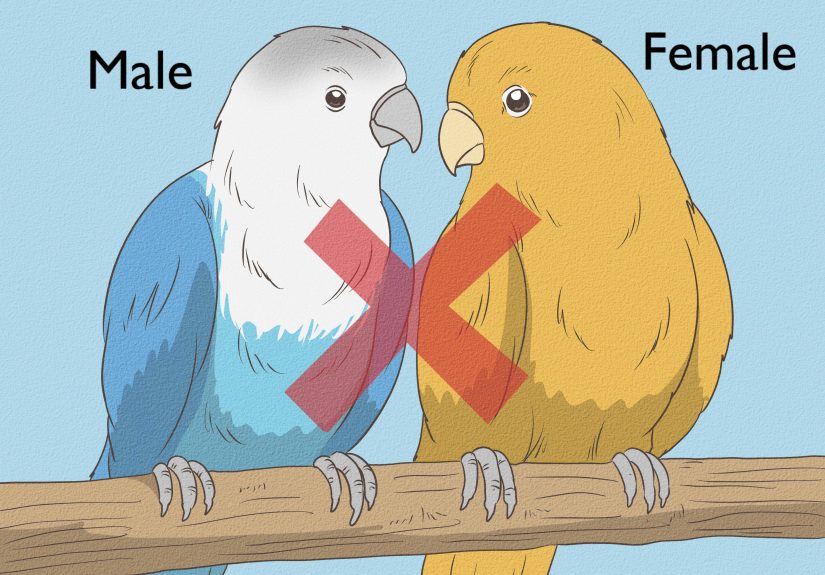
Many lovebirds are sexually monomorphic, meaning males and females have nearly identical outward appearance.
That’s why “looking closely” often turns into “staring intensely” and hoping for a sign from the universe.
Knowing sex matters for more than naming your bird “Mr. Pickles” (only to discover she’s a chronic egg-layer). It can affect:
- Health planning (egg-laying issues are obviously female-only; some reproductive conditions are sex-specific).
- Behavior (hormonal seasons can look different; nesting behavior is often more pronounced in females).
- Pairing decisions (bonded pairs can be any combo, but breeding requires opposite sexes).
- Preventing surprises (like waking up to an egg and questioning everything you thought you knew).
Step 1: Identify Your Lovebird Species (Because Some Actually Give You Clues)
The “Lucky Few” Lovebirds With Visible Sex Differences
A small number of lovebird species show sexual dimorphism (visible differences between males and females).
If you have one of these, you may be able to sex your bird visually once they’re mature.
- Black-winged (Abyssinian) lovebird: adult males develop red on the forehead; females keep an all-green head.
- Red-headed (red-faced) lovebird: males generally show more extensive red coloration than females.
- Gray-headed (Madagascar) lovebird: males have a gray head/chest; females are mostly green.
Important: even in dimorphic species, young birds can look similar until they mature. If your lovebird is a baby or juvenile,
don’t assume adult coloration rules apply yet.
The Common Pet Lovebirds That Look the Same
The lovebirds most commonly kept as petslike peach-faced, masked, and Fischer’sare
typically monomorphic. In other words: your eyes will not save you. You’ll want to move on to the reliable methods below.
Step 2: The Reliable Ways to Determine Sex (The “Sure Thing” Options)
Option A: DNA Sexing (Accurate, Popular, and Usually the Best First Choice)
DNA sexing is the modern go-to for monomorphic parrots. A lab analyzes genetic material to identify sex chromosomes
(birds use Z and W sex chromosomes). Done correctly, this method is highly accurate and widely used for companion parrots.
How it’s typically done:
- A lab receives a sample (commonly a few plucked chest feathers with follicles, or a small blood sample collected by a professional).
- The lab runs a genetic test and reports male or female.
- Results usually return quickly (often within days to a couple weeks, depending on the lab and shipping).
Feathers vs. blood: Many services accept feather samples, while some veterinarians prefer blood samples due to sample quality.
Either way, proper collection matters more than the sample type. If you’re not experienced handling birds, ask an avian veterinarian
to collect the samplestress and injury risks are real in small parrots.
Realistic expectations: Mail-in kits are often relatively affordable, but you may also pay a vet visit fee if you choose
professional sampling. Think of it as paying to avoid months of guessing and the emotional whiplash of “Sir Chirps-a-Lot” becoming a
surprise egg producer.
Option B: Endoscopic (Surgical) Sexing (Very Direct, But More Invasive)
Endoscopic sexing (sometimes called surgical sexing) is performed by an avian veterinarian under anesthesia. Using a small scope,
the vet visually identifies reproductive organs. This method can be accurate and may also allow the vet to assess internal health, but it is more invasive.
When it’s commonly used: breeders seeking confirmation, cases where internal evaluation is helpful, or situations where other
diagnostic information is needed. Because it requires anesthesia, it’s not usually the first choice for a healthy pet when DNA testing is available.
Option C: Egg-Laying (Technically “Definitive,” Practically Not a Strategy)
If your lovebird lays an egg, you have a female. That’s the clearest proofbut waiting for an egg on purpose isn’t a great plan.
Chronic or frequent egg-laying can create health risks. If you’re seeing nesting behavior or egg-laying, it’s smart to talk to an avian vet
about prevention and management.
Step 3: Clues That Can Help (But Shouldn’t Be Your Only Evidence)
Behavioral and physical clues can be useful as supporting evidence, especially when you’re deciding whether to spend money on DNA testing.
But they’re not perfect, and individual birds love breaking “rules.”
Clue A: The Classic “Paper-Strips Tucked Into Feathers” Nesting Behavior
In many lovebirdsespecially peach-facedfemales may shred paper into long, fairly uniform strips and tuck them into rump or tail/wing
feathers to carry to a nesting site. It’s one of the most famous lovebird tells because it looks like your bird is wearing a tiny paper bustle.
Caveats (because lovebirds enjoy chaos):
- Not every female does it, especially if she isn’t hormonal or doesn’t have nesting triggers.
- Some males shred paper too, but often less “strip-like” and more “confetti celebration.”
- Nesting behavior can be influenced by daylight hours, diet, cozy huts/tents, and access to shreddable materials.
Clue B: “Wider Stance” and Pelvic Differences (Often Overstated)
You may hear that females sit with their legs farther apart due to pelvic width. While there can be trends, this is
not reliable enough to bet your bird’s identity on itposture varies by personality, perch type, comfort, and even mood.
A stronger warning: avoid DIY “pelvic bone palpation.” It’s easy to be wrong and easier to stress or injure a small bird.
If a professional uses physical examination as part of a broader assessment, that’s different.
Clue C: Personality Myths (Aggressive = Male? Sweet = Female? Nope.)
Some people claim males are calmer, females are bossier, or vice versa. In reality, lovebird personality is shaped by
socialization, environment, hormones, and individual temperament. A confident male can be feisty; a female can be gentle.
“Attitude” is not a sex testthough it is absolutely a lovebird specialty.
Clue D: Courtship and Pair Dynamics (Interesting, Not Diagnostic)
In bonded pairs, you might see feeding, regurgitation behavior, mutual preening, and courtship posturing.
These behaviors can show a bond, but they don’t reliably confirm who is male or femalesame-sex pairs can bond strongly, too.
A Practical Decision Guide: Which Method Should You Use?
If You Just Want to Name Your Bird Correctly
If you’re mostly aiming for accurate pronouns, a correct name, or peace of mind: DNA testing is usually the best balance of accuracy,
cost, and minimal invasiveness. If you’re okay with uncertainty, use behavioral clues as “hints” but keep the name gender-neutral until confirmed.
If You’re Pairing Birds (Bonding vs. Breeding)
If your goal is companionship, two birds of the same sex can still bondlovebirds are social and can form strong pairs.
But if you’re aiming to breed responsibly, you need accurate sexing (and you should be prepared for the serious responsibilities of breeding).
DNA testing before pairing can prevent months of confusion and frustration.
If You’re Seeing Hormonal Behavior or Egg-Related Concerns
If your bird is shredding obsessively, trying to nest, becoming territorial, or laying eggs, don’t just focus on sexfocus on health and environment.
Discuss behavior triggers (light cycle, nesting spaces, rich foods) with an avian vet. Knowing sex helps, but managing hormones safely matters more.
How to DNA Sex Your Lovebird Safely (Bird-First Tips)
DNA sexing is straightforward, but sample collection is where people get into trouble. The safest approach is to let an
avian veterinarian collect the sample during a wellness visit.
- Ask for professional sampling if your bird is skittish, you’re new to handling, or you’re worried about injury.
- Follow the lab’s instructions exactly if you use a mail-in kitsample type, number of feathers, packaging, and labeling all matter.
- Avoid “blood feathers” (developing feathers with blood supply). If a blood feather is damaged, bleeding can be serious in small birds.
- Minimize stress: short sessions, calm handling, and no repeated attempts. Stress is not a “necessary part of the process.”
Quick pro tip: if you’re already scheduling a checkup, tell the clinic you’d like DNA sexing. It’s an easy add-on,
and your bird gets the benefit of a professional exam at the same time.
Common Mistakes (So You Don’t Get Fooled by a Confident Little Bird)
- Assuming pet store labels are correct: many are guesses, not confirmed.
- Relying on one behavior: nesting behavior is suggestive, not absolute proof.
- Confusing bonding with breeding: same-sex pairs can look like “a couple.”
- Trying risky DIY methods: avoid invasive handling, palpation, or any procedure that could injure your bird.
- Forgetting age matters: many cues appear around maturity (often months after you bring a baby home).
FAQ: Quick Answers to Common Lovebird Sexing Questions
At what age can a lovebird be DNA sexed?
DNA sexing can often be performed when a suitable sample can be collected. Behavioral clues, on the other hand, tend to be clearer as birds approach
sexual maturityoften around the first year, depending on the individual and environment.
Can I determine sex by the vent?
For lovebirds and most small parrots, “vent sexing” by amateurs is unreliable and can be harmful. If sex matters, use DNA testing or consult an avian vet.
If my lovebird is tucking paper strips, does that mean it’s definitely female?
It’s a strong clueespecially in peach-faced lovebirdsbut not absolute proof. Consider it a “raise your suspicion” moment, not a final verdict.
Can two females live together peacefully?
Sometimesyes. Sometimesabsolutely not. Pair success depends on personalities, space, introductions, enrichment, and monitoring. Sex alone doesn’t guarantee harmony.
Final Takeaway
If you want the most accurate answer with the least drama, choose DNA testing through a reputable lab (ideally with sample collection
by an avian veterinarian). Use behavior clueslike paper-strip nest buildingas helpful context, not a verdict. And if your bird’s behavior or egg-laying
suggests hormonal stress, prioritize health and environmental changes over “winning the guessing game.”
Experiences From the Real World: What Lovebird Owners Learn (About )
Ask a room full of lovebird owners how they learned their bird’s sex, and you’ll hear a predictable pattern: confidence, certainty, and then… an egg.
Many people start with a best guess from a breeder, a pet store label, or a friend who claims to have a “talent” for spotting males. It works right up
until it doesn’t. One common story goes like this: “We named him Captain. He was loud, bold, and acted like he owned the place. Then one morning,
Captain produced an egg and stared at us like we were the ones being weird.”
Another frequent experience is the paper-strip plot twist. Owners buy a peach-faced lovebird, provide a fun shred toy (because enrichment is great),
and suddenly their bird becomes a tiny interior designermeticulously cutting long strips and tucking them into feathers like a feathered contractor.
People describe the moment with equal parts delight and alarm: delight because it’s adorable, alarm because they realize the “male” label might have been
optimistic. Some owners report that their birds only do this seasonally, especially when daylight hours increase or when cozy huts, tents, or shadowy corners
are available. They learn fast that lovebirds will interpret “cute snuggle hut” as “excellent egg apartment complex.”
DNA testing often shows up in owner stories as the point where everything gets easier. Breeders and careful pet owners talk about DNA sexing as a simple way
to prevent pairing mistakes and reduce long-term stress. People who planned to keep two birds as companions describe relief after testingbecause it helps
them anticipate certain hormonal behaviors and talk more clearly with their vet if egg-laying becomes a concern. For multi-bird households, DNA results can
also reduce “mystery management,” where every new behavior triggers a spiral of online searches and contradictory advice.
Owners also share lessons about safety. Some learn the hard way that rough handling during “DIY feather collection” can create panic and broken trust.
Others discover why developing blood feathers are no jokestories about heavy bleeding often end with a frantic call to an avian clinic and a promise to
never improvise medical-ish tasks again. Many owners ultimately say the same thing: paying a professional for sample collection felt worth it, because it
protected their bird’s health and preserved the relationship they’d built.
And then there are the bonding surprises. Plenty of owners keep two lovebirds who preen, cuddle, and act like soulmatesonly to find out they’re the same sex.
Instead of disappointment, experienced keepers usually shrug and say, “A bond is a bond.” The big takeaway from these stories isn’t that lovebirds are confusing
(they are), but that the most peaceful path is accuracy plus compassion: confirm sex with a reliable method, then build a care plan around what your bird
actually needsregardless of what you originally guessed.