Table of Contents >> Show >> Hide
- First, the Reality Check That Actually Helps
- Step 1: Get Clear on Your Boundary (So You Don’t Accidentally Move It)
- Step 2: Use a Kind-but-Firm “Clear No” (Yes, You Can Be Nice and Direct)
- Step 3: Stop Feeding the Crush (Without Being a Jerk)
- Step 4: Be Consistent (Because Hope Is Stubborn)
- Step 5: Handle the “But Why?” Conversation Without Getting Trapped
- Step 6: If You Have to See Him Often (School, Work, Teams, Friend Groups)
- Step 7: If It’s Online (DMs, Comments, Constant Likes, “Accidental” Messages)
- When It Crosses the Line: Harassment, Threats, or Stalking
- How to Be Kind Without Becoming His Therapist
- What Not to Do (Even If the Internet Says It’s “Iconic”)
- Quick Checklist: The Calm, Effective Way to Make This End
- Conclusion: Clear Is Kind (and It Lets Both of You Move On)
- Real-Life Experiences People Share (and What Actually Worked)
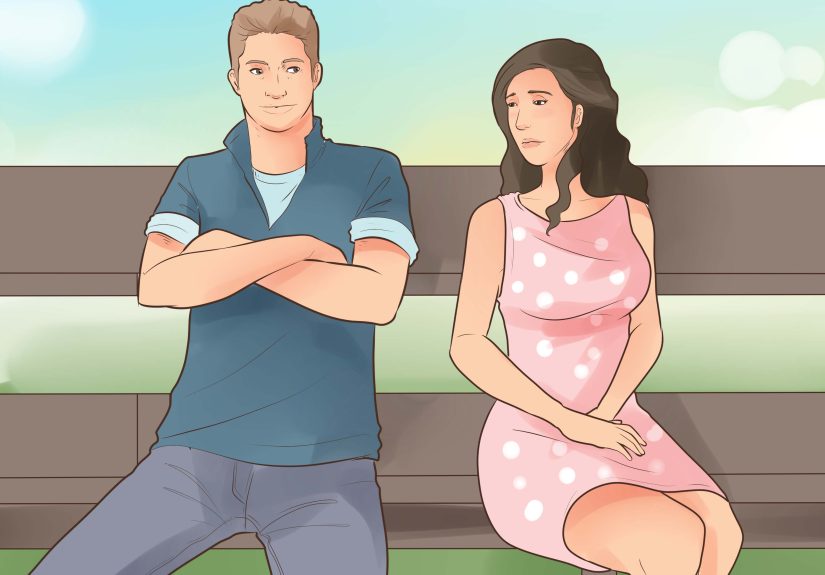
You’ve got a problem that feels like it should come with a user manual: a guy likes you, you don’t like him back,
and you want it to stopwithout being cruel, awkward, or accidentally starring in a group-chat drama trilogy.
The good news: you can’t control someone else’s feelings, but you can control access, expectations, and
the signals you send. That’s usually enough to help most crushes quietly fade out like a phone on 2% battery.
This guide is about doing the mature thing: being clear, kind, consistent, and safe. No “be mean so he hates you”
nonsense. No “just ghost him” as the default. And definitely no advice that turns your life into a sitcom where
everyone’s yelling in public places. (Your nervous system deserves better.)
First, the Reality Check That Actually Helps
You can’t press a button and make someone’s feelings switch off. But you can make it unmistakably clear that
the relationship they’re imagining is not happeningthen remove the fuel that keeps the crush burning:
private access, constant messaging, emotional intimacy, and mixed signals.
Think of it like a campfire. If you stop adding wood, it doesn’t “explode into feelings.” It just… goes out.
Step 1: Get Clear on Your Boundary (So You Don’t Accidentally Move It)
Before you talk to him, decide what you actually want. Your boundary can be different depending on the situation:
- Option A: “No dating, but normal friendliness is okay.”
- Option B: “No dating, and I want less one-on-one time.”
- Option C: “No dating, and I need you to stop contacting me.”
The clearer you are with yourself, the clearer you’ll be with him. And clarity is kinder than ambiguitybecause
ambiguity is basically hope in a trench coat.
Step 2: Use a Kind-but-Firm “Clear No” (Yes, You Can Be Nice and Direct)
If he’s expressed interest, the fastest path to “he moves on” is a respectful, direct answer that leaves
very little room for interpretation. You don’t owe a long explanation. You do owe clarity.
Simple scripts that work (pick one and keep it short)
-
The classic:
“I’m flattered, but I don’t feel the same way. I’m not interested in dating.” -
The friendly boundary:
“I like you as a person, but only as a friend. I’m not going to date you.” -
The stop-asking boundary:
“I’ve answered this, and my answer isn’t changing. Please stop bringing it up.” -
The no-contact version (if needed):
“I’m not comfortable with our interactions. I need you to stop contacting me.”
The key is to avoid “maybe,” “not right now,” “we’ll see,” or “I’m too busy lately,” if the real answer is “no.”
Those phrases can sound like a door left cracked open.
Step 3: Stop Feeding the Crush (Without Being a Jerk)
Most unwanted crushes survive on access and emotional momentum. If you want the feelings to fade, reduce the
crush-fuel in everyday life:
Reduce one-on-one time
Group settings are your friend. If you share a friend group, keep things social and public. If he tries to
turn everything into a private hangout, redirect:
“I’m just doing group plans right now.”
Dial back constant texting
If you text all day, every day, it can feel like a relationshipeven if you never agreed to one. Slow the pace:
shorter replies, longer gaps, fewer late-night heart-to-hearts. You’re not punishing him; you’re aligning your
behavior with your boundary.
Cut “relationship-coded” behavior
Flirty teasing, inside jokes that exclude others, physical closeness, “you’re the only one I can talk to” vibes
those are basically crush fertilizer. Keep your tone warm but neutral. Friendly ≠ flirty.
Step 4: Be Consistent (Because Hope Is Stubborn)
Here’s the part people hate: if you say “no” but behave like “maybe,” you’ll keep repeating this situation.
Consistency is what lets him grieve the idea and move on.
Consistency means:
- Don’t accept “date-like” favors (rides, gifts, constant help) if it blurs the line.
- Don’t vent to him like he’s your emotional partner.
- Don’t flirt when you’re bored. (Boredom is not a good relationship strategy.)
- Don’t “check in” with extra sweetness right after rejecting him if it restarts hope.
Step 5: Handle the “But Why?” Conversation Without Getting Trapped
Some guys will ask for reasons. Sometimes they want closure. Sometimes they want to negotiate your feelings like
it’s a car price. You don’t have to debate your “no.”
Try the broken-record technique
Repeat a calm line without adding new material:
- “I get that this is disappointing. I’m still not interested.”
- “I’m not going to discuss it further. My answer is no.”
- “I hear you. It’s still not happening.”
The more you explain, the more he can argue with your explanation. Clarity beats courtroom cross-examination.
Step 6: If You Have to See Him Often (School, Work, Teams, Friend Groups)
When you can’t fully avoid someone, your goal is predictable, polite distance.
In a shared class or school setting
- Choose seats near friends or closer to the front.
- Keep conversations brief and on-topic.
- If he tries to corner you, move toward people: “I need to gosee you.”
- If you’re a teen, loop in a trusted adult (school counselor, teacher, parent) if it doesn’t stop.
In a workplace
- Use professional language: “I’m here to work. Please keep it work-related.”
- Don’t meet privately if you don’t want to.
- Document repeated boundary-pushing and talk to a manager/HR if needed.
In a mutual friend group
- Don’t make friends “pick sides.” Just set your boundary and keep it moving.
- Let a close friend know what’s up so they can help redirect group plans if needed.
- Avoid long private talks at parties. “I’m going back to the group.”
Step 7: If It’s Online (DMs, Comments, Constant Likes, “Accidental” Messages)
Online attention can feel extra sticky because it follows you everywhere. Use the tools platforms give you:
- Restrict or mute so he can’t pull you into constant conversation.
- Change privacy settings (story visibility, close friends, comment filters).
- Block if he won’t respect boundaries. Blocking isn’t rude; it’s a feature.
- Don’t “hate-watch” his profile or respond to bait. Silence is powerful.
If messages become threatening, creepy, or relentless, save screenshots and tell a trusted adult (and/or your
school/workplace) right away.
When It Crosses the Line: Harassment, Threats, or Stalking
Most crush situations are uncomfortable but not dangerous. Still, it’s important to know where the line is:
repeated unwanted contact that ignores your clear boundary can become harassment, and patterns of unwanted
attention that cause fear or serious distress can be stalking.
Red flags that you should take seriously
- He won’t accept “no” and keeps escalating (more calls, new accounts, showing up).
- He monitors you (where you are, who you’re with) or tries to isolate you.
- He threatens you, guilt-trips you, or says you “owe” him attention.
- He contacts your friends/family to get to you after you’ve said stop.
What to do if you feel unsafe
- Tell someone right away: a parent/guardian, counselor, trusted teacher, manager, or friend.
- Stay in public and use the buddy system when possible.
- Document dates, messages, screenshots, and repeated incidents.
- Get support from local victim services or law enforcement if it escalates.
You are never “overreacting” for protecting your safety. Your discomfort is valid information.
How to Be Kind Without Becoming His Therapist
You can be compassionate without taking responsibility for his emotions. A useful mindset:
you’re responsible for being respectful, not for making rejection painless.
If he’s genuinely upset, you can encourage healthier support:
“I’m sorry this hurts. I’m not the right person to process this with. Please talk to a friend or counselor.”
What Not to Do (Even If the Internet Says It’s “Iconic”)
- Don’t humiliate him to “make him hate you.” That can backfire and escalate conflict.
- Don’t flirt to keep him around for attention. It’s unfair to both of you.
- Don’t over-apologize until your “no” disappears. You can be kind and still be firm.
- Don’t disappear without words if a clear rejection would be safer and simpler (unless you feel unsafe).
- Don’t recruit a fake boyfriend as your main strategy. Your boundary should be enough.
Quick Checklist: The Calm, Effective Way to Make This End
- Decide your boundary.
- Say a clear, respectful “no.”
- Remove mixed signals (texts, alone time, flirting).
- Stay consistent when he tests the boundary.
- Use distance + group settings if you still have to see him.
- Use online tools (mute/restrict/block) if needed.
- Escalate to trusted adults or authorities if it becomes unsafe.
Conclusion: Clear Is Kind (and It Lets Both of You Move On)
The goal isn’t to make him feel terrible. The goal is to stop the “maybe” storyline so he can stop investing in
something that isn’t realand you can breathe again. When you’re direct, consistent, and respectful, most guys
eventually get the message and shift their attention elsewhere.
And if he doesn’t? That’s not romance. That’s a boundary problemand you’re allowed to protect yourself.
Real-Life Experiences People Share (and What Actually Worked)
In real life, this situation shows up in a bunch of different “flavors,” and the best solution depends on the
setting. A common one: a classmate who starts texting every day and slowly treats you like you’re already dating.
People who handled it successfully usually did two things at oncesaid a clear “no,” and then changed the pattern.
They stopped replying instantly, avoided late-night chats, and kept conversations in group threads. The crush
often faded once the daily emotional closeness disappeared.
Another classic: the “nice guy” in your friend group who keeps trying to turn hangouts into dates. Folks who
got unstuck here often used friendly, repeatable language: “I’m not interested in dating, but I’m fine being in
the same group.” Then they backed it up by avoiding one-on-one situations. They’d show up with friends, leave
with friends, and keep interactions short. Over time, the message landed without creating a friend-group civil war.
Online versions can feel relentlessconstant DMs, replies to every story, comments that get a little too personal.
People who found relief usually stopped “soft responding” (like emojis that accidentally encourage more messages)
and switched to one clear line: “I’m not interested. Please stop messaging me.” If it continued, they used the
platform tools: restrict, mute, block. The big lesson from these stories is that you don’t need to keep access open
to prove you’re polite. Polite is how you communicate. Access is something people earn by respecting boundaries.
Sometimes the hardest version is the coworker situation, where you’re trying to be safe and professional while the
other person keeps pushing. People who navigated this well tended to keep receiptssaving messages, writing down
dates of repeated boundary violations, and using workplace language like “Please keep this professional.”
When it didn’t stop, they involved a manager or HR early rather than waiting for it to become unbearable.
They also avoided private rides, closed-door conversations, or “let’s talk outside” moments that can create pressure.
Finally, a small but important set of experiences involves someone who won’t accept “no” and starts escalating:
showing up where you are, creating new accounts after being blocked, messaging your friends, or making you feel
watched. People who stayed safest didn’t try to “fix” it alone. They told trusted adults, used the buddy system,
documented what was happening, and got help. The biggest takeaway from these stories is simple: you deserve to feel
safe, and you’re allowed to treat persistent boundary-crossing as a serious issueeven if the person insists it’s
“just because I like you.”