Table of Contents >> Show >> Hide
- Why Honey and Dish Soap Work So Well on Flies
- What You’ll Need for a Honey and Dish Soap Fly Trap
- Step-by-Step: Classic Jar Fly Trap With Honey and Dish Soap
- Version 2: Soda Bottle Fly Trap for Patios and Trash Areas
- The Best Places to Put a Homemade Fly Trap
- Tips, Troubleshooting, and Safety Notes
- Honey and Dish Soap vs. Other DIY Fly Traps
- Real-Life Experiences With Honey and Dish Soap Fly Traps
- Final Thoughts
Nothing ruins a lazy summer afternoon faster than a fly doing laps around your head like
it pays rent. Store-bought fly traps work, but they’re not exactly cute, and constantly
buying refills adds up. The good news? You can make a surprisingly effective homemade fly
trap with honey and dish soap using things you already have in your kitchen.
Think of this as a Hometalk-style project: simple, budget-friendly, and oddly satisfying.
You’ll turn an ordinary jar or bottle into a little fly “hotel” where check-in is easy and
check-out… doesn’t happen. We’ll walk through why honey and dish soap are such a powerful
combo, step-by-step instructions, the best places to set your traps, and extra real-life
tips so you’re not just swatting blindly at the problem.
Why Honey and Dish Soap Work So Well on Flies
Flies are not complicated creatures. They follow their noses (or more accurately, their
antennae) toward anything that smells like sugar, fermentation, or decay. Sweet
ingredients like honey, sugar water, old wine, fruit juice, or apple cider vinegar act as
irresistible bait. Your homemade fly trap basically pretends to be a tiny all-you-can-eat
buffet… with a twist.
Here’s the science in plain English:
-
Honey attracts flies. Its strong, sweet scent mimics the smell of ripe or
rotting fruit. Fruit flies, houseflies, and gnats all gravitate toward that sugary aroma. -
Dish soap traps them. When you add a few drops of dish soap to water or
vinegar, it breaks the surface tension. Instead of landing on top and skating away like
tiny figure skaters, the flies sink into the liquid and can’t escape. -
Optional vinegar boosts the lure. Apple cider vinegar smells like
fermenting fruit, which flies love. Paired with honey and soap, you get a triple-threat
mixture that’s very hard for them to ignore.
The result is a simple, low-tox option that’s perfect for kitchens, patios, and anywhere
you don’t want to spray a bunch of chemicals in the air you actually breathe.
What You’ll Need for a Honey and Dish Soap Fly Trap
You don’t need anything fancy. Raid your pantry and recycling bin and you’re basically
ready.
- Container: A small mason jar, drinking glass, yogurt cup, or plastic bottle.
- Honey: Any kind worksraw, regular, the kind you forgot in the back of the cabinet.
- Dish soap: A basic liquid dish soap (unscented or mildly scented works best).
- Warm water: Helps the honey dissolve and releases more scent.
- Optional: Apple cider vinegar to make the trap extra tempting.
- Cover: Jar lid with holes, plastic wrap, or a paper cone.
- Rubber band or tape: To secure plastic wrap or paper cones.
- Toothpick or fork: For poking entry holes.
- Marker and scissors (for bottle version): If you’re using a soda bottle trap.
Step-by-Step: Classic Jar Fly Trap With Honey and Dish Soap
Step 1: Mix the Bait
In your jar or glass, combine:
- About 1/2 cup warm water
- 2–3 teaspoons honey
- A splash (2–4 tablespoons) of apple cider vinegar (optional but very effective)
- 2–3 drops of dish soap
Stir gently until the honey mostly dissolves. You don’t need perfection herethis is a
fly trap, not a gourmet sauce. As long as the liquid smells sweet and there are visible
soap bubbles on top when you stir, you’re in business.
If you don’t have vinegar, you can skip it and just use honey, water, and dish soap. It
may be a little less powerful, but still works well, especially for smaller indoor flies.
Step 2: Create the “One-Way In” Cover
You want flies to get in easily but struggle to get out. There are two easy options:
Option A: Plastic Wrap Lid
- Stretch plastic wrap tightly over the top of the jar.
- Secure it with a rubber band so it doesn’t sag or fall in.
- Use a toothpick or fork to poke 8–12 small holes in the plastic wrap.
The holes should be big enough for flies to squeeze through but not so large that they
can easily find their way out again.
Option B: Mason Jar Lid With Holes
- Use a hammer and a small nail to punch several tiny holes in the metal lid.
- Fill the jar with your bait mixture and screw the lid back on.
- Make sure the holes are open and not bent shut by the nail.
This option is durable and reusableperfect if you plan to make traps regularly during
fly season.
Step 3: Place Your Trap in a “Fly Hotspot”
Now move your trap to where flies are already hanging out. Good spots include:
- Next to your fruit bowl or compost crock
- Near the trash can or recycling bin
- By a kitchen window or sliding door
- On a covered patio table near food
Avoid placing it directly on cooking prep areas. Even though the ingredients are fairly
gentle, it’s still a container full of dead insectsnot exactly the garnish you want
next to your cutting board.
Step 4: Check, Refresh, and Dispose
Within a few hours to a day, you should start to see flies floating in the mixture. How
fast it works depends on how many flies you have and how close the trap is to their main
hangout.
-
Refresh every 2–4 days. Once the liquid looks murky or is full of flies,
dump it, rinse the jar, and mix a fresh batch. -
Dispose safely. Pour the contents down the toilet or an outdoor drain,
then rinse the container with hot soapy water. -
Keep going. For heavy infestations, run several traps at once until the
fly population drops noticeably.
Version 2: Soda Bottle Fly Trap for Patios and Trash Areas
If you’re dealing with flies near outdoor trash cans, pet areas, or a back porch, a
soda-bottle fly trap is a great upgrade. It keeps the bait contained, catches more flies,
and costs almost nothing.
How to Make a Soda Bottle Fly Trap
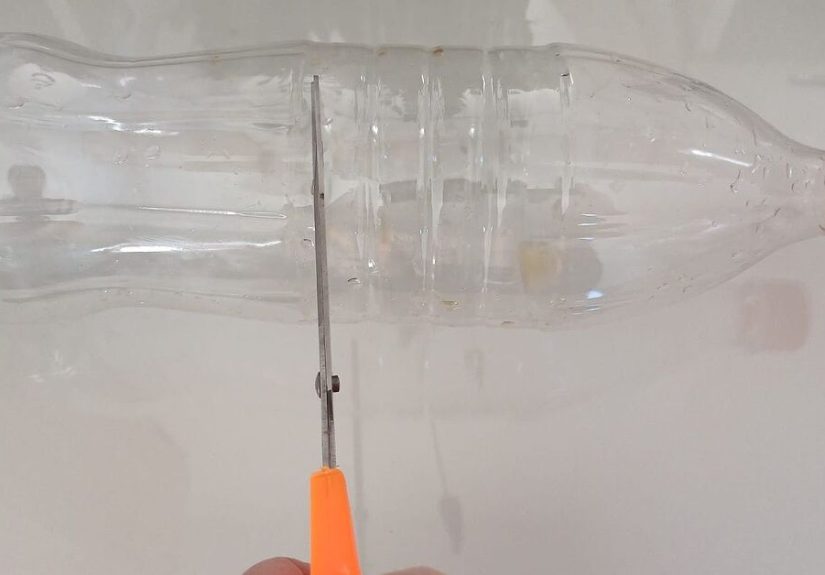
- Rinse an empty plastic bottle (16 oz to 2-liter size works).
- Use scissors or a utility knife to cut the top third of the bottle off.
-
Mix your bait in the bottom section:
- 1/2 cup warm water
- 2–3 teaspoons honey
- 2–4 tablespoons vinegar (optional)
- 3–4 drops dish soap
- Flip the top piece upside down to form a funnel and place it into the bottom half.
- Secure the two pieces together with tape or staples if needed.
- Set it near your problem area, or punch two holes and hang it with string.
Flies will follow the scent down through the funnel, but they’ll have a hard time
figuring out how to escape. Combined with the dish soap’s slick, sinking effect, the
bottle quickly turns into a fly graveyard.
The Best Places to Put a Homemade Fly Trap
Placement is half the battle. A perfect trap in the wrong place is just modern art.
-
Kitchens: Near fruit bowls, compost bins, or the sink (but not
directly where you prep food). -
Dining areas: On outdoor tables during barbecues or near doors that
people leave open. -
Trash and recycling zones: Close to indoor or outdoor trash cans and
bins where smells attract flies. -
Pet areas: Near litter boxes or outdoor spots where pets are fed can
sometimes attract flies. -
Plant corners: If you’re seeing gnats around potted plants, placing a
small trap nearby can help catch adult flies while you address overwatering or soggy soil.
As a rule of thumb, put the trap near the problem, not right in the center of your
main living space. You want the flies to go toward the trap, not toward your face.
Tips, Troubleshooting, and Safety Notes
If Your Trap Isn’t Catching Much
-
Move it closer to the action. If flies are around your fruit bowl but
your trap is on the other side of the room, they may never “discover” it. -
Adjust the bait. Try a bit more honey, switch to apple cider vinegar,
or add a small piece of overripe fruit to boost the smell. -
Check the holes. If they’re too small, flies can’t enter. If they’re too
big, flies may zip in and out like a drive-through. -
Use more than one trap. Large kitchens, open floor plans, or outdoor
areas often need several traps working at once.
Cleanliness Still Matters
A fly trap is like a bouncer at the doorit helps control traffic, but if the club is
giving away free pizza inside, people will still come. To really get flies under control:
- Take out the trash regularly and rinse sticky bins.
- Don’t leave dirty dishes or open food on counters for long.
- Rinse out cans, bottles, and food containers before tossing them.
- Clean up spills, especially sugary drinks and juices.
Is It Safe Around Kids and Pets?
Compared with many chemical sprays, a honey-and-dish-soap trap is fairly gentle, but it’s
still a container of soapy, bacteria-filled liquid once the flies start piling up. Keep
traps:
- Out of reach of toddlers and curious pets.
- Off the floorplace them on counters, shelves, or hung outside.
- Well away from pet food and water bowls.
Also avoid spraying home-mixed soap or vinegar solutions directly on plants or wildlife.
Your enclosed trap keeps everything contained and controlled, which is safer for your
garden and local beneficial insects.
Honey and Dish Soap vs. Other DIY Fly Traps
If you’ve ever Googled “how to get rid of fruit flies,” you know there are a million
recipes. So why bother with honey and dish soap specifically?
-
Honey + dish soap: Strong sweet smell, inexpensive, easy to mix, and
works fast for kitchen flies and gnats. -
Vinegar + dish soap: Great when you don’t have honey or want a stronger
fermented smell for fruit flies. -
Rotting fruit traps: Very effective but can get gross and smell stronger
than you’d like indoors. -
Store-bought traps: Convenient and often long-lasting, but more
expensive and less satisfying than a quick DIY.
In everyday use, the honey-and-dish-soap trap hits a sweet spotliterally. It doesn’t
overwhelm your kitchen with odor, it’s easy to refresh, and you can scale it up or down
depending on whether you’re dealing with a few fruit flies or a bigger swarm.
Real-Life Experiences With Honey and Dish Soap Fly Traps
Homemade fly traps sound almost too simple, so let’s talk about what it’s actually like to
live with them. Spoiler: you’ll become way too proud of a jar of dead flies.
The Backyard Barbecue Save
Picture this: you’ve got burgers on the grill, a table full of side dishes, and a steady
stream of flies auditioning for a role in your potato salad. Before guests arrive, you set
out two soda bottle trapsone near the trash can and one a few feet from the food table.
Within an hour, you start noticing more flies in the trap than on the food. Guests ask,
“What’s in that thing?” and you get to say, “Oh, just some water, honey, and dish soap,”
like you casually invented fly science. By the end of the night, the traps are full
enough that everyone agrees they’d rather see the flies there than buzzing around the
coleslaw.
The Apartment Fruit Fly Invasion
If you live in an apartment, you know fruit flies can appear out of nowhere the moment you
bring home bananas. One renter noticed a little cloud of fruit flies near the sink every
time they walked into the kitchen. Instead of going on a spraying rampage, they set up a
small jar trap with:
- 1/4 cup warm water
- 1–2 teaspoons honey
- 1–2 tablespoons apple cider vinegar
- 2 drops of dish soap
They placed it between the fruit bowl and the trash can. By the next morning, the jar had
a floating ring of fruit flies, and the cloud around the sink had noticeably shrunk. After
refreshing the mixture every other day for a week and cleaning the sink drain, the fruit
flies went from “tiny roommates” to “rare visitors.”
The Compost Corner Fix
Another common hotspot is the area where you keep a kitchen compost pail or outdoor bin.
Even if you’re careful, a little residue or moisture can turn the space into fly heaven.
Setting a honey-and-soap trap right beside the compost system makes a huge difference.
One gardener noticed that once they started using a sturdy mason jar trap on the counter
near their compost pail, they could actually leave the lid open while cooking without a
swarm forming. The trap quietly handled the “overflow” of curious flies while they
continued tossing veggie scraps like a zero-waste champion.
Lessons Learned From Everyday Use
-
Smell matters. If the mixture doesn’t smell strongly sweet or tangy,
it won’t attract many flies. Adjust your honey or vinegar to intensify it. -
Fresh is better. Old, stale bait loses its punch. Refreshing every few
days keeps the trap working hard. -
Multiple traps win. People with the most success usually run 2–3 small
traps instead of one big one. -
Don’t skip the soap. Without dish soap, some flies can land and fly off
again. The soap is what turns the juice into a trap, not a snack bar.
The bottom line: homemade fly traps with honey and dish soap aren’t magic, but they are
surprisingly powerful. They work best as part of a bigger strategycleaning up food
sources, closing trash, and wiping sticky surfacesbut once you see how many flies end up
in that jar, you’ll never look at honey the same way again.
Final Thoughts
Learning how to make a homemade fly trap with honey and dish soap is one of those small
skills that makes your home feel more under control. It’s cheap, quick, and flexible
enough to handle everything from a minor fruit fly flare-up to a full-on summer fly
invasion. With a simple jar or bottle, a bit of honey, and a couple drops of dish soap,
you can lure flies away from your food and into a contained, easy-to-dispose trap.
So the next time you hear that annoying buzz, don’t just wave your hands in the air and
hope for the best. Mix up a batch of sweet, soapy bait, set your trap in a strategic
spot, and let physicsand a little kitchen chemistrydo the dirty work for you.