Table of Contents >> Show >> Hide
- What is a Pop It, and why does it feel so good?
- Choose your DIY level: 3 homemade Pop It options
- Method 1: Foam “Simple Dimple” (fast, cheap, and surprisingly satisfying)
- Method 2: Silicone “Oogoo” Pop It (closest to store-bought)
- Method 3: Hot-glue mini Pop It (quick experiments + tiny fidgets)
- Customization ideas (because plain is fine, but extra is fun)
- Care and durability tips
- Conclusion: Your hands deserve better than doomscrolling
- Extra: 500+ words of real-world DIY Pop It experiences (the fun, the fails, and the “ohhh THAT’S why” moments)
Pop It toys are basically bubble wrap that went to college, got a glow-up, and learned how to be reusable.
They’re satisfying, snackable (emotionallyplease don’t actually snack on silicone), and weirdly good at keeping
your hands busy when your brain is doing the most. If you’ve ever caught yourself clicking a pen, tapping a foot,
or “just one more scroll” on TikTok, a Pop It-style fidget makes a lot of sense.
The best part: you don’t have to buy one to get that clicky-pop sensory vibe. You can make a homemade Pop It with
simple craft supplies, or you can go full “mad scientist of squish” and build a silicone version that feels
surprisingly close to store-bought. I’ll walk you through three DIY methods (from easiest to most realistic),
plus pro tips to make your pops crisp instead of… sad.
What is a Pop It, and why does it feel so good?
A Pop It is a flexible sheet (usually silicone) with little dome “bubbles” that flip in and out. That flipping
motion gives you a soft pop plus a tiny hit of tactile feedbackkind of like closing a laptop dramatically,
but for your fingertips. For many people, repetitive hand movement can help with focus, self-regulation, and
calming down during stress. It’s not magic, and it’s not a replacement for real supportbut as a small tool,
it can be genuinely helpful when used in the right moment.
Also: it’s fun. Sometimes the whole scientific explanation is just “my hands like doing the thing.”
And honestly, that’s valid.
Choose your DIY level: 3 homemade Pop It options
| Method | Time | Cost | Feel | Best for |
|---|---|---|---|---|
| 1) Foam “Simple Dimple” | 20–40 min | $ | Clicky + springy | Fast DIY, keychains, school-safe fidgets |
| 2) Silicone “Oogoo” Pop It | 1–3 hrs (with cure time) | $$ | Closest to real Pop It | Durable, washable, gift-worthy builds |
| 3) Hot-glue mini Pop It | 15–30 min | $ | Pop-adjacent | Quick experiments, tiny fidgets, “I’m bored” crafts |
If you want the most authentic Pop It sheet, go with the silicone method. If you want something quick and
satisfying with minimal mess, start with the foam version.
Method 1: Foam “Simple Dimple” (fast, cheap, and surprisingly satisfying)
This method makes a Pop It-style “one bubble” (often called a simple dimple). It’s perfect for backpacks,
pencil cases, and stressy moments where you just need your hands to do something other than refresh your inbox.
What you’ll need
- Craft foam sheet (2mm–3mm works great)
- Cardboard (cereal box cardboard or chipboard is ideal)
- Scissors
- Hot glue gun or strong craft glue (hot glue is faster)
- Marker or pen (for tracing circles)
- Optional: keychain ring + ribbon/elastic loop, stickers, paint, washi tape
Step-by-step
- Cut two cardboard circles (about 2.5–3 inches wide). These are your front and back plates.
- Cut one foam circle that’s slightly smaller than the cardboard circles.
-
Make the “pop dome”: cut a single slit from the edge of the foam circle toward the center
(not all the way through). Overlap the edges slightly to form a shallow cone/dome shape. - Glue the overlap so the foam holds that domed shape.
-
Cut a hole in one cardboard circle (centered) that’s just big enough for the dome to move.
Think “window,” not “giant crater.” -
Sandwich time: glue the foam dome behind the hole so it can pop through. Then glue the second
cardboard circle behind everything to trap the foam in place. -
Test the pop: push the dome in and out. If it barely moves, widen the hole slightly. If it
falls through, you widened it into the “giant crater” zoneadd a thin cardboard ring as a fixer. - Decorate your homemade Pop It however you want. Stickers = instant personality.
Upgrade tips (so it pops better)
- Double-foam trick: stack two foam circles and glue them before forming the dome. More spring = cleaner pop.
- Smoother edges: wrap the outer edge with washi tape so it feels nicer in your hand.
- Make it a keychain: glue a folded ribbon loop between layers before sealing the back plate.
Method 2: Silicone “Oogoo” Pop It (closest to store-bought)
“Oogoo” is a popular DIY silicone dough made by mixing 100% silicone caulk with cornstarch. The cornstarch helps
it cure faster and makes it less sticky, more like workable putty. When it sets, you get flexible rubbery
silicone that can handle lots of squishing.
Safety-first (quick, not dramatic)
- Work in a well-ventilated area (open windows/doors). Some silicone sealants release a vinegar-like smell while curing.
- Wear disposable gloves to avoid skin irritation and to keep your project clean.
- Adult supervision is smart if you’re using caulk tubes, cutters, or anything hot.
- Not food-safe: don’t use your DIY Pop It as a baking mold or for food.
What you’ll need
- 100% silicone caulk (the kind in a tube; “100% silicone” on the label)
- Cornstarch
- Disposable cup/bowl + popsicle stick (or plastic spoon)
- Gloves
-
A bubble mold option (choose one):
- Easiest: an existing Pop It (you can cast a mini version or a “patch”)
- Kitchen option: a silicone half-sphere chocolate/candy mold
- DIY option: air-dry clay pressed with marbles to form a grid of dimples, lined with plastic wrap
- Optional: acrylic paint (a tiny amount for color), glitter (keep it minimal), baby powder/cornstarch for dusting
Step 1: Make or choose your bubble mold
A Pop It works because the bubbles are consistent domes. So your DIY gets easier if you start with a mold that
already has that dome shape.
-
If you have a Pop It already: use it as a pattern for making a smaller “travel Pop It” (or a
replacement piece). You can press silicone dough into a section of bubbles, then back it with a flat layer. -
If you have a silicone half-sphere mold: you can make rows of bubbles cleanly and then join
them into a sheet. -
If you have no mold: press marbles into air-dry clay in a neat grid, let the clay firm up,
then cover it with plastic wrap as a barrier. This gives you a workable “dimple tray.”
Step 2: Mix your silicone dough
- Add cornstarch to your mixing cup (start with about 2 tablespoons).
- Squeeze in silicone caulk (a blob about the size of a large egg is a good starter).
-
Mix and knead (with gloves) until it feels like playdough. If it’s sticky, add a little more
cornstarch. If it crumbles, add a touch more silicone. -
Color option: add a tiny dab of acrylic paint and knead it in. Go smalltoo much paint can
mess with texture.
Step 3: Form the bubble layer
- Press the silicone dough into your bubble mold so it fills each dome evenly.
- Smooth the back so the bubble layer is a consistent thickness (uneven thickness = uneven pop).
-
Let it cure until it feels rubbery and releases cleanly. (Cure time varies by product and
thicknessdon’t rush it.) - Peel/demold carefully and trim ragged edges with scissors.
Step 4: Add the flat backing (this is what makes it a Pop It)
Without a backing, you basically have silicone bubble sculptures. Fun, yes. Pop It, not quite.
The backing gives the bubbles a “frame” to flip against.
- Make a flat sheet of silicone dough on plastic wrap or a silicone mat.
- Press the bubble layer onto the flat sheet, aligning edges.
-
Seal the perimeter by pressing gently around the border. You can add a thin “rope” of silicone
dough as a gasket if needed. - Let it cure fully, then trim edges smooth.
How to get a better pop (the “engineering” part)
- Thickness matters: bubbles that are too thick feel stiff; too thin feels floppy and weak.
- Consistency matters: try to keep bubble domes the same size for an even, satisfying rhythm.
- Backing stiffness matters: a slightly firmer backing makes flips feel cleaner.
Method 3: Hot-glue mini Pop It (quick experiments + tiny fidgets)
Hot glue can act like a soft plastic when it cools. If you pour it into a silicone dimple mold (or even into the
dimples of an existing Pop It), you can create mini “bubble” pieces. This method is best for small fidgets,
keychains, or prototypesnot a long-lasting full sheet.
What you’ll need
- Hot glue gun + glue sticks
- Silicone mold with dimples or a Pop It to use as a mold
- Parchment paper (for drips)
- Cardboard or plastic sheet backing (optional)
- Scissors
Step-by-step
- Warm up the glue gun and set up parchment paper underneath (because hot glue has a mind of its own).
- Fill a few dimples with hot glue. Don’t overfillflat backs are easier to attach later.
- Let it cool fully before removing. Silicone molds release easier than rigid plastic.
-
Make it a fidget: glue your cooled bubbles onto a stiffer backing so they have something to
push against. For a “mini Pop It,” arrange bubbles in a 2×3 or 3×3 grid. - Trim rough edges so it’s comfortable to hold.
Hot glue safety (tiny but important)
Hot glue can burn skin quickly. Keep fingers away from the nozzle and fresh glue. If you do get a minor burn,
cool the area under cool (not icy) running water for several minutes and follow basic first-aid guidance.
Customization ideas (because plain is fine, but extra is fun)
- Color themes: “neon arcade,” “pastel cloud,” “galaxy black with sparkles,” or “school notebook doodle.”
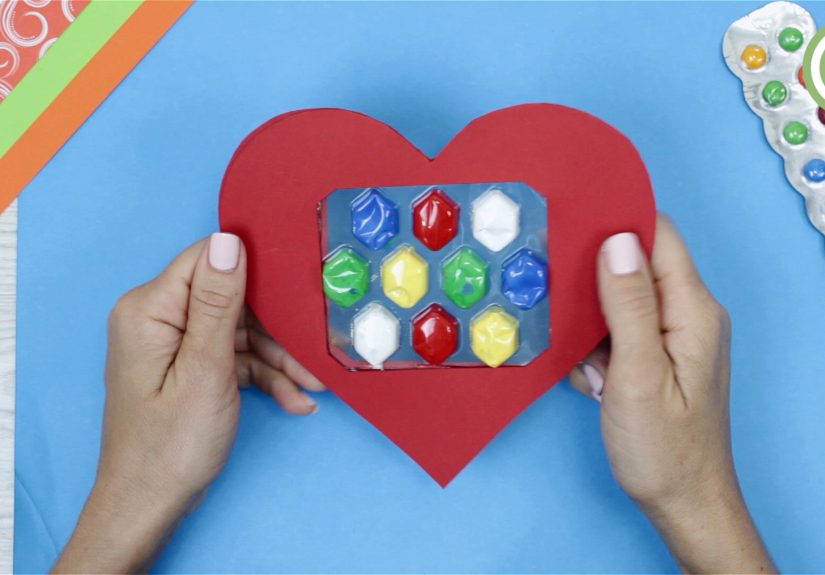
- Shape hacks: hearts, avocados, clouds, game controllerstrace a template and build your bubble section inside.
- Quiet mode: thicker foam and softer backing reduces sound if you’re fidgeting in class or meetings.
- Grip upgrade: add a strip of textured tape on the back so it doesn’t slide around.
Care and durability tips
- Foam version: keep it dry; moisture can warp cardboard. If it’s a keychain, seal edges with clear tape.
- Silicone version: wipe with mild soap and water, then air dry. Don’t soak it for hours.
- Hot glue version: don’t leave it in a hot carheat can soften glue and warp your bubbles.
Conclusion: Your hands deserve better than doomscrolling
A homemade Pop It is a small project with a big payoff: you get something tactile, fun, and personalizedplus the
satisfaction of saying “I made that” every time someone asks where you bought it. If you want quick and easy,
go foam. If you want the closest thing to a real Pop It, go silicone. And if you want to experiment at lightning
speed, hot glue is your chaotic little side quest.
Whichever method you choose, the goal is the same: give your hands a job so your brain can breathe. Now go forth
and pop responsibly.
Extra: 500+ words of real-world DIY Pop It experiences (the fun, the fails, and the “ohhh THAT’S why” moments)
The first time most people try making a homemade Pop It, the expectation is: “I will craft a perfect bubble grid,
and it will sound like angels lightly tapping bubble wrap.” The reality is usually: “Why does my bubble feel like
a pancake?” And honestly, that’s part of the charmDIY fidgets teach you fast.
The foam version is the easiest to fall in love with because it gives you quick feedback. You cut, you glue, you
pressand you instantly know if your dome shape is working. When the dome is too shallow, it won’t flip cleanly.
It just kind of… bends. When the dome is too tall, it flips but gets stuck, like it’s being dramatic on purpose.
The sweet spot is a gentle curve where the foam wants to snap through the hole. If you’re making one for the first
time, do a “test dome” with scrap foam before you commit. That one tiny practice piece can save you from
rebuilding the whole sandwich like a disappointed engineer.
The funniest part is how picky a Pop It is about tiny details. A hole that’s 2 millimeters too small makes the
pop feel weak. A hole that’s 2 millimeters too big makes the dome escape like it’s trying to start a new life
somewhere else. People end up inventing surprisingly clever fixes: adding a cardboard ring as a “washer,”
reinforcing edges with tape, or doubling the foam so it has more spring. Those little upgrades aren’t just
craft-y; they’re basically you doing low-key product design.
Silicone DIY Pop Its are a different vibe. They feel more “project” than “craft,” which can be super satisfying
if you like building something that lasts. The first surprise is the smell during curingmany silicone sealants
have that vinegar-like scent, and you immediately understand why ventilation matters. The second surprise is how
quickly your brain turns into a quality-control manager. You start noticing thickness: “This bubble row feels
crisp… this row feels squishy… why?” And then you realize you pressed harder on one side of the mold. The fix is
boring but powerful: go slower, press evenly, and smooth the backing like you’re frosting a cake you actually
care about.
One of the best “experience hacks” is making mini versions first. Instead of attempting a full-size Pop It sheet
right away, make a small 2×3 or 3×3 bubble patch. It’s easier to cure evenly, easier to trim, and easier to
troubleshoot. Once you’ve made a small patch that pops nicely, scaling up feels way less intimidatingbecause you
already know what “good” feels like.
Customization becomes its own rabbit hole. People start with “I’ll just make it blue,” and end with “This one is
a pastel rainbow avocado with a face, and it’s emotionally supportive.” And that’s genuinely part of why DIY
fidgets are so fun: you’re not just copying a trend; you’re remixing it. The best homemade Pop Its usually aren’t
perfect replicasthey’re personal. A slightly chunkier pop, a quieter click for school, a keychain loop, a weird
shape that makes you smile. Those “imperfections” are features when they match how you actually use the toy.
And the biggest takeaway? The process itself can be calming. Cutting, shaping, pressing, smoothingthose actions
are repetitive in a good way. Even before your Pop It is finished, you’ve already gotten some of the same
self-soothing benefit you wanted from the fidget in the first place. So if your first attempt looks a little
wonky, congratulations: you accidentally made the experience part of the product. That’s peak DIY.