Table of Contents >> Show >> Hide
- Why Paint and Stencil Tile Floors?
- Before You Start: Is Painting Tile Floors a Good Idea for Your Room?
- Tools and Materials You’ll Need
- How to Paint and Stencil Tile Floors Step by Step
- 1) Inspect the tile and grout first
- 2) Deep-clean like your paint job depends on it (because it does)
- 3) Scuff-sand or degloss the surface
- 4) Tape and protect the room
- 5) Do a test patch
- 6) Apply a bonding primer
- 7) Paint the base coat
- 8) Plan your stencil layout before touching paint
- 9) Stencil with less paint than you think you need
- 10) Touch up the pattern as you go
- 11) Seal or topcoat for durability (if your system calls for it)
- 12) Respect dry time and cure time
- Common Mistakes to Avoid
- How to Make a Painted Tile Floor Last Longer
- Budget Example: What This Update Might Cost
- Quick FAQ
- Real-World Experiences and Lessons Learned (Extended Section)
- Conclusion
If your tile floor is giving “1998 rental bathroom” energy but your budget is giving “absolutely not,” painting and stenciling can be a smart in-between solution. It won’t magically turn builder-grade ceramic into hand-laid Moroccan cement tile (if only), but it can dramatically improve the look of a room for a fraction of replacement cost.
The key is to treat this like a real floor-finishing project, not a weekend shortcut with leftover wall paint. A painted tile floor can look surprisingly polished, but only if you prep thoroughly, use the right primer and paint system, and respect drying and cure times. In other words: the pretty stencil is the fun part, but prep is the hero.
This guide walks you through exactly how to paint and stencil tile floors, where it works best, what mistakes to avoid, and how to make the finish last longer in real life.
Why Paint and Stencil Tile Floors?
Painting and stenciling tile floors is popular for one big reason: it delivers a visual transformation without demolition. You skip the mess of ripping out tile, hauling debris, and paying for new materials and installation. For many homeowners, that makes it one of the most practical budget-friendly floor updates for small bathrooms, laundry rooms, mudrooms, and entryways.
What you gain
- Lower cost than replacing tile
- Fast cosmetic upgrade for dated colors or patterns
- Creative control over color and stencil design
- No demolition (your neighbors will thank you)
What you need to accept
- It is a surface finish, not a permanent replacement
- High traffic and constant moisture can wear paint faster
- Touch-ups may be part of the long-term maintenance plan
Before You Start: Is Painting Tile Floors a Good Idea for Your Room?
Let’s be honest: painting floor tile is a practical makeover, not a forever finish. Some paint manufacturers and pros warn against painting floor tile because foot traffic and friction can wear it prematurely. That doesn’t mean you can’t do itit means you should go in with realistic expectations.
Best places for painted and stenciled tile floors
- Powder rooms
- Guest bathrooms
- Laundry rooms
- Low-traffic entryways
- Small areas where a big visual impact matters
Use caution (or skip) in these areas
- Inside showers or constantly wet areas
- Very high-traffic kitchens with heavy daily wear
- Homes where you need a near-zero-maintenance finish
- Tile that is loose, crumbling, or severely damaged
If the tile is structurally failing, paint won’t fix that. Loose tile, major cracks, and failing grout are signs the floor needs repair or replacement first.
Tools and Materials You’ll Need
Basic supplies
- Vacuum or broom
- Degreasing cleaner (tile-safe)
- Buckets, rags, and sponges
- Painter’s tape
- Drop cloths or plastic sheeting
- Foam roller and roller tray
- Small angled brush (for edges and grout lines)
- Dense foam roller or stencil brush for stencil work
- Stencil sized to your tile (for example, 12"x12")
- Low-tack spray adhesive (optional, for stencil stability)
- Fine-grit sandpaper or sanding sponge (often 220–240 grit for light scuffing)
- Tack cloth or damp microfiber cloth (for dust removal)
Paint system (the important part)
- Bonding primer (made for slick/glossy surfaces)
- Tile paint, floor paint, epoxy-based paint, or a floor coating system rated for tile/floor use
- Topcoat/sealer if your paint system requires or benefits from one
Safety gear
- Gloves
- Protective eyewear
- Respirator or mask appropriate for paint fumes (follow product label guidance)
- Good ventilation (fans, open windows where safe and practical)
How to Paint and Stencil Tile Floors Step by Step
1) Inspect the tile and grout first
Start with a reality check. Look for loose tiles, cracked tiles, missing grout, and soft spots. Painting over damage is like putting lipstick on a leaky pipe: it looks better for five minutes and then your problem comes back.
Repair small chips or hairline defects as needed, and make sure any patching material is paintable and fully cured before moving on.
2) Deep-clean like your paint job depends on it (because it does)
Tile is often glazed to resist dirt, moisture, and stains. Convenient for life. Terrible for paint adhesion. You need the surface squeaky clean and free of grease, soap residue, grime, and mildew.
- Sweep or vacuum thoroughly
- Scrub tile and grout with a grease-cutting cleaner
- Rinse to remove residue
- Let it dry completely
Pay extra attention to grout lines and corners. If residue remains, the paint may peel or bubble later. This is the least glamorous part of the project and one of the most important.
3) Scuff-sand or degloss the surface
Most tile floors have a glossy finish, and paint does not love glossy surfaces. Lightly sanding the tile helps remove shine and creates “tooth” so the primer can grip better. You are not trying to grind through the tilejust dull the glaze enough to improve adhesion.
After sanding, remove every bit of dust. Vacuum, then wipe with a damp cloth or tack cloth, and let the floor dry fully.
4) Tape and protect the room
Use painter’s tape around baseboards, tubs, vanities, and toilet bases. Cover surrounding floors, cabinets, or thresholds with drop cloths or plastic. This step takes extra time, but it saves you from the tiny heartbreak of scraping paint off trim later.
5) Do a test patch
This step is easy to skip and expensive to regret. Even many bonding primers and paint manufacturers recommend testing adhesion on a small section firstespecially on slick tile.
Prime and paint a small hidden area, let it dry/cure per label directions, then test adhesion. If it scratches off too easily, stop and reevaluate your prep or product choice before coating the entire floor.
6) Apply a bonding primer
Use a high-quality bonding primer designed for tough, glossy surfaces. This is the bridge between tile and paint. Roll the open areas and use a brush for edges, grout lines, and tight spots.
Apply thin, even coats rather than a heavy coat. Thick primer can puddle, leave texture, or dry unevenly. Follow the label for dry time, and apply a second coat if recommended or needed for full coverage and adhesion.
Pro tip: Some primers advertise “no sanding needed,” but many manufacturers still recommend proper cleaning and an adhesion test. Prep still matters.
7) Paint the base coat
Your base coat is the foundation for the stencil pattern, so aim for smooth, even coverage. Use paint specifically suited for tile or floors (often epoxy-based or specialized floor paint/coating systems). Do not use standard interior wall paint and hope for the best.
- Cut in edges and grout lines with a brush
- Roll the main field with a foam or short-nap roller
- Use thin coats to reduce drips and improve leveling
- Let each coat dry fully before recoating
Many DIYers apply two thin coats for solid coverage. Some systems have specific steps (base coat plus top coat) and exact recoat windows, so always follow the product instructions on the can or technical sheet.
Before stenciling, allow the base color enough dry time. Rushing this stage is one of the fastest ways to lift paint with tape or smear the pattern.
8) Plan your stencil layout before touching paint
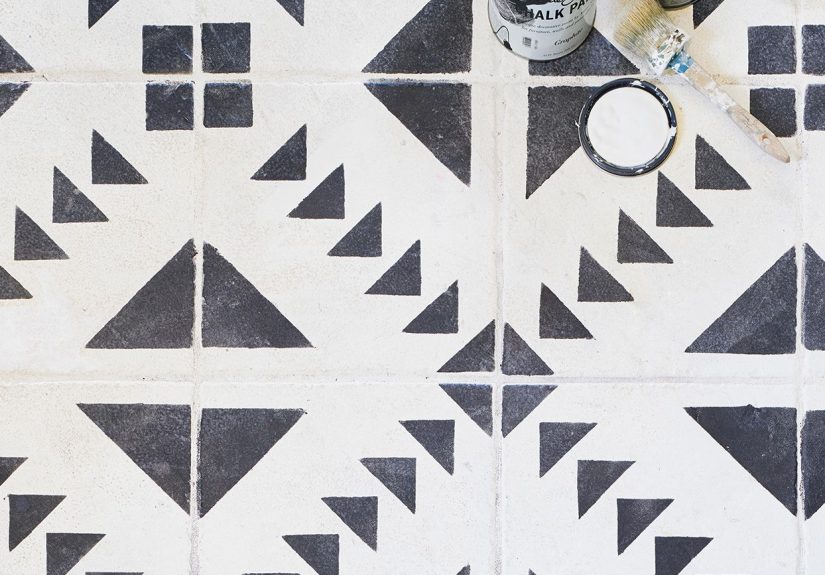
Choose a stencil that matches the tile size for the easiest alignment. If you have 12-inch square tile, a 12"x12" tile stencil is the easiest starting point. Dry-fit the stencil first and decide where you want full motifs versus cut-off edge patterns.
For the cleanest result:
- Start in a focal area (for example, the doorway sightline)
- Practice on cardboard first
- Mark reference points lightly if needed
- Use painter’s tape and/or low-tack spray adhesive to prevent shifting
9) Stencil with less paint than you think you need
This is the big secret to crisp stencil lines: use a nearly dry roller or stencil brush. Paint bleed happens when the applicator is overloaded.
- Load the roller lightly
- Offload excess paint on the tray or a paper towel
- Apply thin passes instead of one heavy pass
- Let each stencil area dry before overlapping when needed
If your stencil design overlaps adjacent tiles, work in a staggered pattern so you are not kneeling on fresh paint. For corners and awkward spots around fixtures, you may need to bend the stencil carefully or hand-paint small details with an artist brush.
10) Touch up the pattern as you go
Don’t wait until the entire floor is done to inspect. After every few tiles, step back and check for:
- Bleeding edges
- Skipped sections
- Misalignment
- Uneven opacity
Small touch-ups are easy while the process is fresh in your mind. They become a detective mystery three days later.
11) Seal or topcoat for durability (if your system calls for it)
Some tile paint and floor coating systems include a dedicated top coat as part of the system, while other painted-floor methods use a clear protective sealer. Read your paint system instructions carefully and use a compatible top coat only.
If using a clear coat, apply thin, even layers and avoid overworking the roller. A good topcoat adds abrasion resistance and helps protect the stencil design from moisture and cleaning.
Also consider slip safety. Some finishes can feel slick, especially when wet. If this is a concern (bathrooms, entryways), look for a compatible anti-slip additive or a finish option intended for floors.
12) Respect dry time and cure time
This is the step that separates a beautiful floor from a peeling one. “Dry to touch” is not the same thing as “ready for normal life.” Many products allow light foot traffic sooner than furniture placement, cleaning, or full use.
General rule: follow the label exactly. Some systems specify timelines for recoating, light foot traffic, replacing furniture, and full cure. If you ignore those windows, even a great paint job can fail early.
Common Mistakes to Avoid
- Using wall paint: It’s not formulated for tile adhesion or floor wear.
- Skipping sanding/prep: Glossy tile and residue are the enemies of adhesion.
- Heavy stencil coats: That’s how you get fuzzy lines and paint bleed.
- No test patch: Different tile glazes behave differently.
- Rushing cure time: The floor may look done before it is actually ready.
- Ignoring moisture zones: Constant splash and standing water reduce longevity.
How to Make a Painted Tile Floor Last Longer
- Use mats in high-traffic spots
- Add felt pads under furniture
- Avoid dragging furniture across the floor
- Clean with non-abrasive tools and gentle cleaners
- Wipe standing water promptly
- Keep leftover paint for touch-ups
Think of it like a painted cabinet finish: beautiful when treated well, but not invincible.
Budget Example: What This Update Might Cost
Costs vary by room size and product choice, but a small bathroom or laundry room can often be refreshed for far less than tile replacement.
- Cleaner, tape, and prep supplies: low cost
- Bonding primer: moderate cost
- Tile/floor paint or coating system: moderate cost
- Stencil: low to moderate cost (reusable)
- Topcoat/sealer: moderate cost
- Rollers/brushes: low cost
The biggest savings comes from avoiding demolition and labor, especially in small rooms where a stencil pattern creates a high-end look on a modest budget.
Quick FAQ
Can you paint porcelain or ceramic tile floors?
Yes, but adhesion depends heavily on prep, primer, and product choice. Glazed tile is slick, so cleaning, scuffing, and a bonding primer are critical.
Do I need a stencil, or can I just paint a solid color?
You can absolutely do a solid painted tile floor. A stencil adds the “wow” factor, but a single color can still modernize a room dramatically.
How long does a painted tile floor last?
It depends on traffic, moisture, prep quality, and the paint system used. In low-traffic areas with careful maintenance, it can last much longer than many people expect. In high-traffic or wet zones, expect more frequent touch-ups.
Real-World Experiences and Lessons Learned (Extended Section)
One of the most common experiences people report with painted and stenciled tile floors is that the project looks deceptively easy in before-and-after photos. The “after” shot is gorgeous. The behind-the-scenes reality is usually a lot of kneeling, taping, cleaning, waiting, and repeating. And honestly, that’s not a bad thingit just means the project rewards patience more than speed.
A typical homeowner experience goes something like this: Day one is all prep. You remove rugs, clean the room, scrub the tile twice, and realize the grout is somehow holding onto mystery grime from three owners ago. Day two is sanding, taping, and priming. Day three is the base coat. Day four is stenciling, which starts as “This is fun!” and turns into “I now understand why professionals charge money.” Then you step back, look at the floor, and suddenly the room feels custom. That’s the magic moment.
Another common lesson is that stencil success comes down to paint control, not artistic skill. People often worry they are “not crafty enough” to stencil a floor. In reality, the neatest results usually come from people who are careful, consistent, and willing to use less paint on the roller. The first few tiles might feel awkward, but by tile number ten, most DIYers develop a rhythm: tape, align, roll lightly, lift, repeat, inspect. It becomes almost meditativelike meal prep, but with more painter’s tape and fewer snacks.
Many DIYers also mention that choosing the right room makes a huge difference in how happy they are with the result months later. Painted tile floors tend to feel most successful in smaller, lower-traffic spaces where the finish gets admired more than abused. Powder rooms are a favorite because guests notice the floor right away, and the space is small enough that the project feels manageable. Laundry rooms are another win because even a simple stencil can make a utilitarian room feel intentionally designed instead of purely functional.
There’s also a practical lesson people learn about expectations: painted tile is a cosmetic renovation, not a structural one. If the floor was uneven, loose, or actively failing before painting, the paint won’t solve that. But if the tile is solid and just outdated, paint and stencil work can be one of the most satisfying budget updates in the house. It scratches that “I changed the whole room” itch without the cost and mess of replacement.
Finally, experienced DIYers almost always say the same thing: they would do it again, but they would schedule more drying and cure time than they think they need. The temptation to move the rug back, put the laundry basket down, or “just use this bathroom once” is strong. Resist it. The floor finish needs time to harden properly. Treat cure time like part of the project, not dead time. Future youthe one not doing touch-ups next monthwill be very grateful.
Conclusion
Painting and stenciling tile floors is one of the best budget-friendly ways to refresh a dated room when replacement isn’t in the cards. The transformation can be dramatic, the cost can stay manageable, and the design options are nearly endless. But the real secret is simple: prep well, use a floor-appropriate paint system, stencil lightly, and honor cure times like your project depends on itbecause it does.
If you go into the project with realistic expectations and a solid plan, you can create a stylish painted tile floor that looks custom, feels fresh, and makes your budget breathe a sigh of relief.