Table of Contents >> Show >> Hide
- Start With the Label: “Ice Cream” Is a Real Thing (Legally)
- Ingredient List: Shorter Isn’t Always BetterBut It’s Usually a Clue
- Vanilla Words on the Carton: Bean, French, “Natural,” and Other Tricksy Terms
- Texture Science You Can Taste: Butterfat, Overrun, and Why Some Pints Feel “Fluffy”
- How Experts Taste-Test Vanilla (So You Can Too)
- Shopping Tactics in the Freezer Aisle (Yes, There’s Strategy)
- Brand Clues Experts Often Like (Without Worshipping Any One Pint)
- Best Vanilla for Different People (Because Your Spoon Has Standards)
- Common Vanilla Ice Cream Myths (Let’s Retire Them)
- of Real-Life Experience: How Vanilla Ice Cream Shopping Turns You Into a Freezer Detective
- Conclusion: Your “Best Vanilla” Checklist
Vanilla ice cream is the jeans-and-a-white-tee of the freezer aisle: classic, dependable, and somehow involved in every important life moment
(birthday cake, breakup sundaes, “I did my taxes” celebrationsno judgment).
But here’s the plot twist: “vanilla” doesn’t automatically mean “simple.” The best vanilla ice cream is a tiny science experiment that tastes like
comfort, smells like a bakery, and melts like a dreamwhile the worst tastes like cold sugar wearing a vanilla-scented hoodie.
To help you choose the good stuff, we’re combining what food editors, recipe developers, and ice-cream pros consistently point to: ingredient quality,
labeling clues, texture science, and a few real-world “freezer aisle tests” you can do without carrying a lab coat into Target.
Let’s turn you into the kind of person who can say, “Ah yes, lovely body, low iciness, excellent vanilla aroma,” and mean it.
Start With the Label: “Ice Cream” Is a Real Thing (Legally)
Not everything in the freezer case qualifies as ice cream. In the U.S., “ice cream” has a standard of identitybasically, rules about what it must contain.
One big requirement: it must contain at least 10% milkfat. There are also minimums for total milk solids and a minimum weight per gallon, which helps prevent
brands from selling you mostly air with a side of vanilla vibes.
Quick takeaway
- If it says “ice cream,” it’s required to meet the standard.
- If it says “frozen dairy dessert” or something similar, it may use non-dairy fats (like vegetable oils) and different formulations.
Translation: if you want the classic rich dairy flavor and melt, the product name on the front is your first filter.
(Yes, this is the part where ice cream gets bureaucratic. It still tastes good. Mostly.)
Ingredient List: Shorter Isn’t Always BetterBut It’s Usually a Clue
Experts and tasters tend to agree on one thing: vanilla ice cream is a spotlight flavor. If the base ingredients aren’t good, there’s nowhere to hide.
So flip the carton and look for the foundation.
The “ideal-ish” core lineup
- Cream + milk (or milk + cream; either is fine)
- Sugar
- Vanilla (more on what “vanilla” really means in a second)
- Egg yolks (optional, but common in custard-style/French vanilla)
- Salt (tiny amount = flavor booster, not “salty ice cream”)
About stabilizers and gums (don’t panic)
You’ll often see ingredients like guar gum, locust bean gum, carrageenan, or cellulose gum. Their job is to improve texture and reduce icinessespecially during
temperature swings (like when someone stands in front of the freezer with the door open, contemplating their entire existence).
Some premium brands use very little; others rely on them more heavily. Neither approach is automatically “bad,” but lots of gums can sometimes read as
slightly “stretchy,” “foamy,” or oddly bouncy to sensitive tasters.
Vanilla Words on the Carton: Bean, French, “Natural,” and Other Tricksy Terms
Vanilla vs. Vanilla Bean
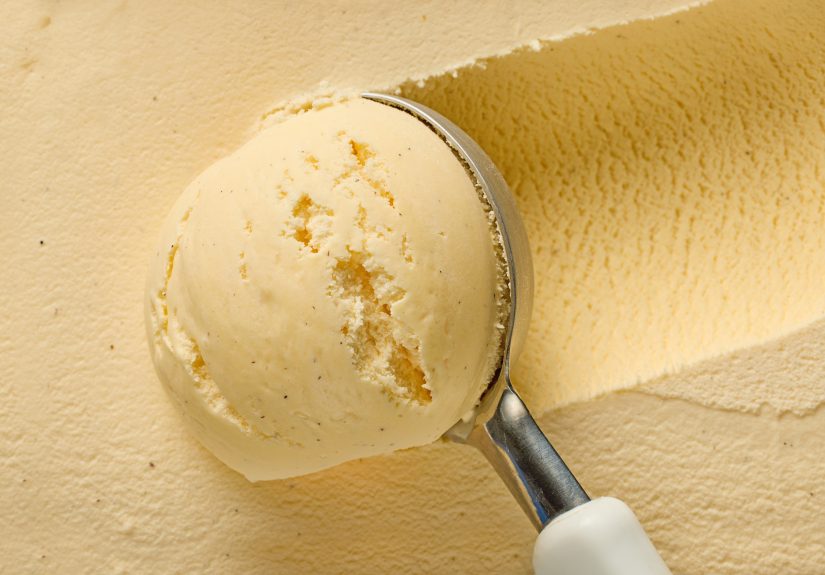
Those little black flecks? They’re vanilla seedsbut experts point out they’re mostly visual. Seeds add a tiny bit of texture and a strong “premium” signal,
but they don’t automatically mean stronger flavor. In fact, pros note that seeds can be “spent” (left over from extract production) and contribute more to looks than taste.
So: enjoy the polka dots, but don’t let them run your life.
French Vanilla
Usually indicates a custard-style base with egg yolks. That often means a richer mouthfeel, a slightly deeper color, and a rounder flavor.
If you want vanilla that feels like a silk robe, French vanilla is often your lane.
“Natural vanilla,” “vanilla flavored,” and the reality of vanillin
The molecule most people recognize as “vanilla” is largely vanillin, which exists in vanilla beans but is also commonly produced for flavoring.
Natural vanilla extract is complex (hundreds of aroma compounds), while simpler “vanilla flavoring” can be more one-note.
The best ice creams taste like vanilla and cream and something a little floral/caramel-ynot like candle aisle air freshener.
Texture Science You Can Taste: Butterfat, Overrun, and Why Some Pints Feel “Fluffy”
Vanilla ice cream isn’t just flavor; it’s engineering. Two major factors drive mouthfeel: fat and air.
You may not see “overrun” printed on the carton, but you can still shop like a detective.
Butterfat: richness, body, and a smoother melt
U.S. ice cream must meet minimum milkfat requirements. Many premium styles run higher, which generally creates a richer, creamier scoop.
More fat isn’t always bettertoo much can feel heavybut the best vanilla usually has enough to taste luxurious without coating your mouth like lip balm.
Overrun: the “air factor”
Overrun is the amount of air whipped into ice cream during freezing. More air can make ice cream feel lighter and less dense; too much can make it taste
hollow and melt fast. Less air often means a denser, more “premium” bite.
The easiest at-home “overrun check”
Compare the weight of two similarly sized containers. If one pint feels suspiciously light for its size, it may be carrying extra air.
A heavier pint often signals a denser churn and a richer scoop.
How Experts Taste-Test Vanilla (So You Can Too)
Professional tasters don’t just go “yum” (although that’s a strong start). They evaluate vanilla like it’s a lead actor, not background music.
Here’s a simple tasting checklist you can run at home with a spoon and a tiny bit of self-control.
1) Aroma first
Before you eat, smell it. Great vanilla should smell warm, creamy, and clearly vanillamaybe floral, maybe caramel-likewithout harsh alcohol notes or
“birthday-candle” vibes.
2) The first bite: sweetness balance
Vanilla ice cream should be sweet, not sugary. If your first thought is “wow, that’s sweet,” the vanilla probably won’t have room to show up.
3) Mouthfeel: creamy vs. icy
Look for smoothness. If it crunches with ice crystals right away (and it’s not intentionally a frozen-ice dessert), that’s a storage, formulation,
or temperature-control issue.
4) Melt test
Put a spoonful on your tongue and let it melt. The best vanilla gets more fragrant as it warms and leaves a clean dairy finish.
If it melts into watery sweetness or feels waxy, something’s off.
Shopping Tactics in the Freezer Aisle (Yes, There’s Strategy)
Choose the coldest part of the case
Ice cream suffers when it partially melts and refreezes. Repeated temperature swings create larger ice crystals, which means grainier texture.
So grab from the deepest, coldest areanot the carton lounging at the front like it’s on vacation.
Avoid cartons with visible frost or sticky lids
Frost buildup can hint at temperature fluctuation. Sticky lids can mean partial thawing and refreezing. Neither is a guaranteed disaster, but both are
clues you might be buying yesterday’s regret.
Color clues (subtle, but useful)
Great vanilla ice cream is often slightly off-white or pale beige, thanks to dairy and vanilla. Extremely bright white can sometimes signal less richness
or a more “flavoring-forward” approach. (Not a universal rulejust a hint.)
Brand Clues Experts Often Like (Without Worshipping Any One Pint)
Food editors and test kitchens consistently favor vanilla that tastes balanced and dairy-forwardrich but not heavy, vanilla-forward but not perfumey.
In blind tastings and expert roundups, certain well-known premium brands often score well for texture and true vanilla character, while some bargain brands
occasionally surprise everyone by being “shockingly decent.”
The point isn’t that one brand is always bestit’s that the best brands tend to deliver:
clean ingredient intent (real dairy), reliable texture (smooth, not icy), and a vanilla flavor that tastes like food, not fragrance.
Use the label and the scoop test to find your personal winner.
Best Vanilla for Different People (Because Your Spoon Has Standards)
If you love pure, classic vanilla
Look for “vanilla” or “Madagascar vanilla” styles with a dairy-forward profile and a simple ingredient list. Your ideal pint smells like a bakery and melts like satin.
If you want extra richness
Choose French vanilla or custard-style versions with egg yolks. You’ll often get a thicker body and a rounder flavor.
If you’re baking with it
A slightly sturdier vanilla (often with eggs or a bit more stabilizer support) can hold up better under pies, crisps, and warm cobblers.
You want an ice cream that melts smoothly, not one that turns into sweet milk puddles.
If you’re topping espresso or making affogato
Pick a vanilla with clear aroma and enough richness to stand up to bitter coffee. This is where “vanilla that smells like vanilla” really matters.
Common Vanilla Ice Cream Myths (Let’s Retire Them)
Myth: Vanilla bean flecks automatically mean higher quality
They can be pretty. They can signal a style choice. But experts emphasize they’re not a guaranteed marker of better flavor. Judge with your nose and tongue, not your eyes.
Myth: Cheaper = always worse
Not always. Some store brands do a perfectly solid classic vanilla. The label tells you more than the price tag does.
Myth: “All-natural” guarantees better taste
“Natural” can describe a lot of approaches. What you’re really looking for is balance: real dairy taste, clean finish, and a vanilla aroma that blooms as it melts.
of Real-Life Experience: How Vanilla Ice Cream Shopping Turns You Into a Freezer Detective
Here’s the funny thing about trying to “pick the best vanilla ice cream”: you start out thinking you’re buying dessert, and you end up developing a whole personality trait.
Suddenly you’re the person who notices freezer temperature at a friend’s house. You’re casually lifting pints like you’re evaluating dumbbells. You’re saying things like,
“This one feels light,” and everyone within earshot is like, “Okay, Captain Overrun.”
The first time you do a side-by-side vanilla comparison at home, it feels dramaticlike a reality show where all contestants are beige and yet somehow intensely competitive.
You scoop three bowls. You take a bite of Pint A and think, “Nice, creamy, classic.” Then you try Pint B and realize you’ve been settling for “cold sugar” for most of your life.
Pint B smells like actual vanilla. It has that warm, almost caramel-floral aroma that hits your nose before your tongue catches up. It melts slowly and leaves a clean dairy finish
instead of that weird squeaky aftertaste that makes you reach for water like you just ate a spoonful of sweetened chalk.
Then there’s the great “vanilla bean fleck” plot twist. You buy a pint with dramatic black specks, expecting it to taste like an expensive bakery. It looks fancy.
You take a bite. It’s… fine? Not bad, but not life-changing. Meanwhile, the plain-looking vanilla next to it is quietly amazingsmooth, fragrant, and rich in a way that makes you
pause mid-chew like you’ve just learned a secret about the universe. That’s when you realize: your eyes are easily impressed, but your taste buds are stubborn truth-tellers.
If you really want to level up, do the “melt test” on purpose. Put a spoonful on your tongue and wait. Great vanilla gets louder as it warmsmore aroma, more complexity,
more “oh wow.” Some ice creams do the opposite: they start strong because they’re cold and sweet, then collapse into watery milk with a vanilla-ish echo.
The melt test is basically a personality interview for ice cream. Cold can hide flaws. Warmth tells the truth.
The freezer aisle strategy becomes second nature, too. You stop grabbing the first carton you see. You reach to the back. You avoid the lid that’s frosty like it just survived a
tiny blizzard. You pick the carton that looks least like it’s been through a thaw-refreeze breakup cycle. And yes, you will eventually find yourself comparing
“grams per serving” between brands like you’re doing financial analysis, because weight is one of the few clues you can actually measure without a microscope.
The best part? Once you’ve found your ideal vanilla, everything gets better: brownies become a full event, pie becomes a holiday, and “I just want a little dessert” becomes
a situation where you’re standing in the kitchen at 11:00 p.m. with a spoon, feeling peaceful. Vanilla is “plain” the way a perfect white shirt is plain: it’s not boring
it’s confident. And when you pick the right pint, it doesn’t just taste good. It tastes like you know what you’re doing.
Conclusion: Your “Best Vanilla” Checklist
- Look for “ice cream” on the front if you want classic dairy richness and standards-backed labeling.
- Scan the ingredients: cream/milk, sugar, vanilla; eggs optional; gums aren’t automatically bad, but too many can affect mouthfeel.
- Don’t worship vanilla flecks: pretty doesn’t always mean tastier.
- Use the weight clue: heavier pints often indicate a denser, richer churn (less air).
- Trust the melt test: great vanilla blooms as it warms and finishes clean.
- Buy smart: choose the coldest carton from the back, avoid obvious thaw-refreeze signs.