Table of Contents >> Show >> Hide
- Before You Refill: A 60-Second Setup That Prevents 90% of Drama
- Know Your Travel Bottle: Not All “Travel Sprays” Refill the Same Way
- Way #1: The Bottom-Fill Pump Method (Fastest When It Fits)
- Way #2: The Spray-Into-Bottle Method (No Fancy Tools Required)
- Way #3: The Syringe or Pipette Method (Most Precise, Least Waste)
- Cleaning, Labeling, and Keeping Scents from Turning Weird
- Troubleshooting: Fix the Most Common Refill Problems
- Travel Tips: TSA Rules, Packing Smarts, and No-Spill Insurance
- Quick Recap: Choose Your Refill Method Like a Normal Person (Not a Panicked Goblin)
- Extra: Real-World Refill Experiences (So You Don’t Learn the Hard Way)
You know that moment when you’re halfway through a trip and your signature scent is gone, leaving you to smell like…
hotel lobby soap? Tragic. The good news: learning how to refill a perfume travel bottle is easier than it looks,
and you don’t need a chemistry degree (or a tiny trench coat for your fragrance).
In this guide, you’ll get three practical, low-mess ways to refill a travel perfume bottlewhether you’re using a
bottom-fill atomizer, a screw-top spray, or a tiny decant bottle. I’ll also cover the “why is this leaking?” moments,
the “why does it smell like three perfumes fighting?” moments, and the “will TSA side-eye me?” moments.
Before You Refill: A 60-Second Setup That Prevents 90% of Drama
Refilling is simple, but perfume has a talent for turning into a slippery, expensive mist at the worst possible time.
Do this quick prep first:
- Pick the right battlefield: A flat surface with good light (bathroom counter is fine; bedspread is not).
- Grab basic supplies: paper towel, a small zip bag (for leak testing), and a label or tape + pen.
- Wash your hands: oils and lotion can mess with caps and seals (and nobody wants Eau de Hand Cream).
- Check the travel bottle type: bottom-fill? screw-top? tiny vial? (We’ll match method to bottle.)
- Don’t overfill: leave a small air gap so pressure changes don’t force leaks.
Know Your Travel Bottle: Not All “Travel Sprays” Refill the Same Way
1) Bottom-fill “pump” atomizers (often 5–8 mL)
These are the popular “click-click” atomizers with a valve on the bottom. You remove the spray head from your full-size
perfume bottle, press the atomizer onto the exposed stem, and pump. Fast and usually the cleanest when compatible.
2) Top-fill travel sprays (screw cap or removable sprayer)
These open from the top, either by unscrewing the sprayer or removing a fill plug. You refill by spraying in, pouring in,
or using a tool like a funnel, pipette, or syringe.
3) Cartridge-style travel cases
Some luxury “twist-and-spray” systems aren’t meant to be refilled from your big bottle. Instead, you swap in a branded
refill canister. If yours works that way, don’t force ityour travel bottle might be “refillable,” but only with its
matching refills.
Way #1: The Bottom-Fill Pump Method (Fastest When It Fits)
This is the “I want this done in 30 seconds” method. It’s designed for bottom-valve atomizers that fill directly from
a standard perfume stem.
Best for
- Bottom-fill atomizers (the ones with a tiny valve on the base)
- Most standard spray perfumes with a removable spray head
Step-by-step
- Remove the cap from your full-size perfume bottle.
-
Pull off the spray head/nozzle (the part you press down). You should see a small plastic stem/tube.
If it won’t come off easily, don’t use brute forceswitch to Way #2 or #3. - Line up the bottom valve of the travel atomizer with the perfume stem.
- Pump straight up and down using firm, controlled presses. Keep it verticaltilting invites leaks.
- Stop before full (aim for about 85–90%). Most atomizers have a window so you can watch the level.
- Reattach the spray head on your full-size bottle and wipe any residue.
Common “why isn’t it filling?” fixes
- The stem doesn’t fit the valve: Not all bottles use the same stem thickness. Try Way #2 or #3.
- You’re pumping too gently: Some valves need a confident press. Think “doorbell,” not “piano key.”
-
The travel atomizer is locked or clogged: Try a few test sprays. If it still won’t fill, rinse the
atomizer (see cleaning tips below) and try again.
Way #2: The Spray-Into-Bottle Method (No Fancy Tools Required)
This method works even when your perfume bottle is stubbornespecially if the spray top won’t come off or the stem won’t
match your travel atomizer’s valve. It’s also the most “do it with what you have” approach.
Best for
- Small decant bottles or top-fill travel sprays
- Perfumes with sprayers that don’t remove easily (or safely)
- People who want simple over perfect
Two ways to do it
A) Direct spray (works, but can mist)
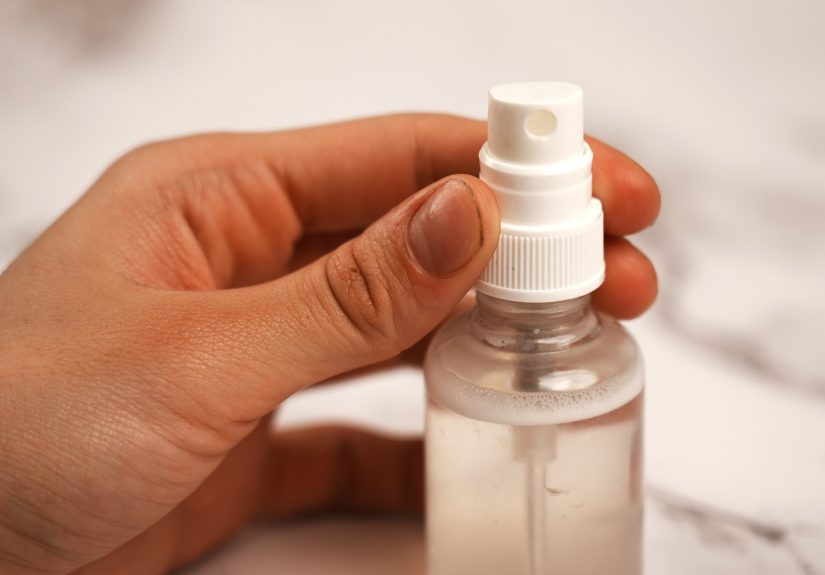
- Open your travel bottle (unscrew the top or remove the sprayer component if it’s designed to come off).
- Hold the travel bottle opening as close as possible to the perfume sprayeralmost touching.
- Spray in short bursts. Pause every few sprays to let bubbles settle.
- Wipe, cap, and test spray once or twice to confirm the nozzle works properly.
B) Spray into a tiny funnel (cleaner, more controlled)
- Place a mini funnel into the opening of your travel bottle.
- Spray into the funnel in short bursts. Aim for the center so it runs down cleanly.
- Stop at 85–90% to prevent overflow when you reassemble the sprayer.
Pro tips to reduce mess
- Paper towel “collar”: Wrap a paper towel around the bottle opening to catch mist.
- Slow down: Most spills happen because you try to refill at “espresso speed.”
- Let it settle: Tiny bubbles make it look full before it’s actually full.
Way #3: The Syringe or Pipette Method (Most Precise, Least Waste)
If you want maximum controlespecially for expensive fragranceuse a blunt-tip syringe or a small pipette.
This method is also handy when you’re filling a tiny vial (like 2–3 mL) where overspray wastes product fast.
Best for
- Top-fill bottles and small decant vials
- Measuring exact amounts (great for testers or layering kits)
- People who hate wasting a single drop
What you’ll need
- A blunt-tip syringe (no needle) or a pipette/dropper
- Paper towel
- Optional: a tiny funnel for easier transfer
Step-by-step
- Open the travel bottle and set it upright (a mug can act like a “holder” so it doesn’t tip).
-
Get perfume out of the source bottle: If your perfume has a sprayer, you can often press and capture
perfume into the syringe opening (slowly) or spray into a small clean container first, then draw it up with the syringe. - Transfer slowly into the travel bottle. Avoid splashing against the sides; go straight down.
- Leave headspace, then reassemble and test spray once or twice.
Why this method feels “pro”
- Less evaporation: Less spraying into open air means more perfume ends up in the bottle, not in the room.
- Cleaner mixing control: Easier to avoid contaminating scents when you’re switching fragrances.
- Exact amounts: Helpful if you’re packing for a 3-day trip vs. a 2-week trip.
Cleaning, Labeling, and Keeping Scents from Turning Weird
Perfume is mostly alcohol and aromatic compounds. Translation: it can cling, mix, and surprise you later.
If you refill the same travel bottle with different scents, you might create a “mystery blend” that smells like
two perfumes arguing in an elevator.
Best practice: one bottle = one fragrance
- Use a dedicated travel atomizer for each scent whenever possible.
- Label the bottom or side with tape (brand + fragrance name + concentration if you know it).
If you must reuse a bottle
- Rinse the empty bottle with a small amount of isopropyl alcohol, swish, then spray it out until clear.
- Let everything air-dry completely before refilling (residual alcohol/water can dilute your perfume).
Troubleshooting: Fix the Most Common Refill Problems
Problem: It leaks in your bag
- Cause: Overfilled bottle, loose cap, or a low-quality seal.
- Fix: Leave headspace, tighten components, store in a small zip bag, and keep upright when possible.
- Quick test: Fill, cap, then shake over a paper towel for 10 seconds. If it fails, it fails at homenot on your clothes.
Problem: The sprayer doesn’t spray after refilling
- Cause: Air trapped in the pump or a misaligned nozzle.
- Fix: Spray 5–10 times to prime it. If nothing happens, reseat the sprayer and try again.
Problem: The scent smells “off”
- Cause: Residue from an old fragrance, dirty funnel/tools, or dilution from moisture.
- Fix: Clean thoroughly, dry completely, and dedicate bottles per scent going forward.
Travel Tips: TSA Rules, Packing Smarts, and No-Spill Insurance
If you’re flying in the U.S., perfume counts as a liquid. For carry-on, keep containers within the standard liquid limit
(3.4 oz / 100 mL per container) and pack them with other liquids in a quart-size bag. If you’re checking luggage, you have
more flexibilitybut leaks become the bigger enemy.
- Go smaller than you think: A 5–10 mL atomizer can last longer than expected because fragrance sprays are concentrated.
- Double-bag it: One zip bag for TSA compliance, one small bag inside for the perfume itself.
- Avoid heat: Don’t leave perfume in a hot car or sun-baked window; heat can degrade fragrance faster.
- Carry-on > checked (for glass): If your travel bottle is glass, cushioning it in your carry-on can reduce impact risk.
Quick Recap: Choose Your Refill Method Like a Normal Person (Not a Panicked Goblin)
- Way #1 (Bottom-fill pump): Fastest and cleanest when compatible.
- Way #2 (Spray in / funnel): Most flexible, great when nothing comes apart nicely.
- Way #3 (Syringe/pipette): Most precise and least waste, ideal for tiny decants.
Once you know how to refill a perfume travel bottle, you’ll stop buying duplicate travel sizes “just in case,” and you’ll
also stop playing luggage roulette with a full-size glass bottle. Your future self (and your suitcase lining) will be grateful.
Extra: Real-World Refill Experiences (So You Don’t Learn the Hard Way)
Let’s talk about what actually happens when real humans refill travel atomizersusually five minutes before leaving for
the airport, while wearing socks on a suspiciously wet bathroom floor. These are the most common “experience-based” lessons
people run into, plus what to do instead.
1) The Overfill “Confidence Spiral”
The bottle looks only 80% full. You add “just one more pump.” Then another. Then you realize the liquid level was lying
to you because tiny bubbles were taking up space. You cap it, and suddenly perfume squeezes out like it’s trying to escape
a tiny glass submarine.
What works better: Stop at 85–90%, set it down for 30–60 seconds, and watch the level settle.
If it drops, top off gently. If it doesn’t, congratulationsyou just avoided turning your toiletries bag into a scented slip-n-slide.
2) The “Why Is My Bag Perfumed Forever?” Leak Mystery
Many travelers have one story about a cheap atomizer that betrayed them. The leak is rarely dramatic; it’s the slow,
quiet kindjust enough to soak a corner of your bag and permanently brand it with your fragrance like a scented tattoo.
The worst part? The bottle often looks fine until pressure changes (altitude) or jostling (walking) puts the seal to work.
What works better: Do the shake test at home over a paper towel, then store the bottle inside a small zip bag
even after it “passes.” Also, choose atomizers with a tight cap and decent threadingyour future self doesn’t want to smell
like “expensive mistake” for the next six months.
3) The Accidental “Layering Experiment” Nobody Asked For
You refill a bottle that used to hold a sweet vanilla scent, then add a crisp citrus fragrance. You think, “This might be fun.”
Then you spray it and discover it smells like a cupcake eating a lemon in a crowded elevator. Mixing fragrances can be amazing
on skin when you do it intentionallyinside a bottle, it’s a different game because residues cling to plastic and seals.
What works better: Dedicate one bottle per scent whenever possible. If you must reuse, clean with isopropyl alcohol,
spray it out, and let it dry completely. Also: label the bottle. Memory is unreliable; tape is loyal.
4) The Airport “Quart Bag Tetris” Reality Check
People often focus on whether perfume is allowed, then forget the real villain is volume management. That quart-size bag fills up fast:
skincare, hair product, contact solution, sunscreen, lip gloss that is apparently also a liquid if you squint… and then your perfume is the final
object that refuses to fit like a stubborn suitcase zipper.
What works better: Go smaller on fragrance (5–10 mL) and keep it in a slim atomizer. Put all liquids in the quart bag early, not at
the checkpoint. If you’re checking luggage, consider moving non-essentials there so your carry-on liquids stay calm and compliant.
5) The “I Refilling It In a Hotel Bathroom” Move
Hotel bathrooms are brightly lit, which feels helpful, until you realize the counter is about the size of a postage stamp and everything is one elbow away
from falling into the sink. Refilling there is doablebut only if you treat it like a tiny laboratory: stable base, paper towel guard, and slow movements.
What works better: Refill before you leave home whenever you can. If you must refill mid-trip, set the travel bottle inside a mug to keep it upright,
work over paper towels, and take your time. The goal is “refilled and ready,” not “new perfume note: panic.”