Table of Contents >> Show >> Hide
- The 60-Second Stain Triage
- Know Your Enemy: Why Stain Type Matters
- Stain-Fighting Kit: What Actually Helps
- How to Remove Grease Stains from Clothes
- How to Remove Tomato Sauce Stains from Clothes
- The “Stain Map” Cheat Sheet: What to Do by Stain Type
- Fabric-Smart Stain Removal: Don’t Treat Silk Like a Bath Towel
- Common Mistakes That Make Stains Worse
- When to Call a Pro (and Feel Zero Shame)
- Quick Examples: Grease and Tomato Sauce in Real Life
- Real-World Stain Experiences & Lessons Learned (Extra)
- Conclusion
Stains have impeccable timing. They show up five minutes before you leave the house, right after you put on the “only wear this on special occasions” shirt, and alwaysalwayson the lightest color you own. The good news: most stains are not permanent life sentences. The bad news: the dryer is basically a stain’s lawyer, judge, and jury.
This guide breaks down how to remove stains from clothes the smart wayespecially the greatest hits: grease stains and tomato sauce stains. You’ll get a simple stain “game plan,” fabric-safe methods, and specific step-by-step fixes for common messes (coffee, ink, blood, grass, wine, makeup, and more). No weird folklore, no “rub it with bread,” and no turning your laundry room into a chemistry lab.
The 60-Second Stain Triage
Before you do anything heroic, do these three things:
- Check the care label. If it says “Dry Clean Only,” treat it like a celebrity: don’t touch it too much and call in a professional.
- Remove excess. Scrape solids with a spoon or dull knife. Blot liquids with a clean cloth or paper towel. Don’t rubrubbing is how stains get promoted to “management.”
- Rinse from the back when possible. Running water through the back of the fabric helps push the stain out instead of driving it deeper.
Golden rule: Don’t machine-dry anything you haven’t inspected in good light. Heat sets stains and makes them dramatically harder to remove.
Know Your Enemy: Why Stain Type Matters
Stain removal works best when you match the fix to the mess. Here’s the quick science (without the lab coat):
- Oil/grease stains (butter, salad dressing, motor oil): need surfactants to break up oils (dish soap is a superstar here).
- Protein stains (blood, egg, dairy): need cold water and often enzymes. Hot water can “cook” protein into fibers.
- Tannin/dye stains (tomato sauce, wine, tea, berries): need quick action, careful flushing, and sometimes an oxygen bleach soak if fabric allows.
- Combination stains (BBQ sauce, gravy): treat like a two-act playremove oil first, then tackle color.
Stain-Fighting Kit: What Actually Helps
You don’t need 37 specialty sprays. A practical laundry stain remover lineup looks like this:
- Grease-cutting dish soap (fragrance-free is great for sensitive skin)
- Liquid laundry detergent (heavy-duty if you can)
- Enzyme-based detergent or pre-treater (great for food, grass, body soil)
- Oxygen bleach (color-safe powder/soak boosterfollow label directions)
- Hydrogen peroxide (3%) for some light/colorfast fabrics (spot test first)
- Rubbing alcohol (isopropyl alcohol) for ink (use carefully; keep away from flames)
- Soft brush/toothbrush, clean towels, and a bowl for soaking
Safety note: Never mix bleach with ammonia or acids, and always ventilate when using strong cleaners. When in doubt, use milder methods and repeat.
How to Remove Grease Stains from Clothes
Grease stains are sneaky because they can look “fine” when wet and then show up later like a plot twist. Your best move is to treat them before washing, and absolutely before drying.
Grease Stain Removal (Fresh Stains)
- Blot, don’t smear. Press a paper towel on the stain to lift excess oil.
- Apply dish soap directly. Put a small amount on the stain and gently work it in with your fingers or a soft brush. Dish soap is designed to break up oils.
- Wait 5–10 minutes. Let the soap do the heavy lifting.
- Rinse warm (if the fabric allows). Warm water helps loosen grease, but follow the care label.
- Pretreat with liquid laundry detergent. Rub a small amount into the area.
- Wash in the warmest water safe for the fabric. Check the label. Then air-dry and inspect.
Grease Stain Removal (Set-In or Washed-But-Not-Dried)
If the stain survived one wash, don’t panic. You can often still winjust repeat with better strategy:
- Reapply dish soap and gently scrub.
- Soak in warm water with detergent for 30–60 minutes (if fabric allows).
- Wash again. Air-dry and inspect.
If the Grease Stain Has Been Dried
Heat-baked grease is stubborn. You can still try:
- Dish soap + patience: Multiple rounds of pretreating and washing can lighten or remove it.
- Oxygen bleach soak (if safe for the fabric and colorfast): This can help lift residual discoloration.
If it’s a delicate fabric or a treasured piece, this is where a professional cleaner earns their keep.
How to Remove Tomato Sauce Stains from Clothes
Tomato sauce stains are extra because they’re often tannin-based (color) and sometimes oil-based (hello, olive oil). The secret is speed, cold water, and not rubbing it like you’re trying to erase a bad memory.
Tomato Sauce Stain Removal (Fresh Stains)
- Scrape off excess sauce. Use a spoon or dull knife.
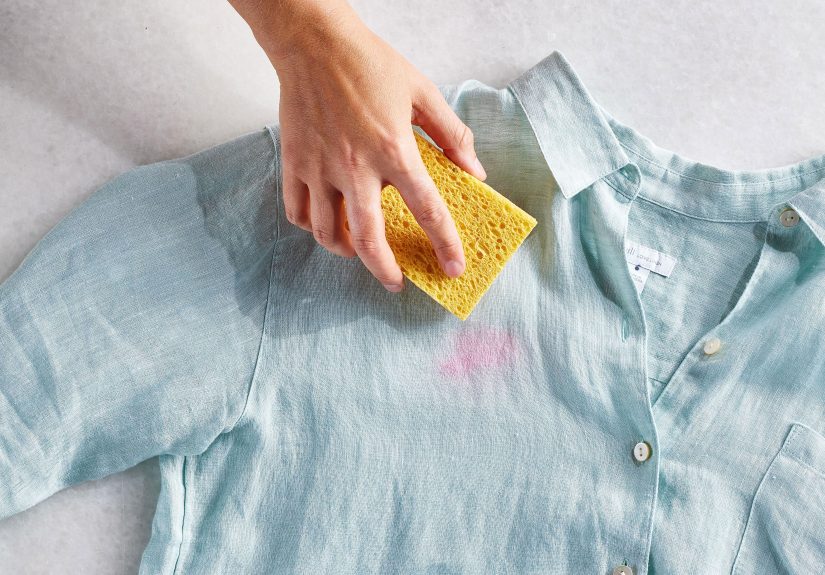
- Flush with cold water from the back. Aim the water through the underside of the fabric to push the stain out.
- Work in liquid detergent or dish soap. Rub gently until you see improvement.
- Rinse and reassess. If it’s still pink or orange, don’t dry it.
- Wash on the warmest safe setting. Then air-dry and inspect.
Tomato Sauce Stain Removal (Dried or Older Stains)
Older tomato stains usually need a soak:
- Rehydrate: soak the stained area in cold water for 15–30 minutes.
- Pretreat with heavy-duty detergent and gently brush.
- Soak in an oxygen-bleach solution if fabric is colorfast and care label allows.
- Wash, then air-dry and inspect. Repeat as needed.
Special Case: White Shirts and “Red Sauce Panic”
White fabric shows everything, including your dinner choices. Treat quickly, flush from the back with cold water, and consider an oxygen bleach soak if the care label allows. Avoid chlorine bleach unless the label explicitly permits it and you’re confident about fiber safety.
The “Stain Map” Cheat Sheet: What to Do by Stain Type
Protein Stains (Blood, Egg, Milk)
- Use cold water first. Hot water can set protein.
- Pretreat with enzyme detergent. Let it sit 10–15 minutes.
- Wash cold or cool. Air-dry and inspect.
- Light fabrics: a small amount of 3% hydrogen peroxide may help (spot test first; rinse well).
Ink Stains (Ballpoint, Marker)
- Blot with a towel underneath. You want ink to transfer out, not spread.
- Dab rubbing alcohol. Use a cotton ball and work from outside in.
- Rinse cold, then detergent pretreat.
- Wash and air-dry. Never use the dryer until it’s gone.
Coffee and Tea
- Rinse with cold water from the back.
- Pretreat with detergent; let sit 10 minutes.
- Wash in warmest safe water. Oxygen bleach can help with lingering discoloration on colorfast fabrics.
Grass Stains
- Work enzyme detergent into the stain.
- Wait 10 minutes, then wash in the warmest safe water.
- For delicates: use cool water and gentle detergent; avoid aggressive scrubbing.
Red Wine and Berry Juice
- Blot. Don’t rub.
- Flush with cold water.
- Pretreat with detergent and consider an oxygen-bleach soak for colorfast fabrics.
Makeup (Foundation, Lipstick)
- Scrape off excess gently.
- Use a small amount of dish soap or detergent to break up oils.
- Wash warmest safe. If it’s a specialty fabric, consider professional cleaning.
Fabric-Smart Stain Removal: Don’t Treat Silk Like a Bath Towel
Different fabrics react differently. Here’s a practical guide:
- Cotton and sturdy blends: Can handle brushing, enzymes, and warmer washes (as allowed by label).
- Polyester/athletic wear: Oils can clingpretreat longer and avoid fabric softeners that trap residue.
- Wool, silk, cashmere: Be gentle. Cold water, mild detergent, minimal agitation. Skip harsh enzymes and strong oxidizers unless the label says it’s safe. When in doubt: dry cleaner.
- Denim: Tough, but dyes can bleed. Spot test oxygen bleach and alcohol-based treatments.
Common Mistakes That Make Stains Worse
- Using the dryer too soon. Heat sets stains and makes them harder to remove.
- Rubbing aggressively. This pushes stain deeper and can damage fibers.
- Skipping the spot test. Especially with peroxide, oxygen bleach, or alcohol.
- Overusing chlorine bleach. It can weaken fibers and damage colors if the label doesn’t allow it.
- Not giving pretreaters time. Most work better with a 10–15 minute sit.
When to Call a Pro (and Feel Zero Shame)
Sometimes the smartest stain removal method is outsourcing. Consider professional cleaning if:
- The label says “Dry Clean Only” (especially silk, wool, structured pieces).
- The stain is from unknown substances, heavy grease, or strong dyes.
- You’ve tried two careful rounds and the stain is still visible.
- The item is sentimental, expensive, or part of a uniform you need tomorrow.
Quick Examples: Grease and Tomato Sauce in Real Life
Example 1: Pizza Grease on a Hoodie
You notice a shiny spot after dinner. Blot, add dish soap, wait 10 minutes, rinse warm (if allowed), pretreat with liquid detergent, then wash warmest safe. Air-dry and check under bright light before using the dryer.
Example 2: Marinara on a White T-Shirt
Scrape off sauce, flush from the back with cold water, rub in detergent, rinse, then wash. If a faint pink shadow remains, soak in oxygen bleach (label-permitting) and wash againno dryer until it’s truly gone.
Real-World Stain Experiences & Lessons Learned (Extra)
Stain removal advice hits different after you’ve lived through a few laundry plot twists. Here are the kinds of situations people run intoand what those moments teach youso you don’t have to learn everything the hard way (or the expensive way).
1) The “It’ll come out in the wash” myth. The most common stain story starts with optimism and ends with regret. Someone spills salad dressing on a shirt, tosses it in the hamper, and figures detergent will handle it later. The next time it’s washed, the stain looks lighter… so it goes into the dryer. That’s the moment the stain becomes a permanent resident. The lesson: if you can see it before washing, treat it before washing. And if you’re not sure it’s gone after washing, air-dry and check. This one habit saves more clothing than any fancy product.
2) The “panic rub” that spreads tomato sauce. Tomato sauce stains often come with instant panicespecially on white or light colors. A lot of people instinctively rub the front of the stain under running water. Unfortunately, rubbing plus front-rinsing can shove the pigment deeper and spread it wider, creating a bigger target. The lesson: scrape first, flush from the back with cold water, and then use detergent. Gentle beats frantic every time.
3) The surprise stain you don’t see until it’s dry. Grease is famous for hiding. It can look like nothing when wet, then appear as a dark shadow after the fabric dries. People often discover it after a load is done and foldedlike a tiny betrayal. The lesson: when you’re dealing with greasy foods, do a quick check in good light before you declare victory. If you suspect grease, dish soap pretreating is usually a better first step than random stain sprays.
4) The “I used hot water because hot is stronger” mistake. Hot water can help with some oils, but it’s not the universal setting for every stain. Protein stainslike blood or eggcan set with heat. Many people learn this after trying to “blast” a stain out with hot water and realizing it’s suddenly harder to remove. The lesson: when you don’t know what the stain is, start with cold water. You can always go warmer later if the care label allows and the stain type calls for it.
5) The ink incident (a.k.a. the leaky pen saga). Ink stains are a rite of passage: a pen explodes in a pocket, or a cap comes off in a backpack. The worst reaction is scrubbing hardink spreads. The better approach is blotting with a towel underneath and carefully dabbing alcohol so ink lifts out instead of traveling further. The lesson: controlled, small steps beat aggressive scrubbing. Also: check your pockets like it’s a preflight checklist.
6) The “too many products at once” experiment. In desperation, people sometimes layer productssoap, vinegar, bleach, and a prayerwithout rinsing between steps. Besides being risky, it can damage fabric or lock in discoloration. The lesson: pick one method, follow it through, rinse, and reassess. Repeating a sensible process is safer than inventing a laundry potion.
Bottom line: stain removal is less about secret hacks and more about calm, fast, and fabric-smart decisions. If you build two habitspretreat early and don’t dry until you’ve checkedyou’ll save a surprising amount of clothing (and a little bit of your sanity).
Conclusion
Learning how to remove stains from clothes is mostly about timing and technique. Blot first, rinse smart (often from the back), match your method to the stain type, and treat before washing when possible. Grease stains respond best to dish soap and warm, label-approved washing. Tomato sauce stains need cold water, gentle flushing, and detergentplus oxygen bleach soaks for stubborn color when fabrics can handle it. Most importantly, don’t let the dryer lock in your mistakes. Air-dry, inspect, and repeat treatment when needed.