Table of Contents >> Show >> Hide
- What cat spraying really is
- How to Stop a Male Cat from Spraying: 11 Steps
- 1. Start with a veterinary checkup
- 2. Neuter him if he is not already neutered
- 3. Figure out the trigger
- 4. Clean every marked area the right way
- 5. Make the litter box setup impossible to hate
- 6. Reduce stress inside the home
- 7. Manage conflict between cats
- 8. Block the view of outdoor cats
- 9. Use calming tools and scent support
- 10. Never punish the spraying
- 11. Ask about medication or behavior therapy if it continues
- Common mistakes that keep spraying going
- When to call for help fast
- Common experiences cat owners have with spraying
- Final thoughts
If your male cat has turned your wall, sofa, or front door into his personal “pee-mail” system, take a deep breath. Cat spraying is frustrating, smelly, and weirdly impressive in the worst possible way, but it is also a common behavior problem with real solutions. In many cases, spraying is your cat’s way of sending a message about stress, territory, hormones, or conflict. The good news? You can often reduce or stop it with the right mix of veterinary care, home changes, litter box strategy, and patience.
This guide breaks the process into 11 practical steps. It is based on widely accepted veterinary and feline behavior guidance: rule out medical issues first, reduce stress, improve litter box setup, remove odor completely, and address the trigger instead of just the mess. The goal is not to “punish” your cat into stopping. The goal is to figure out why he is spraying in the first place and make that behavior unnecessary.
What cat spraying really is
Spraying is different from a simple litter box accident. A spraying cat usually backs up to a vertical surface, raises his tail, makes it quiver, and releases a small amount of urine. It is communication, not bad manners. Male cats spray to mark territory, respond to stress, react to other cats, or signal sexual status. Intact males are the most likely to do it, but neutered males can spray too.
Think of spraying as your cat’s version of posting a strongly worded note on the neighborhood bulletin board. Annoying? Yes. Random? Usually not.
How to Stop a Male Cat from Spraying: 11 Steps
1. Start with a veterinary checkup
Before you assume your cat is “just being difficult,” rule out medical problems. Urinary tract disease, bladder inflammation, pain, crystals, infection, and other conditions can cause cats to urinate outside the box or change their elimination habits. Even if it looks exactly like spraying, a vet exam is step one.
Call your veterinarian promptly if your cat is straining, crying in the litter box, visiting the box frequently, producing only tiny amounts of urine, licking his genitals excessively, or if you notice blood in the urine. A urinary blockage can become an emergency very quickly in male cats. Do not wait and hope he will “walk it off.” Cats are dramatic, but urinary obstruction is not theater.
2. Neuter him if he is not already neutered
If your cat is intact, neutering is one of the most effective ways to reduce spraying. Hormones play a major role in territorial urine marking, especially in unneutered males. Many male cats spray much less after neutering, and some stop entirely.
That said, neutering is not a magic wand. Cats who have been spraying for a while may keep the habit, especially if stress, conflict, or outside-cat activity is still present. Still, this step is often the biggest game changer and should be done sooner rather than later.
3. Figure out the trigger
Spraying almost always has a reason. Your job is to become a furry little detective. Ask yourself what changed right before the behavior started. Common triggers include:
- A new cat, dog, baby, roommate, or partner
- Moving to a new home or rearranging furniture
- Outdoor cats hanging around windows or doors
- Tension between cats in the same household
- A dirty or poorly placed litter box
- Changes in schedule, noise, visitors, or construction
Look for patterns. Is he spraying near windows? That often points to neighborhood cats. Is he spraying one person’s laundry or a suitcase? That may signal stress over changing scents or routines. Is he spraying near a hallway or doorway? That can be a territorial hotspot.
4. Clean every marked area the right way
If your cat can still smell old urine, he may return to “refresh” the mark. Use an enzymatic cleaner made for pet urine. These products break down odor compounds instead of just covering them up. Blot the area well, follow product directions carefully, and repeat if needed.
Avoid ammonia-based cleaners. To a cat, ammonia can smell enough like urine that it practically reads as an invitation. That is the opposite of what you want. Steam cleaning can also set odors into some surfaces, so use caution on carpets and upholstery.
If the smell has soaked into carpet padding, baseboards, or unfinished wood, deeper cleaning or material replacement may be necessary. Glamorous? No. Effective? Often, yes.
5. Make the litter box setup impossible to hate
Even cats who spray often still use the litter box, but a poor litter box setup can make the problem worse. Give your cat a setup that says, “Yes, sir, this restroom was designed by a feline architect.”
- Provide one litter box per cat, plus one extra
- Place boxes in quiet, easy-to-reach locations
- Have boxes on every level of the home
- Choose large boxes with low stress access
- Use unscented litter, because many cats dislike perfumed varieties
- Scoop daily and wash boxes regularly with mild unscented soap
If your cat seems picky, try offering different box styles and litter textures side by side for a short period to see what he prefers. Many cats like open, roomy boxes with soft, unscented clumping litter. Basically, think less “designer pod” and more “clean, private studio apartment.”
6. Reduce stress inside the home
Stress is one of the biggest causes of spraying, especially in neutered males. Cats like predictability. They like routines. They like knowing where they stand. They do not appreciate chaos, surprise guests, or that giant robotic vacuum that screams across the floor like a cursed pancake.
Help your cat feel secure by keeping feeding, play, and quiet time on a regular schedule. Offer hiding spots, high perches, cat trees, window seats, and cozy resting areas. Give him daily interactive play sessions to burn nervous energy. Use food puzzles, treat hunts, and enrichment toys to give him something more useful to do than redecorate your wall with urine.
7. Manage conflict between cats
If you have more than one cat, tension may be the hidden engine behind spraying. Cats do not need to be full-on wrestling in the kitchen for conflict to exist. Sometimes the signs are subtle: staring, blocking hallways, guarding litter boxes, silent tension at feeding stations, or one cat always taking the best resting spots.
Give each cat separate resources. That means separate food bowls, water stations, resting places, scratching posts, and litter boxes spread throughout the home. Do not cluster everything in one room like a tiny cat food court.
If the problem started after introducing a new pet, slow things down. Reintroductions may help. Use scent swapping, separate safe spaces, gradual visual exposure, and reward calm behavior. In more serious cases, ask your veterinarian for guidance or a referral to a qualified behavior professional.
8. Block the view of outdoor cats
Many male cats spray because they see or smell cats outside and feel the need to defend their territory. If your cat sprays near windows, glass doors, or entryways, outside-cat pressure is a prime suspect.
Limit visual access to visiting cats by closing blinds, using privacy film, repositioning furniture, or temporarily blocking the most triggering views. You can also discourage neighborhood cats from approaching the house by removing food sources and making outdoor areas less inviting.
In plain English: if your cat is having a cold war with the tabby on the patio, try to cancel the border dispute.
9. Use calming tools and scent support
Synthetic feline facial pheromone products can help some cats feel more secure and may reduce stress-related marking. Diffusers or sprays are often used in areas where the cat spends time or where spraying has occurred. They are not a cure-all, but they can be a helpful part of a broader plan.
You can also encourage appropriate scent marking by placing scratching posts in important areas. Scratching is another natural way cats mark territory, and giving your cat approved places to do that may reduce the urge to spray. A tall, sturdy scratching post near the entrance to a room, by a window, or near a previously marked area can be especially useful.
10. Never punish the spraying
Yelling, squirting water, rubbing your cat’s nose in the mess, or physically dragging him to the litter box will not solve the problem. It usually increases fear and anxiety, which can make spraying worse. Punishment may also damage your relationship with your cat and make him less predictable around you.
Instead, interrupt only if you can do so gently and without scaring him, then redirect him to a more appropriate activity. Reward calm behavior, use management, and fix the trigger. In cat behavior, “becoming the scary giant” is rarely a winning strategy.
11. Ask about medication or behavior therapy if it continues
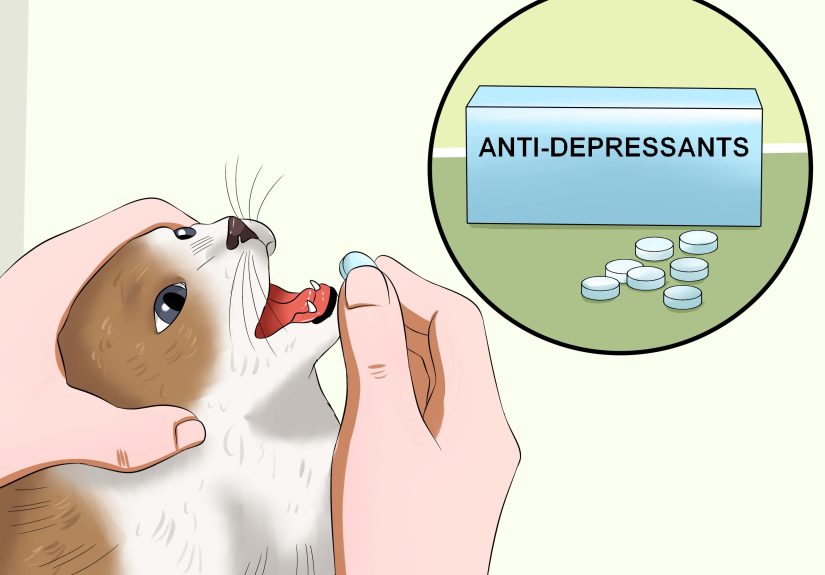
If you have ruled out medical problems, cleaned thoroughly, improved the environment, reduced stress, and your cat is still spraying, talk with your veterinarian. Some cats need additional treatment, especially when anxiety is a major factor. In certain cases, anti-anxiety medication or a structured behavior plan may be appropriate.
This is not a sign that you failed. It is a sign that your cat may need a little more support. Chronic spraying can become a learned habit, and the longer it goes on, the more layered the solution may need to be.
Common mistakes that keep spraying going
- Cleaning with the wrong product and leaving odor behind
- Using too few litter boxes
- Putting boxes in noisy or trapped locations
- Ignoring stress from another cat in the home
- Forgetting about outdoor-cat triggers
- Assuming neutering alone will fix everything
- Punishing the cat instead of addressing the cause
- Waiting too long to involve a veterinarian
When to call for help fast
Spraying is often behavioral, but not always. Contact a veterinarian quickly if your cat suddenly starts urinating outside the box, strains to urinate, produces very little urine, cries, seems painful, becomes lethargic, vomits, or stops eating. Male cats are at particular risk for urinary blockage, and that can be life-threatening.
Common experiences cat owners have with spraying
One of the most common owner experiences is realizing that the spraying was not random at all. A cat may ignore a wall for years, then suddenly spray the minute a new kitten arrives, a roommate moves in, or an outdoor cat starts parading across the porch like he pays rent. Owners often say the breakthrough came when they stopped focusing only on the stain and started asking, “What changed for my cat?” That shift in mindset usually turns frustration into problem-solving.
Another frequent experience is discovering that neutering helped a lot, but did not completely erase the behavior overnight. Some owners expect instant results and feel discouraged when a recently neutered male still sprays for a while. In reality, hormones take time to fade, and habits can linger. Many people find that the best results happen when neutering is paired with deep cleaning, better litter box management, and stress reduction. In other words, surgery opens the door, but home changes walk through it.
Multi-cat households also come up again and again. Owners are often surprised to learn that their cats do not have to be fighting loudly to be in conflict. Sometimes one cat silently blocks the hallway, stares at the other near the litter box, or claims the favorite resting places. The “victim” cat may respond by spraying a doorway, a bed, or a wall near a traffic path. Once owners separate resources, add more litter boxes, provide more vertical space, and reduce competition, the home often becomes much calmer.
Cleaning is another big lesson. Many owners swear they cleaned the spot thoroughly, only to discover later that they used the wrong product or did not reach the carpet pad underneath. The smell may be gone to human noses but still obvious to a cat. Once they switch to an enzymatic cleaner and block access to the area during cleanup, they often see improvement. It is not glamorous work, but it matters more than people expect.
Outdoor cats are a classic hidden trigger. A lot of people only figure this out after noticing that the spraying happens near windows, sliding doors, or the front entry. Some describe seeing their cat become visibly tense, chatter at the glass, or patrol the room before spraying. Adding privacy film, closing blinds at night, rearranging furniture, or discouraging neighborhood cats from lingering nearby can make a huge difference. It sounds simple, but sometimes your cat is not having a bathroom problem at all; he is having a border-security problem.
Finally, many owners say the biggest change came when they stopped punishing and started reassuring. Cats that spray are often stressed, insecure, or overstimulated. When the humans in the house respond with yelling, the stress rises, and so does the spraying. When owners switch to calm routines, daily play, predictable feeding times, and positive support, the cat often relaxes. The lesson repeated by countless households is this: spraying is not a revenge plot. It is communication. Once you understand the message, the smell usually has a much better chance of disappearing.
Final thoughts
If you are dealing with a male cat who sprays, you are not doomed to live in a house that smells like a tiny subway station. Most spraying problems improve when you combine medical rule-outs, neutering when needed, smart litter box changes, stress reduction, proper cleaning, and trigger management. The key is consistency. Your cat is not trying to ruin your life. He is telling you that something feels off. Once you fix what is off, the spraying often fades.