Table of Contents >> Show >> Hide
- First, Let’s Normalize It: Space Isn’t a Breakup
- Before You Say Anything: Get Clear on What “Space” Means
- The Conversation Blueprint: A Kind Way to Say It
- Scripts You Can Use (Steal These Like a Responsible Adult)
- What to Avoid (Unless You Enjoy Emotional Chaos)
- How to Say It If She’s Sensitive (or You Think She’ll Panic)
- If She Reacts Poorly: What to Do in Real Time
- Make Space a Relationship Skill, Not a Relationship Threat
- When “I Need Space” Might Mean Something Else
- Conclusion: Say It Clearly, Say It Kindly, Back It Up With a Plan
- Real-World Experiences: What This Looks Like in Actual Relationships (500+ Words)
Asking for space can feel like trying to defuse a bomb with oven mitts on. You’re not trying to end the relationshipyou’re trying to keep it healthy. But if you say it wrong (or say it like a mysterious movie villain), she may hear: “I’m leaving” or “You’re too much.” The goal is to communicate distance without creating disconnection.
This guide will help you ask for space in a way that’s clear, kind, and actually works. You’ll get a step-by-step plan, scripts you can borrow, examples of what not to do, and a “how to use the space” plan so it doesn’t turn into awkward silence and suspicious vibes.
First, Let’s Normalize It: Space Isn’t a Breakup
Healthy relationships are a mix of togetherness and individuality. Wanting alone time can mean you’re overwhelmed, introverted, stressed, or simply trying to show up as your best self. In fact, asking for what you needclearly and respectfullyis one of the habits associated with healthier relationships overall.
The problem isn’t “needing space.” The problem is when space shows up as disappearing, stonewalling, passive aggression, or vague statements like: “I don’t know… I just need space.” That’s the relationship equivalent of sending a “??” text and turning your phone off for 12 hours.
Before You Say Anything: Get Clear on What “Space” Means
If you don’t define space, she will. And her definition might be “he’s halfway out the door.” So before the conversation, answer these questions for yourself:
1) What are you actually asking for?
- Time-based space: “Two evenings a week to myself.”
- Conflict space: “A 20-minute break when we’re escalating so I can calm down and come back.”
- Mental space: “Less texting during work hours so I can focus.”
- Social space: “One friend night a week without feeling guilty.”
2) Why do you need it?
Be honestbut not dramatic. “I need space because you’re too intense” is a relationship-speedrun to pain. A better truth sounds like: “I’ve been feeling overloaded and I need some alone time to reset so I can be present with you.”
3) How long, and how will you stay connected?
Space works best when it’s specific and paired with reassurance. “I need space” lands much better when it comes with: what it looks like + when you’ll reconnect + how you’ll show care.
The Conversation Blueprint: A Kind Way to Say It
Here’s a simple structure that keeps you honest and keeps her nervous system from interpreting your request as emotional eviction. Think of it like a three-course meal: reassurance, clarity, plan.
Step 1: Choose a calm moment (not mid-fight)
Do it when you’re both regulated. Not while she’s crying, not right after you forgot your anniversary dinner reservation, and not when you’re already halfway out the door saying “We’ll talk later.” Pick a time where you can give full attentionphones down.
Step 2: Lead with reassurance
Say the thing she’s afraid of not hearing: “I love you. I’m not trying to end us. I’m trying to take care of myself so I can be better with you.”
Step 3: Use “I” statements and keep it about your needs
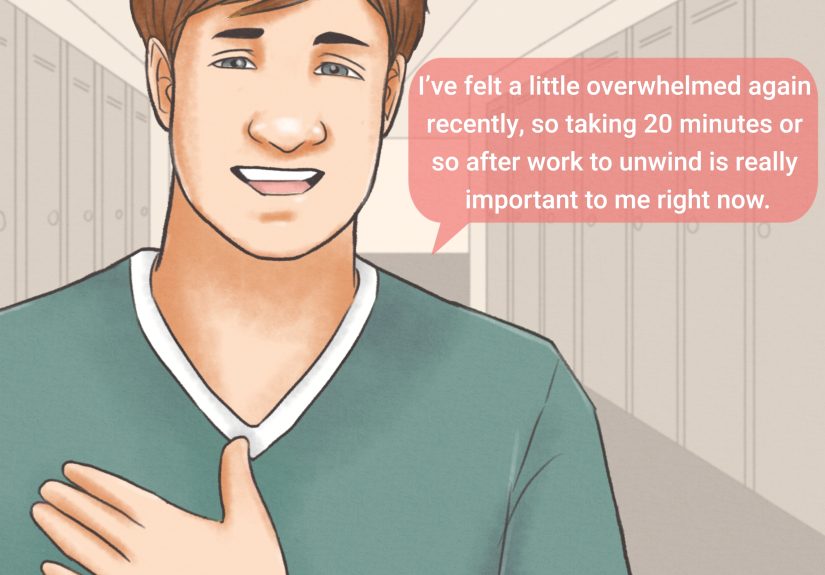
“I” statements reduce blame and defensiveness. Instead of “You’re smothering me,” try: “I’ve noticed I’m getting overwhelmed and I need some alone time to recharge.”
Step 4: Define what “space” looks likespecifically
This is where most people fail. Vague space is scary space. Try: “For the next couple weeks, I want Tuesday and Thursday evenings to myself to decompress, and I’ll be fully present with you the other nights.”
Step 5: Offer a connection plan (space + closeness)
You’re not asking for less loveyou’re asking for a healthier rhythm. Add: when you’ll talk, what stays the same, and how you’ll reassure her.
Scripts You Can Use (Steal These Like a Responsible Adult)
Script A: You’re overwhelmed and need alone time
“I want to talk about something that’ll help me show up better in our relationship. I care about you a lot, and this isn’t about pulling away from you. I’ve been feeling overloaded lately, and I realize I need some alone time to recharge. What I mean by ‘space’ is: two evenings a week where I can be by myselfgym, reading, just decompressingwithout us texting nonstop. I still want us. I still want you. I just want a healthier balance. Can we try this for two weeks and check in on how it feels for both of us?”
Script B: You need space during conflict (the “pause button”)
“When we argue, I sometimes get flooded and I stop thinking clearly. I don’t want to say something hurtful or shut down. Can we agree that if one of us is getting overwhelmed, we can take a 20-minute break to calm downthen come back and finish the conversation? I’m not walking away from you. I’m taking a break so we can handle it better.”
Script C: You want less constant contact, but more quality time
“I love talking to you, and I also notice I get mentally drained when I’m texting all day. I want to be more present, not less connected. Can we try fewer messages during work hours and then do a real check-in at night? I’d rather give you quality than constant.”
What to Avoid (Unless You Enjoy Emotional Chaos)
- Ghosting disguised as “space”: space is communicated; ghosting is abandonment with better branding.
- Vague timelines: “I need space” with no plan can feel like a slow-motion breakup.
- Blame language: “You’re suffocating me” makes her the problem instead of your needs being the topic.
- Making it a punishment: “You did X so now I need space” turns space into a weapon.
- Over-explaining like you’re in court: clarity is good; a 40-minute closing argument is not.
How to Say It If She’s Sensitive (or You Think She’ll Panic)
Some people hear “space” and their brain translates it to: “I’m about to be replaced by a houseplant.” If you know she’s anxious, be extra intentional with reassurance and structure:
- Name your commitment: “I’m not breaking up. I’m building sustainability.”
- Make it temporary and specific: “Let’s try this for two weeks.”
- Offer predictability: “We’ll have date night Friday and brunch Sunday.”
- Stay warm: affection doesn’t have to disappear for space to exist.
If She Reacts Poorly: What to Do in Real Time
Even if you say it perfectly, she may still feel hurt. Feelings aren’t a customer service issue you can solve with the right script. Your job is to stay steady, kind, and clear.
If she says: “So you don’t want to be with me?”
Try: “I do want to be with you. That’s why I’m being honest now instead of quietly burning out. Space helps me recharge so I can be present with you.”
If she says: “Are you hiding something?”
Try: “I get why it might feel that way. I’m not asking for space to do shady stuff. I’m asking for space to rest my brain and reset. We can talk about what would help you feel secure while I do that.”
If she says: “Fine. Do whatever you want.”
Try: “I hear that you’re hurt. I’m not asking to get my way; I’m asking to find a balance that works for both of us. What would make this feel fair to you?”
If the conversation escalates
Use the pause button: “I want to keep talking, and I’m getting overwhelmed. I’m going to take 20 minutes to calm down and then come back. I’m not leaving; I’m taking a break so we can do this respectfully.”
Make Space a Relationship Skill, Not a Relationship Threat
Asking for space should come with responsibility. You’re not requesting a “no feelings allowed” zone; you’re creating room for both of you to breathe. Here’s how to do it right:
1) Keep one reliable connection ritual
A simple habit reduces anxiety: a goodnight call, a short evening check-in, or a “thinking of you” message. Not because you’re on a leash, but because predictability communicates care.
2) Use the time well (don’t just scroll into oblivion)
Space is for recharging, not for emotionally evaporating. Use it for sleep, exercise, journaling, hobbies, therapy, or quiet reflection. If you come back calmer and kinder, the relationship benefits.
3) Follow the agreement like it matters (because it does)
If you say you’ll check in Friday, check in Friday. Broken promises turn “space” into “I can’t trust you,” and trust is a pain to rebuild.
4) Debrief after a trial period
Treat this like a team experiment: “What worked? What didn’t? Do we need more structure, more reassurance, or different timing?”
When “I Need Space” Might Mean Something Else
Sometimes “space” is a legitimate need. Other times it’s a vague umbrella covering deeper issues:
- Avoiding a hard conversation: commitment fears, resentment, incompatibility.
- Burnout: work stress, depression, anxiety, family pressure.
- Boundary problems: no personal time, constant availability expectations.
- Ongoing conflict patterns: criticism, shutdowns, repeating the same fight.
If you’re asking for space because you’re scared to talk about the real issue, consider naming the bigger topic gently: “I need some room to think, and I also want to talk about what’s been feeling hard between us. Can we set a time this weekend?”
And if there’s emotional manipulation, controlling behavior, or you feel unsafe, prioritize support and safety. Space can be healthy, but safety is non-negotiable.
Conclusion: Say It Clearly, Say It Kindly, Back It Up With a Plan
The kindest version of “I need space” has three ingredients: reassurance, specificity, and follow-through. You’re not asking to love her lessyou’re asking to love her better by staying emotionally resourced.
If you remember nothing else, remember this: don’t ask for space like you’re walking away. Ask for space like you’re building a healthier rhythm. Because that’s what it should be.
Real-World Experiences: What This Looks Like in Actual Relationships (500+ Words)
Most couples don’t struggle with the idea of spacethey struggle with the execution. The stories below are the kinds of scenarios people commonly describe when they try to create breathing room without accidentally detonating trust.
Experience 1: The “Introvert vs. Golden Retriever” Dynamic
One common pattern is the introvert-extrovert mismatch. One partner recharges alone; the other recharges together. In practice, the introverted partner starts feeling mentally fried, while the more connection-driven partner feels rejected. The turning point usually happens when “space” stops being framed as distance from you and starts being framed as care for me. When the introverted partner says, “I need two quiet nights so I can feel like myself,” and follows it with, “I’m taking you out Friday and I want to be fully present,” the nervous system calms down. The couple often finds that a predictable rhythm (two solo nights + one intentional date night) removes the constant negotiation that was exhausting both of them.
Experience 2: The Texting Trap
Another frequent experience is the “we’re together, but we’re also together all day.” Constant messaging can feel romantic at first, then slowly morph into a low-grade obligation. People describe checking their phone not with excitement, but with a tiny sense of dreadlike opening an email titled “Quick Question” (which is never quick). The healthiest fixes are rarely dramatic. They’re practical: “Let’s do fewer texts during work, then a real call after dinner,” or “Send memes freely, but no pressure for immediate replies.” When couples agree on a normlike “urgent calls, non-urgent texts”the connection stays warm while attention and productivity stop bleeding out through the cracks.
Experience 3: Space During Conflict Saves the Relationship
Many couples report that the most valuable “space” is not days apartit’s minutes apart. A short, agreed-upon break during an argument can prevent saying the one sentence you can’t un-say. The key detail people highlight is the return. A break without a return time can feel like abandonment, especially to someone who already fears being left. Couples who succeed with this strategy usually make it specific: “I’m taking 20 minutes, then I’m coming back at 8:40.” The pause becomes a skill, not a shutdown. Over time, partners start trusting that a temporary break is a path back to connection, not a door slam.
Experience 4: Living Together Makes Space Harder (But More Important)
When couples share a home, space can feel tricky because you’re physically in the same place. People often assume space means leaving, when it can also mean separate modes: one person reads in the bedroom while the other watches a show in the living room, both emotionally fine, both not “mad.” Couples who thrive in shared spaces often create small rituals that protect individuality: one solo hobby night, a morning walk alone, headphones time, or “parallel play” (doing separate activities in the same room). The biggest improvement usually comes from removing the guilt. Alone time stops being interpreted as a threat and starts being treated like brushing your teeth: basic maintenance that prevents bigger problems later.
Experience 5: The Best “Space Talk” Ends With a Check-In
People commonly say the conversation lands best when it ends with an agreement to revisit it: “Let’s try it for two weeks and then talk.” That short timeline reduces fear. It also creates accountability: if space is helping you become calmer, kinder, and more present, she’ll feel the benefit. If space becomes an excuse to avoid intimacy or responsibilities, the check-in exposes it quickly. In healthy relationships, space doesn’t make love smallerit makes it sturdier.