Table of Contents >> Show >> Hide
- What You’re Treating (In Plain English)
- Before You Treat: A 30-Second Reality Check
- The 15-Step Plan to Treat Contact Dermatitis
- Step 1: Break up with the trigger immediately
- Step 2: Wash the skinsooner beats “stronger”
- Step 3: Decontaminate the “supporting cast” (clothes, tools, pets)
- Step 4: Cool it down with compresses (simple, underrated, effective)
- Step 5: Stop scratching (your future self will thank you)
- Step 6: Moisturize like you mean it (barrier repair is treatment)
- Step 7: Try OTC 1% hydrocortisone for mild, localized flares
- Step 8: If it’s more intense, talk to a clinician about stronger topical steroids
- Step 9: Consider non-steroid anti-inflammatory creams for sensitive areas
- Step 10: Use oral antihistamines strategically (mostly for itch and sleep)
- Step 11: Take a “lukewarm bath” approach (hot water is a chaos agent)
- Step 12: Protect raw or blistered areasdon’t pop
- Step 13: Avoid common “oops” that prolong flares
- Step 14: Do the detective work (because guessing gets old)
- Step 15: If it keeps coming back, ask about patch testing
- When You Should Get Medical Help (Not “Wait It Out”)
- Prevention That Actually Works (So You Don’t Keep Rewriting This Story)
- Common Questions (Because Your Skin Didn’t Come With a Manual)
- of Real-World Experiences (What People Commonly Learn the Hard Way)
- Wrap-Up
Contact dermatitis is your skin’s way of filing a strongly worded complaint. You touched (or wore, or scrubbed with,
or worked around) something it didn’t likenow your skin is sending you a red, itchy memo in all caps.
The good news: most cases improve with smart home care and a little detective work.
Quick note: This is educational information, not a medical diagnosis. If your rash is severe, spreading fast,
involves your eyes/genitals, or shows signs of infection, skip the internet and call a clinician.
What You’re Treating (In Plain English)
“Contact dermatitis” is a rash caused by direct contact with something that irritates your skin or triggers an allergy.
There are two main types:
Irritant contact dermatitis
This is the “too much, too harsh, too often” versionthink soaps, detergents, cleaners, solvents, repeated handwashing,
or wet work. It can sting or burn and may show up quickly after exposure.
Allergic contact dermatitis
This is your immune system getting dramatic over something specificlike poison ivy/oak/sumac resin, nickel in jewelry,
fragrance ingredients, preservatives in skincare, hair dye, rubber accelerators in gloves, or topical medications.
The rash may appear hours to days after contact and can keep flaring if you keep encountering the allergen.
Either way, the core strategy is the same: stop the trigger, calm inflammation, protect the skin barrier, and prevent a rerun.
Before You Treat: A 30-Second Reality Check
Contact dermatitis often shows up where the substance touched: under a watchband, along a belt buckle,
on the hands after a new dish soap, or in streaks after brushing against a plant. It may itch, burn, feel tender,
or develop small blisters.
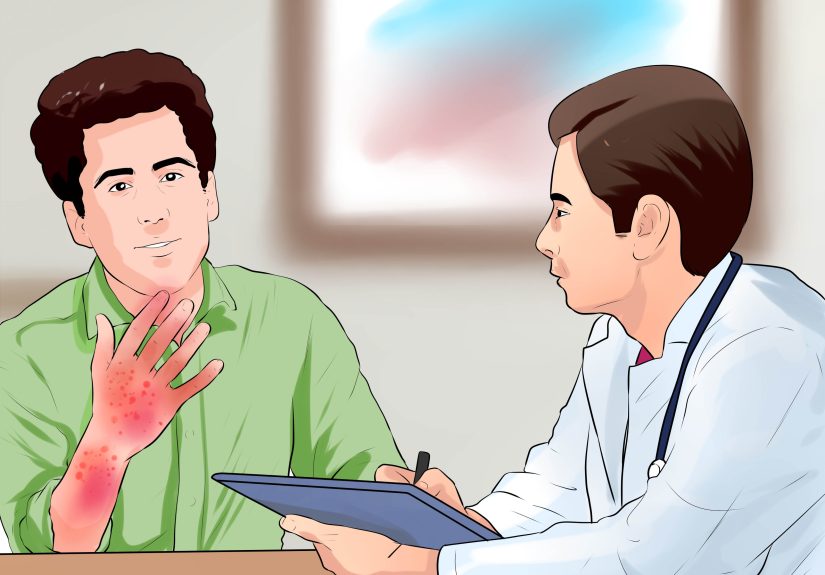
But rashes can impersonate each other. If you’re unsure whether it’s contact dermatitis versus eczema flare, psoriasis,
fungal rash, scabies, or an infection, the safest move is to get evaluatedespecially if it’s not improving.
The 15-Step Plan to Treat Contact Dermatitis
-
Step 1: Break up with the trigger immediately
Stop using the suspected product or remove the suspected item (jewelry, watch, gloves, new lotion, cleaning agent).
If it’s a workplace exposure, pause the task and wash up. The rash can’t calm down if the offender keeps coming back. -
Step 2: Wash the skinsooner beats “stronger”
Gently wash the exposed skin with lukewarm water and a mild, fragrance-free cleanser. If you suspect poison ivy/oak/sumac,
washing promptly can remove plant resin and limit severity. Rinse wellleftover soap can also irritate. -
Step 3: Decontaminate the “supporting cast” (clothes, tools, pets)
Contact dermatitis triggers love hitchhiking. Wash clothing, towels, gloves, bedding, and any objects that touched the irritant/allergen.
For plant exposures, resin can linger on shoes, tools, and even pet furleading to repeat “mystery” flares. -
Step 4: Cool it down with compresses (simple, underrated, effective)
Apply a cool, damp compress for 10–15 minutes a few times per day to reduce itch and inflammation.
If the rash is weepy or blistered, cool wet dressings can be especially soothing. Think “spa day,” not “scratch festival.” -
Step 5: Stop scratching (your future self will thank you)
Scratching worsens inflammation and can break the skin, opening the door to infection. Trim nails short.
If nighttime scratching is your specialty, consider cotton gloves or covering the area with a clean, breathable dressing. -
Step 6: Moisturize like you mean it (barrier repair is treatment)
A thick, fragrance-free moisturizer (ointment or cream) helps repair the skin barrier and reduces dryness and irritation.
Apply it several times a day, especially after washing. This step looks boring, but it’s secretly doing the heavy lifting. -
Step 7: Try OTC 1% hydrocortisone for mild, localized flares
Over-the-counter hydrocortisone can temporarily reduce inflammation and itching for small, mild areas.
Follow the label instructions and use it for a short period. Avoid using steroid creams on thin-skinned areas
(like eyelids) unless a clinician specifically advises it. -
Step 8: If it’s more intense, talk to a clinician about stronger topical steroids
Moderate to severe contact dermatitis may need prescription-strength topical corticosteroids.
Clinicians choose potency based on body area and severity (stronger isn’t always betterface and groin need extra caution).
Use exactly as directed to reduce side effects like thinning skin. -
Step 9: Consider non-steroid anti-inflammatory creams for sensitive areas
If the rash involves the face, eyelids, neck, or skin folds, your clinician may recommend non-steroid topical options
(often called calcineurin inhibitors) that reduce inflammation without some steroid-related risks in delicate areas. -
Step 10: Use oral antihistamines strategically (mostly for itch and sleep)
Oral antihistamines can help reduce itchingespecially at night. Some cause drowsiness, which can be helpful for sleep
but risky if you need to drive or operate machinery. Non-drowsy options may help some people, though itch relief varies. -
Step 11: Take a “lukewarm bath” approach (hot water is a chaos agent)
Short, lukewarm showers or baths can soothe without stripping oils. Colloidal oatmeal baths may reduce itch.
Skip harsh scrubs, loofahs, and “exfoliating miracles.” Your skin is already stresseddon’t give it a second job. -
Step 12: Protect raw or blistered areasdon’t pop
Blisters are annoying, but popping them increases infection risk. If an area is weeping, use a nonstick dressing and change it
regularly. Keep it clean, and watch for signs of infection (increasing pain, warmth, pus, honey-colored crusting, fever). -
Step 13: Avoid common “oops” that prolong flares
During a flare, keep routines simple: fragrance-free cleanser, fragrance-free moisturizer, and clinician-recommended treatment.
Avoid new scented products, essential oils, strong acne treatments, and heavy makeup on the rash. The goal is fewer variables,
not a skincare obstacle course. -
Step 14: Do the detective work (because guessing gets old)
If you’re not sure what caused it, think like a rash detective: What’s new in the last 1–2 weekssoap, detergent, wipes,
gloves, jewelry, watch, phone case, work chemicals, gardening, hobbies, topical antibiotics, or skincare actives?
Keep a simple list. Patterns are your friend. -
Step 15: If it keeps coming back, ask about patch testing
Recurrent or stubborn allergic contact dermatitis often needs a more precise answer than “probably something.”
Patch testing can identify specific allergens (like nickel, fragrance mixes, preservatives, rubber chemicals),
helping you avoid the real trigger instead of living in fear of everything you own.
When You Should Get Medical Help (Not “Wait It Out”)
Contact dermatitis is usually manageable, but some situations deserve prompt care:
- Severe swelling of the face, eyelids, lips, or widespread blistering
- Rash on the eyes, genitals, or large body areas
- Signs of infection: increasing pain, warmth, pus, fever, red streaks
- Breathing problems or facial swelling that suggests a serious allergic reaction
- No improvement after several days of trigger avoidance and basic treatment
Clinicians may prescribe stronger topical treatments or, for severe widespread allergic reactions (like significant poison ivy),
a short course of oral steroids. The right plan depends on your body area, severity, medical history, and medications.
Prevention That Actually Works (So You Don’t Keep Rewriting This Story)
Build a “safe basics” routine
Many repeat flares come from product overload. Stick to fragrance-free, dye-free basics and introduce new products one at a time.
If you find a product that doesn’t trigger you, treat it like a treasured heirloom.
Use physical barriers smartly
Gloves, long sleeves, and barrier creams can helpespecially for irritant exposures. But gloves can also cause trouble if you’re allergic
to rubber chemicals or if sweat gets trapped. If gloves worsen your rash, talk to a clinician about alternative materials and liners.
Nickel and metal contact hacks
If metal triggers you, use covers over metal fasteners and choose nickel-free jewelry. For watches or fitness trackers,
consider switching bands or adding a barrier layer that keeps metal from touching skin.
Outdoor plant strategy
Learn poison ivy/oak/sumac identification in your region, wear protective clothing, and wash exposed skin promptly after yard work.
Also wash gearand don’t forget the dog who just sprinted through the brush like it was a personal mission.
Common Questions (Because Your Skin Didn’t Come With a Manual)
How long does contact dermatitis last?
Mild cases can improve within days once exposure stops. More severe allergic reactions may take 2–3 weeks to fully settle,
especially if the trigger keeps sneaking back in through contaminated items or repeated exposure.
Is it contagious?
Contact dermatitis itself isn’t contagious. But if the trigger is still on your clothes or objects (like plant resin),
you can “spread” the exposureso wash items thoroughly.
Can I put antibiotic ointment on it?
Sometimes topical antibiotics can themselves cause allergic contact dermatitis in certain people. If you suspect infection,
it’s better to get evaluated than to self-treat with multiple new products that can muddy the waters.
of Real-World Experiences (What People Commonly Learn the Hard Way)
If you’ve ever had contact dermatitis, you know the emotional arc: “It’s nothing” → “It’s itchy” → “I have made a terrible mistake”
→ “Why is it still here?” A few patterns show up again and again in how people experience (and accidentally prolong) this rash.
Experience #1: The trigger is often something boring. Many people expect the cause to be exoticrare tropical plants,
mysterious toxins, maybe a curse. More often it’s the new “fresh linen” detergent, a heavily fragranced lotion, a cleaning spray,
or a hobby that quietly changed (new resin, new paint, new gloves). The most helpful mindset shift is treating your bathroom cabinet
like a lineup: who showed up right before the rash started?
Experience #2: “More product” usually means “more problems.” When a rash appears, it’s tempting to throw everything at it:
a scented cream, a cooling gel, an essential oil blend, an exfoliating scrub “to get the toxins out,” then a new soap “for sensitive skin.”
The result is often a skin barrier that’s even angrier. People tend to do better when they simplify down to a small, boring routine:
gentle cleanser, fragrance-free moisturizer, and one anti-inflammatory treatment that makes sense.
Experience #3: Poison ivy isn’t just a plantit’s a logistics problem. With plant allergies, the rash can feel like it’s
“spreading,” when what’s really happening is delayed reaction timing plus resin re-exposure. Folks commonly realize later that the resin
stayed on shoes, garden gloves, phone screens, steering wheels, or the dog’s fur. Once they wash the gear and surfaces, the “mystery new patches”
finally stop appearing. It’s less “my body is haunted” and more “my laundry basket is the villain.”
Experience #4: Metal allergies love to hide in plain sight. Nickel reactions can show up under a belt buckle, where a jean button
touches the abdomen, on wrists under a watchback, or on ears from earrings that were “fine for years” until they weren’t. People often report
that simple fixescovering metal snaps, switching to nickel-free items, changing watch bandsmake an outsized difference once the culprit is confirmed.
Experience #5: The itch is the boss fight. Many people can tolerate redness, but itching is what breaks themespecially at night.
Practical tricks like cool compresses, keeping nails short, covering the rash, and using clinician-advised itch control can prevent the scratch cycle
that turns a mild flare into a weeks-long saga. The goal isn’t heroic willpower; it’s building an environment where scratching is harder than resting.
The biggest “aha” most people report is this: treatment isn’t only about calming the current rashit’s about preventing the next exposure.
Once you identify the trigger (often with help like patch testing), your skin usually becomes dramatically easier to live with.