Table of Contents >> Show >> Hide
Few Beatles songs inspire as much head-scratching, delighted laughter, and heated debate as
“I Am the Walrus”. It’s weird, noisy, orchestral, slightly menacing, and packed with
surreal images. Some fans rank it among the band’s greatest achievements; others quietly skip it
to get back to “Hey Jude.” Today, rankings, lists, and online arguments have turned this psychedelic
oddball into one of the most dissected tracks in the Beatles’ catalog.
In this deep dive, we’ll look at where “I Am the Walrus” lands in major rankings, how critics
and fans rate it, what makes the song so polarizing, and why it still matters in the streaming era.
Then we’ll wrap up with real-world style experiences and listening tipsbecause this isn’t just a song,
it’s a full-on trip.
What Exactly Is “I Am the Walrus”?
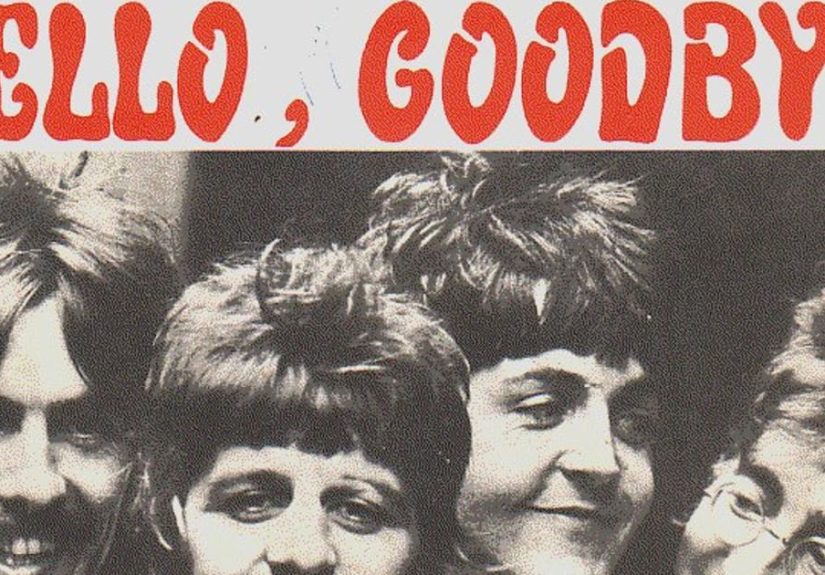
“I Am the Walrus” was released in 1967 as the B-side to “Hello, Goodbye” and appeared on
the Magical Mystery Tour EP and album. John Lennon wrote it at the height of the
Beatles’ psychedelic phase, deliberately mashing together random images, wordplay, and nursery rhymes
to confuse listeners who were analyzing Beatles lyrics like sacred texts.
The song pulls from Lewis Carroll’s poem The Walrus and the Carpenter, Lennon’s LSD
experiences, and English schoolyard chants. Producer George Martin layered in a small orchestra,
a choir instructed to sing absurd lines and vocal sounds, and a live radio feed that happened to be
broadcasting Shakespeare’s King Lear.
Musically, it’s a controlled collision: shifting keys, unusual chord progressions, and a finale built
on overlapping ascending and descending lines that feel like a musical Möbius strip. Musicologists
have pointed out its use of modal shifts, dense harmony, and an outro that cycles through chords while
bass and strings move in opposite directions, creating the sensation that the track is spiraling forever.
Oh, and it was once banned by the BBC for using a slang word for underwear. For a three-to-four-minute
pop song, that’s quite a résumé.
How High Does “I Am the Walrus” Rank?
On Beatles-Only Song Rankings
If you look at rankings that only cover Beatles songs, “I Am the Walrus” consistently lands
in the “elite but not quite Mount Rushmore” tier.
-
Rolling Stone’s “100 Greatest Beatles Songs” placed the track at
No. 16, praising its sheer audacity and the fact that this gloriously uncommercial
experiment was relegated to a B-side. -
NME’s complete ranking of every Beatles song put “I Am the Walrus” in the
mid-20s, calling it feral, aggressive, and a key example of Lennon leaning into his more chaotic,
confrontational side.
In other words, critics may still prefer emotional epics like “A Day in the Life” or “Hey Jude,”
but when they want to highlight the Beatles at their most experimental, “I Am the Walrus”
is almost always in the conversation.
In All-Time Song Lists
In broader “Greatest Songs of All Time” rankings, “I Am the Walrus” doesn’t always make
the headline top 10 the way some other Beatles singles do, but it regularly appears as a standout
psychedelic track in discussions of late-’60s rock. Commentators often mention it alongside
“Strawberry Fields Forever” and “Penny Lane” as part of a powerhouse run of Lennon-McCartney
singles that rewired what pop music could sound like.
Some independent critics’ lists rank it higher than more traditional hits precisely because it’s so
strange. Their reasoning is simple: plenty of bands can write a catchy love song; almost nobody else
could have written this.
What Modern Critics Say
Modern write-ups regularly describe “I Am the Walrus” as one of the Beatles’ most daring
experiments. American Songwriter calls it several minutes of “pure psychedelic rock/pop and nonsensical
lyrics,” highlighting how the song manages to be both chaotic and fun at the same time.
A 2024 essay on the Needlefish blog describes it as undeniably strange yet “widely considered a
masterpiece,” and uses it as prime evidence that a track can be driven by chord shifts and texture
rather than a conventional sing-along melody.
Recent interviews with Paul McCartney have also reinforced its status as an avant-garde milestone.
He’s talked about how experimental composers like John Cage and early tape-loop pioneers inspired
the random radio and sound collage techniques used on tracks like “I Am the Walrus”,
helping the Beatles fuse high-art experimentation with pop songcraft.
Why the Song Is So Polarizing
For every critic who calls it a masterpiece, there’s at least one listener who finds it loud, messy,
or downright uncomfortable. That tension is baked into both the music and the lyrics.
Organized Chaos in the Arrangement
The track layers together:
- A lurching rock band groove with heavy electric guitar
- Classical strings and brass arranged like a mini avant-garde piece
- A choir chanting nonsense lines and vocal sounds
- Snippets of a Shakespeare play drifting in from a live radio broadcast
The result feels less like a standard song and more like a sound collage that just happens to have
a beat. For some listeners, that density is thrillingthe audio equivalent of opening a surrealist
comic book. Others find it overwhelming, especially if they’re expecting a straightforward chorus
and an easy sing-along hook.
Nonsense Lyrics with a Mean Streak
Lennon wanted to frustrate people who were searching for a single “correct” meaning in Beatles lyrics.
The words toss together classroom memories, authority figures, playground imagery, religious references,
and absurd food items in a stream that feels playful on the surface but carries an edge of paranoia and
resentment underneath.
Contemporary critics were split. Some hailed the song as a bold, fragmented portrait of modern life,
calling it one of the band’s most realized works since “A Day in the Life.” Others complained that it
was silly, ugly, and incomprehensiblebasically a four-minute inside joke with an orchestra attached.
Fan Opinions: Love It, Hate It, Can’t Forget It
Spend five minutes in an online Beatles discussion and you’ll see how divisive this song still is.
Some fans describe it as the ultimate Lennon trip: dark, disjointed, and powered by an aggressive groove
that feels like the underside of the Summer of Love. Others admit they respect it more than they enjoy it,
or only really like the opening and the orchestral freak-out.
What’s striking is how rarely people feel neutral. Very few listeners say, “Oh yeah, that one’s fine.”
They either rank it near the top of the Beatles catalog or somewhere in the chaotic middle, appreciated
but not beloved. That passionate split is part of why the song keeps rising in long-term rankings:
divisive art stays in the conversation.
My Own Ranking: Where Does “I Am the Walrus” Belong?
If we’re talking about importance rather than how often you’d put it on a party playlist,
“I Am the Walrus” belongs firmly in the Beatles’ top 10.
Here’s the case:
-
It’s one of their boldest studio experiments, pushing pop toward sound collage, electronic textures,
and avant-garde techniques without completely abandoning hooks. -
It captures Lennon’s sense of humor and anger at the same timenonsense words wrapped around very real
frustration with authority, critics, and the expectations placed on the band. -
The arrangement still sounds modern: dense, cinematic, and unapologetically weird in a way that would
fit right into an art-house film or prestige TV soundtrack.
On a purely emotional level, it might not dethrone “A Day in the Life” or “Let It Be” for most casual
fans. But if you’re ranking Beatles songs on innovation and cultural influence,
“I Am the Walrus” has a strong argument for “top-10, no questions asked.”
How to Listen So the Song Clicks
1. Use Good Headphones or Speakers
This track lives in the details: stray sound effects, background chatter, and subtle changes in the
strings. On a phone speaker, it can sound like a wall of noise. Through headphones or a decent stereo,
you start to hear distinct layers, like audio brushstrokes.
2. Follow the Chords, Not Just the Words
If the lyrics feel too chaotic, shift your focus to the harmony. Notice how the chords slide into
unexpected places, how the mood tilts from sneering to dreamy to ominous and back again. Critics who
love the song often insist that it’s the chord changes, not the melody, that make it so addictive.
3. Treat It Like a Short Film
Instead of asking “What does this line mean?”, ask “What kind of scene does this create?”
Imagine the song as a surreal short film: a strange teacher, a chaotic playground, a gray English
landscape, then suddenly you’re in the middle of a Shakespeare broadcast and an orchestral march.
Once you lean into that cinematic feeling, the song’s jump-cuts start to feel intentional rather than random.
4. Embrace the Joke
Lennon famously wanted to mess with people who wrote overly serious essays about Beatles lyrics. Knowing
that, there’s freedom in not trying too hard to “solve” the song. Instead, enjoy the absurdity, the
wordplay, the chant-like phrases, and the way the arrangement takes itself very seriously while the
vocabulary does the opposite.
“I Am the Walrus” in the Age of Rankings
In an era of endless lists“Top 500 Songs,” “Best Beatles B-Sides,” “Most Psychedelic Tracks of the ’60s”
songs like “I Am the Walrus” are built to thrive. They’re not background music; they’re conversation
starters. Every time a new ranking comes out, the same questions return:
- Is this song brilliant or just bizarre?
- Does innovation matter more than sing-along comfort?
- Should a B-side this strange outrank more polished hits?
Rankings will always shift, but the fact that “I Am the Walrus” keeps showing updecades after
its releasesays a lot. Plenty of songs were huge in 1967. Not many of them still feel as unruly,
mysterious, and meme-worthy as this one.
Experiences and Stories Around “I Am the Walrus”
Beyond charts and critics, the real test of a song is what it does in people’s lives. For a track as
strange as “I Am the Walrus”, the stories are just as fascinating as the recording.
Talk to long-time Beatles fans and you’ll often hear a similar arc: the first listen is confusion,
maybe even annoyancethen somewhere between the third and tenth spin, something clicks. One person
might remember hearing it on a late-night classic rock station, half-asleep, and wondering if the DJ
had accidentally played three songs at once. Another might recall finding it buried in a parent’s vinyl
collection, putting the needle down out of curiosity, and suddenly realizing that pop music could be
much stranger than the radio suggested.
For musicians, “I Am the Walrus” can be a gateway drug into adventurous arranging. You start
by trying to learn the chords and quickly realize they don’t move in standard patterns. Cover bands often
simplify the structure or scale back the orchestration, because reproducing the full studio chaos on a
small stage is almost impossible. That challenge has its own charmsome artists lean into the rock side,
others highlight the eerie strings, and a few brave souls try to recreate the full swirl with backing
tracks and small chamber ensembles.
The song also shows up in unexpected emotional contexts. For some listeners, it becomes a bonding tool:
you play it for a friend and watch their reaction. Do they laugh? Look puzzled? Ask to hear it again?
Those responses become mini personality tests. If someone instantly loves it, you may mentally file them
under “chaos appreciator” and know you can safely recommend them other weird favorites.
Stories from families and educators working with music show how even the Beatles’ more complex tracks can
become part of people’s personal growth. While many accounts focus on more straightforward tunes,
the entire Beatles catalogquirky songs includedoften gives kids and teens a safe place to explore sound,
rhythm, and emotion. In that mix, “I Am the Walrus” can function as a delightful curveball: proof
that art doesn’t always have to be tidy to be meaningful.
Then there are solitary experiences: walking at night with this song in your headphones, watching street
lights smear into color while the strings rise and fall; re-listening as an adult and suddenly catching
the Shakespeare snippet you never noticed as a teenager; or playing the track for someone much younger and
realizing that, even in the age of hyper-produced pop and algorithm-approved hooks, this 1967 oddity can
still shock, amuse, and fascinate.
These experiencesshared, private, chaotic, funnyare what ultimately give “I Am the Walrus” its
staying power. Rankings can shift, opinions can flip, but it’s hard to forget the first time you hear a
song that sounds like rock music colliding with a dream and a radio play at the same time.
Closing Thoughts
So where does “I Am the Walrus” land in the grand scheme of Beatles songs? On most lists, it sits
just outside the top handful of sacred classicsyet it might be one of the most essential tracks
for understanding who the Beatles were in the late ’60s: restless, playful, rebellious, and increasingly
willing to throw the rulebook out the window.
You don’t have to put it at No. 1 on your personal list. But if you care about how rock music grew from
tidy verse-chorus structures into something stranger and more cinematic, this chaotic B-side deserves a
very high slot in your own rankingsand at least an occasional, volume-up, lights-off listen.