
Table of Contents >> Show >> Hide
- The First Scene: When Curiosity Beat Instinct
- Why a Dog and a Duck Can Actually Become Friends
- Safety First: How I Made “Cute” Stay Cute
- Training That Made Filming Possible
- Designing a Duck-Friendly “Set”
- How I Captured Their Friendship on Film (Without Turning It Into a Circus)
- Editing the Story So People Feel What You Felt
- What This Friendship Taught Me (Besides “Buy More Storage”)
- Behind-the-Scenes: of Real Moments From Filming Their Friendship
- Conclusion
I used to think “dog + duck” was basic math that ended in chaos. A wagging tail. A flurry of feathers.
A neighborhood group chat message that begins with, “Is everyone okay?” And honestlydepending on the dog,
that instinct isn’t a paranoid fantasy. Dogs are predators by design, and ducks are basically squeaky toys
that come with legs and opinions.
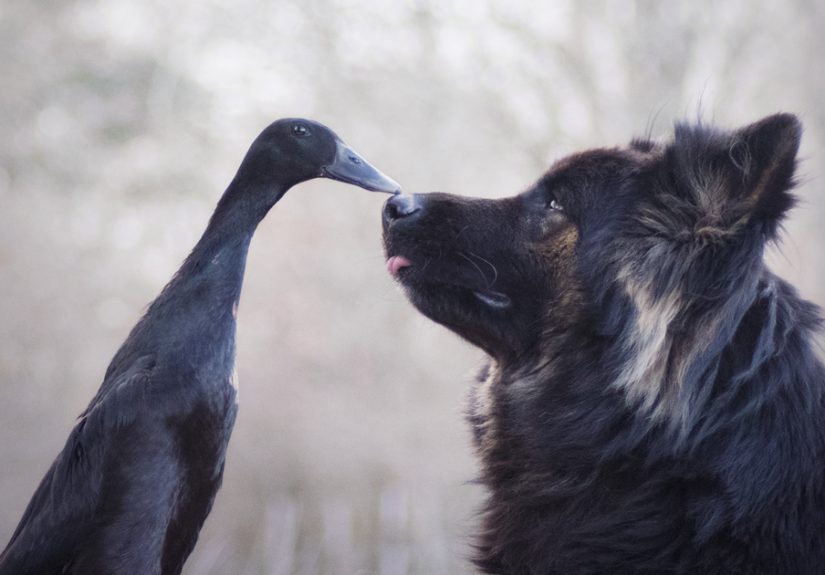
But then something weird happened: my dog didn’t chase. My duck didn’t panic. Instead, the two of them
formed the kind of friendship that makes you question everything you’ve ever assumed about animal behavior
and also makes your camera roll look like a feel-good movie trailer.
This is the story of how I captured their unlikely bond on film, plus the practical (and safety-first) steps
that helped me turn “please don’t eat the duck” into “please stop posing like a sitcom duo.”
The First Scene: When Curiosity Beat Instinct
The beginning wasn’t dramatic. No slow-motion sprint. No villain music. It was more like a cautious comedy:
my dog stood still, ears doing that satellite-dish swivel, while my duck waddled forward like a tiny detective
investigating a suspiciously fluffy object.
I expected a chase. What I got was… a sniff. Then a pause. Then my duck did the boldest thing possible:
it sat down. Not “ready to flee” downmore like “this spot is mine now” down. My dog blinked the way dogs do
when they’re trying to understand the plot, then gently backed up half a step as if to say, “Okay. Respect.”
That tiny moment mattered. In animal friendships, the “first draft” of the relationship often becomes the tone:
fear creates distance; tension creates conflict; calm curiosity creates room for connection. I started filming
right away, because I could feel the story formingsoftly, not loudly.
Why a Dog and a Duck Can Actually Become Friends
“Unlikely animal friends” isn’t just an internet trope. It’s often a mix of temperament, timing, and reinforcement.
Dogs are social learnersmany of them are wired to cooperate with humans and adapt their behavior based on feedback.
Ducks, especially those raised around people, can become surprisingly confident (some would say “bossy,” and they’d be right).
1) Temperament matters more than species
A mellow dog with good impulse control is playing a different game than a high-prey-drive dog who lives for the thrill
of pursuit. Likewise, a calm duck that’s used to the environment is less likely to flap into panic, which can trigger
chasing behavior in dogs.
2) Motion triggers the chaseso calm reduces risk
Many dogs are activated by quick movement. A duck sprinting, flapping, and zig-zagging can look like a “go signal.”
Slow, stable introductions reduce that trigger and give the dog time to process the duck as a living creature, not a moving target.
3) Positive patterns get repeated
Animals repeat what works. If every calm interaction is rewarded (with praise, treats, or simply a peaceful outcome),
calm becomes the default. Over time, the dog learns: “Being gentle is what we do here.” The duck learns:
“This big fuzzy thing is not a threatand may even be useful as a portable shade umbrella.”
Safety First: How I Made “Cute” Stay Cute
Let’s be real: filming is not worth it if it risks injury or stress. Ducks are fragile compared to dogs, and even a dog
who “just wants to play” can cause harm by accident. So I treated safety like a non-negotiable production rule.
The goal wasn’t to force friendship. The goal was to allow itcarefully.
Rule #1: Supervision is the whole point
I never left them together unattended. Not “just for a minute.” Not “while I run inside.” The sweetest moment can flip
if the duck startles or the dog gets overstimulated. If I’m filming, I’m also directingquietly.
Rule #2: The duck always has an exit
I set up a duck-safe zone the dog couldn’t enter: a small gated area or a pen with an opening sized for the duck,
not the dog. That way, the duck could opt out whenever it wanted. (And it did, occasionally, because ducks are dramatic.)
Rule #3: I watched body language like subtitles
Dogs and ducks communicate constantlyjust not in English. If my dog showed stress or over-arousal
(stiff posture, intense staring, freezing, lunging, ignoring cues), filming stopped. If my duck showed fear
(rapid retreat, frantic flapping, repeated distress calls), filming stopped. No clip is worth a setback.
Rule #4: Hygiene is part of animal care
Ducks (like other backyard poultry) can carry germs that make people sick, even when they look clean and healthy.
I kept handwashing simple and consistentespecially after handling water bowls, bedding, or anything in the duck’s area.
Clean routines protect both humans and animals, and they keep the “wholesome story” from turning into a “why is everyone upset” story.
Training That Made Filming Possible
The secret ingredient wasn’t a fancy camera. It was trainingboring, beautiful training. If you want a dog-and-duck friendship
to be safe, the dog needs a few reliable skills that function like guardrails.
Essential cues for a duck-savvy dog
- “Leave it” (disengage from the duck on cue)
- Recall (come back immediately, even when curious)
- “Place” (go to a mat/spot and stay, so the duck can move freely)
- Loose-leash walking (so introductions don’t become a tug-of-war)
I used positive reinforcement: rewarding the dog for calm choices. I didn’t wait for perfection. I rewarded progress:
a glance away from the duck, a relaxed body, a successful “place,” a soft sniff and step back. Filming sessions were short.
Ending on a win keeps everyone confident for next time.
Management isn’t failureit’s smart
If your dog has a strong prey drive, management is not optional. Leashes, long lines, secure fencing, and controlled setups
aren’t “ruining the vibe”they’re preventing rehearsal of chasing behavior. And what gets rehearsed gets repeated.
In other words: if the dog learns chasing is fun, you’ve accidentally trained the wrong sport.
Designing a Duck-Friendly “Set”
Ducks are happiest when their basic needs are met: safe shelter, dry bedding, clean water, and protection from predators
especially at night. A comfortable duck is a calm duck, and a calm duck is less likely to trigger a dog’s chase instinct.
This is where animal care and filmmaking suddenly become the same job.
My filming checklist for the environment
- Dry footing so the duck doesn’t slip and panic
- Shade and water access so the duck can regulate temperature and feel secure
- Predator-safe boundaries so outside stress doesn’t spill into the interaction
- No tight corners where the duck could feel trapped
One surprisingly helpful detail: I kept the most exciting “duck things” (like splashing in water) separate from early dog introductions.
Water play can make ducks suddenly fast, loud, and unpredictable. Great for comedy. Not great for a dog learning self-control.
How I Captured Their Friendship on Film (Without Turning It Into a Circus)
The best footage came when I stopped trying to “make moments” and focused on creating conditions for moments.
The camera didn’t cause the story. It just showed up on time.
1) I filmed at their level
If you film from above, your pets look small and far awaylike security camera footage of a cute crime.
When I got down low, the friendship looked immersive. Their eye contact mattered more. Their tiny gestures became plot points.
2) I used predictable routines
Routines are the documentary filmmaker’s best friend. Morning yard time. Afternoon sun spot. Evening “everybody pretend you’re tired”
session. When animals know what happens next, they relaxand relaxed animals give you honest behavior.
3) I leaned on burst mode and fast shutter speeds
Even “calm” ducks do sudden duck things. Even “gentle” dogs do sudden dog things. For action momentslike a duck hop or a playful
dog bowI used burst shooting and settings designed to freeze motion. If you’re using a phone, burst mode helps; if you’re using a camera,
a faster shutter speed plus continuous focus can make the difference between “iconic” and “blurry evidence.”
4) I filmed micro-moments, not just big scenes
The internet loves spectacle, but friendship is made of small stuff:
the duck following one step behind,
the dog pausing to let the duck pass,
the synchronized snack break,
the shared stare at absolutely nothing (a classic pet hobby).
5) I let the duck be funny
Dogs get all the credit for charisma, but ducks are underrated comedians.
Mine had three signature moves: the confident waddle, the judgmental head tilt, and the “I meant to do that” slip on wet grass.
When my dog reacted with gentle patience, it was like watching a buddy-cop movie where one cop is a feathered chaos gremlin.
Editing the Story So People Feel What You Felt
Raw footage is proof. Editing is meaning. I didn’t just clip together “cute moments.” I shaped a narrative arc:
curiosity → trust → routine → affection.
A simple editing structure that works
- Hook: the first calm encounter (the moment viewers don’t expect)
- Build: short scenes showing boundaries and growing comfort
- Payoff: a clear “they chose each other” moment (shared nap, gentle greeting, following behavior)
- Close: a quiet, ordinary scene that proves it’s real lifenot a one-time miracle
I also kept clips short. The goal was to make people smile fast, then stick around for the deeper sweetness.
If you’re posting online, captions can carry your safety message too: supervised, gradual, and respectful of both animals.
Cute and responsible can share the same screen.
What This Friendship Taught Me (Besides “Buy More Storage”)
Watching a dog and a duck become friends rewired my brain in the best way. It reminded me that relationships are built on
repeated small choices: gentleness, patience, and respect for boundaries. My dog learned self-control. My duck learned trust.
And I learned that the “unexpected” part of life often shows up when you stop forcing outcomes and start creating safe opportunities.
Behind-the-Scenes: of Real Moments From Filming Their Friendship
The first time I got a truly “movie moment” on camera, it wasn’t a dramatic chase or a perfectly framed shot. It was my dog lying down
as if the yard had suddenly become a yoga studio, and my duck waddling over like it owned the membership. The duck paused, looked at my dog,
then calmly settled beside himclose enough that you could tell it was a choice, not an accident. My dog didn’t flinch. He just sighed,
the kind of deep exhale that says, “This is my life now,” and rested his chin on the grass. I hit record and immediately forgot how to breathe.
After that, the friendship started giving me little giftstiny scenes that felt too perfectly scripted to be real. The duck would follow my dog
around the yard like a determined intern. If my dog stopped to sniff something important (probably a leaf with celebrity status), the duck would
stop too, craning its neck as if it also understood the significance of that exact patch of dirt. When my dog wandered toward the water bowl,
the duck would hustle over and “supervise,” dipping its bill like it was taste-testing for quality control. Sometimes the duck would quack,
and my dog would look at me with an expression that clearly translated to: “I don’t know what that means, but I’m trying my best.”
Filming taught me how much the best moments depend on preparation. The cutest clips happened when nobody was stressed.
I kept sessions short, ended early, and treated calm behavior like it deserved an award. If my dog got too fixated,
I didn’t push for “one more take.” I redirected him, gave him a break, and tried again later. That choicestopping before
things went sidewaysprotected the trust we were building. It also protected the footage, because tense animals don’t look cute.
They look like a warning label.
My favorite “unexpected” moment came on a day I wasn’t even trying. I had the camera out to capture some sunny-yard B-roll,
and my dog wandered into frame, then sat down. The duck waddled in behind him, paused, and gently preened its feathers.
My dog turned his head just slightly, as if checking whether his feathered friend was comfortable, then faced forward again.
No big movement. No chaos. Just companionship. In editing, that clip became the closing scene because it proved the point:
the friendship wasn’t a performance. It was routine.
And yesthere were outtakes. There was a time the duck stole a treat I had intended for my dog, then strutted away like a tiny bandit.
There was a time my dog tried to initiate play with an exaggerated play bow, and the duck responded by… staring. Judging. Probably writing a review.
Those moments mattered too because they showed their personalities, not just the highlight reel. The more I filmed, the more I realized the story
wasn’t “a dog and duck doing cute things.” The story was “two different animals learning each other’s language.” That’s what made it worth capturing.
Conclusion
Capturing the unexpected friendship between my dog and my duck wasn’t about luckit was about creating a safe environment, rewarding calm behavior,
and letting trust build at its own pace. If you’re hoping to film your own “unlikely animal friends” story, make safety and supervision your
foundation, then focus your camera on the small moments: patience, gentle curiosity, and everyday togetherness. That’s where the real magic lives.


