Table of Contents >> Show >> Hide
- Why Towns Can Look the Same Even When Life Doesn’t
- How Society Has Changed (Even If the Street Corner Hasn’t)
- How Towns Stay Visually Similar: The “Built Environment” Moves at Human Speed
- Main Street as a Mirror: What “Downtown” Reveals
- What I’m Really Capturing in These Photos
- Small Visual Clues That Society Has Shifted
- Three “Everywhere” Stories You’ll Recognize
- How to Photograph “Change in a Familiar Place” Without Forcing It
- What This Tension Means: We Change Fast, Places Change Slowlyand That’s Not a Bad Thing
- Experiences From the Road: on Noticing Change in Familiar Towns
If you want to understand America, don’t start with the skyscrapers. Start with the places that still have a
water tower, a courthouse, and at least one diner that swears its pie is “homemade” (and maybe it isno
one has proven otherwise).
Over the last few decades, society has sprinted. Jobs moved. Shopping habits shape-shifted. Our phones
became tiny handheld life managers. But the townsespecially the bones of themoften stayed stubbornly
recognizable. Same street grid. Same brick storefronts. Same “Main Street” that somehow looks like it’s been
waiting patiently while the world refreshes its software.
This article explores that tension: how society changes fast while towns change slow.
It’s also a love letter to the everyday scenes worth photographingthe places where the most interesting
stories happen in the smallest visual differences.
Why Towns Can Look the Same Even When Life Doesn’t
A town is not just a collection of buildings; it’s a long-term contract with the past. Streets, sewer lines,
lot boundaries, and downtown blocks are expensive to redo, so communities tend to adapt around what
already exists. People can change careers, buy a new phone, or start working from home. A town can’t
“update” its 1890 courthouse square the way you update an app.
That inertia creates a fascinating visual effect: the background stays familiar while the foreground changes.
In photos, the storefronts might be the same, but the signage fonts are newer. The same corner building might
hold a different business every five years. The sidewalk is unchanged, yet the way people use itselfies,
scooters, earbuds, coffee-to-gokeeps evolving.
How Society Has Changed (Even If the Street Corner Hasn’t)
1) Work and the economy: from factory shifts to flexible schedules
One major shift is what people do for a living and where they do it. Manufacturing once
anchored many regions, especially smaller cities and rural counties. Over time, manufacturing employment
declined substantially while service-sector work expanded, changing local paychecks, local identities, and what
“a good job” looks like.
Then came the work-from-home era. A growing share of workers began doing their jobs from kitchens, spare
bedrooms, or whatever corner had the best light and the fewest interruptions. That shift didn’t remodel the town
overnightbut it did change how towns are lived in. A house becomes an office. A coffee shop becomes a
conference room. Suddenly, small-town quiet is a feature, not a lack of amenities.
2) Shopping: from downtown department stores to big-box and e-commerce
Retail changed in a way you can almost hear in the photos. Older images show busy sidewalks, window displays,
and main-street stores with practical names like “Hardware” or “Dry Goods” (straight to the point, no branding
consultant required). Over time, big-box stores and strip retail pulled activity toward the edges of town, and
e-commerce grew into a major share of retail spending.
The visual result is subtle but real: fewer crowded sidewalks at midday, more “Available” signs, more businesses
that sell experiences rather than things. You might see the same brick building, but the interior has changed from
shelves to yoga mats, from cash registers to laptops, from shopping bags to QR codes.
3) Technology: the smartphone as a new “main character”
If you’re documenting social change, you can’t ignore the rectangle glowing in everyone’s hand. Smartphones
changed how we navigate, shop, date, work, learn, and entertain ourselves. They also changed town life in a
strangely quiet way: you can stand in the exact spot your grandparents stood and experience the same view
while simultaneously reading global news, ordering dinner, and checking if Mercury is in retrograde.
In photographs, the shift shows up as posture and attention: heads tilted down, earbuds in, people “together”
without always interacting. The town remains the stage; the script is updated.
4) Demographics and migration: uneven growth, new arrivals, and aging communities
Population change isn’t evenly distributed. Some small towns grow, others shrink, and many fluctuate as industries
expand or disappear. Rural counties in many regions have lagged in growth compared with suburbs and many metro
areas, and a sizable share have fewer residents than they used to. Meanwhile, some regionsespecially parts of the
South and Westhave seen more small-town growth.
Aging is another big storyline. Many rural places have a rising share of older residents and a smaller working-age
population, which affects everything from school enrollment to downtown foot traffic. You can photograph the same
town square for 30 years and notice a gradual shift in who’s using it and when.
How Towns Stay Visually Similar: The “Built Environment” Moves at Human Speed
The street grid doesn’t care about trends
Town layouts are durable. Once streets and lots are set, they’re hard to undo. Many American towns were built
around a walkable corecourthouse squares, rail stops, or river crossings. Even after cars took over, those cores
usually remained. They may have lost stores, gained parking, and endured questionable sign choices in the 1970s,
but the underlying geometry stayed.
Old buildings are surprisingly adaptable
A brick storefront can outlive dozens of businesses. That’s why towns can feel “the same” even when their
economies change. The building is still there, still anchoring the corner, still quietly doing its joblike a
supporting actor who never gets top billing but holds the whole movie together.
Civic anchors have staying power
Schools, churches, post offices, libraries, parksthese institutions and places often remain, even if their roles evolve.
A library might add a makerspace. A park might host a farmers market. The structures and locations are familiar,
but the way people use them shifts with the times.
Main Street as a Mirror: What “Downtown” Reveals
Main Street is where social change becomes visible without needing a headline. It shows the push-and-pull between
local identity and national forces: big-box competition, online shopping, shifting industries, and changing lifestyles.
Yet Main Streets also have a history of reinvention, including organized revitalization efforts that focus on design,
economic vitality, promotion, and community coordination.
When a downtown rebounds, you can often see it in small details first: flower planters, better lighting, fresh paint on
upper floors, outdoor seating, murals, and a renewed sense that the street is meant for peoplenot just for cars passing
through on the way to somewhere else.
What I’m Really Capturing in These Photos
A “town stayed similar” photo series isn’t about proving nothing changes. It’s about showing how change happens:
layered, uneven, sometimes invisible until you compare images side-by-side.
- Same building, different purpose: a former bank becomes a restaurant; a department store becomes apartments.
- Same corner, new rituals: kids once gathered around arcade machines; now they gather around Wi-Fi.
- Same street, different pace: fewer errands downtown, more “destination” trips for coffee, events, or local festivals.
- Same town name, new identity: from “mill town” to “outdoor recreation hub” to “remote-work refuge.”
Photography loves contrasts, and towns offer the perfect setup: the fixed background of place and the ever-changing
foreground of people, culture, and commerce.
Small Visual Clues That Society Has Shifted
Signs tell on us
Signs are an underrated historical record. Older photos show painted lettering and simple storefront names.
Newer ones show vinyl banners, brand palettes, and the occasional sign that looks like it was designed by someone
who just discovered gradients. Even when the building is unchanged, the signage reveals shifting tastes, technologies,
and business models.
Cars quietly rewrite the scene
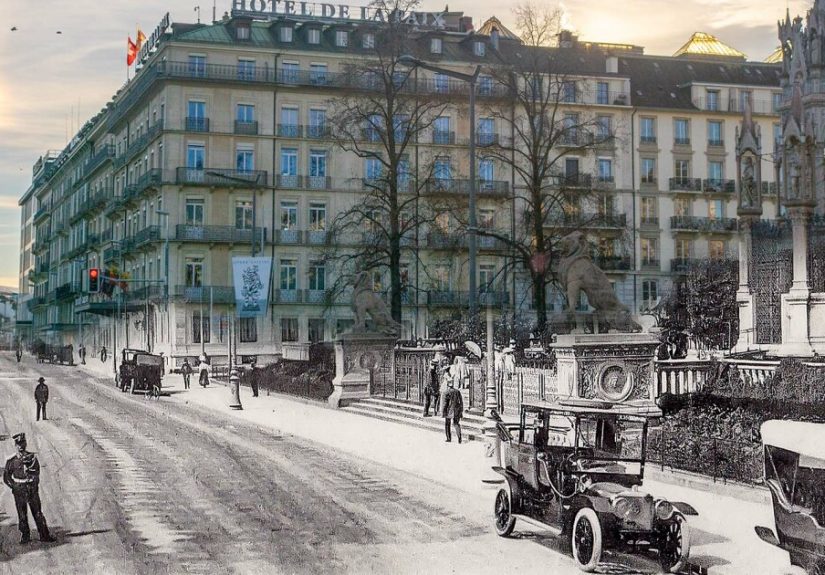
Compare a “then” photo with a “now” photo and look at the vehicles. The town might look the same, but the cars
broadcast changing incomes, fuel prices, safety standards, and lifestyle expectations. Bigger vehicles also change how
streets feelparking lots look tighter, sightlines change, sidewalks feel narrower even when they aren’t.
The sidewalk is the same; the behavior is different
Outdoor seating and street festivals signal a renewed appetite for shared space. At the same time, earbuds and
phone screens can make a crowded street feel more individually lived-in. People are present, but their attention
is divided between the physical town and the digital world.
Three “Everywhere” Stories You’ll Recognize
The county-seat classic
There’s a courthouse square with mature trees and a ring of two-story buildings. The buildings are the same.
But the ground-floor tenants rotate: insurance office, boutique, coffee shop, local restaurant, maybe a coworking
space. The upstairsonce offices or storageslowly becomes apartments again, because housing demand finds
a way.
The bypass-and-strip era
A highway bypass pulls traffic away from downtown, and commercial activity clusters near interchanges.
Downtown doesn’t necessarily die, but it changes character. It becomes less about convenience shopping and more
about identityevents, local food, services, community gathering. When revitalization happens, it often leans into
the historic look that never fully went away.
The “newcomers with laptops” chapter
A town near natural amenities starts attracting remote workers and retirees. A formerly empty storefront becomes a
cafe with fast internet. The local hardware store stays put (because pipes still leak in every era), but a new bookstore
opens next door. The town looks familiar; the conversations in the coffee line sound different.
How to Photograph “Change in a Familiar Place” Without Forcing It
Pick repeatable viewpoints
Corners, bridges, courthouse steps, and storefront alignments make great anchors. If you can return years later and
line up the same sightline, your images will do the storytelling for you.
Include ordinary details on purpose
The magic isn’t always in dramatic moments. Capture the things people overlook: streetlights, benches, crosswalk paint,
window posters, newspaper boxes, the presence (or absence) of a payphone-sized object that used to matter.
Photograph the “in-between” layers
Transitional periods are visually rich: a faded sign for a long-gone store, a new mural on an old wall, a reopened theater,
a renovated facade with the original brick still visible. That’s where the town’s continuity and change overlap.
What This Tension Means: We Change Fast, Places Change Slowlyand That’s Not a Bad Thing
It’s tempting to treat “unchanged towns” as stuck, but the slower pace of physical change can be a form of stability.
Buildings that last are a kind of environmental and economic thrift: reuse instead of rebuild. Familiar streets help
people feel rooted even when their work, habits, and identities evolve.
And towns do changejust not always in the ways a quick scroll would notice. The transformation is often internal:
who lives there, how they earn money, what they value, and how they connect. The photos capture that truth:
a place can look the same and still be living a completely different life.
Experiences From the Road: on Noticing Change in Familiar Towns
The longer you travel through small towns, the more you realize the biggest differences aren’t always the ones you can
point to with a finger. They’re the ones you feel in timing, rhythm, and the little social habits that ride on top of the
same old pavement.
I’ve stood at a four-way stop where the buildings looked unchangedsame brick, same awnings, same sun-faded
lettering high on the facadeand watched an entirely new kind of “downtown traffic” move through. Not cars, but
information. Someone paused on the corner to take a photo of a mural, then immediately posted it. A couple walked
out of a coffee shop with laptops under their arms, talking about meetings that weren’t happening anywhere near the
town limits. A teenager crossed the street while listening to something only they could hear, moving with that
confident rhythm earbuds seem to provide. The town’s exterior was steady; the invisible infrastructure of modern
life was buzzing.
In some places, the changes announce themselves quietly. A former video rental store becomes a tax-prep office,
then a boutique gym, then a thrift shopeach iteration leaving small traces behind, like ghosts of logos on the glass.
The theater marquee still hangs over the sidewalk, but now it advertises community events and film nights instead
of weeklong runs. A barbershop that once felt like an all-day conversation now has a little online booking sign taped
by the register. Nothing about the building “looks” radically different, but the town is learning new behaviors.
And then there’s the way people talk about distance. Years ago, someone might have measured life in miles to the
nearest mall or in minutes to the factory shift. Now it’s also measured in signal strength and delivery times. “We’re
about forty minutes from the city” sits right next to “The internet is decent if you’re near the window.” That’s a new
form of geography, layered on top of the old.
The most surprising part is how continuity can be comforting without being limiting. When I line up a repeat photo
same sidewalk crack, same angle toward the courthouse domeI’m reminded that stability has value. A town that
still has recognizable landmarks gives people a shared reference point, especially when everything else feels like it
updates overnight. The joke is that the town looks the same because it refuses to change; the truth is that it looks the
same because it’s built to last. And in those familiar frames, you can see the real story: society doesn’t just move on.
It moves throughleaving new patterns on an old map.