Table of Contents >> Show >> Hide
- Why a Cinderella Theme Works So Well in Switzerland
- Pre-Production: How I Planned the Shoot
- Camera Setup and Settings That Saved the Day
- The 19-Pic Storyboard (Shot List + Intent)
- Pic 1: Arrival at the Gate
- Pic 2: Hand on Stone Wall
- Pic 3: Looking Up at the Towers
- Pic 4: Walking Through an Archway
- Pic 5: Staircase Pause
- Pic 6: Close-Up Portrait by Window
- Pic 7: Veil/Wrap in the Wind
- Pic 8: Courtyard Spin
- Pic 9: The “Lost Slipper” Hint
- Pic 10: Reflection in Water or Puddle
- Pic 11: Balcony Overlook
- Pic 12: Laughing Candid with Hair Out of Place
- Pic 13: Corridor Silhouette
- Pic 14: Hands and Jewelry Detail
- Pic 15: Seated on Stone Steps
- Pic 16: Blue-Hour Exterior
- Pic 17: Looking Back While Exiting
- Pic 18: Night Portrait with Minimal Fill
- Pic 19: Final “Midnight” Frame
- Editing Style: Dreamy, Not Overcooked
- Common Mistakes (And How I Avoided Them)
- Logistics, Budget, and Time Reality
- What Made These 19 Photos Feel Cohesive
- Conclusion
- Extended Experience Journal (500+ Words): What It Actually Felt Like on Shoot Day
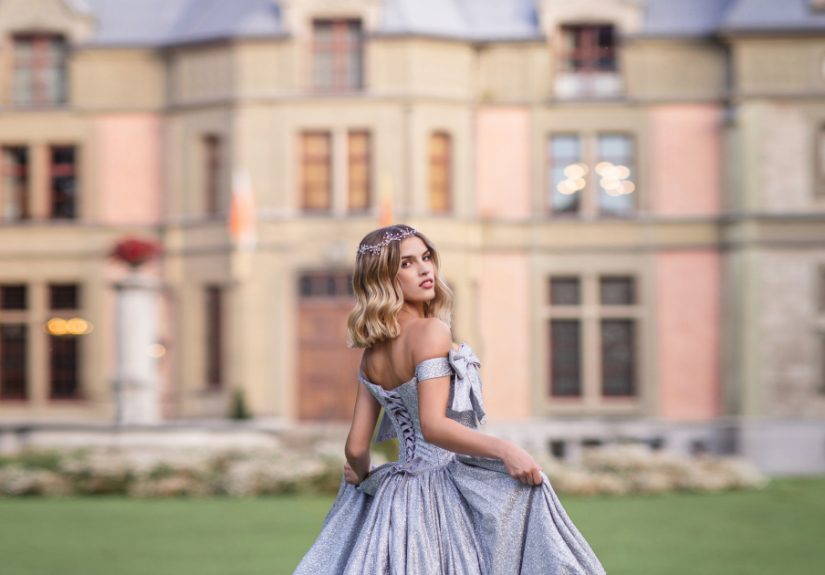
One castle. One floating blue dress. Nineteen photos. Zero glass slippers harmed in production.
I wanted to build a photo story that felt like Cinderella without looking like a costume party at midnight.
The goal was simple: create a dreamy, cinematic editorial set in a real Swiss castle, then tell the story frame by frame so each image felt like a scenenot just a pretty pose.
If you’ve ever searched for Cinderella themed photos, Swiss castle photography ideas, or fairytale portrait inspiration, this guide is the behind-the-scenes blueprint I wish I had before I started.
Why a Cinderella Theme Works So Well in Switzerland
Cinderella is one of those stories that keeps reinventing itself across cultures, eras, and visual styles. That gives photographers a lot of room to play:
you can go classic, modern, moody, romantic, or whimsical and still keep the emotional corehope, transformation, and that tiny moment of magic before the clock strikes.
A Swiss castle gives you the perfect visual grammar for that story: weathered stone, arches, narrow corridors, courtyards, lake reflections, and mountain light that changes by the minute.
You get instant production value without hauling in a truck full of fake props. The location does half the storytelling for you.
Pre-Production: How I Planned the Shoot
1) I built the narrative before I packed the camera
Instead of “let’s get pretty photos,” I wrote a one-page mini script with three acts:
before the ball, the royal moment, and after midnight.
That narrative structure gave every photo a job and helped me avoid random, repetitive shots.
2) I picked light over convenience
I chose early morning and late afternoon windows because castle stone can look flat at noon.
Soft directional light creates texture in old walls and keeps skin tones flattering.
If clouds rolled in, I treated them as a giant diffuser and leaned into the moody atmosphere.
3) I designed a practical wardrobe
The dress looked “princess,” but it was built for movement: lighter fabric layers, hidden clips, and a hem short enough to survive stairs.
Cinderella energy is less about glitter and more about silhouette + motion. Flowing fabric did more for the story than extra accessories.
4) I kept props minimal
I used only a few symbolic elements: a soft-blue wrap, pearl earrings, one vintage-style hair comb, and a simple neutral bouquet.
Less clutter meant cleaner compositions and more editorial polish.
Camera Setup and Settings That Saved the Day
For this style of fairytale photoshoot, I used a flexible setup:
- 35mm for environmental portraits (castle + subject)
- 50mm or 85mm for emotional close-ups
- Wide aperture for dreamy separation and softer backgrounds
- Fast shutter whenever fabric movement mattered
I metered for skin first, then protected highlights in bright windows and reflective lake scenes.
Indoors, I embraced available light and raised ISO before sacrificing shutter speed.
A tiny LED fill was my emergency tool in darker stairwells.
The 19-Pic Storyboard (Shot List + Intent)
Here’s the exact sequence I used. You can copy this as a practical castle photoshoot checklist.
Pic 1: Arrival at the Gate
Wide shot. Subject small in frame, castle dominant. This establishes scale and instantly tells the “ordinary-to-magical” arc.
Pic 2: Hand on Stone Wall
Detail shot with shallow depth of field. Texture + touch = grounded emotion before the fantasy builds.
Pic 3: Looking Up at the Towers
Low angle, slight backlight. It frames wonder without forcing a smile.
Pic 4: Walking Through an Archway
Use the arch as a natural frame. Movement blur in the hem adds story energy.
Pic 5: Staircase Pause
Classic “between moments” image. I asked for one breath in, one breath outsoft jaw, relaxed shoulders.
Pic 6: Close-Up Portrait by Window
Window side-light, eyes toward the brightest edge. This is the emotional anchor of the set.
Pic 7: Veil/Wrap in the Wind
High shutter speed. Shoot in short bursts and time with gusts. Wind became my unpaid creative director.
Pic 8: Courtyard Spin
One controlled turn, one camera step back. Keep horizon clean so the dress shape reads clearly.
Pic 9: The “Lost Slipper” Hint
Not literal glass. I shot a shoe strap loosened near a stone stepsymbolic, modern, less costume-y.
Pic 10: Reflection in Water or Puddle
Low-to-ground angle. Reflections double the fairytale mood for almost zero effort.
Pic 11: Balcony Overlook
Subject turned 45 degrees, chin toward light. This reads as “princess perspective” without cliché poses.
Pic 12: Laughing Candid with Hair Out of Place
Perfect photos can feel sterile. One imperfect frame adds humanity and relatability.
Pic 13: Corridor Silhouette
Expose for background, let subject go dark. Great transition image for visual pacing.
Pic 14: Hands and Jewelry Detail
Micro-story frame. Use it between wider shots in your final carousel for rhythm.
Pic 15: Seated on Stone Steps
Strong diagonal lines from steps guide the eye. Keep posture elegant but not stiff.
Pic 16: Blue-Hour Exterior
Cool tones + warm interior lights in the background = instant cinematic contrast.
Pic 17: Looking Back While Exiting
Classic ending gesture. It implies closure without needing text.
Pic 18: Night Portrait with Minimal Fill
Subtle LED or bounced light, very low power. Preserve darkness for mood.
Pic 19: Final “Midnight” Frame
Subject mid-step, slight motion blur in dress, clock tower or tower silhouette in distance. Story complete.
Editing Style: Dreamy, Not Overcooked
Post-production is where many fairytale sets go too far. I kept the edit clean:
- Lift shadows gently, but keep black points for depth
- Warm skin tones slightly while cooling stone and sky
- Use selective contrast on eyes and key fabric folds
- Add a light glow only where highlights already exist
- Retouch distractions, not personality
The rule: if the effect shouts louder than the subject, dial it back.
Common Mistakes (And How I Avoided Them)
- Too many props: visual noise killed elegance.
- Over-posing: I switched to prompts (“walk toward me,” “pause and breathe”) instead of rigid directions.
- Ignoring backgrounds: tourists, signs, and modern objects can break the illusion fast.
- No shot sequence: without a storyboard, every frame starts to look the same.
- Over-editing skin: fairytale doesn’t mean plastic.
Logistics, Budget, and Time Reality
A castle shoot sounds expensive (and yes, it can be), but careful choices keep it manageable:
- Travel light and rent only specialty gear
- Prioritize one signature outfit over multiple average ones
- Use public-access areas efficiently with a strict timetable
- Scout routes so you don’t burn the best light while searching for angles
My timeline was tight: one scout block, one primary shooting window, one backup weather plan, and one blue-hour finale.
Fast decisions gave me better photos than endless debating on location.
What Made These 19 Photos Feel Cohesive
Consistency. Same visual language across the set:
similar color palette, controlled contrast, repeated motifs (stairs, arches, fabric motion), and a beginning-to-end story arc.
That’s the difference between “19 nice pictures” and “a complete editorial.”
Conclusion
If you want to create your own Cinderella themed photos at a Swiss castle, focus on storytelling first, gear second.
Build a sequence, simplify the styling, respect the light, and edit with restraint.
The magic comes from intentionnot just the dress, not just the castle, and definitely not from glitter overload.
Give every frame a purpose, and your audience won’t just scrollthey’ll stay for the whole fairy tale.
Extended Experience Journal (500+ Words): What It Actually Felt Like on Shoot Day
I arrived before sunrise with a rolling suitcase that sounded much louder than it had any right to on old stone paths.
It was one of those crisp Swiss mornings where the air feels clean enough to drink. The castle looked enormous up closeless “storybook prop,” more “this place has watched centuries pass.”
I stood there for a minute with coffee in one hand and a garment bag in the other, trying not to drop either, and realized this was exactly the balance the whole project would demand: romantic vision in one hand, practical problem-solving in the other.
The first challenge came early: wind. Great for dramatic fabric, terrible for hair control and consistency.
Instead of fighting it, we rewrote the opening sequence around movement. Every time the wind gusted, we shot; every time it died, we switched to close-ups.
That decision saved the day. By 8:30 a.m., I already had several frames that felt alive, not staged. The dress wasn’t “perfect,” but it looked believablelike someone had actually run through a castle corridor, not stood frozen in it for ten minutes.
By late morning, tourist traffic picked up. We learned to work in tiny pockets: 45 seconds to position, 20 seconds to shoot, then step aside.
Instead of getting frustrated, I treated people movement as part of the rhythm.
While waiting for clear backgrounds, I captured detail shotshands on railing, ribbon movement, close crops of embroidery, profile against stone.
Those became critical transition images later in the edit and made the full 19-photo story feel intentional.
Around noon, light got harsh and contrasty. We took a reset break, reviewed what we had, and identified what was missing: one emotional close-up, one strong reflection shot, and a convincing ending frame.
This mid-day review prevented panic later. It also reminded me that great shoots are usually built in checkpoints, not heroic guesswork.
During the break, I adjusted the shot order and moved “reflection” earlier because a shaded courtyard still held soft water highlights.
That small scheduling tweak gave us one of my favorite images of the day.
In the afternoon, a cloud layer rolled in and suddenly everything looked cinematic.
Stone surfaces softened, skin tones improved, and the color palette naturally drifted into cool blues and graysthe exact mood the Cinderella concept needed.
We moved fast through arches and staircases, then slowed down for window portraits.
I gave prompts instead of hard poses: “Think of hearing music from another room,” “Take one step, then pause,” “Look like you’re deciding whether to leave.”
The expressions were subtler and way more believable than “smile now” direction.
Blue hour was the final test. Temperature dropped, hands got stiff, and everyone was a little tired.
But that edge of fatigue actually helped the mood: quieter faces, softer gestures, less overthinking.
We captured the last sequence with minimal fill light and just enough movement blur in the dress to suggest that midnight urgency.
When I checked the back of the camera, I knew we had the ending.
On the train back, I imported previews and saw the full arc come together: arrival, wonder, transformation, and exit.
Not every frame was technically perfect, and honestly, that helped. A fairytale still needs breath, texture, and a little unpredictability.
The biggest lesson from the whole experience was this: cinematic photos are rarely about expensive tricks. They’re about decisionswhere to stand, when to wait, what to remove, what to keep, and how to tell one clear story from first frame to last.
If I did this shoot again, I’d still pack the same essentials: comfortable shoes, a shot list, extra clips, patience, and a sense of humor.
Castles are old. Weather is moody. Zippers are chaotic. But when the light hits and the story locks in, it feels like magic earned the right way.