Table of Contents >> Show >> Hide
- What makes “good” LGBTQIA merch?
- Before the fun part: flags, symbols, and a little respect
- How I designed the collection (without making it weird)
- 10 Pics: My LGBTQIA merch lineup
- Pic 1: “You Belong Here” Rainbow Tee
- Pic 2: Pronoun Pin Set
- Pic 3: Progress Pride Sticker (License-aware)
- Pic 4: “Chosen Family” Tote
- Pic 5: “Protect Trans Joy” Hoodie
- Pic 6: Ace Spectrum Notebook
- Pic 7: “Bi and Thriving” Water Bottle Decal
- Pic 8: “Intersex Inclusion” Patch
- Pic 9: “Love Is a Verb” Minimal Tee
- Pic 10: “Kindness With Boundaries” Sticker Sheet
- Common mistakes I avoided (so you don’t have to learn the hard way)
- If you want to make your own LGBTQIA merch: a quick, non-overwhelming checklist
- Experience notes (500-ish words): what making Pride merch feels like in real life
Somewhere between “I should probably drink more water” and “why do I own three nearly identical black hoodies,” I decided to make
LGBTQIA merch that felt actually thoughtfullike something you’d wear because it’s you, not because it’s June and your feed is a rainbow
confetti cannon.
The goal: create pieces that celebrate identity without turning people into punchlines or stereotypes, look good on real humans, and hold up after
laundry day (a weekly villain arc). I also wanted designs that welcomed folks across the LGBTQIA spectrumlesbian, gay, bi, trans, queer, intersex,
asexual, and the “I’m still figuring it out, thank you for your patience” crew.
What makes “good” LGBTQIA merch?
The easy answer is: “rainbow = done.” The better answer is: merch should feel like a hug, not a billboard. Great LGBTQIA merch usually does at least
one of these things:
- Affirms someone’s identity (without being overly personal or invasive).
- Signals safety and allyship in a way that doesn’t center the wearer as the hero.
- Educates lightly (think: gentle prompts like pronouns, respect, and inclusionnot a dissertation on a hoodie).
- Looks like real designbalanced typography, intentional color, and no “graphic design is my passion” energy.
I treated each piece like a mini-poster: simple message, strong shape, readable from six feet away, and respectful of the symbols being used.
Before the fun part: flags, symbols, and a little respect
Pride flags are not just “pretty gradients.” They have history and meaning, and some designs have specific usage terms. If you’re making merch,
it’s worth knowing what you’re referencingespecially if you plan to sell it.
Rainbow flag basics (and why colors matter)
The original Pride rainbow flag debuted in 1978 and used eight colors, each with a meaning (later versions commonly shifted to six stripes for
production reasons). Whether you use six or eight, the point is the same: the rainbow flag is a symbol of LGBTQ+ pride and community, not a generic
“party theme.”
Progress Pride and intersex-inclusive designs
The Progress Pride Flag builds on the rainbow by adding a chevron that highlights communities that have been pushed to the margins, including trans
people and LGBTQ+ people of color. An intersex-inclusive version incorporates intersex symbolism (a yellow field with a purple circle) to explicitly
include intersex people, emphasizing wholeness and autonomy.
Practical takeaway: if your design uses a specific flag variant (especially the Progress Pride design), do your homework on how it’s meant to be used
and whether there are licensing terms for commercial products.
Language: the smallest detail that makes the biggest difference
Words on merch can be affirmingor accidentally messy. Some terms (like “queer”) are proudly reclaimed by many people but not universally welcomed
by everyone. I kept phrases friendly, optional, and non-presumptive. When in doubt, I aimed for messages that communicate respect without labeling
strangers.
How I designed the collection (without making it weird)
Step 1: Start with a message, not a product
Instead of saying, “I need a Pride shirt,” I started with themes:
visibility, belonging, joy, chosen family, pronouns, and
quiet confidence. Then I matched each theme to an item that made sensebecause not every idea belongs on a t-shirt.
Some ideas are sticker ideas. Some are tote ideas. Some are “this should be a tiny enamel pin” ideas.
Step 2: Choose items people actually use
I went with practical favorites: tees, a hoodie, a tote, stickers, a notebook, and a couple of small “signal” items (like a pin). If the merch can’t
survive a busy week, it’s not merchit’s a craft project with a time limit.
Step 3: Pick the right printing method
Printing isn’t just “print.” It’s a whole menu. For small batches and detailed art, DTG (direct-to-garment) can be great. For bold
designs and bigger runs, screen printing is often a go-to because it layers ink through stencils (screens) and tends to hold up
especially well over time. If you need vibrant transfers on different fabrics, you’ll hear people compare options like DTF, vinyl, and more.
The cheat code: match the method to the design. Tiny gradients and photo-level detail don’t behave the same way as big, clean shapes.
Step 4: Make it readable (accessibility is style)
Color is part of Pride, but readability is part of respect. I avoided “light text on light pastel” and “neon-on-neon” combos that look fun on screen
and turn into a blur in real life. Basic contrast guidance helps: aim for strong text/background separation and avoid relying on color alone to
communicate meaning (a win for folks with low vision or color-vision differences).
Step 5: Be honest about ethics and claims
If you ever say “Made in USA,” that phrase has a specific standard for unqualified claims. I treated origin claims like ingredients on food packaging:
if I couldn’t back it up, I didn’t say it. Same with “eco-friendly” or “sustainable”specific is better than vague.
I also built in a “give-back” plan. Pride isn’t just a color paletteit’s community. If you’re selling Pride merch, consider supporting LGBTQIA orgs,
mutual aid, or local groups. “Proceeds benefit…” hits differently when it’s real.
10 Pics: My LGBTQIA merch lineup
Below are ten “pics” (placeholders) with captions and design notes. Swap in your actual photos before publishing.
Pic 1: “You Belong Here” Rainbow Tee

This is the “walk into any room with your shoulders relaxed” shirt. The rainbow is a supporting character; the message is the star. I used thick,
high-contrast lettering because nobody should need to squint to feel included.
Pic 2: Pronoun Pin Set

Pronoun pins are best when they’re opt-in and non-demanding. I included an “ask me” option for people who prefer conversation over labels.
The design is minimal so it pairs with anything from backpacks to denim jackets.
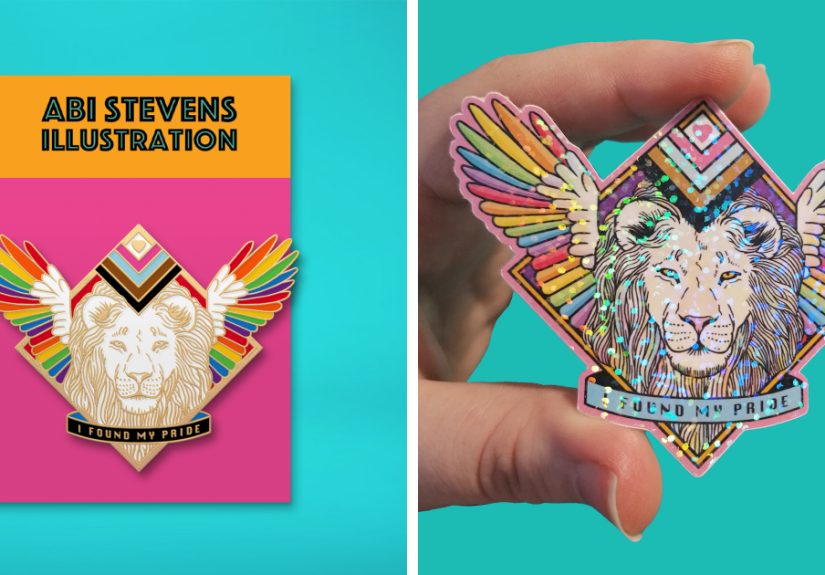
Pic 3: Progress Pride Sticker (License-aware)

This one comes with a responsibility label (not literally on the stickerthough that would be hilarious). If you’re using a specific Progress Pride
design, check usage terms before selling products. I also kept the sticker large enough that the chevron reads clearly, not like “mysterious triangle
vibes.”
Pic 4: “Chosen Family” Tote

“Chosen family” is a concept with deep roots in LGBTQ+ life. I used understated typography so it feels wearable year-round, not only during Pride
Month. Bonus: a tote is basically a personality trait.
Pic 5: “Protect Trans Joy” Hoodie

I wanted something supportive without turning trans identity into a trend graphic. The stripe motif is subtle, and the message centers joynot just
struggle. It’s a wearable reminder that trans people deserve safety, dignity, and happiness.
Pic 6: Ace Spectrum Notebook

Asexual visibility gets overlooked a lot, so I designed something quietly affirming. “Still valid” is short, powerful, and doesn’t assume anything
about the buyer other than: they deserve respect.
Pic 7: “Bi and Thriving” Water Bottle Decal

This decal is for the bi folks who are tired of being treated like a phase. I kept it playful and boldeasy to read from across the classroom,
office, or wherever you’re pretending to understand spreadsheets.
Pic 8: “Intersex Inclusion” Patch

The yellow and purple circle is iconic and meaningful. I paired it with plain text so people don’t have to already know the symbol to feel welcomed.
It’s small, but it starts conversations the right way: with dignity.
Pic 9: “Love Is a Verb” Minimal Tee

This one is Pride-adjacent on purpose. Some people want subtle merch that feels safe in more conservative environments. The message is universal, but
the context is clear to those who need it.
Pic 10: “Kindness With Boundaries” Sticker Sheet

Pride is joy, yesbut it’s also self-respect. These stickers are upbeat and firm. My favorite is “No is a full sentence,” because honestly it should
be embroidered on society.
Common mistakes I avoided (so you don’t have to learn the hard way)
- Overcrowding the design: If you need a paragraph to explain it, it’s not merchit’s a flyer.
- Low contrast text: Pastels are cute until nobody can read them.
- Tokenizing: Don’t use identities as decoration. Center people, not aesthetics.
- Sloppy claims: “Made in USA,” “eco,” “donation” and similar claims should be true and specific.
- Ignoring usage terms: Some flag designs have licensing expectations, especially for commercial use.
If you want to make your own LGBTQIA merch: a quick, non-overwhelming checklist
- Pick one message per item. Simple wins.
- Make it readable from six feet away (test on a phone screen at arm’s length).
- Choose printing based on design complexity and quantity.
- Use respectful language; avoid labeling strangers.
- Double-check symbol meaning and usage terms if you’re selling.
- Be transparent about materials and where money goes (if you make those claims).
Experience notes (500-ish words): what making Pride merch feels like in real life
Making LGBTQIA merch is a funny mix of “this is pure joy” and “why is my laptop fan auditioning for a jet engine role.” The first experience is
usually excitementsketching ideas, saving color palettes, imagining someone spotting your design and thinking, oh, me too. Then you hit the
reality stage: tiny details matter. That cute thin font you loved? It disappears on fabric. That pastel gradient? It prints like a whisper. The
experience teaches you quickly that good merch is less about your cleverness and more about your empathy and craft.
One of the most meaningful moments tends to happen when you test messages with actual people. Not as a “please approve me” exercise, but as a
“help me avoid stepping on toes I didn’t know were there” practice. Folks might tell you that a certain phrase feels too loud, too personal, or too
assumptiveespecially for people who aren’t out everywhere. And that’s when the project becomes more than design: you start building choices into the
collection. You make bold items and subtle items. You include pronoun options and an “ask me” option. You aim for merch that meets people where they
are, not where you wish the world already was.
Another real-world experience: you start noticing how Pride merch gets treated in the marketplace. There’s a difference between community-made work
and “rainbow slapped on a mug, shipped in two days, and forget the people.” When you’re creating with care, you feel that difference in your bones.
You start asking: Who benefits from this? Who gets credit? Where does the money go? Even if your project is small, the act of being intentionalusing
inclusive language, checking symbol usage terms, supporting LGBTQIA causes, and being honest in your claimsadds up.
And then there’s the pure fun part: seeing the first finished sample. The print looks crisp, the colors pop, the fabric feels right, and suddenly the
idea is real. People often describe this as a tiny “pride and relief” combopride in the work, relief that it didn’t turn out like an arts-and-crafts
tragedy. The best feedback is rarely about the “design” in a technical sense. It’s usually personal: “I needed this today,” or “I’ve never seen
something for my identity that didn’t feel like an afterthought.” That kind of response is the reason to keep going, tweak the next batch, and keep
showing up with care.
The ongoing lesson: LGBTQIA merch is most powerful when it’s made like a community artifactjoyful, readable, respectful, and built to last. The
coolest part isn’t that you made something colorful. It’s that you made something that helps someone feel seen.