Table of Contents >> Show >> Hide
- The Viral Cat-vs.-Lunch Showdown
- Why This Story Landed So Hard
- Was Refusing To Share the Sandwich Actually the Right Move?
- What the Story Gets Right About Real Cat Behavior
- How To Handle a Cat Who Thinks Your Lunch Is a Shared Asset
- The Real Verdict
- Cat-Owner Experiences That Make This Story So Relatable
- Final Thoughts
There are serious internet debates, there are ridiculous internet debates, and then there are the truly essential constitutional crises of our time: who owns the chicken sandwich when a cat puts her face in it first?
That is the question at the center of one of the funniest cat-owner stories to make the rounds online. A young woman sat down with a chicken sandwich, her cat Luna made a move for it, and the owner gently blocked the attempt. Instead of this ending as a simple “nice try, tiny thief,” it became a full-on mock AITA-style moral hearing, complete with dramatic language, fake legal arguments, and one unforgettable line: “I pay the bills.”
On the surface, it is just a funny cat story. But the reason it spread so fast is that it captures something almost every cat owner understands: the intense, unblinking confidence cats bring to human mealtimes. They do not ask. They do not negotiate. They simply assume your lunch is now a shared asset.
And that is exactly why this story works so well. It is hilarious, weirdly relatable, and secretly rooted in real cat behavior. It also raises a useful question beneath the jokes: was the owner actually wrong for refusing to share lunch with her cat? In the court of internet comedy, maybe yes. In real life, probably not.
The Viral Cat-vs.-Lunch Showdown
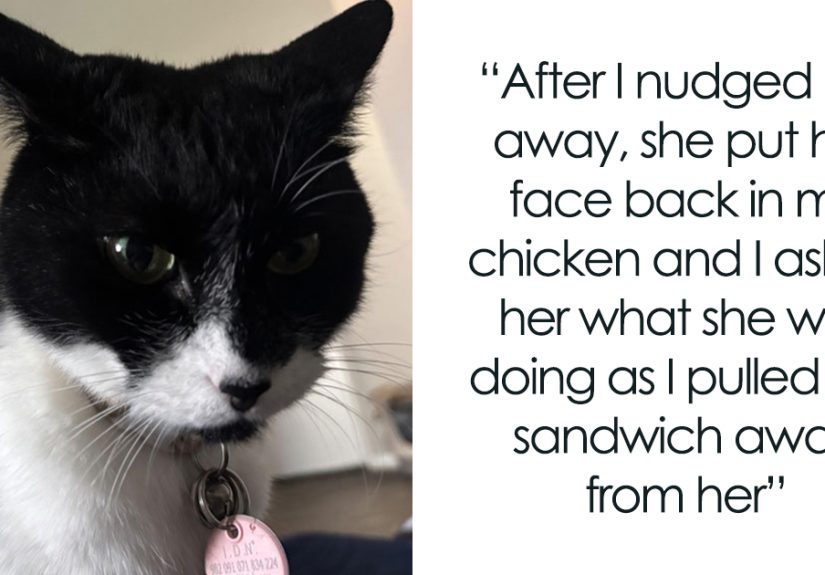
The post that inspired all the laughter had the perfect setup. The owner explained that she was treating herself to a chicken sandwich while studying, which already gives the story the energy of someone trying to have exactly one peaceful moment. Enter Luna, the cat, who apparently believes peace is overrated and sandwiches are a communal resource.
As the owner started eating, Luna reportedly went straight for the sandwich. The human response was gentle but firm: no, you may not place your face directly into my lunch. That boundary, however, was not accepted by the feline opposition. The cat allegedly returned to the scene, gave her owner a loaded look, and, in the owner’s telling, made the entire disagreement feel strangely political.
That framing is what turned an ordinary pet-owner moment into comedy gold. The post did not read like a sterile recap of a cat trying to steal food. It read like a courtroom statement written by someone who knew exactly how absurd it was to describe a cat’s meow as a formal objection. Add in the now-iconic “I pay the bills” defense, and the internet practically had no choice but to adopt the case.
People piled into the comments with the kind of fake outrage usually reserved for dramatic relationship posts. Some insisted the cat was clearly the injured party. Others argued that all chicken belongs to cats by ancient law. A few treated the sandwich dispute like a custody case. The joke worked because everyone understood the bit: the owner was obviously not being cruel, but the cat’s theatrical entitlement felt hilariously believable.
Why This Story Landed So Hard
Funny pet content spreads all the time, but this one had extra lift because it combined three internet favorites at once: cats, mock-serious storytelling, and the AITA format. That mix is almost unfair. Cats already behave like tiny, judgmental landlords. The AITA structure gave people a ready-made way to “rule” on the dispute. And the owner’s writing style made the whole thing feel like a stand-up routine disguised as a household complaint.
It also hit that sweet spot between chaos and comfort. Nobody was actually in danger. Nobody was being truly mistreated. It was just a highly recognizable standoff between a hungry human and a food-motivated cat who had the audacity to act wronged after being denied access to a sandwich.
That kind of low-stakes drama is catnip for the internet. People love stories that let them perform outrage without any real sadness attached. In this case, readers could theatrically declare the human guilty while also nodding along and thinking, “Yes, that is exactly what my cat would do.”
There is also a bigger reason stories like this resonate: they turn daily pet ownership into a shared language. Cat owners know the stare. They know the paw inching closer to the plate. They know the silent accusation in a cat’s face when denied a piece of chicken, tuna, turkey, or literally anything that smells remotely premium. This story did not need elaborate plot twists. It just needed one determined cat and one lunch worth defending.
Was Refusing To Share the Sandwich Actually the Right Move?
Comedy aside, the owner’s refusal was the sensible call. Cats are absolutely interested in meat, and chicken is no mystery there. Felines are obligate carnivores, which means animal-based nutrients are central to their nutritional needs. So yes, Luna’s attraction to chicken makes perfect biological sense. From the cat’s perspective, that sandwich was not lunch. It was destiny.
But a chicken sandwich is not the same thing as a simple bite of plain, cooked chicken. Human food gets complicated fast. Sandwiches often come with breading, salt, sauces, oils, seasoning blends, and toppings like onion or garlic. Those details matter. A tiny amount might not always trigger a crisis, but “probably fine” is not the gold standard anyone should use when a pet is trying to mug them for fast food.
Why Cats Want the Chicken
Cats are wired for protein-rich foods, and the smell of cooked meat is extremely persuasive. That is why many cats suddenly appear from nowhere the second a rotisserie chicken is opened or a deli container is cracked. If your cat can hear a treat bag from three rooms away and materialize like a furry tax auditor, imagine what warm fried chicken does to the brain.
So Luna’s attempted sandwich acquisition was not shocking. It was classic cat behavior: identify the good thing, approach the good thing, behave as though the good thing has always belonged to you.
Why the Sandwich Is Still a Bad Idea
The problem is everything wrapped around that chicken. Onion and garlic are major red flags for cats. Excess salt is not great. Rich, fatty foods can upset a pet’s digestive system. Sauces may contain ingredients that are harmless for people but not ideal for pets. Even when the main ingredient sounds fine, the final meal often is not.
That is the trap many owners fall into. They think, “It’s just a little chicken.” But it is rarely just chicken. It is chicken plus seasoning, coating, mayo, spice blend, crumbs, pickle brine, and enough sodium to make a veterinarian sigh from a different ZIP code.
So no, refusing to share a sandwich does not make someone mean. It makes them a person who understands that feline cuteness is not a substitute for ingredient awareness.
What the Story Gets Right About Real Cat Behavior
Begging Works Because It Often Pays Off
One of the funniest parts of the story is that Luna behaves like she knows she has a case. That confidence is not random. Cats are excellent behavior economists. If something has worked before, they remember. If sitting next to your plate once resulted in a bite of chicken six months ago, that strategy is now part of the business model.
Veterinary guidance often points out that begging behavior gets reinforced when humans reward it. In plain English: if your cat begs and you cave, your cat learns that begging is effective. Congratulations, you have not just shared lunch. You have funded a campaign.
Boredom Can Look Like Hunger
Another reason cats become intensely interested in food is that food is exciting. Indoor cats especially can turn meals, treats, and kitchen surveillance into a part-time hobby. Sometimes a cat who acts starving is not actually underfed. Sometimes she is bored, highly routine-driven, or simply aware that your plate is more interesting than her bowl.
That does not mean you should ignore every sign of increased appetite. Sudden hunger changes can sometimes be tied to medical issues, so a major shift deserves attention. But in many homes, the dramatic “I have not eaten since the Roosevelt administration” performance is just standard feline theater.
Attention Is Part of the Equation Too
Cats are not always chasing calories. Sometimes they are chasing involvement. Your lunch is fascinating because it smells strong, it holds your attention, and it creates a moment of interaction. To a cat, this is a social event with food at the center. That is a compelling package.
Which is why simply saying “stop begging” rarely solves much. Cats do better when owners redirect the behavior. A puzzle feeder, a treat toy, a short play session before human mealtime, or even feeding the cat on a schedule that does not overlap with your lunch can reduce the sense that every sandwich is a live opportunity.
How To Handle a Cat Who Thinks Your Lunch Is a Shared Asset
If this story felt familiar, the fix is not to become your cat’s personal short-order cook. It is to set better rules.
First, do not reward the plate-hovering routine with random bites from your meal. Mixed signals are how you end up eating one-handed while defending a turkey wrap like it contains state secrets. Second, offer cat-safe treats only on your terms, not during active begging. Third, make mealtime more engaging with food puzzles or enrichment tools so your cat has a legitimate outlet for that energy.
It also helps to separate “I love my cat” from “therefore my cat gets a little bit of everything.” Those are not the same sentence. Many owners show affection through food because it feels easy and immediate. But sometimes the better gift is structure. Your cat does not need a bite of your seasoned sandwich nearly as much as she needs a balanced diet, mental stimulation, and a human who can resist emotional blackmail delivered through whiskers.
In other words, love your cat deeply. Just maybe not with Popeyes.
The Real Verdict
If we are judging this as internet entertainment, the owner is delightfully guilty. She challenged a cat over chicken, used “I pay the bills” as a defense, and underestimated the legal influence of a determined face near fried food. In the imaginary judicial system of cat people online, that is enough for a dramatic conviction.
But if we are judging it as actual pet care, the owner was right. Human lunches are not automatically cat-safe, and refusing to share a seasoned sandwich is a perfectly normal boundary. The real beauty of the story is that it holds both truths at once: the human made the sensible decision, and the cat still somehow won the vibe-based argument.
That is life with cats in one sentence. You can do everything correctly and still feel like the villain because a ten-pound creature stared at you like you cancelled Christmas.
Cat-Owner Experiences That Make This Story So Relatable
If you have lived with a cat for more than five minutes, you probably have your own version of the Luna incident. Maybe it was a turkey sandwich. Maybe it was takeout sushi. Maybe it was the rotisserie chicken that never even made it onto a plate before your cat appeared with the confidence of a customs officer inspecting contraband. The details change, but the emotional arc stays the same: you had food, your cat noticed, and suddenly you were cast as the selfish villain in a drama you did not agree to join.
One of the funniest parts of cat ownership is how cats act like every boundary is a shocking personal betrayal. You can feed them on schedule, give them treats, buy them expensive wet food, rotate toys, clean their litter box like a loyal employee, and still get glared at because you would not surrender half a grilled chicken wrap. A dog might beg with obvious enthusiasm. A cat begs with constitutional indignation. Different energy entirely.
Many owners know the ritual. You unwrap lunch, and your cat starts casually circling. At first, she is “just nearby.” Then she is sitting a little closer than usual. Then she is standing on a chair like a tiny food critic. Then a paw appears on the table. Then a nose. Then suddenly you are using your elbow like a nightclub bouncer to protect a salad you did not even want that badly in the first place.
What makes these moments memorable is not just the attempted theft. It is the attitude. Cats rarely look embarrassed. They look disappointed in you. As if you, a supposedly competent adult, have misunderstood the basic household arrangement in which all premium proteins are jointly owned. That expression is why so many people laughed at the AITA-style story. It was not exaggerated. It was documentary-level accurate.
There is also the strange negotiation phase that owners slip into without realizing it. “You cannot have my sandwich, but you may sniff the wrapper.” “No, you may not lick the plate, but here is a cat-safe treat.” “Please get off the counter.” “Please stop climbing my shoulder while I open tuna.” Before long, you are in a full diplomatic exchange with an animal who has no intention of compromising.
And yet, these little mealtime standoffs become part of the charm. They are annoying in the moment, but funny in retrospect because they reveal how much personality cats pack into ordinary situations. A lunch break becomes a power struggle. A snack becomes a moral referendum. A sandwich becomes evidence in a fake trial where your cat is somehow plaintiff, jury, and influencer.
That is why the “I pay the bills” story feels bigger than one viral post. It captures the weird, affectionate absurdity of living with cats. They are dramatic, opportunistic, intelligent, and occasionally convinced that your plate is a civil rights issue. You laugh, you protect your lunch, and you tell the story later because deep down you know the truth: this was never just about chicken. It was about a cat defending what she believed was hers, namely everything.
Final Thoughts
“I Pay The Bills” is a funny title for a funny story, but it also nails a universal cat-owner experience: the constant negotiation between what is yours and what your cat believes should obviously be hers. The online post became a hit because it balanced humor, relatability, and just enough faux-serious drama to let everyone join in.
In practical terms, refusing to share the lunch was the correct move. In cultural terms, Luna still walked away as a folk hero. That is the magic of great cat content. The human may have the bills, but the cat always has the audience.