Table of Contents >> Show >> Hide
- Why Pandemic Humor Still Works
- 19 Humorous Comics That Perfectly Capture Pandemic Life
- Pic #1: The Living Room Became Corporate Headquarters
- Pic #2: Business on Top, Pajamas on the Bottom
- Pic #3: The Grocery Store as an Extreme Sport
- Pic #4: The Great Hand Sanitizer Era
- Pic #5: The Mask Forgot Nothing
- Pic #6: Every Cough Became a Public Relations Crisis
- Pic #7: Zoom Turned Us Into Amateur Broadcasters
- Pic #8: Home Schooling Came With Zero Training and Full Panic
- Pic #9: The Sourdough Starter Became a Dependent
- Pic #10: Time Lost All Structural Integrity
- Pic #11: Social Distance, Emotional Closeness, Physical Awkwardness
- Pic #12: Birthdays Became Tiny Broadcast Events
- Pic #13: The Walk Became the Highlight of the Day
- Pic #14: Pets Thought This Was the Best Era Ever
- Pic #15: Fitness Turned Into Living Room Acrobatics
- Pic #16: Streaming Was No Longer Entertainment, It Was Infrastructure
- Pic #17: Haircuts Entered Their Experimental Phase
- Pic #18: Telehealth Made the Doctor’s Office Look Different
- Pic #19: “You’re on Mute” Became a Cultural Phrase
- What These Pandemic Comics Really Say About Us
- Extended Reflections: Personal Experiences From a Very Strange Time
- Final Thoughts
Note: This article is written for web publication in clean HTML and does not include source links or unnecessary citation artifacts.
There are historical events, and then there are historical events that somehow turned all of us into part-time bakers, full-time video callers, and amateur disinfectant experts. The COVID-19 pandemic did not just change public health policy or office routines. It changed the small stuff too: how we greeted people, how we shopped, how we celebrated birthdays, how we worked, how we worried, and how we laughed when reality got a little too weird to process in a straight face.
That is exactly why humorous comics about pandemic life still land so well. They take the giant, complicated mess of the era and shrink it into one painfully accurate image: a laptop balanced on a laundry basket, a person dressed professionally from the waist up and emotionally from the waist down, or a family arguing over Wi-Fi bandwidth like it is the last helicopter out of the movie. Comedy became one of the most human ways to deal with a time that was confusing, frightening, lonely, and oddly full of hand sanitizer.
In this collection-style article, I am not just revisiting the pandemic for nostalgia points and awkward chuckles. I am showing how COVID-19 changed our lives through 19 comic-worthy moments that capture the strange new habits, emotional whiplash, and accidental absurdities of the time. Some are silly. Some are bittersweet. All of them are familiar. If you lived through the era of sourdough starters, muted microphones, and six feet of personal space, you will probably recognize yourself in at least half of these.
Why Pandemic Humor Still Works
Humor was not a distraction from pandemic life. In many ways, it was survival gear. When daily routines got flipped upside down, people used funny comics, memes, and cartoons to make sense of the chaos. A joke about hoarding paper towels was never really just about paper towels. It was about uncertainty. A comic about endless video calls was not just office satire. It was about how home suddenly became a workplace, classroom, cafeteria, gym, and emotional support bunker all at once.
Good pandemic comics did something surprisingly smart: they turned large social changes into ordinary snapshots. Instead of lecturing readers about how the world changed, they showed one exhausted parent hiding in the bathroom for five minutes of peace during remote learning. That image says more than a thousand charts ever could. It reminds us that the COVID-19 pandemic changed our lives not only through big headlines, but through tiny daily habits that quietly reshaped everything.
19 Humorous Comics That Perfectly Capture Pandemic Life
Pic #1: The Living Room Became Corporate Headquarters
Before the pandemic, a living room was for relaxing. During the pandemic, it became a boardroom, classroom, lunchroom, and sometimes a panic room. One comic-worthy scene shows a person attending a serious video meeting while a child cartwheels behind them and a dog barks at the vacuum. It is funny because it is true. Remote work did not just change where we worked. It erased the wall between professional life and personal chaos.
Pic #2: Business on Top, Pajamas on the Bottom
If there were an official uniform of 2020, it might be a collared shirt paired with pajama pants that should never have met daylight. Pandemic humor thrived on this fashion contradiction. It captured the rise of performative professionalism, where people looked polished in a tiny square on-screen while their real lives were collapsing just below camera level. The joke worked because it exposed how quickly appearances became a strategic skill.
Pic #3: The Grocery Store as an Extreme Sport
Grocery shopping used to be mildly annoying. Then it became a suspense thriller. Every trip felt like a cross between a scavenger hunt and a survival game. Comics from this era nailed that energy: masked shoppers staring at empty shelves with the emotional weight of Shakespearean tragedy. Suddenly, finding flour felt like winning a treasure hunt, and seeing someone sneeze near the cereal aisle felt like an action sequence.
Pic #4: The Great Hand Sanitizer Era
One of the most instantly recognizable pandemic changes was the rise of hand sanitizer as a lifestyle accessory. A funny comic might show a person moisturizing one minute and turning into a raisin the next after their seventeenth sanitizer application of the day. COVID hygiene habits were essential, of course, but humor found the tiny side effects: dry skin, the constant smell of alcohol gel, and the new talent of opening doors with elbows like a determined octopus.
Pic #5: The Mask Forgot Nothing
Face masks changed how we moved through public spaces, but they also created endless small comedy moments. Glasses fogging up. Lipstick becoming a pointless act of optimism. Smiling at someone and realizing your whole face’s emotional labor was hidden behind fabric. A great comic does not mock masks. It highlights how humans adapted, fumbled, readjusted, and slowly built brand-new social habits around them.
Pic #6: Every Cough Became a Public Relations Crisis
Once upon a time, a random cough was just a cough. During the pandemic, one throat tickle could send a whole room into silent dramatic tension. Comics turned that anxiety into relatable humor: a person trying desperately to suppress a cough in public like they were hiding state secrets. It was funny because it captured the hyper-awareness people felt around every sneeze, sniffle, and suspicious throat clear.
Pic #7: Zoom Turned Us Into Amateur Broadcasters
Nobody asked for it, but suddenly millions of people became accidental producers. We learned about camera angles, lighting, echo, mute buttons, and the terrible danger of talking while muted. Pandemic comics loved the technical disasters: frozen faces, accidental filters, and the one person who always said, “Can you hear me now?” five times per meeting. Remote communication made everybody more connected and somehow more confused at the same time.
Pic #8: Home Schooling Came With Zero Training and Full Panic
Parents around the country were handed a new role with no warning: assistant teacher, tech support, recess coordinator, and snack provider. That alone could power an entire comic series. One panel practically writes itself: a parent trying to explain fractions while also answering work emails and untangling charger cables. Remote learning showed how much labor normally happens behind the scenes in education, and humor helped families survive the crash course.
Pic #9: The Sourdough Starter Became a Dependent
For a glorious stretch of pandemic life, people looked at global uncertainty and thought, “You know what this situation needs? Fermented flour with a name.” Baking became comfort, hobby, therapy, and social-media content all at once. Comics about sourdough starters as needy roommates or moody pets captured the era perfectly. When routines vanished, people created new ones, even if that meant emotionally investing in bread bubbles.
Pic #10: Time Lost All Structural Integrity
Pandemic days had a weird texture. Monday felt like Thursday. April felt like a decade. Noon arrived suspiciously fast, but entire weeks vanished into a fog of repeated routines. A humorous comic might show a person looking at a calendar like it is written in ancient code. COVID did not just disrupt schedules. It broke the normal markers people use to understand time, and the result was a collective feeling that clocks had simply quit trying.
Pic #11: Social Distance, Emotional Closeness, Physical Awkwardness
Humans are social creatures, but the pandemic forced people to renegotiate how social contact looked. No handshakes. No easy hugs. Careful spacing in lines. Half-waves that felt like diplomatic experiments. Comics from this theme are gold because they capture the awkward ballet of people trying to be warm, safe, polite, and deeply confused all at once. Few things summarize pandemic etiquette better than two friends accidentally sidestepping each other in synchronized panic.
Pic #12: Birthdays Became Tiny Broadcast Events
Pandemic celebrations had a strange energy. They were heartfelt, homemade, and just a little bit haunted. Cakes were delivered to porches. Candles were blown out in front of phone cameras. Friends sang through glitchy connections with the rhythm of a haunted choir. Yet those moments mattered. A comic about someone posing next to a laptop full of tiny birthday guests is funny, but it also captures how people protected joy even when normal celebrations were off-limits.
Pic #13: The Walk Became the Highlight of the Day
During lockdown-era life, a basic walk around the neighborhood transformed into an event with emotional significance. People put on real shoes, stepped outside, and felt like explorers returning to civilization. Pandemic comics understood the drama of that shift. A person leaving the house for a ten-minute walk like they are embarking on an epic quest is ridiculous, yes, but also painfully recognizable. Fresh air became luxury. Sidewalks became sanity.
Pic #14: Pets Thought This Was the Best Era Ever
Dogs were thrilled. Cats were suspicious. Either way, pets suddenly had their humans home all day and could not believe their luck. Funny pandemic comics often flipped the perspective: pets assuming permanent retirement had begun, only to become deeply offended when people eventually started leaving again. These jokes landed because animals became emotional anchors during an isolating period, and they witnessed every weird work call and kitchen cry session.
Pic #15: Fitness Turned Into Living Room Acrobatics
With gyms closed or limited, people improvised. Chairs became workout equipment. Water bottles became dumbbells. Yoga mats became permanent floor decorations. A pandemic comic showing someone doing an online workout while stepping over laundry and dodging furniture says everything about the era’s optimism. Even exercise became part comedy, part coping mechanism. The message was simple: health mattered, but so did not losing your mind in a one-bedroom apartment.
Pic #16: Streaming Was No Longer Entertainment, It Was Infrastructure
At some point, movies, TV series, livestreams, and endless scrolling stopped being “screen time” and started functioning like emotional support wallpaper. Pandemic life changed how people used technology. It was how we worked, learned, checked on family, watched concerts, joined trivia nights, and escaped reality for a while. A humorous comic of someone asking, “Are we watching for fun or for survival?” gets the point across beautifully.
Pic #17: Haircuts Entered Their Experimental Phase
Salons were unavailable, patience was low, and many people looked into the mirror and thought, “How hard can this be?” The answer, as pandemic comics reminded us, was “Very.” Homemade bangs, clippers wielded with misplaced confidence, and family members suddenly promoted to hairstylist created a golden age of visual comedy. Hair became one of the funniest symbols of pandemic adaptation because it literally showed how long the situation had been going on.
Pic #18: Telehealth Made the Doctor’s Office Look Different
Medical appointments changed too. Instead of sitting in a waiting room flipping through old magazines, people found themselves describing symptoms from their kitchen table while adjusting camera angles. Comics about telehealth are funny because they mix serious conversations with wildly domestic settings. There is something inherently absurd about discussing your health while your cat walks across the screen, yet that became completely normal for many households.
Pic #19: “You’re on Mute” Became a Cultural Phrase
Some phrases define an era. For the pandemic, one of them was definitely, “You’re on mute.” It was the battle cry of virtual life, repeated in offices, schools, family chats, and community meetings. A final comic centered on this line would be the perfect closer because it captures the whole experience: we were all trying to stay connected, often imperfectly, through tools that worked just well enough to keep life moving. Clumsy? Yes. Human? Absolutely.
What These Pandemic Comics Really Say About Us
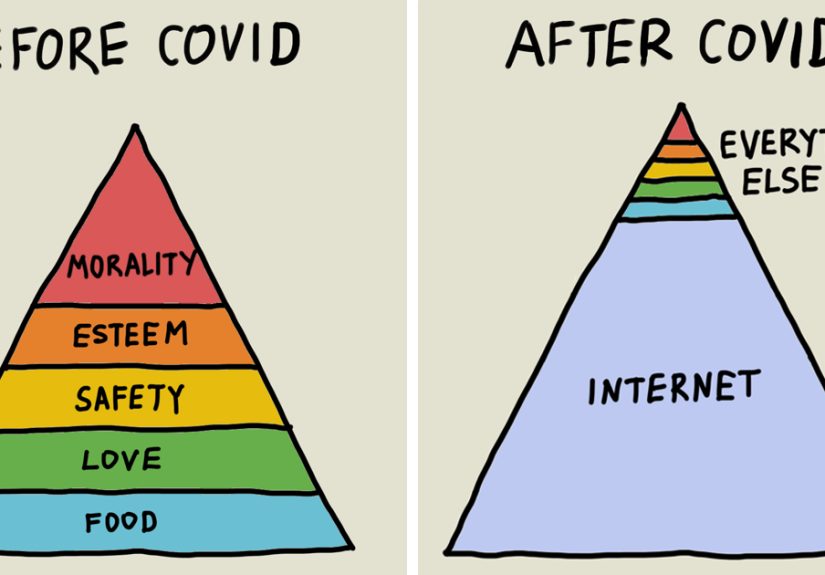
The best COVID-19 pandemic humor does more than get a laugh. It acts like a time capsule. Every comic panel preserves a little slice of how people adapted under pressure. We changed routines overnight. We invented backup plans for our backup plans. We learned how fragile normal life could be, but we also learned how creative people become when normal disappears.
That is why these humorous comics are still so effective. They are not making light of hardship. They are showing resilience in a recognizable form. A joke about a chaotic video call can sit next to a deeper truth about isolation. A comic about weird grocery habits can remind us how uncertain daily life felt. Humor gave people a way to process disruption without pretending everything was fine.
In that sense, pandemic comics became a visual diary of adaptation. They documented the masks, the distance, the screen fatigue, the emotional weirdness, and the tiny rituals people created to stay sane. They also proved something important: even when life gets turned upside down, people still find ways to connect, cope, and laugh at the absurdity of trying to be a functioning adult while your banana bread is overproofing in the background.
Extended Reflections: Personal Experiences From a Very Strange Time
Looking back, one of the strangest parts of the pandemic was how ordinary the extraordinary started to feel. At first, everything seemed temporary. People thought in terms of a few weeks, maybe a short disruption, maybe a quick pause before the regular world came back online. But then the routines changed for real. Masks moved from emergency item to everyday object. Video calls stopped feeling futuristic and started feeling exhausting. The phrase “out of an abundance of caution” became so common it practically sounded like elevator music.
For many people, the emotional experience of the pandemic was not one single feeling. It was a rotating menu. Fear one day, boredom the next, gratitude after that, then frustration, then cautious optimism, then stress over something tiny like whether it was worth wiping down a package. That emotional unpredictability is part of what made pandemic humor so powerful. It gave people permission to admit that the whole experience was weird, heavy, awkward, and occasionally ridiculous.
There was also something oddly revealing about how the pandemic stripped life down to basics. People paid more attention to the shape of their homes, the comfort of small routines, the value of a walk, and the importance of hearing another person’s voice. A kitchen table stopped being just a table. It became a desk, classroom, meeting room, therapy corner, and dinner spot. The same four walls had to perform multiple jobs, and that forced people to confront what they needed from everyday life.
Social relationships changed too. Some friendships got stronger because people checked in more intentionally. Others faded without the casual structure of school, work, or in-person gatherings. Families spent more time together than they had in years, which was heartwarming in theory and occasionally chaotic in practice. Many people discovered that love is real, but so is the need for a door that closes.
Another lasting memory is how creative people became under pressure. They held birthdays on screens, waved through windows, organized porch drop-offs, learned new recipes, adopted pets, started side hobbies, and found ways to build connection out of scraps. None of those substitutes were perfect, but perfection was never really the point. The point was to keep some version of life going. That stubborn creativity deserves more credit than it gets.
And then there was the humor, which often arrived at exactly the right moment. People laughed about frozen video screens, dramatic grocery trips, failed haircuts, and the bizarre intimacy of seeing coworkers’ laundry baskets in the background. Those jokes were not shallow. They were a form of recognition. They said, “This is hard, but you are not the only one living in this strange little movie.”
That may be the biggest reason pandemic comics still matter. They remind us that history is not just policies, case counts, and timelines. History is also what it felt like to live through it. It is the small habits, the awkward jokes, the improvised routines, and the emotional survival tricks. In other words, it is exactly the stuff comics are good at capturing. A single funny panel can preserve a whole chapter of human experience, and the chapter called COVID-19 was one of the strangest most people will ever live through.
Final Thoughts
The COVID-19 pandemic changed our lives in ways that were serious, lasting, and deeply personal. It altered work, school, healthcare, shopping, communication, and social behavior. But it also produced a very human response: humor. Funny comics turned anxiety into something shareable, frustration into something recognizable, and daily absurdity into something strangely comforting.
That is what makes a gallery like this so compelling. It is not just a collection of jokes. It is a portrait of adaptation. The masks, the video calls, the remote learning disasters, the sourdough starters, the silent panic when someone coughed in public, the accidental pet cameos, the never-ending phrase “you’re on mute” all of it became part of how we remember this period. And somehow, through comics, those memories feel a little lighter without losing their truth.