Table of Contents >> Show >> Hide
- The Story Behind These People-and-Animal Portraits
- Why Photos of People and Animals Feel So Powerful
- The Role of Nature and Natural Light in Showing True Beauty
- How to Capture Natural Beauty in People-and-Animal Photos
- Ethics: Respecting Animals and People in the Frame
- Why This Kind of Photography Resonates Online
- Extra: My Experiences Photographing People and Animals Together
- Conclusion: Why These 50 Photos Matter
Some people collect stamps, others collect sneakers. I collect tiny moments when a human quietly leans into an animal, and the whole world seems to exhale.
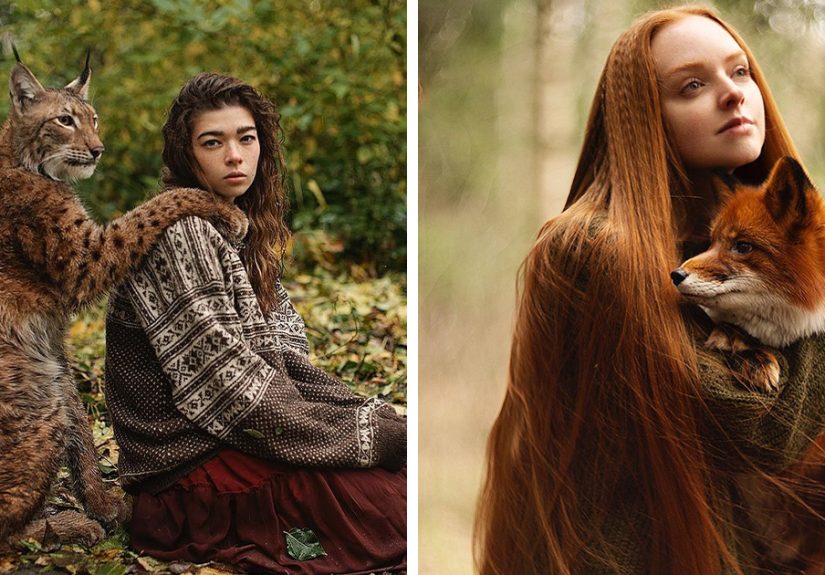
A freckled girl with a fox, a boy nose-to-nose with a rescue dog, a woman wrapped in the calm weight of a sleepy cat – that’s the universe I try to photograph.
The idea behind “I Take Photos Of People And Animals To Show The Natural Beauty Among Them (50 Pics)” is simple:
put people and animals together, step back, and let their natural beauty do the talking. No heavy retouching, no plastic smiles, no over-posed drama.
Just real faces, soft fur, messy hair, and the kind of connection you can’t fake.
In this article, we’ll walk through the story behind this style of photography, why the human–animal bond hits us so hard, how natural light and nature
settings amplify the magic, and some practical tips for anyone who wants to try similar portraits. At the end, I’ll also share personal experiences and lessons
learned from photographing people and animals together – the wins, the awkward fails, and the little miracles in between.
The Story Behind These People-and-Animal Portraits
The Bored Panda feature that sparked this title showcases a photographer dedicated to revealing how humans and animals sit in gentle balance with nature,
not above it. Instead of treating animals like props, these images show them as equal characters in the frame – sometimes even the quiet stars of the story.
Many of the portraits involve:
- Humans with no heavy makeup or retouching – just freckles, wrinkles, scars, and all.
- Animals that look relaxed, curious, or gently wild, rather than forced or staged.
- Natural environments like forests, fields, lakesides, or soft indoor window light.
The goal is to highlight natural beauty rather than perfection. Stray hairs, muddy paws, and slightly crooked smiles create authenticity that
polished studio work often loses. These portraits whisper instead of shout, but they stay with you much longer.
Why Photos of People and Animals Feel So Powerful
We’re wired to notice eyes, expressions, and body language. When you place a person and an animal in one frame, your brain starts reading both stories at once.
A dog leaning into its human, a cat wrapped around someone’s shoulders, or a horse gently bowing its head tells us more than any caption could.
Animal and human portraits often tap into a few universal themes:
- Trust: When a wolfish-looking dog rests its head calmly in someone’s lap, it challenges stereotypes and shows gentle strength.
- Vulnerability: A person closing their eyes while holding an animal feels like a small, wordless prayer for safety and comfort.
- Belonging: The way animals mirror our moods – excited, curious, calm – visually reinforces the idea that we’re part of the same world, not separate from it.
Pet photographers and portrait artists often talk about these images as “emotional time capsules.” They don’t just document what someone looked like
with their pet or companion animal; they preserve a bond that might someday be all that’s left when the animal or the person is gone. That’s part of what
makes these photos so moving and so shareable.
The Role of Nature and Natural Light in Showing True Beauty
When you’re trying to show natural beauty, your best friend is, unsurprisingly, nature. A patch of moss, a foggy morning, a lake at golden hour –
these are cheap special effects with a huge emotional return.
Portrait and pet photographers frequently recommend avoiding harsh midday sun and instead shooting:
- During golden hour – shortly after sunrise or before sunset, when light is soft and dimensional.
- In open shade – under trees, beside buildings, or near porches, where light is even and flattering without hard shadows.
- Near big windows indoors – where indirect daylight creates a gentle spotlight and beautiful catchlights in the eyes.
Natural light tends to be kinder to both humans and animals. It softens skin, keeps fur looking textured rather than blown out, and supports that
moody, cinematic atmosphere many love in these people-and-animal portraits. Instead of looking like a studio ad, the image feels like a stolen
moment from a fairy tale.
Eyes in Focus: The Soul of the Photo
Whether you’re photographing a person or an animal, one rule shows up again and again in portrait and wildlife photography: get the eyes in focus.
The eyes are where viewers connect. If you nail the focus on the fur but miss the eyes, the image can feel strangely flat.
In people-and-animal portraits, you often have two pairs of eyes to consider. That’s where depth of field becomes your secret weapon.
Many photographers shoot at a moderately wide aperture (for example, f/2.8 to f/4) and position faces on the same plane so both sets of eyes are sharp.
When one pair of eyes is sharp and the other gently softer, you can guide the viewer’s attention to the emotional center of the image – maybe the person, maybe the animal.
How to Capture Natural Beauty in People-and-Animal Photos
You don’t need a thousand-dollar lens or a mystical forest to start. You just need patience, curiosity, and respect for everyone in front of your camera –
especially the animals. Here are some practical tips inspired by portrait, pet, and wildlife photography pros:
1. Start in a Familiar, Comfortable Place
Animals behave more naturally in environments they know. Instead of dragging someone’s shy rescue dog to a busy park, photograph them in the backyard,
on the porch, or on the living room rug. Familiar smells and sounds help the animal relax, and a relaxed animal is infinitely more photogenic.
2. Let the Connection Happen First, Then Raise the Camera
Great photographers don’t just pose people and pets; they observe them. Give your human subject a simple prompt:
- “Hold your cat the way you usually cuddle on the couch.”
- “Whisper something to your dog and watch how they react.”
- “Just stand there and let your horse nuzzle you as long as it wants.”
Once something real starts happening – a laugh, a sigh, a nose bump – then you start shooting. Your job is to be ready, not to force the moment.
3. Play With Angles and Perspectives
Try shooting from:
- Eye level with the animal – to make the viewer feel like part of the pack.
- Low to the ground – to make a child and dog look heroic and larger-than-life against the sky.
- Above the scene – capturing a person curled around a sleeping cat, like a comma wrapped around a period.
Changing perspective keeps the series visually interesting. Over 50 photos, variety matters. Not every shot has to be front-facing. Profiles,
back views, and detail shots (hands in fur, paws on knees) add storytelling layers.
4. Keep Posing Loose and Organic
Over-posing humans rarely works with animals, who have their own opinions about where they want to stand, sit, or zoom. Instead of stiff instructions like
“Stand here, look there, don’t move,” try prompts that invite interaction:
- “Walk slowly toward me and ignore the camera.”
- “Give your dog a treat and then scratch their favorite spot.”
- “Close your eyes and feel the weight of your cat in your arms.”
The goal is to capture gestures – the way fingers curl into fur, the way shoulders drop when someone relaxes, the way a dog’s head tilts
when it hears its name.
5. Edit to Enhance, Not Erase
Editing is where you can deepen the mood, but it’s also where it’s easy to lose the “natural” in natural beauty. Many artists who photograph people and animals
focus on:
- Adjusting contrast and color tones to emphasize the atmosphere (warm golden, cool forest, misty morning).
- Gently brightening eyes and darkening distractions in the background.
- Avoiding skin-smoothing or body modifications that remove character and texture.
Leave the freckles, whiskers, and tiny imperfections. That’s where the story lives.
Ethics: Respecting Animals and People in the Frame
Beautiful photography should never come at the expense of its subjects. With people-and-animal portraits, this means:
- No risky stunts: Don’t place animals on unsafe ledges, in deep water, or in environments that stress them out just for the shot.
- Consent and comfort: Humans should always be comfortable with how they’re portrayed, and animals should never be restrained or forced into positions that cause fear or pain.
- Honest storytelling: Avoid editing that creates misleading impressions about the animal’s behavior or welfare.
Many modern photographers see their work as part of a broader conversation about animal welfare, connection with nature, and empathy.
People share these portraits not just because they’re pretty, but because they remind us to be kinder to the creatures we live with.
Why This Kind of Photography Resonates Online
Scroll any social feed and you’ll notice: photos of people and animals cut through the noise. They feel refreshing in a sea of filters and sales pitches.
A heartfelt portrait of a girl with her dog gets shared across platforms not because it’s trendy, but because it’s honest.
A collection of 50 such images – each showing a different human-animal relationship, each celebrating natural beauty – becomes more than eye candy.
It turns into a visual manifesto:
- Different bodies are beautiful.
- Different species can share real bonds.
- We are part of nature, not separate from it.
That’s why people bookmark these galleries, share them, and even use them as inspiration for their own photoshoots and art.
They’re not just looking at pictures; they’re looking at possibilities for how life could feel.
Extra: My Experiences Photographing People and Animals Together
Theory is nice, but photography happens in real, sometimes chaotic, life. Here are some experiences and lessons I’ve collected while trying to capture
natural beauty between people and animals – the honest, behind-the-scenes version of those dreamy portraits.
The Day the Dog Fired Me (Almost)
One of my first sessions involved a family and their very energetic rescue dog, Milo. The plan was simple: soft sunset light in an open field,
gentle cuddles, maybe a few running shots. Milo had other plans. He spent the first 20 minutes sprinting in circles, ignoring every treat, toy,
and loving plea from his humans.
I was tempted to panic – the light was fading, and all I had were blurry streaks of fur. Then I remembered a basic truth:
you can’t out-stubborn an animal with a camera. Instead of forcing a pose, we changed the game. I asked the family to join Milo.
They started running with him, playing tug-of-war, collapsing in the grass, laughing like kids. Those ended up being the best shots of the session.
Not a single “perfect” sit-and-stay, but a gallery full of joy and motion.
Lesson learned: sometimes “chaotic” is just another word for “alive.” The natural beauty among people and animals often appears right after you stop fighting what’s actually happening.
The Cat Who Refused to Perform
Then there was Luna, a cat whose hobbies included ignoring humans and judging everyone from a high shelf. Her person wanted photos of them together,
ideally something cuddly and close. Luna calmly declined to participate.
Instead of chasing her or trying to move her physically (never a good idea with cats), we reset expectations. I suggested we photograph Luna on her own terms.
We moved a chair near her favorite window perch, and her human simply sat below, reading a book. After about ten quiet minutes, Luna wandered down,
rubbed against a shoulder, and settled in a lap. No one said a word; I just started shooting.
The result was a series that felt tender and true – not a single forced cuddle, just a cat deciding, “Okay, I choose you. Now.”
It taught me that patience and respect often create stronger images than any pose board.
When Nature Becomes a Co-Author
Some of my favorite portraits of people and animals happened because nature decided to collaborate. A sudden gust of wind turning a cloak into a wing,
light filtering through leaves onto a dog’s face, or unexpected fog rolling into a field – these are gifts you can’t schedule.
During one session, I was photographing a young woman with her horse near a lake. The sky had been flat and gray all afternoon.
Just as we considered packing up, the sun slipped under the clouds and lit them from below, turning the whole sky into a pastel painting.
The horse lifted its head, the woman turned toward the light, and for about 90 seconds, everything aligned.
Those were the images she chose to print and hang in her home.
That day reinforced a humbling reality: as photographers, we’re not fully in control. We’re collaborating with animals, weather, and timing.
Our job is to be technically prepared and emotionally flexible enough to capture the magic when it shows up – not when we demand it.
What These Sessions Teach People (Including Me)
Photographing people and animals together does more than fill a gallery; it changes how many of us see ourselves:
- People often realize they look their most beautiful when they’re not posing – when they’re laughing at their dog’s zoomies or wiping cat hair off their shirt.
- Animals show their quirks and personalities, reminding us they’re not accessories; they’re family with their own inner worlds.
- I’m reminded, over and over, that “natural beauty” isn’t about symmetry or perfection. It’s about presence, connection, and honesty.
So when I say, “I take photos of people and animals to show the natural beauty among them,” what I really mean is this:
I chase proof that kindness, softness, and interspecies friendship still exist in a noisy world. And every time someone sees one of those
portraits and smiles, or remembers a beloved pet, or feels a little more at home in their own imperfect skin – the photo has done its job.
Conclusion: Why These 50 Photos Matter
A series like “I Take Photos Of People And Animals To Show The Natural Beauty Among Them (50 Pics)” is more than a viral gallery.
It’s a reminder that real beauty is quietly powerful. It lives in the way a dog’s paw rests on a hand, the way a horse’s mane tangles with human hair,
the way a cat half-closes its eyes in trust.
You don’t need perfect bodies, perfect faces, or perfect lighting to create meaningful images. You need presence, patience, and empathy for every living being in your frame.
Whether you’re a professional photographer, a hobbyist, or just someone with a phone and a very photogenic pet, you have the tools to tell these stories.
And who knows? Your next photo of you and your animal might be the one that makes someone else pause mid-scroll and think,
“This is what natural beauty really looks like.”