Table of Contents >> Show >> Hide
- Why Iceland Feels So Wild, Even on a Short Trip
- Day One: Reykjavík, Steam, and a Humbling Lesson in Weather
- Day Two: South Coast Drama, No Filter Needed
- The Golden Circle Is Popular for a Reason
- What Iceland Tastes Like
- What Surprises First-Time Visitors Most
- How to Do Iceland Well in Just a Couple of Days
- The Empire of Fire and Ice, in Human Terms
- A Few More Pages From My Short Stay in Iceland
- Conclusion
If a fantasy novelist, a geologist, and a weather app had a group project, the result would probably be Iceland. In just a couple of days, this island manages to throw glaciers, volcanoes, black-sand beaches, steaming hot water, turf-roof history, and moody North Atlantic skies into one unforgettable travel experience. It is called the land of fire and ice for a reason, and that nickname is not some lazy tourism slogan cooked up in a Reykjavík marketing office over coffee. It is a literal, dramatic, boots-on-the-ground reality.
Spend even 48 hours here and Iceland starts to feel less like a normal destination and more like Earth showing off. One minute you are walking through a lava field that looks like a movie set for a very serious alien film. The next, you are warming up in a geothermal lagoon while cold wind tries to negotiate with your face. Then suddenly you are staring at a glacier tongue, a waterfall, or a fissure where the planet seems to have split itself open just to prove a point.
This is not a place that asks for your attention politely. Iceland kicks open the door, points at a volcano, and says, “Look alive.”
Why Iceland Feels So Wild, Even on a Short Trip
The magic starts with geology. Iceland sits on the Mid-Atlantic Ridge, one of the rare places where a major tectonic boundary rises above sea level. That helps explain why the country feels so geologically restless. Lava fields, steaming vents, fissures, crater landscapes, and geothermal pools are not occasional features here. They are part of the everyday scenery. Even the quiet-looking ground sometimes feels like it is plotting something.
Then there is the ice. Iceland is home to massive glaciers, including Vatnajökull, the largest ice cap in Europe. In many areas, ice and fire practically share an address. Volcanoes sit beneath glaciers, geothermal heat shapes the land, and meltwater has carved out plains, lagoons, and dramatic river systems. This natural contradiction gives Iceland its signature personality: beautiful, intense, and slightly unhinged in the best possible way.
That contrast is what hits hardest when you only have a few days. You do not need two weeks to understand the country’s appeal. A short stay is enough to see how Iceland moves between extremes with zero interest in moderation.
Day One: Reykjavík, Steam, and a Humbling Lesson in Weather
Most quick Iceland trips begin in Reykjavík, and that is not a bad thing. The capital is small enough to feel manageable, but lively enough to keep you entertained between nature missions. Colorful houses, clean streets, modern design, cozy cafés, public pools, street art, and a harbor that reminds you the ocean is always nearby give the city a personality that feels equal parts creative and practical. Reykjavík does not shout. It knows the landscape is doing that already.
On a first day, the city is the perfect soft landing. You can wander through downtown, admire Hallgrímskirkja rising like a basalt-organ dream, grab a pastry, and adjust to the strange local rhythm of weather changing every ten minutes. Icelandic weather has a well-earned reputation for unpredictability. Sunshine can arrive looking innocent and disappear behind wind, drizzle, and low clouds before you have finished pretending your jacket was optional.
This is also where Iceland introduces one of its greatest cultural truths: bathing is not a side activity. It is practically a philosophy. Whether you choose the Blue Lagoon, Sky Lagoon, or one of the city’s local pools, soaking in geothermal water is one of the fastest ways to understand the country. Icelanders do not treat hot water as a luxury. They treat it as civilization.
And yes, if you are wondering whether a soak in warm mineral-rich water while cold air bites at your ears feels amazing, the answer is absolutely yes. It feels like your body has finally agreed to stop arguing with the climate.
Day Two: South Coast Drama, No Filter Needed
If you have only one full day outside the capital, the South Coast is the obvious overachiever. It is one of the most rewarding regions for first-time visitors because the scenery changes constantly, and none of it is subtle. Waterfalls tumble off cliffs. Moss-covered lava fields stretch across the land. Glacier views appear like giant frozen walls. Then the coast turns dark and volcanic, and suddenly the whole country looks like it has switched genres.
Seljalandsfoss is the kind of waterfall that makes people forget how to behave around beauty. Skógafoss is wider, louder, and gloriously dramatic, with spray that can leave you damp and delighted at the same time. Continue east and the landscape grows even moodier. Near Vík, the black sands of Reynisfjara meet the sea in a scene so striking it almost looks edited. The basalt columns, crashing surf, and dark shoreline create one of Iceland’s most iconic views, though the ocean here deserves deep respect. The waves are not performing for tourists. They are handling business.
Further along the broader southern route, Iceland doubles down with glacial scenery. Jökulsárlón glacial lagoon and nearby Diamond Beach have become famous for good reason. Icebergs drift through the lagoon and fragments wash ashore, where they sit on black sand like giant pieces of fallen sky. It is one of those places that makes cameras work overtime and still fail to fully explain the mood.
The Golden Circle Is Popular for a Reason
Travel writers sometimes get suspicious of famous routes, as if popularity automatically makes a place less interesting. Iceland laughs at that idea. The Golden Circle is busy because it is genuinely excellent. It offers a concentrated look at the forces that shaped the country and remains one of the best short-trip itineraries in Europe.
Thingvellir National Park
Thingvellir is where history and geology shake hands. It is associated with Iceland’s early parliament, and it is also one of the clearest places to appreciate the tectonic drama beneath the island. The landscape is full of fissures, lava, and open space that make the earth feel unusually alive.
Geysir Geothermal Area
The geothermal zone nearby is a bubbling, steaming reminder that Iceland keeps a furnace under the floorboards. The original Great Geysir gave the English language the word “geyser,” while Strokkur now steals the show with regular eruptions that send hot water skyward. There is something wonderfully primitive about standing around a hole in the earth waiting for it to throw a tantrum.
Gullfoss
Then comes Gullfoss, one of Iceland’s most famous waterfalls. It crashes into a rugged canyon with so much force that even seasoned travelers tend to go quiet for a minute. Not because they have become spiritual, necessarily. Sometimes the planet just knows how to shut everybody up.
What Iceland Tastes Like
One of the best surprises of a short trip is realizing that Iceland is not only about scenery. It has a distinct food culture too, and it often ties directly back to the landscape. Geothermal energy shows up in cooking just as it does in bathing and heating. Rye bread baked using underground heat is one of the country’s most memorable culinary traditions, especially around Laugarvatn, where hot spring bread has become both heritage and experience.
Then there is the famous hot dog situation. Yes, a hot dog sounds underwhelming in a place of glaciers and volcanoes, but Icelandic hot dogs have achieved cult status for a reason. Usually made with a lamb-forward blend and topped with crunchy onions, raw onions, mustard, ketchup, and remoulade, they are simple, affordable, and weirdly satisfying. Eating one in Reykjavík feels less like grabbing a snack and more like participating in local diplomacy.
Iceland also rewards travelers who pay attention to its quieter flavors: seafood pulled from cold waters, lamb raised on open grazing land, greenhouse-grown produce, thick dairy products, and the kind of comforting soups and breads that make perfect sense in a windblown northern climate. This is a cuisine built more on adaptation than showmanship, which somehow makes it even more appealing.
What Surprises First-Time Visitors Most
The first surprise is how close everything feels to myth. Turf houses, saga history, remote churches, and landscapes with names that seem to require a brave keyboard all contribute to the sense that Iceland lives halfway between history and folklore. Even modern Reykjavík carries a deep awareness of story, books, and cultural identity. This is a country with a famously strong reading culture, and that intellectual thread gives balance to all the raw natural power outside.
The second surprise is scale. Photos can make Iceland look enormous, but the real trick is how much variety is packed into relatively reachable distances from the capital. In a short drive, you can move from city streets to lava fields, from waterfalls to black beaches, from steaming springs to glacier views. It feels efficient in a way that is almost suspicious, like nature forgot to space things out properly.
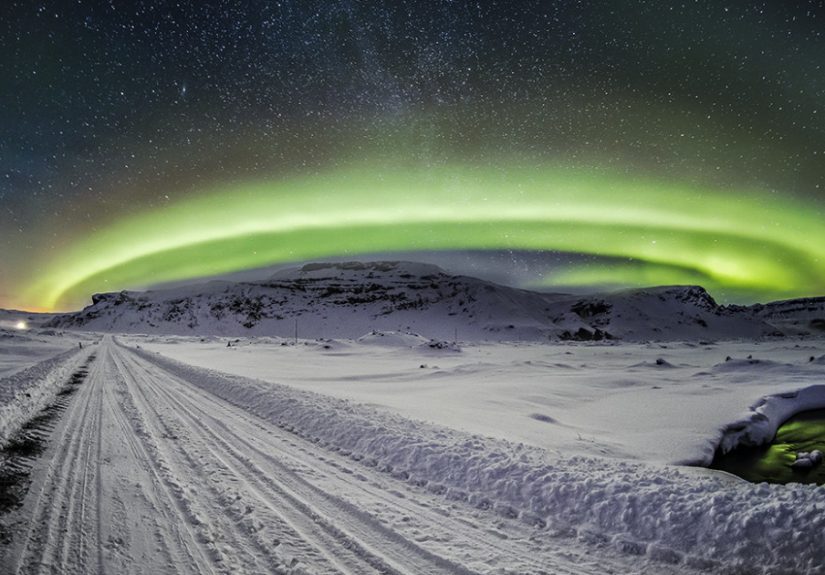
The third surprise is the light. In summer, the long daylight hours stretch the day into something dreamlike. In darker months, the low sun and extended twilight make the landscape feel cinematic, and on lucky nights the aurora can add a final layer of drama. Northern lights are never guaranteed, of course. Iceland is magical, not obedient.
How to Do Iceland Well in Just a Couple of Days
If your time is short, resist the urge to do everything. Iceland punishes over-ambition with fatigue, weather delays, and the realization that every stop deserves more time than your schedule gave it. A smarter plan is to focus on one or two regions and let the trip breathe.
For most travelers, that means combining Reykjavík with either the Golden Circle and a lagoon, or the South Coast and a lagoon. If you have a little more flexibility, you can also begin to understand why the Ring Road has such a legendary reputation. Stretching around the island for roughly 830 miles, it ties together many of Iceland’s most famous landscapes. But a full Ring Road trip deserves time, patience, and a healthy respect for changing road conditions.
The essential rule is simple: build your plans around nature, not ego. Dress in layers. Expect wind. Keep your camera ready. Stay curious. And whenever Iceland gives you a chance to slow down and stare at something ridiculous, take it. The country is at its best when you stop trying to collect attractions like baseball cards and start letting the atmosphere do its work.
The Empire of Fire and Ice, in Human Terms
What makes Iceland linger in memory is not just the scenery. It is the feeling of being somewhere that still seems shaped by forces larger than convenience. People here have adapted to geothermal energy, harsh weather, volcanic risk, darkness, distance, and a deeply specific landscape. The result is a culture that feels resilient, creative, and refreshingly unsentimental.
That is why a couple of days in Iceland can feel oddly complete, even when they are nowhere near enough. You do not leave thinking you saw everything. You leave thinking you finally saw a place that still knows how to be fully itself. Not polished into sameness. Not translated into bland comfort. Just entirely, gloriously Iceland.
A Few More Pages From My Short Stay in Iceland
By the end of my second day, Iceland had started to play a trick on time. I had only been there for what was technically a short trip, but it felt as if I had crossed several countries, two climates, and at least one alternate dimension where steam rises from the ground like the island is permanently exhaling. That is the thing about Iceland: it stretches experience. A few hours here do the emotional work of a much longer vacation.
I remember standing near the coast with the wind hitting hard enough to make conversation feel optional. The sea was dark, the sand was darker, and the cliffs looked as if they had been sketched in charcoal. Nothing about the scene was soft. It was beautiful in a stern, unsmiling way. Iceland does not always try to charm you. Sometimes it just presents itself with complete confidence and lets you deal with your own feelings.
Later, I found myself warming up with something simple to eat and realizing that comfort in Iceland often arrives in modest packaging. A bowl of soup. A hot shower. Bread that tastes like weather and patience. A pool of hot water under a cold sky. The country has a way of making basic human pleasures feel deluxe. You stop chasing spectacle for a moment and notice how satisfying it is just to thaw out.
Even the roads contributed to the mood. Driving through lava fields or along stretches of coast felt like moving through unfinished earth, as if the landscape were still in the middle of becoming itself. Nothing looked decorative. Every cliff, ridge, and blackened patch of ground seemed to have earned its shape through heat, pressure, ice, or time. You do not really “pass through” scenery like that. You read it, even when you do not fully understand the language.
Reykjavík, too, stayed with me more than I expected. It was not flashy, which is probably part of why it worked so well. The city felt grounded, clever, and comfortable in its own skin. There was art where I did not expect it, calm where other capitals would have noise, and a sense that people here had figured out how to build warmth against the odds. Not tropical warmth, obviously. Iceland is not about to become Miami. But social warmth, design warmth, pool warmth, soup warmth. The important kinds.
And then there was the strange emotional effect of the light. Depending on the season, Iceland can give you long evenings that barely dim or dark stretches that make every lamp and window feel important. Either way, the light changes how you move through the day. It makes everything feel a little more cinematic, a little less ordinary. You notice shadows. You notice cloud texture. You notice the way distant snow can suddenly glow while the ground beneath you stays gray and volcanic.
If I had to explain the experience honestly, I would say this: Iceland made me feel small, but not in a depressing way. In a clarifying way. The country is full of reminders that the earth is active, old, unpredictable, and completely unconcerned with your travel itinerary. Yet somehow that does not feel harsh. It feels freeing. You stop trying to control everything and start paying attention instead.
That is why a couple of days in the empire of fire and ice can leave such a deep mark. Iceland does not just offer attractions. It offers perspective. It reminds you that beauty can be raw, that comfort can come from heat rising out of stone, and that some places are still powerful enough to rearrange your thoughts before you have even unpacked properly. I arrived expecting dramatic scenery. I left with the much stranger feeling that the landscape had been quietly observing me the whole time.
Conclusion
Iceland is one of those rare destinations that fully lives up to its myth. In just a couple of days, it can deliver volcanic landscapes, glacier views, geothermal culture, unforgettable road trips, and the kind of weather that keeps both your jacket and your ego humble. Whether you spend your time in Reykjavík, circle through the Golden Circle, or chase waterfalls and black-sand beaches along the South Coast, the country leaves a lasting impression because it never feels ordinary for even a second.
If you want a trip that blends nature, culture, atmosphere, and just enough chaos to keep you alert, Iceland is an excellent choice. It is dramatic without being fake, famous without being hollow, and wildly beautiful without needing a filter. A couple of days here may not be enough to see the whole island, but they are more than enough to understand why travelers keep coming back to the land where glaciers and volcanoes somehow coexist like old rivals forced to share the same glorious stage.